The sun is up and so is the sparky (or, the day began pear-shaped)

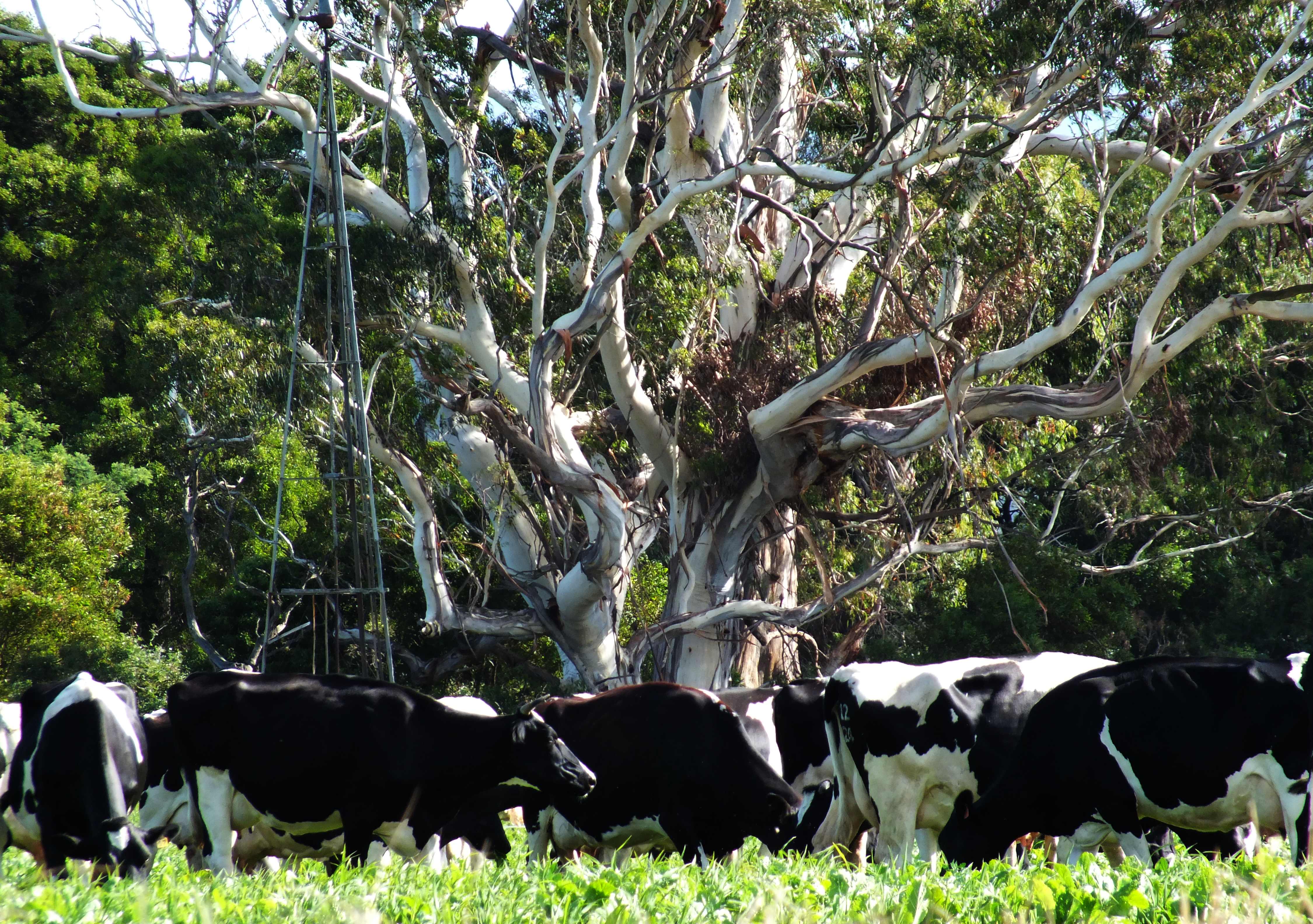
Dairy cows are rounded up before dawn but, today, they slept in. We had a bit of a disaster in the dairy last night that would have meant the girls missed breakfast. That certainly would not do, so while they waited for the sparky to weave his magic in the grain auger control box, this is how the cows enjoyed watching the sunrise.

Sleeping in

Sleeping in

Two hours later than normal, with steaming breath and swaddled in layers of clothes to ward off the still chilly air, the kids and I had the rare treat of a family morning round up.
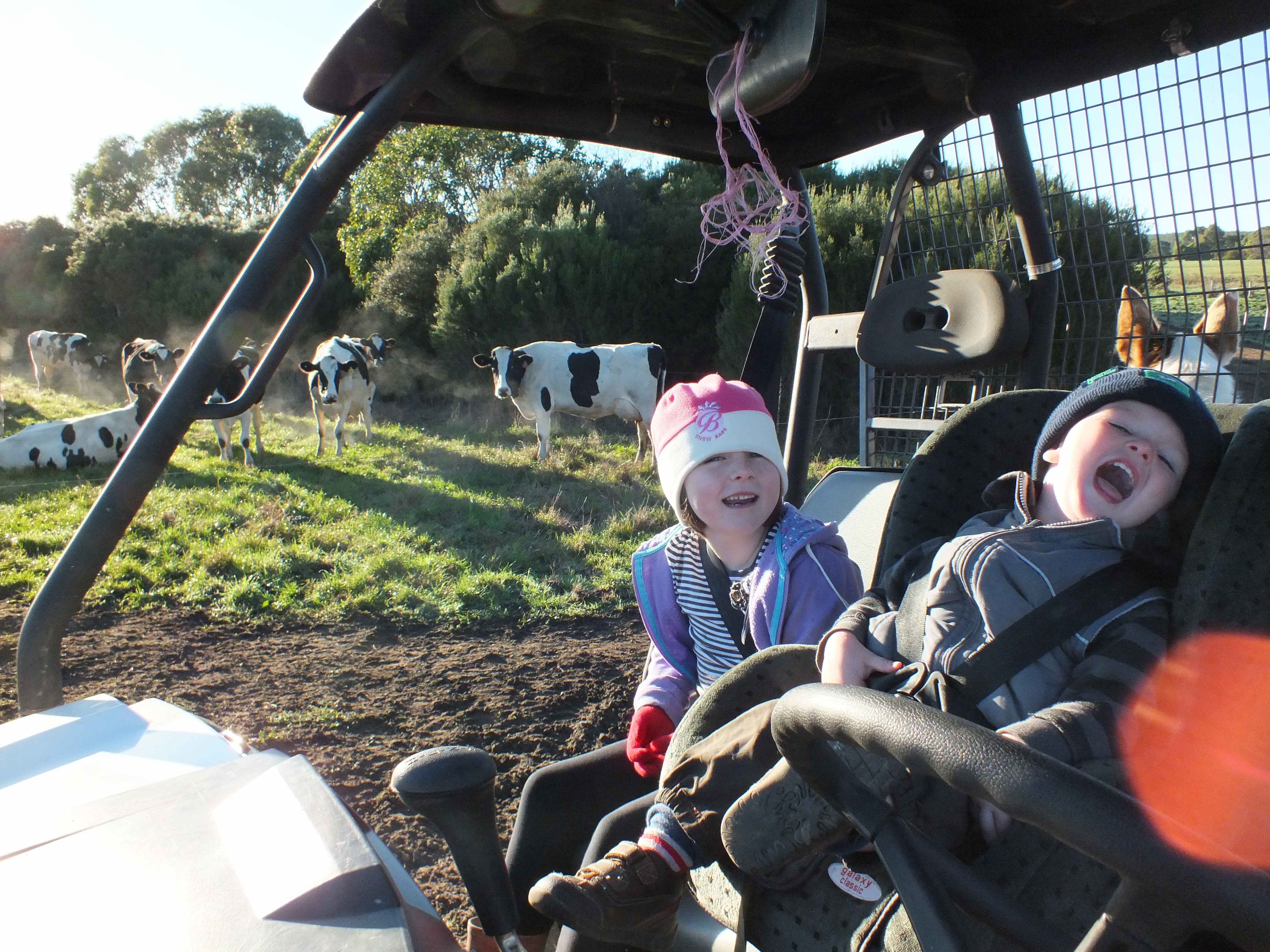
Rounding up was noisier than usual, too!

Rounding up was noisier than usual, too!

The cows seemed to take it all in their stride but we are lucky this has happened late in the season when milk production is falling away. Farmers are so fastidious about rising early because a late morning milking means painfully-full udders and the risk of mastitis. Wayne took the opportunity to do a heap of other farm chores while the feed system was repaired and will milk the cows late tonight to help even things out for the cows again.

A big thank you to Dutchy the sparky for getting out of bed so early on a frosty Sunday morning. It turns out that, in dairy country, the cows rule the lives of farmers, their families and even the local electricians.
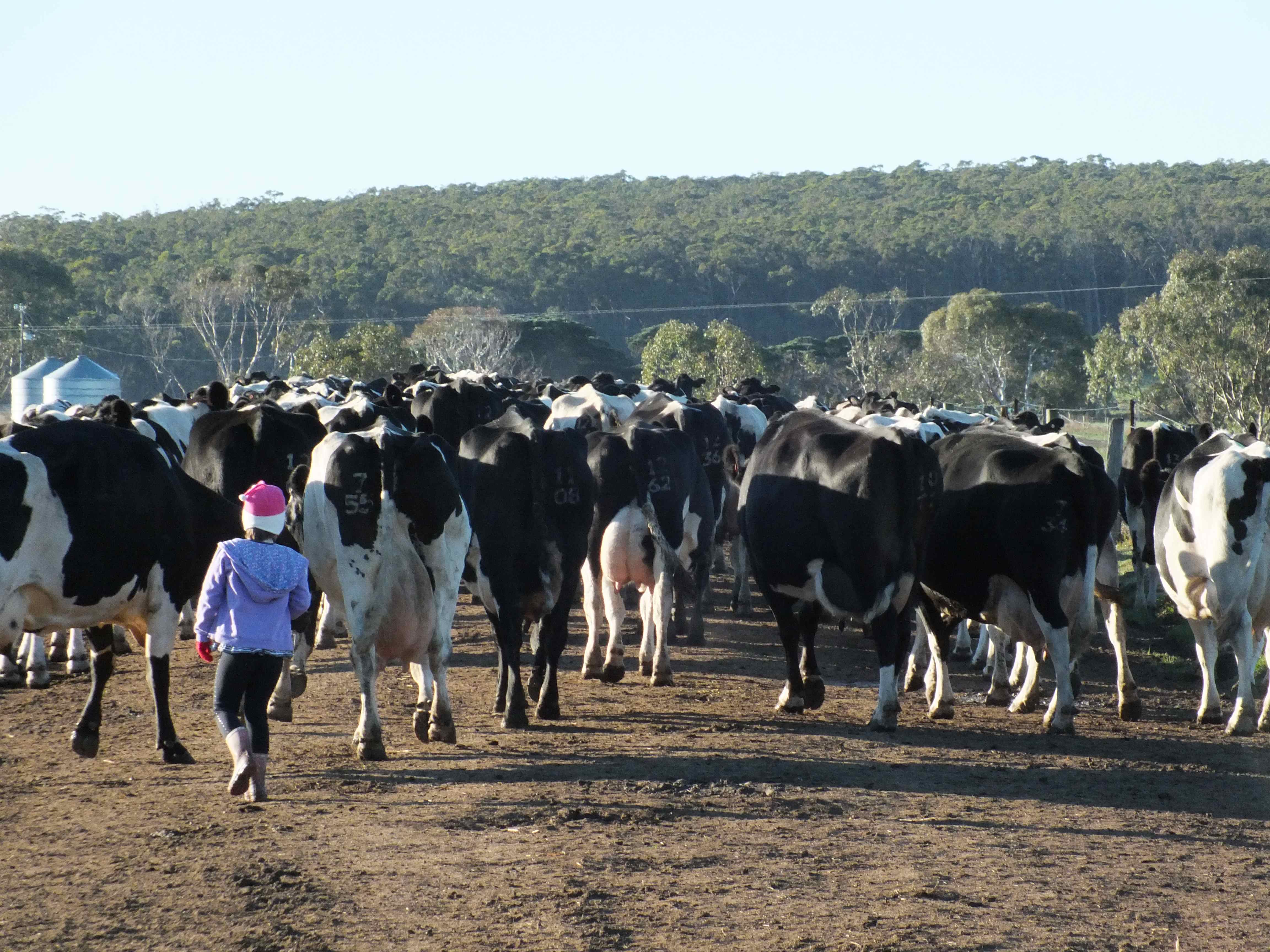
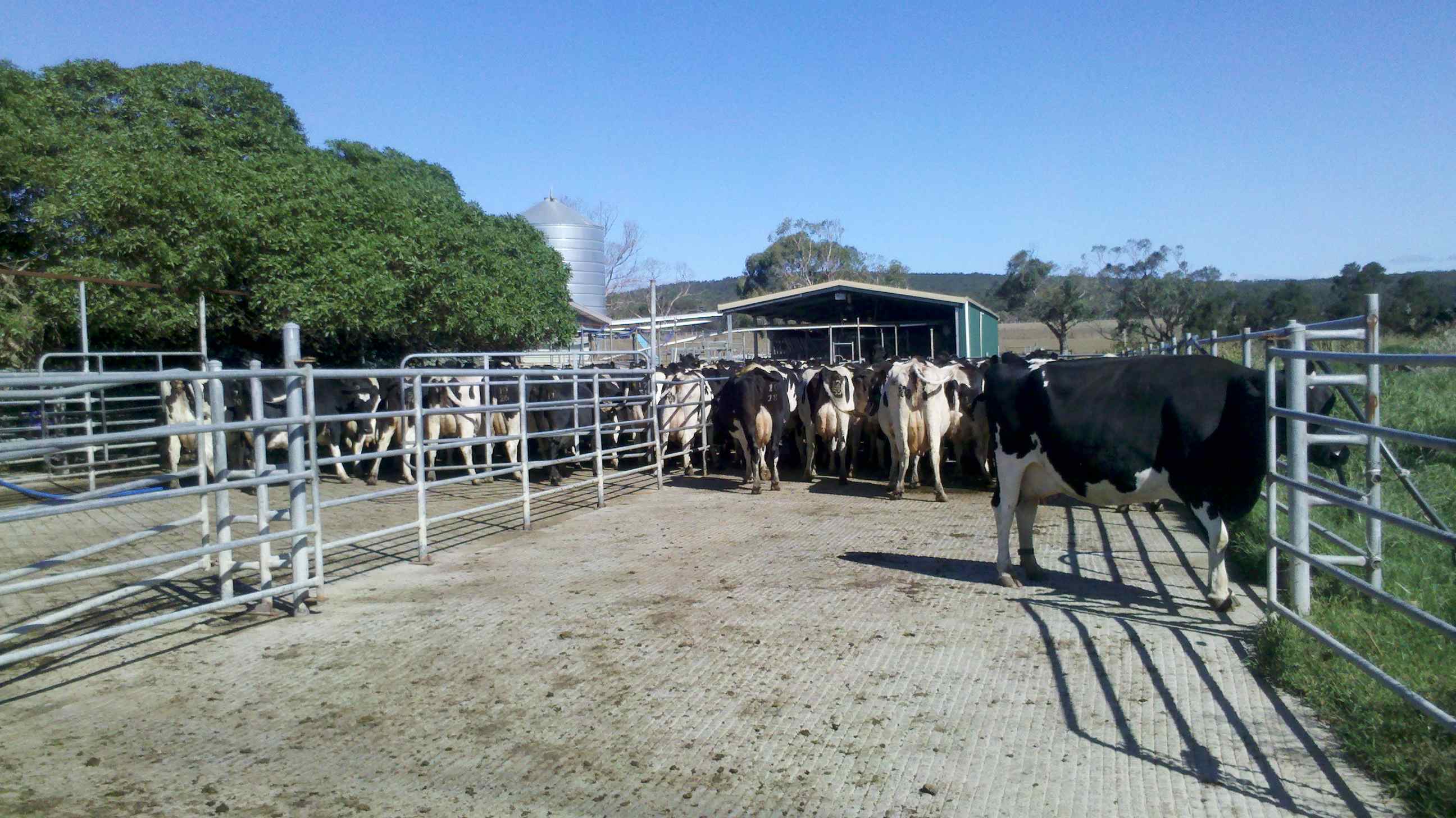
Cows having a sleep in

We’re all individuals: the herd mentality

The Life of Daisy

The Life of Daisy

A quote from the Life of Brian (1979) springs to mind whenever I see our cow ‘Solo’ at the end of the yard:

Brian: Look, you’ve got it all wrong. You don’t need to follow me. You don’t need to follow anybody! You’ve got to think for yourselves! You’re all individuals!
The Crowd: Yes! We’re all individuals!
Brian: You’re all different!
The Crowd: Yes! We’re all different!
Man in crowd: I’m not…

The herd instinct remains strong, even in our dairy cows who’ve been domesticated for thousands of years. It’s so strong that if one cow heads the wrong way during rounding up, we generally don’t worry – she’ll head back to her herd mates anyway.

But every now and then you meet a true individual like Solo. The entire herd faces the dairy in anticipation of breakfast or dinner with the exception of this one member, who, without fail, heads to the north-west corner of the yard and gives everyone else the cold shoulder. She doesn’t want to rush out the gates (as you can see, they’re wide open in the pic above). Instead, Solo likes to poke her nose into the gatepost.

Generally, cows that hang towards the back of the yard are at the bottom of the pecking order, pushed back by more dominant cows eager to get into the shed. That’s not Solo, who’s strong, average-sized for our herd and in her prime. Just a little different, that’s all.

Is autumn really here? No, it’s coming, so cows are going

AutumnLeaf

Golden leaves carpet the farmhouse driveway. Yes, it’s autumn at last but I’m not sure whether the ash are superbly tuned into the seasons or simply too water stressed to hold onto their leaves any longer. The crisp autumnal mornings are yet to arrive – it was already 26 degrees Celsius when Alex and I checked the weather outlook just before six this morning – and the farm is again desperately dry.

But a dairy farmer is always planning ahead. Last weekend we sent a handful of cows on their annual two-month maternity leave, with a dozen or so more to join them in a fortnight.

The summer millet crops are getting their final grazing today and tomorrow so we can prepare for sowing new perennial pastures when the “autumn break” finally arrives. We’re testing the soils of each paddock so we can apply just the right levels of nutrients – enough to maintain fertility without risking leaching into the river or water table.

In anticipation of rain (and mud), our cow tracks are also about to get a makeover to help prevent two of the most troublesome afflictions for dairy cows: lameness and mastitis.

Autumn is the time when dairy farmers lay the foundations of a successful season and it’s strangely exciting. I wonder what will mark this year?

GPS on the farm

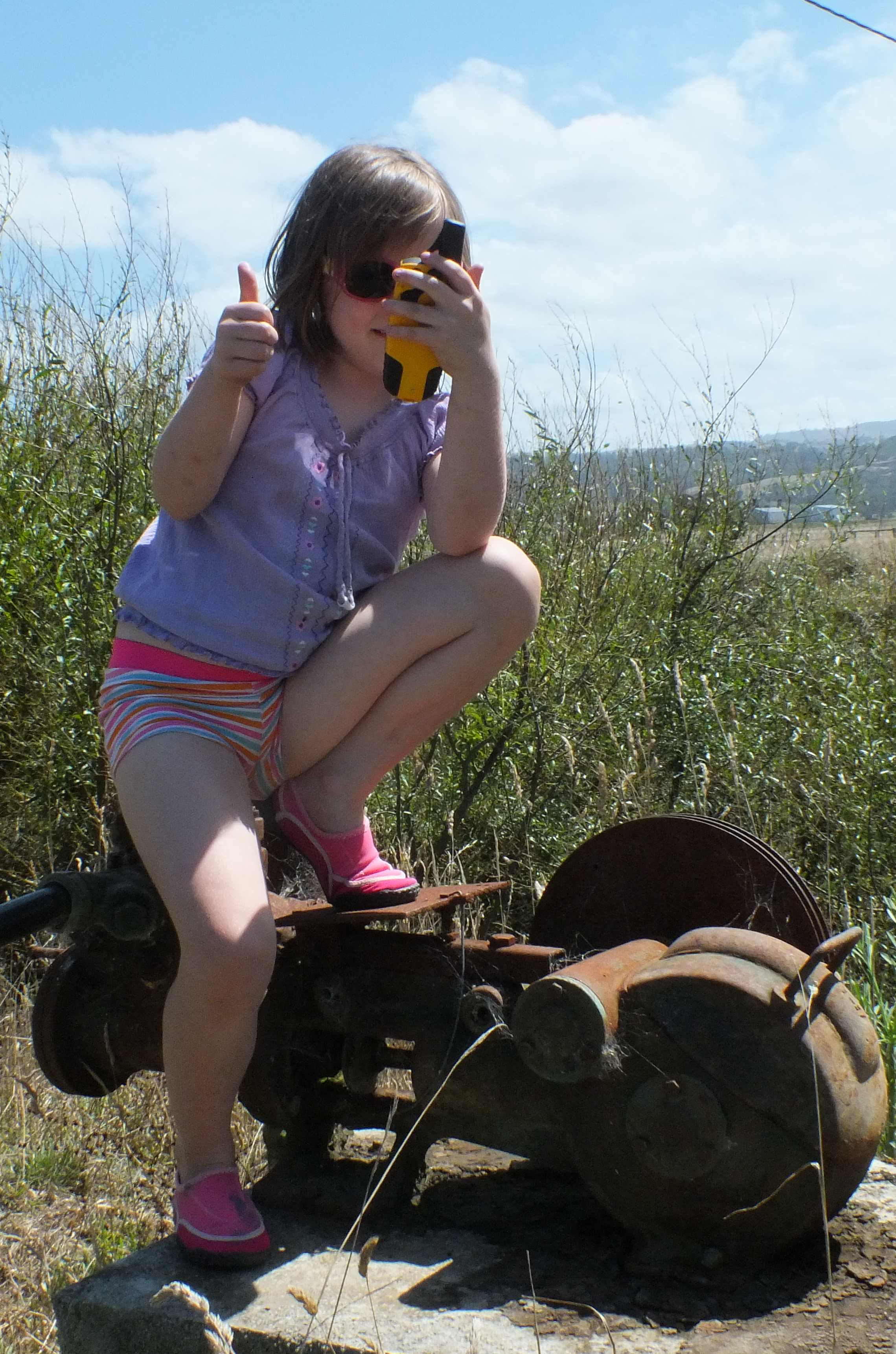
A GPS comes in handy on the farm. We use it to plot farm infrastructure and maps, while contractors use them to fertilise and sow our pastures. Today, it did another very important job: science teacher for Zoe.

"We've got four, no, FIVE satellites!"

“We’ve got four, no FIVE satellites!”

With 250 cows drinking up to 200 litres of water each on a hot day, we need a pump we can rely on, so when the pressure began to fall, we were quick to investigate. Bugger. Faithful old Davey is getting pretty tired. An inch has been worn off his venturi and the jets need replacing. It’s a major overhaul, so we’ve decided to buy a second pump to keep Davey Senior company in semi-retirement.

To make sure Davey Junior is right for the job, it’s important to check how high he needs to suck water out of the river and then how high he needs to push it around the farm, which is where the GPS and its six-year-old pilot came in.

The GPS is magical to my little girl, and why not? It’s covered in buttons and talks to satellites whizzing through space at thousands of kilometres an hour. She was practically an astronaut today!

Well hello, Luscious Legs, how pregnant are we?

luscious legs

Ooh la la!

These shapely legs belong to the beleaguered wearer of “The Shirt”. Apparently, it was too hot to wear long pants or anything waterproof today doing a Big Job.

Anyhow, the Big Job was a special occasion: we got to find out how pregnant we are (or more correctly, how pregnant the cows are). Preg testing qualifies for the title of Big Job because it entails lining up 125 cows a day for an internal examination by the vet. Not painful for the cows but a big change in routine like this always means added excitement.

The good news is that almost all of our 250 milkers have indeed conceived to our irresistible team of bulls. All expectant cows will take a two-month holiday before calving and we will greet the next generation from late April onwards.

A sizeable group of cows will not calve at all in 2013 – I pulled the plug on mating early – and will instead enjoy our company twice a day, seven days a week for the next 18 months.

Hot milk

Remember yesterday’s 41 degree Celsius heat? Now, imagine you were standing outside in it being blasted by 250 1500-watt hair dryers. How do you feel now? Ready to do athletics?

Grazing the lush crop

Icy poles for cows

Believe it or not, each of our dairy cows gives off body heat equivalent to a 1500-watt hair dryer on a hot day. Yet, incredibly, each still made an average of 29 litres of milk for us yesterday. We nursed them through with some very careful planning based on the principles of the Cool Cows program.

  • Wayne got up an hour earlier to milk before the sun’s rays began to sting and milked two hours later than usual. This meant that the cows spent less time in the sun on the concrete yard waiting to be milked.
  • We hosed the whole yard down about 45 minutes before the afternoon milking. It’s amazing how much cooler the yard felt afterwards.
  • The yard sprinklers were activated as the cows came towards the yard. (You remember the fun of dancing through sprinklers on the lawn!)
  • The cows’ diet changed a little for the day. The cows got a little more grain, a little more green crop and a little less hay yesterday. It takes more energy to digest high-fibre foods, which adds to heat stress. Rather than feeding out the hay during the day, Wayne stayed up late and offered the cows a “night-cap” in the relative cool of the evening.
  • We chose the coolest paddock on the farm, ringed by the deep shade of mature willow trees.
  • On a hot day, dairy cows can slurp up a staggering 250 litres each. Our extra-large troughs ensured they had plenty of fresh, cool water to drink when they chose to emerge from their hideouts.

Poor girls. According to the Cool Cows program leader, Dr Steve Little, dairy cows start to seek out shade when it gets to about 25 degrees C. I think the farm’s cows, dogs and humans all felt the need to go into summer hibernation yesterday.

How a girl becomes a cow-girl

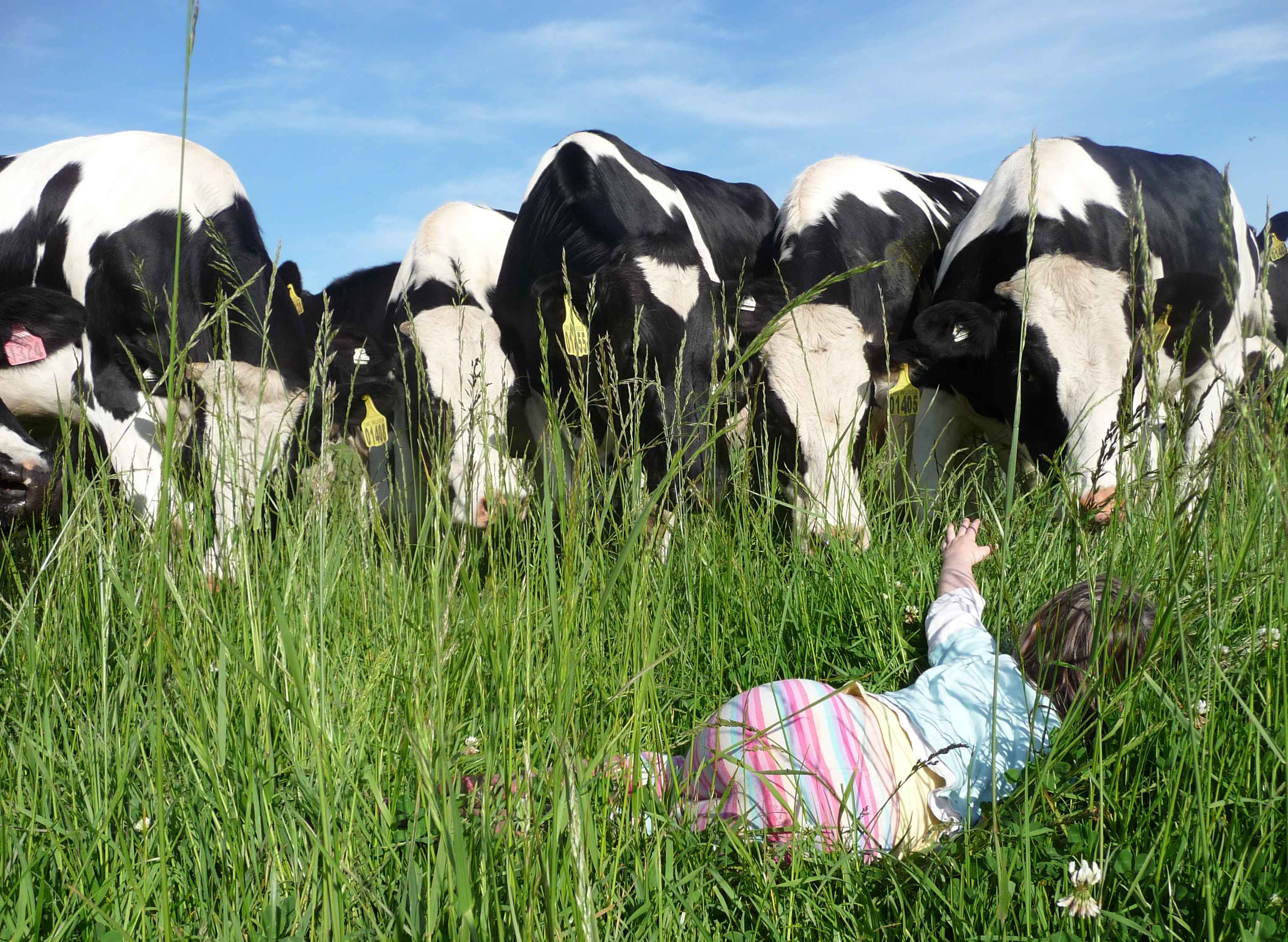
Zoe gets cows. She really undersands them but there’s still lots to learn and, early this morning, we had a fun little lesson with the “teenagers” on the farm.

Step one is to lie down nice and still in the grass. Step two is to stay still (and quiet). Step three is to wait a little bit longer.

Heifers and Zoe reach out

“You can trust me”

If you’re patient enough, they’ll come. Snuffling, chewing their cud and nudging forward little by little with unbridled curiosity. It’s not exactly “Gorillas in the Mist” but it is an awesome, humbling experience and everybody should try it.

The working dog from St Albans

Patch Rounds Up The Yearlings

I was born to do this

Patch runs rings around them - literally.

Just look at his face. When Wayne collected Patch from suburban St Albans this Easter, it was clear he was a working dog breed (or three) but I doubt his rescuers from Homeless Hounds would have envisaged this. Only problem is, he likes it too much.

It took me nearly half an hour to retrieve him from the yearling paddock and when he decided to round up Zoe yesterday, I decided something had to be done, and fast. You must not, cannot let a working dog get out of control, no matter what.

I called Paul Macphail of Beloka Kelpies for help and, 20 minutes later, Zoe, Alex, Patch and I were in training at his school in Welshpool. Paul quickly summed Patch up as a tad “arrogant” and swiftly put him in his place. I have not been a tough enough boss.

A litte while later, Patch, who had never seen a sheep before, was in the pen working a mob and then in the paddock masterfully bringing another (albeit rather tame) mob back to Paul. Just like Babe, really. Pig dog turns hero. “He’s a natural,” says the laconic Paul.

I am so impressed, I will be back at Paul’s with Patch in a week to see if I he will reach his calling as a semi-automatic dairy cow rounding up dog with the speed of a cheetah and the gentleness of a dove.

It’s not all black and white at the Royal Melbourne Dairy Show

There hasn’t been a lot of activity on the Milk Maid Marian dairy blog of late because we’ve taken a family mini-break centred around the Royal Melbourne Dairy Show. Held a week or so before the big public Royal Melbourne Show, this event is the opportunity for dairy breeders to strut their stuff.

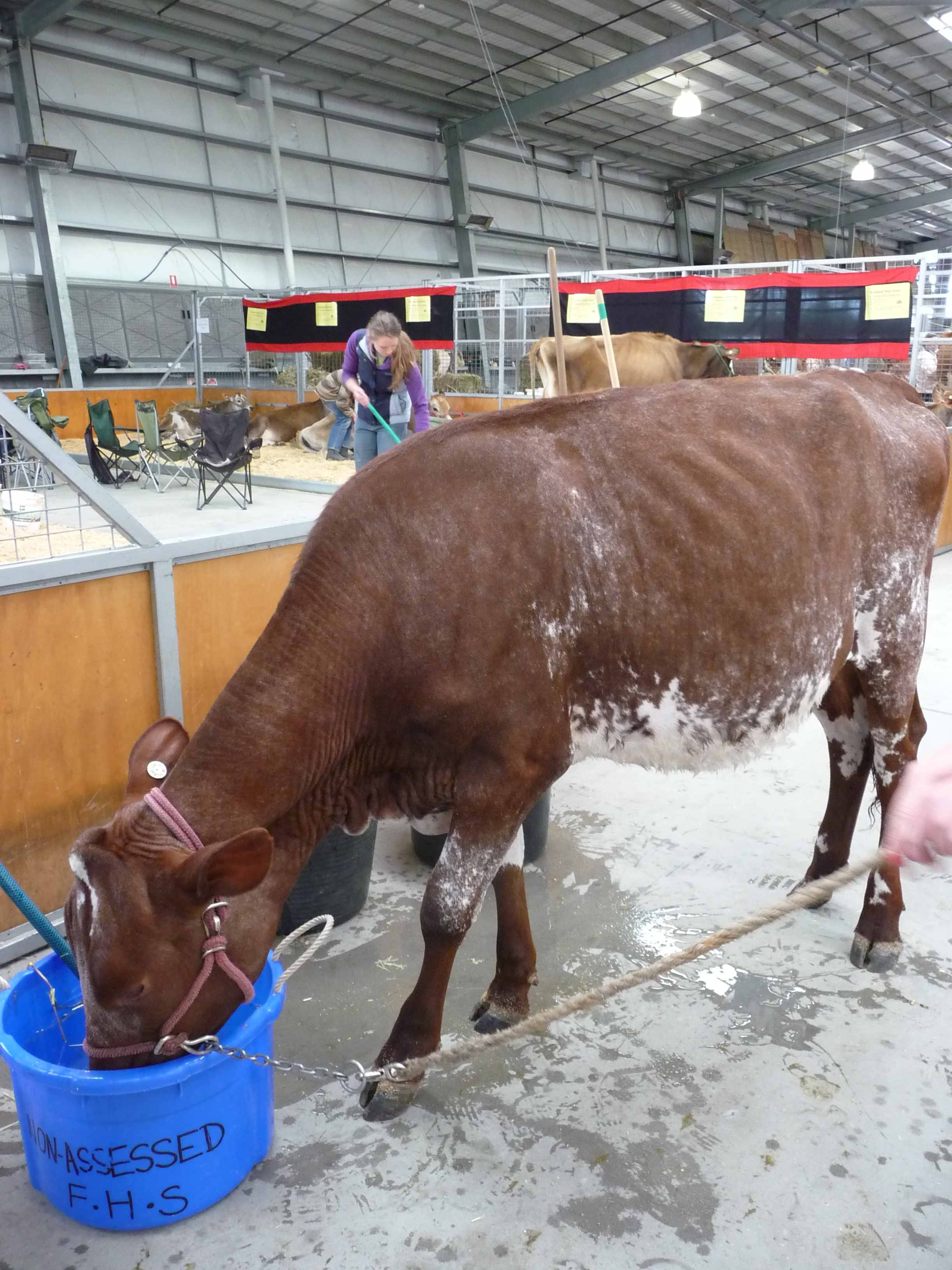
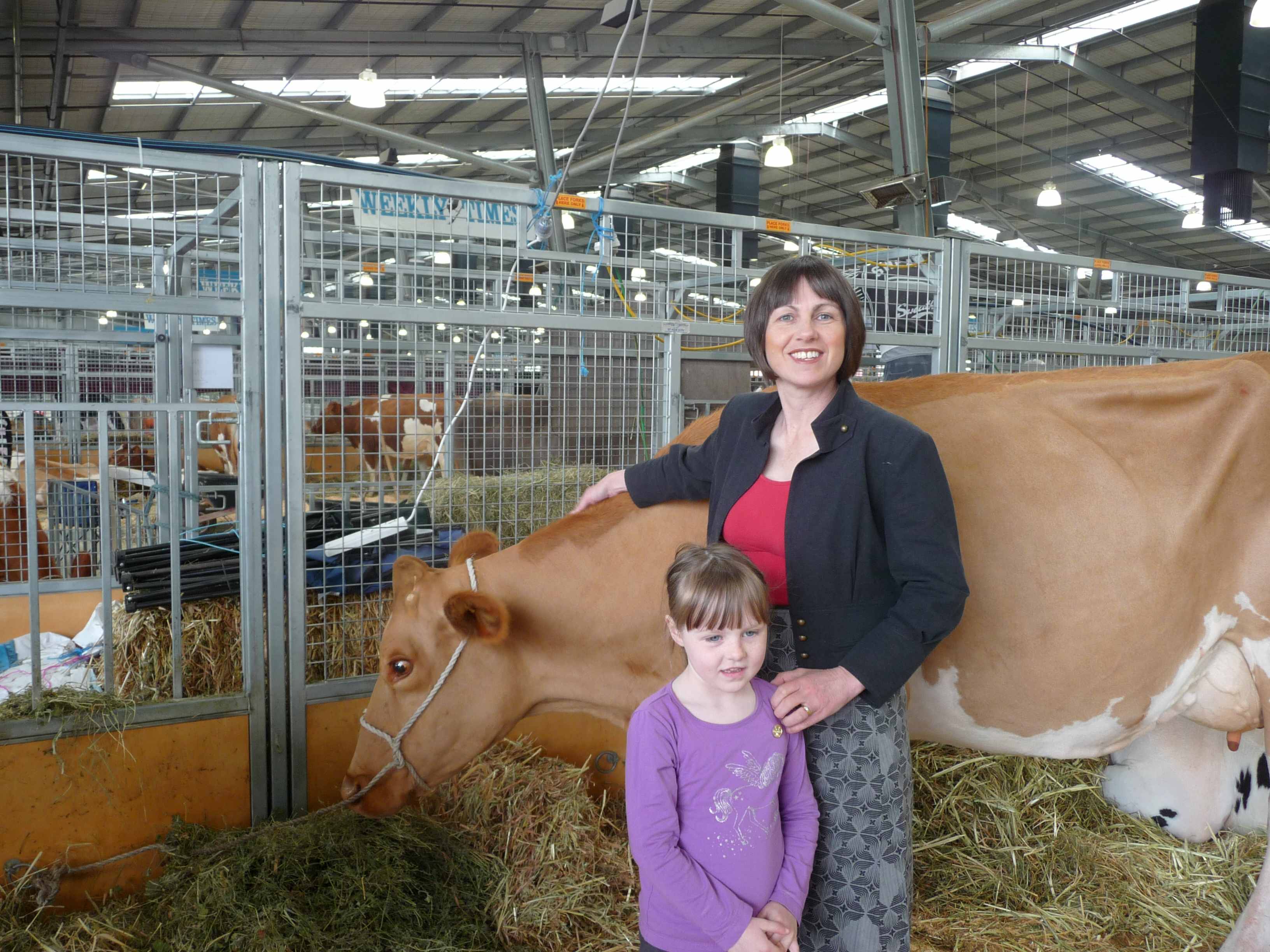
What struck us as “commercial” dairy farmers rather than showies was the variety of cows and the sheer size of the Holsteins. Just take a look at this cow!

Huge Holstein cow

The guy handling the cow was not a midget

We also fell in love with a few gorgeous cows.

Illawarra cow

Young Illawarra cow – Australia’s own dairy breed

Guernsey cow

A gentle Guernsey called “Bling”

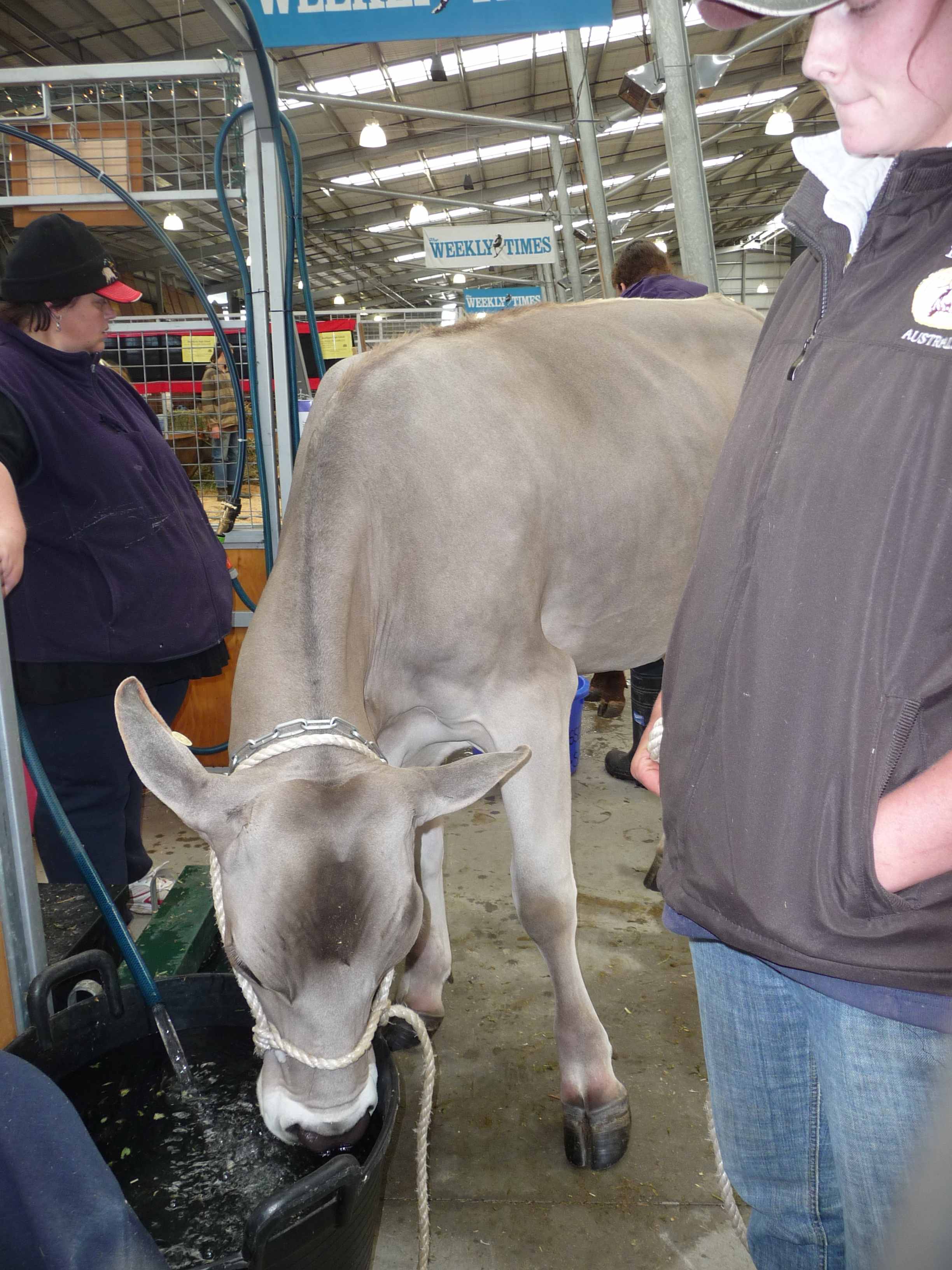
Brown Swiss cow

Beautiful Brown Swiss

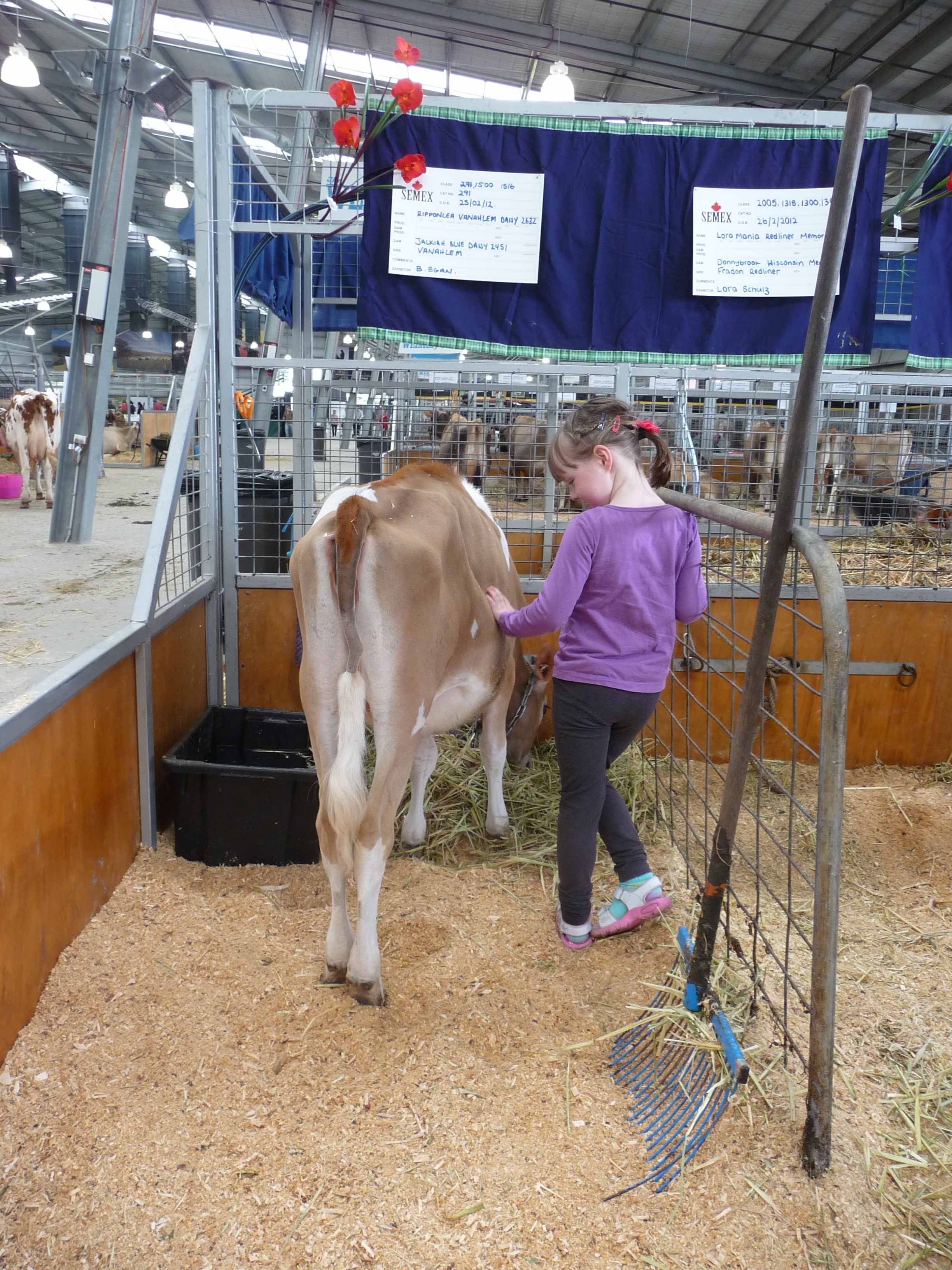
Jersey Heifer

Zoe with a dear little Jersey yearling

It’s a great reminder that even though 1.4 million of Australia’s 1.7 million dairy cows are Holsteins, there’s a whole kaleidoscope of cows out there.

Do you have the stomach to adopt a heifer?

I was amazed by Mike’s comment suggesting an “adopt a heifer” program following my last post about the impact of falling milk prices on my dairy cows and even more amazed by the responses it generated.

One of my fellow dairy farmers, Jessa, has had the same thought but a few reservations have held her back. The biggie is: “What if the heifer dies?”.

To that, I’d add: “What if the heifer turns out to be infertile, bad feet that send her lame often or gets intractable mastitis?”. The reality is that, ordinarily, she’d be sent to market. There is no ‘fat’ in the price farmers are paid for their milk and, consequently, no room for infirm passengers on farm. How would you feel if your adopted heifer had to go? Especially if I posted a picture of her big brown eyes.

The scenario gets at the heart of what it is to be a farmer. We love animals. But we can only look after them properly if we are profitable farmers and that means some animals are created more equal than others (with apologies to Mr Orwell).

Farm animals are cherished but not in the same way as pets – mostly. I still remember the day 30 years ago when my father sent Queen Bessie to market. For a decade or more, Queen Bessie stood regally at the head of the dairy entrance demanding scratches until she simply became too old to thrive. Dad was shattered for weeks but, nevertheless, she was sold.

It’s only with a philosopher’s eye for the big picture that farmers manage the balancing act of love, business and the welfare of the herd. Could you stomach it or is that where the “adopt a heifer” experiment would come unstuck?