I bought it but I don’t want to use it

Blitz

The circle of life in stainless steel

I paid handsomely for this German-engineered (whoops, I mean Danish) tool but I hate it. The charmingly-named Blitz Gun is used specifically for killing cattle. Importantly, it’s not a typical gun and operators don’t need a shooter’s licence. The Blitz arrived this afternoon by courier and I’ve only just opened it gingerly for a closer look.

Until now, we’d relied on professionals to euthanase our cows. Two knackery men serviced our area and the waiting time for suffering animals was brief but after one sold his business, it stretched to a single daily round. That meant the prospect of cows struggling through icy nights. That, I believe, is not good enough.

As farmers, we cannot stop the circle of life from turning but we can do our best to look after our animals the whole way through.


A taste of my own medicine

Last night, I had a shocking taste of my own medicine. The farm, you see, is almost entirely fenced with single strand electric wires.

These “hot wires” are kinder than barbs, low-cost and flexible. And while they are also less vulnerable to floods, the trio we had recently left our fences in a state of disarray. I have snipped the connections to all non-essential sections in order to keep the power up to the core and am going around fixing paddock by paddock ahead of the cows.

At the same time, Alex at 13 months is getting heavy. With 12 kgs of wriggling toddler on my chest, fencing work is becoming something of a challenge, so I decided to trial him on my back.

I ended up with an extra burden of mother guilt. Suffice to say, I am not used to crawling under electric fences with an extra load “up top”. Zap!

That horrid sensation of pulsing muscles hit me just as I crept tentatively under a fence. It must have connected with Alex on the carrier but he didn’t seem to notice at all, as he carried on with his babbling, happy as a lark while mum staggered to her feet.

Glad none of the cows were watching!

Gracious visitor to the farm

It’s an understatement to call it wet here at the moment. We have a mini-flood across the river flats and the dam is overflowing so last night I started up the siphon again and look who I saw!

White bellied sea eagle

Her Majesty, the White Bellied Sea Eagle, seated on her (or is that “his”?) throne.

Apologies for the photo quality – it was getting dark and the eagle was right in the centre of the dam, which is a big ask of my farm-going point and shoot! To appreciate its majesty, take a look at these photos of the white bellied sea eagle.

I was very lucky indeed to see it. According to a DPI fact sheet, the eagle is very rare here:

The total Victorian population is thought to be extremely low: possibly only 100 breeding pairs survive (R. Bilney pers. comm.). Distribution records indicate two population concentrations – approximately 25 pairs around the
Gippsland Lakes and 25 pairs around Corner Inlet – and a further 50 pairs scattered throughout the rest of Victoria.

The bird is about the size of a small wedgetail, with a wingspan of up to 2.2 metres. Like the wedgie, this one was harassed by smaller birds as she literally took off into the sunset.

Sea Eagle in Flight

Off into the blue yonder

I’m with Hugh on this one: it’s not fun to kill

I am no stranger to death – every year, just as new calves are born, some old cows must pass away. I am, by necessity, philosophical about it but, still, every loss is felt. Nor can I eat an animal I have known, although I am keenly aware of my own emotional hypocrisy. One thing I am clear about, however, is that I will never kill for fun.

I don’t understand duck season. If I were to fire endless shots at stampeding cows from a hundred feet or more away, I would be rightly condemned for animal cruelty. Why is it so different with birds?

Ducks

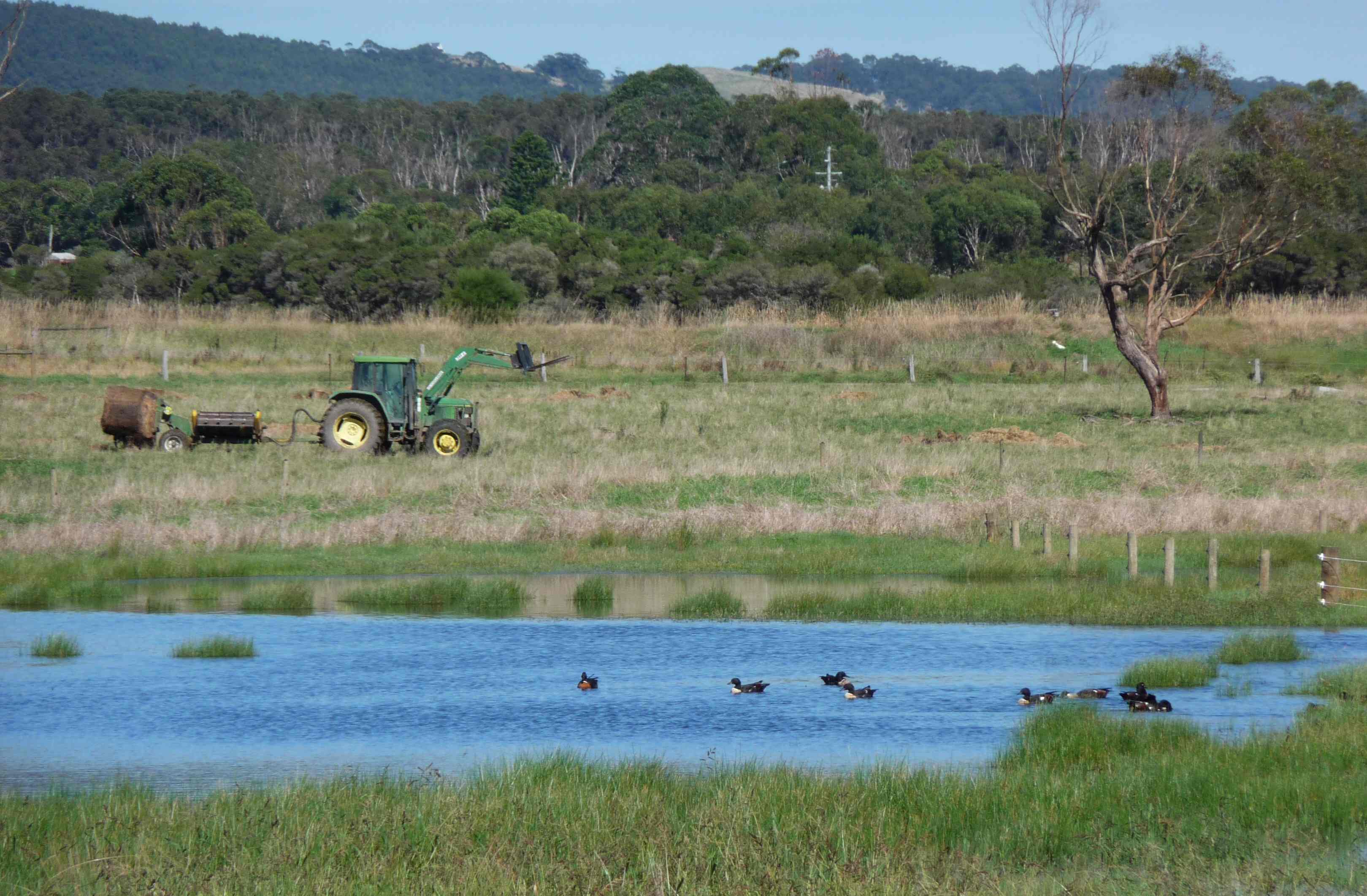
Australian Shelducks

This Spring, we’ll be creating another permanent sanctuary for our bird life on the farm with the assistance of the Shire of Wellington, which has provided a grant for the fencing and trees (thanks Andrew!). This paddock will be broken into three pieces: the wet centre will belong to the birds while the higher, drier sections will be amalgamated with neighboring paddocks.

What farm fanatics do

Paddock Book

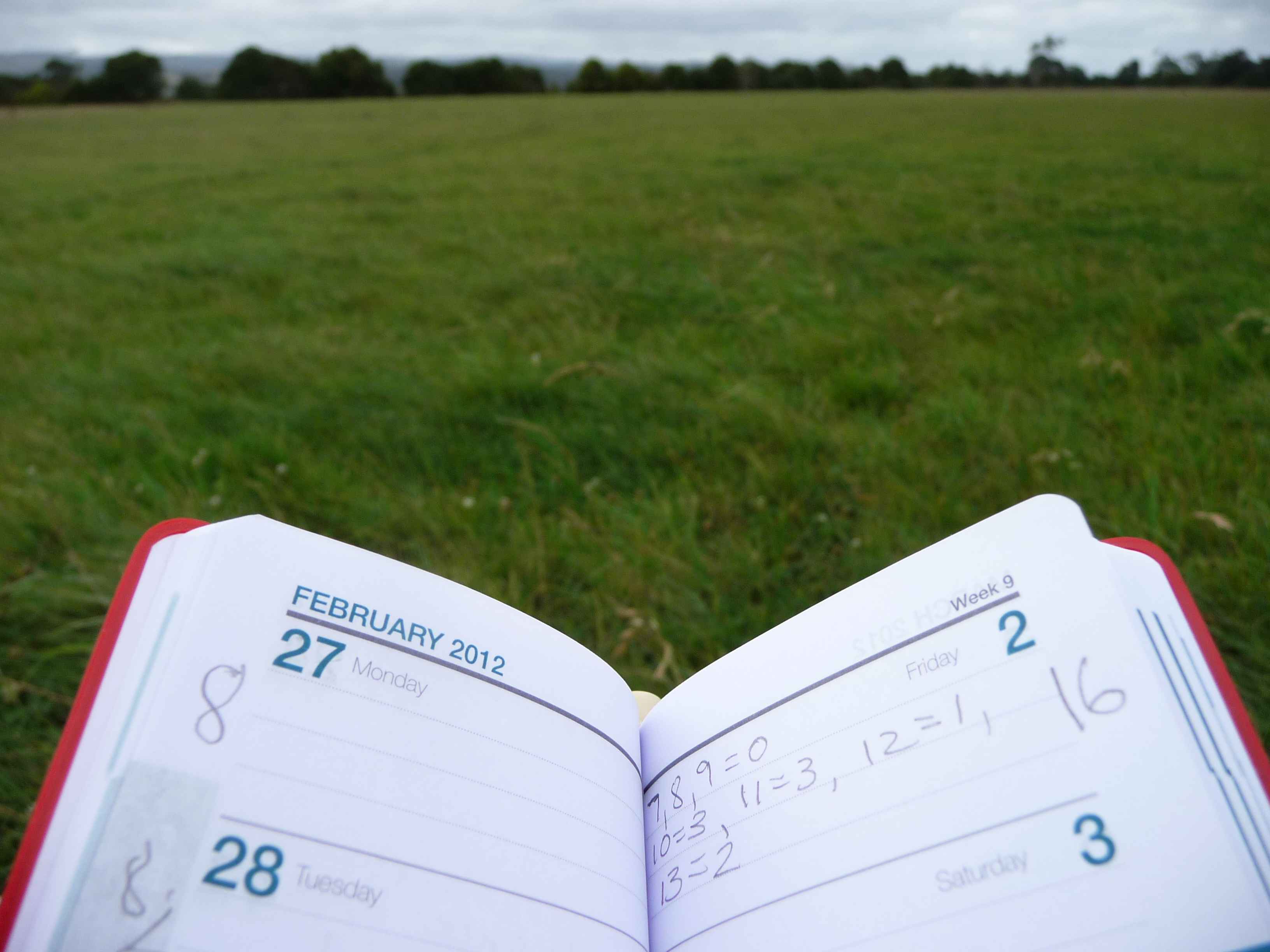
My little red book is indispensable

If ever you see a farmer crawling around in the grass, it’s not because she’s convinced she’s a cow. She’s a fanatical leaf counter. One of my weekly rituals is a “farm tour”. I stop at almost every paddock with my little red (easier to spot in the grass than the classic black) book and get counting.

It’s the best way I can be sure there’s just the right amount of grass ahead of the cows and answer the questions of our farm consultant when he visits (see you tomorrow, Matt!).

This little book is also whipped out every time I notice a cow who needs treatment, to record the specs of a punctured tyre or even a BIG IDEA.

I should be able to remember all this stuff but with two littlies, a farm and an every-now-and-then desk job, life flashes by too quickly these days. On second thoughts, if you do see me crawling around, nose to the grass, I could just have gone crazy!

Not just an old tree

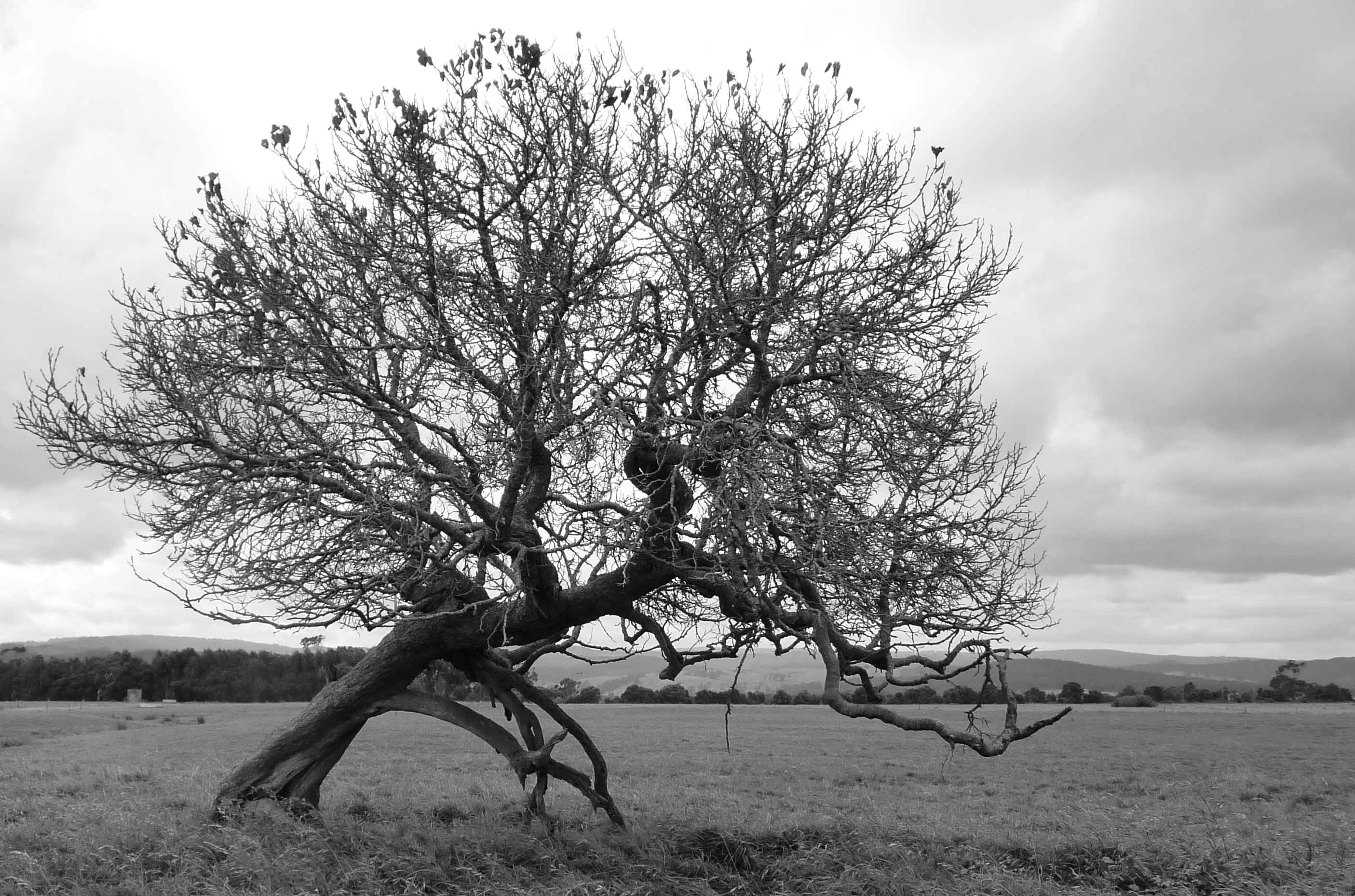
With hands and faces stained purple, my brother and I perched in this old tree every summer of my childhood. The exquisite mulberries were just reward for a hard day’s labour in the scorching heat filling sacks with buttery yellow ragwort flowers.

I looked forward to hoisting Zoe up that very same tree this year but the tradition will stop with me.

Old mulberry

She has at last succumbed

The tree has writhed across the landscape ever since I can remember but now she has a hideous crack right up the base of her trunk that must have made life not just tough but impossible. Normally, she would be covered in heart-shaped leaves hiding almost black fruit in early March. Instead, just a handful of leaves remain even though thousands of buds seem poised to burst open with new life.

She was the last productive member of an ancient orchard Dad told me was planted by the farm’s settlers before they realised it was an island on a floodplain. The house was later built a few hundred yards away, reached only by the worst floods. She could well be 100 years old.

Her death brings the cycle of life into stark focus. My Dad and brother are gone; Zoe and Alex walk beside me these days.  When Zoe turned one, we planted a mulberry tree in the garden to celebrate. It has borne its first fruit this year.

Early morning greeting as the farmer tends her animals

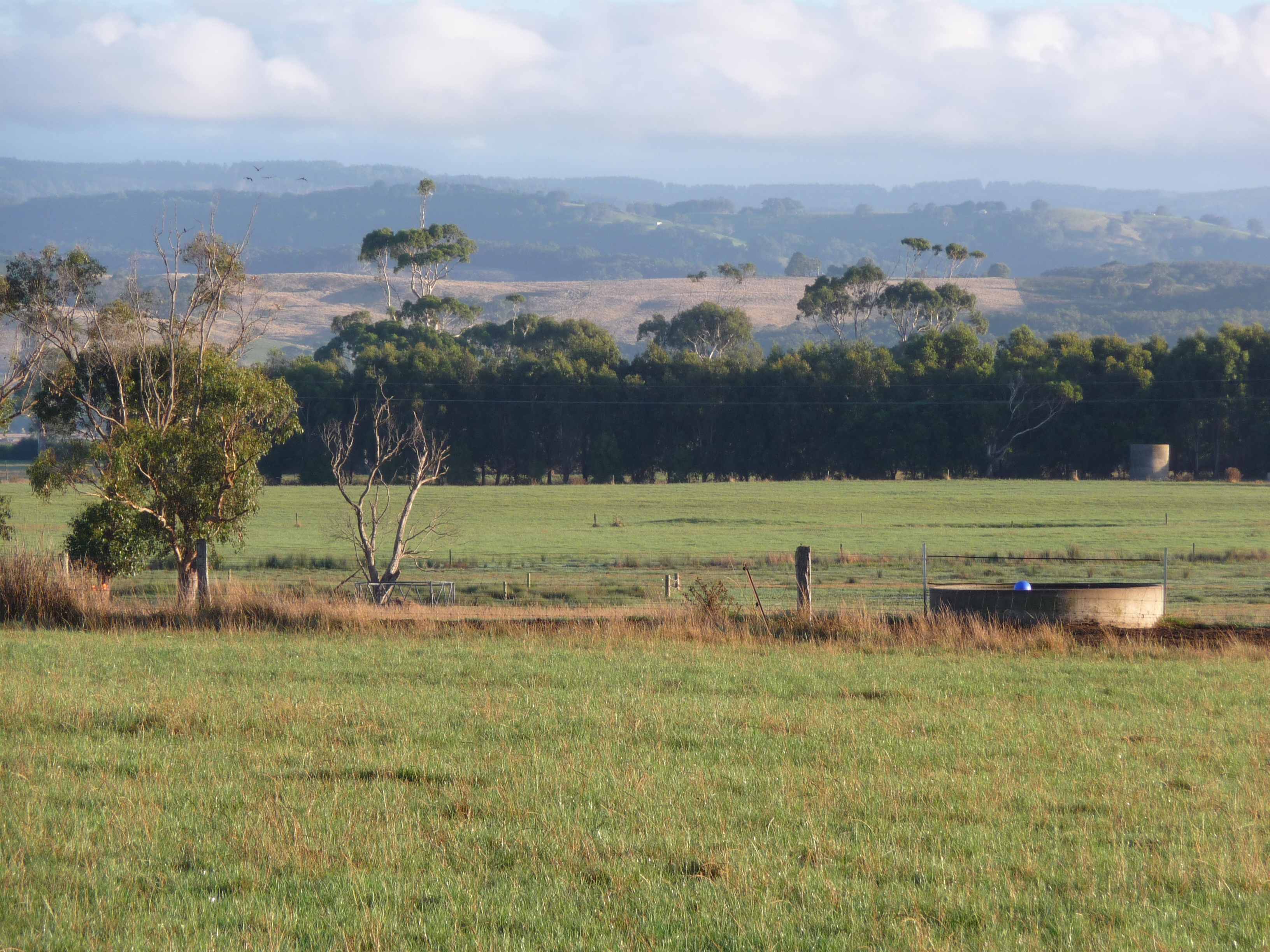
With a scorching 36 degrees Celsius forecast today, Zoe and I decided to get out on the farm nice and early. Amazingly for mid summer, it still looks lovely and green.

Cool morning

Cool before we cook

One of the first things we did was check on a calf in the sick bay. Dubbed “Pinky” by Zoe, this calf is about the same age as my own baby Alex – eight months – and is thriving but had an umbilical hernia that vet Pete operated on last week. We are spraying her with a pink disinfectant and fly repellant to keep her wound nice but it looks horribly inflamed as a result. She’s camping in a small paddock by the shed with a friend to minimise the amount of running around she does for the next week or so.

Pinky

Pinky recovers in the company of a friend

Zoe and I also stopped to top up Charlie and Lola’s pantry and say good morning to our semi-nocturnal Maremma guardians.

Charlie the sleepy Maremma

Good morning sleepy head

But it was a far less cuddly creature that greeted me when I went to check the milk chart.

Chart

Aaaargh...look who came out to greet me!

Yikes! Got to take the good with the bad!

I’m a greedy parent

I’m something of a greedy parent. I want my children to be strong but gentle, thoughtful yet bold and big picture thinkers who care about the small stuff (maybe Zoe will one day point her shrink to this post as evidence).

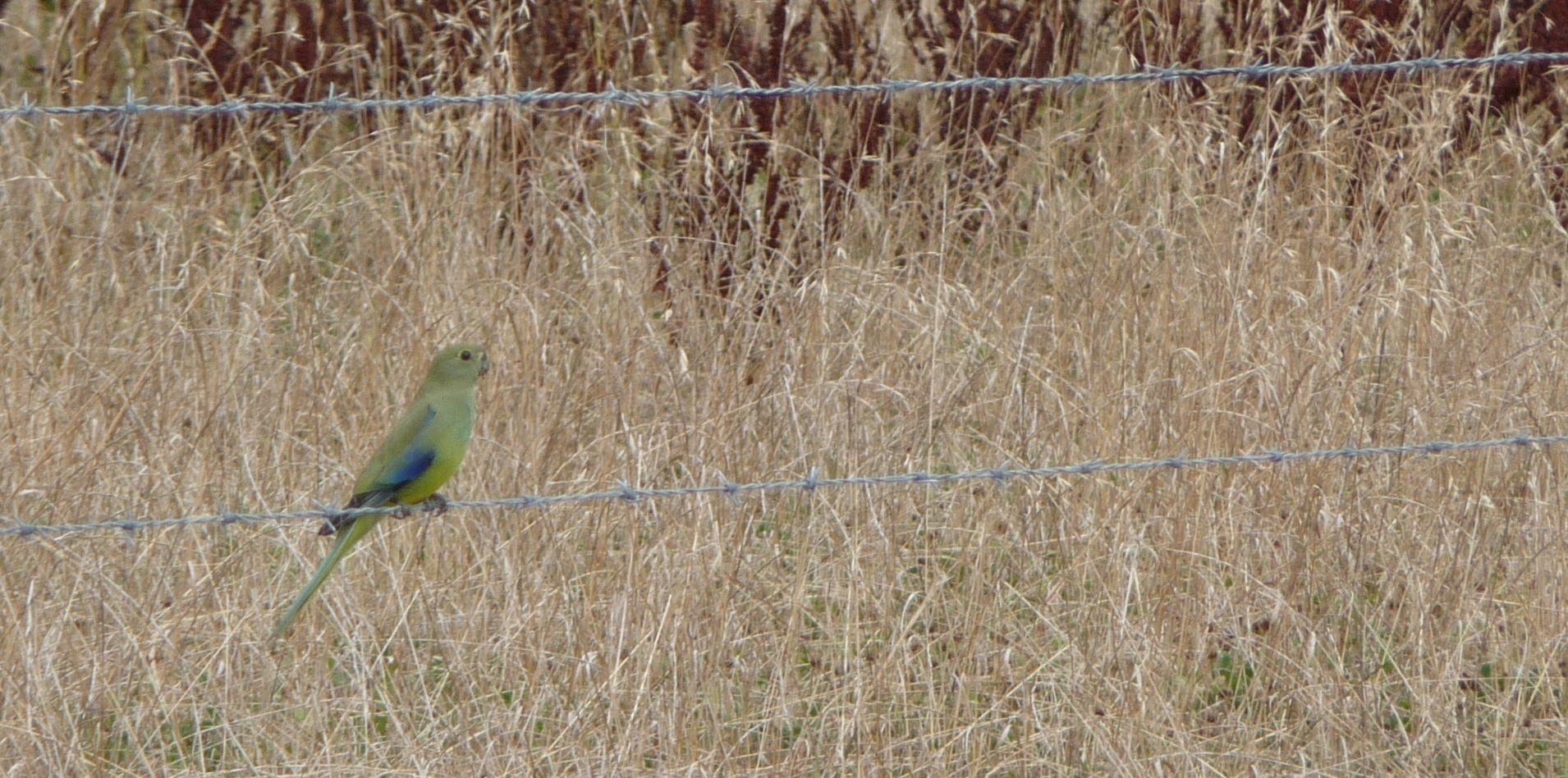
Blue winged parrot

The critically endangered orange-bellied parrot?

I’m a fairly excitable type and nearly crashed into a fence post when I saw this little bird and its mate on the farm because I had only that morning read this description of just such a bird by the Parrot Society:

“Australia’s Orange-bellied Parrot can be ranked with the Giant Panda, Whooping Crane and Siberian Tiger as amongst the rarest and most endangered of the Wildlife. Only 100 to 200 individuals still exist.”

I managed to snap a pic before the timid pair flitted away and breathlessly told the Little Farmer how lucky we were to see it. As an idealistic 20-something, I even trudged through the mangroves down near Wilson’s Prom in a fruitless search back in the 90s.

Having turned to Pizzey’s Field Guide to the Birds of Australia though, my excitement evaporated. I think instead, we have slightly atypical blue-winged parrots. Lovely and thankfully, in good numbers.

Just as Berenson’s Father Bear’s stuff-ups were the makings of a great Baby Bear, though, I hope my enthusiasm counts for something in the parenting stakes.

Have Australian dairy farmers given up?

I know things have gotten tough for Australian dairy farmers but I’d hate to think of us as quitters. Still, as the Dairy Levy Poll roadshow tours the country, it seems a real possibility that in just a few weeks we will try to vote ourselves out of existence.

In just a few weeks, Australia’s dairy farmers will vote whether to increase the amount we pay in levies to research and development body, Dairy Australia, or have it abolished. I hate seeing any deduction from my milk cheque as much as the next farmer (believe me!) but I also know that I would not be farming here today without that Dairy Australia levy.

Twenty years ago, our farm looked greener but not all that different from the beef farm next door. Dad was more interested in his role as local councillor and, later, dancer and bushwalking pursuits than in making every blade of grass count. And he could afford to. Farming was more profitable then and his debt level was low.

One divorce and a drought later, things changed. Faced with a suddenly massive monthly interest repayment, it’s fair to say Dad’s initial response was to panic. He lost two stone off his already very slender frame, considered selling the farm and then sought help. His decision to enrol in a Dairy Australia levy funded Target 10 course and to seek the advice of farm consultant, John Mulvany, saved the farm.

Productivity soared as a rotational grazing system offered cows fresh, high quality grass every day. Dad also confessed a new enthusiasm for farming. After 50 years on the job, he was learning again. He then embarked on just about every DA funded course he could find: Feeding Dairy Cows, Fertilising Dairy Pastures, Feeding Pastures For Profit, Countdown Down Under and Cow Time are just some of the handbooks he left behind.

Today, my interest repayments are even higher than Dad’s and farm margins are even tighter but with the latest know-how, I will make it.

Australian dairy farmers have become some of the lowest paid in the world. That stinks but it’s the reality. If we are going to survive, we need to be smarter than the rest. And if we don’t vote for investment in the very research that keeps us going, can we really expect the Australian taxpayer to help? I think not.

If you want to send a message to the bureaucrats, ring them up and tell them you’re not happy. I do. But I’ll never tell them I’ve given up and that’s why I will vote yes.

The poison farm

The Poison Garden is an oddly captivating blog on many weird and wonderful poisonous plants. Since spending some time there, I’ve realised our dairy yard is ringed by hemlock – the deadly plant Socrates drank as his death sentence.

I was thrilled when The Poison Garden’s author, John Robertson, agreed to write this post for the Milk Maid Marian.

The only type of question I dread about poisonous plants begins ‘Should I remove…?’ You can’t say that it is fine to leave the plant(s) alone because that’s sure to mean the questioner’s dog ends up dead within a few weeks but it has to be remembered that, in the majority of cases, the plant concerned has been growing in gardens, parks or open country for hundreds of years and rarely, if ever, caused a problem.

But what about farmland? Loss of a beloved pet may be heart-rending but loss of a herd of cattle because of some unrecognised risk could bring financial ruin on top of the emotional upset.

Instances of poisoning due to plants are, thankfully, rare but they do happen and they do happen more with farm animals than anything else. Just this week, I saw this (pdf) report of an incident in the Republic of Ireland where a herd of cattle fell ill, and some died, three weeks after being turned out to a new pasture. Thorough investigations proved that the cause was ensiled ragwort, Jacobaea vulgaris, in the feed the animals had been given prior to being let out but it would have been natural to assume that there must have been something in that new pasture since the cattle showed no signs of illness prior to their release.

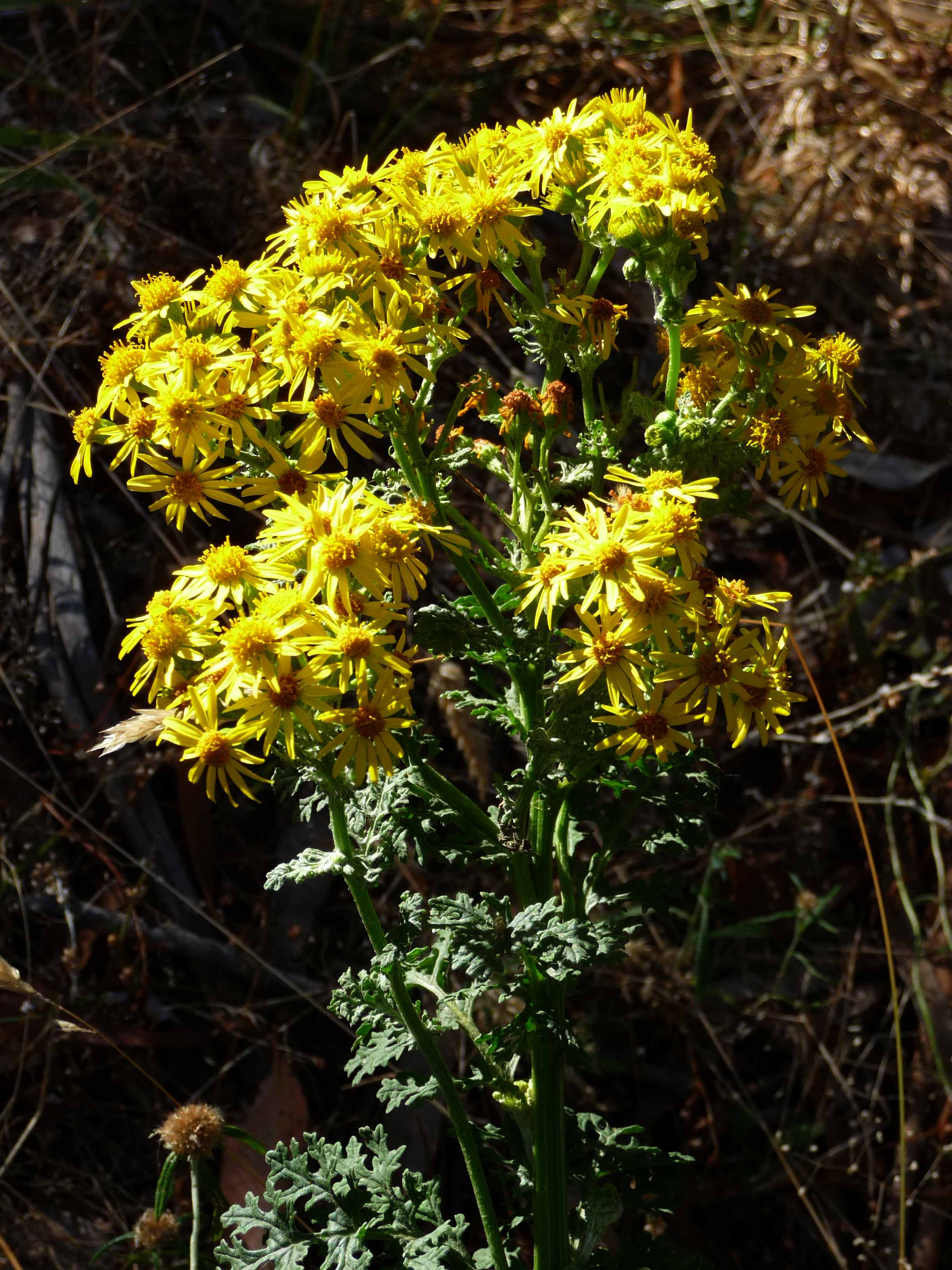
Ragwort

The buttery yellow flowers of ragwort

I mentioned this case to Esther Hegt who runs the website ‘Ragwort, myths and facts’ and she replied by telling me about a case some years ago in the Netherlands where 250 cattle suffered ragwort poisoning after being fed hay that was badly contaminated with ragwort.

So what should a farmer do? Well, as I said at the start these poisonous plants have been around for a very long time and only rarely do harm. That may be because the taste deters consumption in normal times or it may be that the animal has evolved not to be attracted to a particular plant. Especially in this age where bio-diversity is king and farmers are expected to protect the environment and feed people, it is not possible to tour every inch of land and remove anything that just might cause problems.

What is important is to be on the lookout for the unusual. The recent poisoning of a Chinese chef in Canberra occurred when an exceptional spell of weather produced fruiting bodies on the Amanita phalloides, death cap mushroom, at the ‘wrong’ time of year and past incidents involving cattle often result from something different happening. A very dry spell early in the spring leading to the ground shrinking and exposing the roots of Oenanthe crocata, hemlock water dropwort, resulted in deaths in cattle though the same pasture had been used for many years with no trouble.

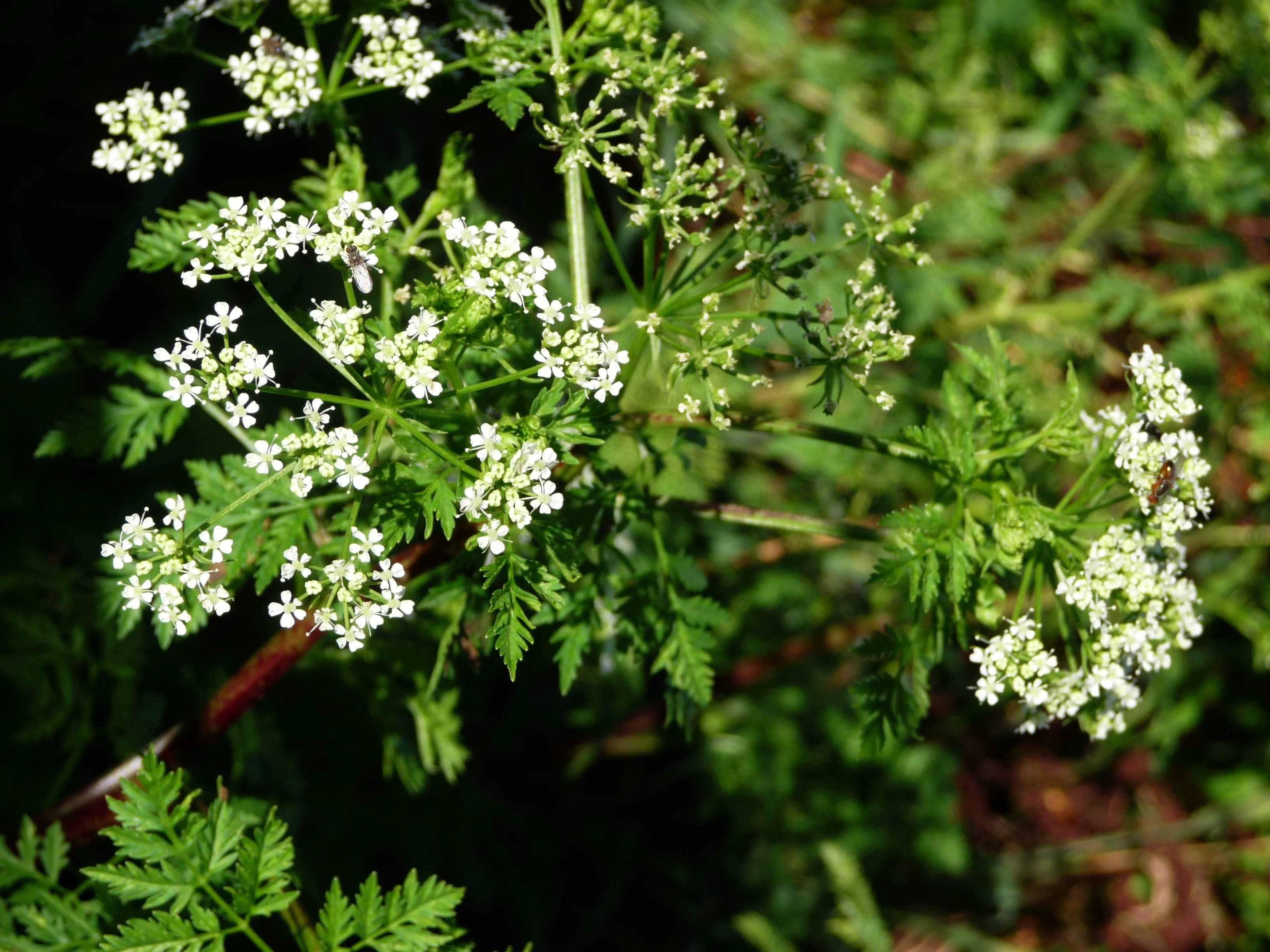
Hemlock

The pretty yet deadly hemlock rings Milk Maid Marian's dairy

Of course, the other thing that can lead to poisoning incidents is lack of knowledge. A number of incidents have occurred when people didn’t realise that Taxus baccata, yew, or Nerium oleander, oleander, were toxic and thought they were being helpful by feeding clippings from these plants to farm, or zoo, animals.

Something different is mostly the cause of one of these rare incidents so it is worth saying that there is something different about modern farming where, perhaps, not enough consideration is being given to possible plant poisonings.

Whether as a commercial venture or in order to be more transparent about farming practices, more farmers are inviting the public onto their farms. It is almost certainly worth spending a couple of minutes making sure those visitors understand why they shouldn’t feed treats, of any sort, to any of the animals they will meet during their visit.