Jonas on what ethical farming means to consumers

Tammi Jonas, who is writing her PhD on the role of food in a cosmopolitan, sustainable society, always has some wonderful insights into the expectations of farmers and consumers, so I was thrilled when she agreed to write this guest post for Milk Maid Marian.

In a number of recent discussions amongst farmers and with non-farmers, there has seemed to be an impasse. It goes something like this:

Non-farmer: ‘how can you treat animals that way?’

Farmer: ‘we love our animals, you’re just being misled by activists showing you worst practice’

Non-farmer: ‘I just want you to be kind to the animals while you raise them, and to kill them with as little stress as possible’ [many vegans snort at this point, though not all]

Farmer: ‘we treat our cows/sheep/etc better than our children! They’re pampered! We love them!’

Non-farmer: ‘but you handle them roughly and slaughter bobby calves young after starving them!’

Farmer: ‘what do you want us to do with all the bobby calves? We can’t afford to raise them all? But we send them to a nearby abattoir to minimise stress and time off feed…’

Non-farmer: ‘but the poor calves!’

Non-farmer then in most cases goes and purchases milk from Coles or Woolworths at $1 per litre for private label, or slightly more for ‘branded’ milk. They also consume meat and dairy daily, yet don’t want their meat to come from intensively-raised animals.

Who’s right here? And what’s at stake?

To get to the heart of the matter, I asked a very simple question on the twitterz yesterday:

Non-farmy (meat-eating) types – what do you want from farmers in the raising of the animals you want to eat? Be specific!

Here were the replies:

@trib: animals get more open space than legislated, only necessary drugs, healthy, natural food, capacity to behave naturally, eg herding

@FreeHugsTommy: I want the animals to be living a life as close as possible to the one they would live if they weren’t being farmed.

@hadrian33: Happy animals (allowed to roam and eat what they like best) As stress-less a death as possible

@andrewfaith: Organic, free range, humanely treated. Treat them the way we would like to be treated – with care and respect.

@katgallow: For animals 2 have chance of self-expression. Eg pigs root around, wallow etc as expressn of ‘pighood’

@drnaomi: I would like food animals to have good living conditions, good natural food and to not be traumatized by transport and slaughter.

@th3littleredhen: the best possible quality of life (& death) before it becomes food.

@graceonline: Truly pasture-raised, pasture-fed; no feed or plants with GMO or animal parts or slurry; respectful butchering; clean;

@abbystorey: to know where & how animals are raised. Sounds obvious but pics of happy farmyards & slippery terms like freerange are misleading.

@stillmansays: want cows raised in deep pasture w cow/calf herds & slaughter in pasture to allow cows opp to grieve & re-form herd dynamics

@EmpiricalBaker: reasonable prices, animals raised outdoors in nature, open communication with farmers

Now, my communities of interest on the twitterz are overrepresented with food-focused folks, and many of them are much more conscious of ethical consumption than average. But by and large, what they said they want is roughly what I believe most people would actually say they want in the treatment of farm animals. As @kirsty_l pointed out, it would make one appear and feel ‘not good’ to suggest one doesn’t care about the treatment of animals.

And yet in the supermarket, where the average consumers’ interactions with food take place, people are confronted with the constant appeal of ‘lower prices’. ‘Consumers win!’ ColeWorths and their mates at the Institute of Public Affairs tell us. But do we? Actually, the only winners here are the shareholders and highly paid execs of the duopoly.

The rest of us consumers lose – we lose choice as they label everything with their own brands, further obscuring an already impenetrable barricade of marketing spin – where are the farmers behind these products? The traceability of our food in supermarkets is now so clouded is it any wonder consumers have forgotten that there are real people out on the land working hard so they can purchase their daily bread in bright, shiny packages?

So back to the farmers – the majority of Australian farmers I believe do care for their animals, but they are very aware that they are raising these animals for slaughter. There is an inescapable level of pragmatism when handling animals destined for dinner plates, but that doesn’t mean most farmers are treating their animals in ways consumers wouldn’t like.

For example, the average dairy cow in Australia grazes happily in the paddock, coming in for milking twice a day (some dairies have gone to three, I understand, due to intense financial pressures in this deregulated market). Yes, on most dairies the calves will be taken off the mother between 12 hours and three days after birth, and some 700,000 calves will go to slaughter between 5 and 30 days old. There are concerns about how long these animals are left without feed in their final day of transport and while waiting at the abattoir, just as there are concerns about their handling throughout. We farmers would do well to listen to those concerns and always aim for best, humane practice, as I believe the majority do. And if we know or hear of farmers, drivers or abattoirs who are treating the animals poorly, rather than responding like the Catholic church and remaining silent or being defensive, we should be the loudest voices denouncing their behaviour.

Australia is lucky – this isn’t America – our beef and dairy cattle and sheep are still living out their lives in the full glory of cowness and sheepness (except in the case of ‘grain fed’ cattle, who are kept in feedlots for long periods even in Australia) – I only wish I could say the same for pigs and poultry, the vast majority of whom are raised intensively.

But I’ll finish by returning to consumers. We vote for humane treatment of animals with our dollar. So long as we over-consume meat and dairy while seeking the cheapest prices, we’ll get what we pay for – intensively farmed animals. If everyone decreased their meat and dairy consumption and paid more for it, farmers could afford to give the animals the space we say we want them to have. Next time you’re not sure you can afford that free-range pork, eat a couple of vegetarian dinners and then splash out and eat the tastiest shoulder you’ve ever had. Everyone will be happier, from your taste buds to the farm critters to your grandchildren. Ethics requires all of us.

Betting on a thunderstorm

Cows grazing with mower in distance

Have I made the right decision?

Imagine a game where you wager thousands of dollars on the timing of a spring thunderstorm. Too stupid? Well, that’s what I’ve just done.

Getting silage done this season has been…tricky. You need a three-day “window” of warm, dry weather to cut, dry, bale and wrap the grass. Three-day windows have been pitifully rare this season though and we have long, stemmy grass that needs harvesting.

This morning’s forecast said 25 degrees C today, followed by 30 tomorrow and a thunderstorm. We’ve decided to cut three paddocks. If the grass stays too moist, we might lose hundreds of rolls of feed. If we didn’t cut, the grass would go to head and stop growing.

Fingers crossed.

What a farm upbringing brings

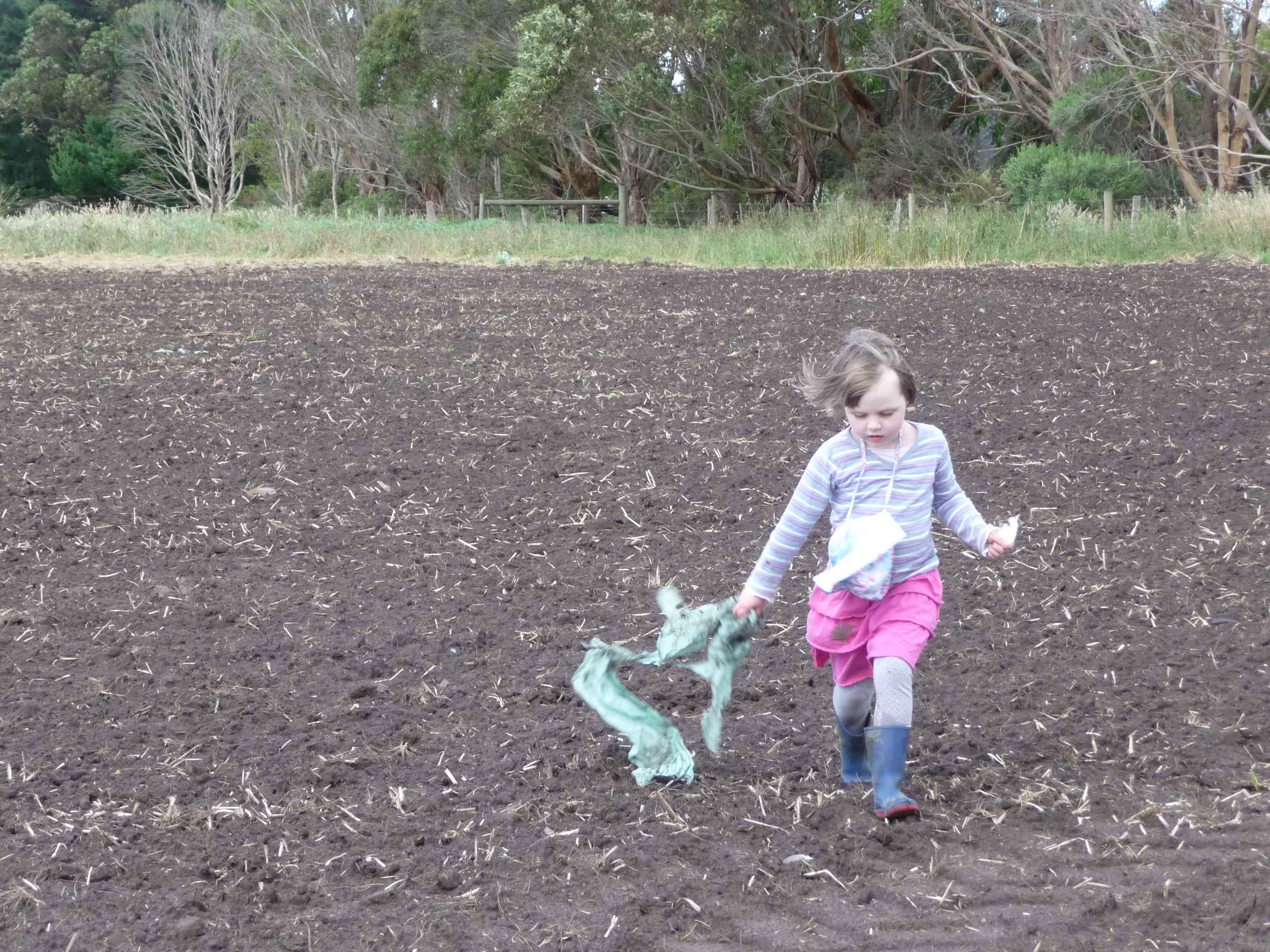
I am a very proud mama. Zoe loves to run and while I was setting up a paddock for the cows, she galloped off along the track and challenged me to beat her to the next gate. I watched the little dot bob along the track and reckoned she might just win, too. Instead, I found her three-quarters of the way to the “finish line”, doing this:

Picking Up Rubbish

"Rotten rubbish"

Just being part of farm life teaches children responsibility, care for animals, respect for the environment and a sense of pride in their own work. We are very, very lucky.

Farming with a baby in the summer sun

Keeping a baby safe, cool and protected from the sun while doing farm work is something of a challenge. And we all know how farmers rise to a challenge, equipped with hay band, tape and either WD40 or silicone!

In my case, it was half a dozen paper lunch bags taped onto the top of the baby carrier to form a “verandah” of sorts that got the fashionistas talking. I’ve since moved on and think I have achieved perfection.

Peeping out of a baby carrier

Peeping out

Some of Wayne’s old XXL cotton shirts have been seconded for a noble mission and you can see the result in the pic above. I just put one of these oversize shirts on over my singlet and the carrier and do up the bottom few buttons. Little man can be nudie rudie under the shirt and safe from the stinging sun.

Sun protection is equally as important for Zoe, who has just got a new hat and sunnies for summer (yes, I know it’s not strictly summer quite yet but it sure feels like it!).

Zoe in new farm hat and sunnies

Slip, slop, slap and splash with the yard hose makes for a cool farm girl

Day in the life of a South African Jersey dairy cow

A little while ago, clever teenage farmer Firn Hyde made a guest post on the Milk Maid Marian blog and it was so popular I begged her for more! So here is your next instalment – a day in the life of a South African Jersey dairy cow written by Firn.

Hi everyone!
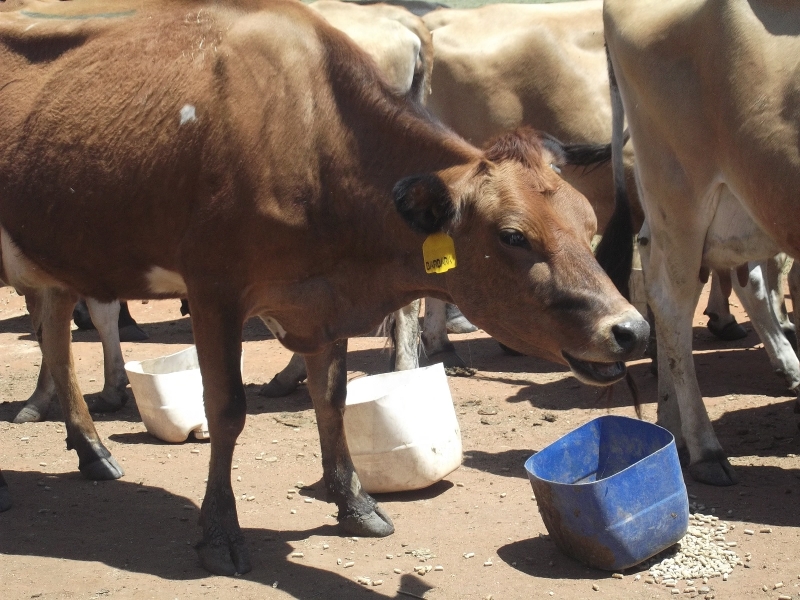
My name is Hydeaway Kalos Barbara, but most people just call me Barbara. I’m a young Jersey cow living on Hydeaway Farm in South Africa. I’ve only just had my first calf, and my friends know me as goofy but loveable.

Barbara the Jersey cow

Introducing Barbara

Early every morning, we walk up to the top of our paddock to get milked. Some of our humans come to fetch us, but we know to come as soon as we hear the milking machine bellow. We have lots of humans who for some reason walk on their hindlegs and are very noisy and not like cows at all, but they feed us and milk us so we’re quite fond of them.
Here I am waiting to go into the parlour to be milked.

Waiting to be milked

Waiting to be milked

The parlour is really noisy. At first I was scared of going inside it with all the noise, and I used to kick at the human putting the machine on my udder to suck my milk out, but now I’m used to it. We get to eat some nice food while we’re being milked, and when I’ve been milked I feel a lot more comfortable.

Milking

Milking time

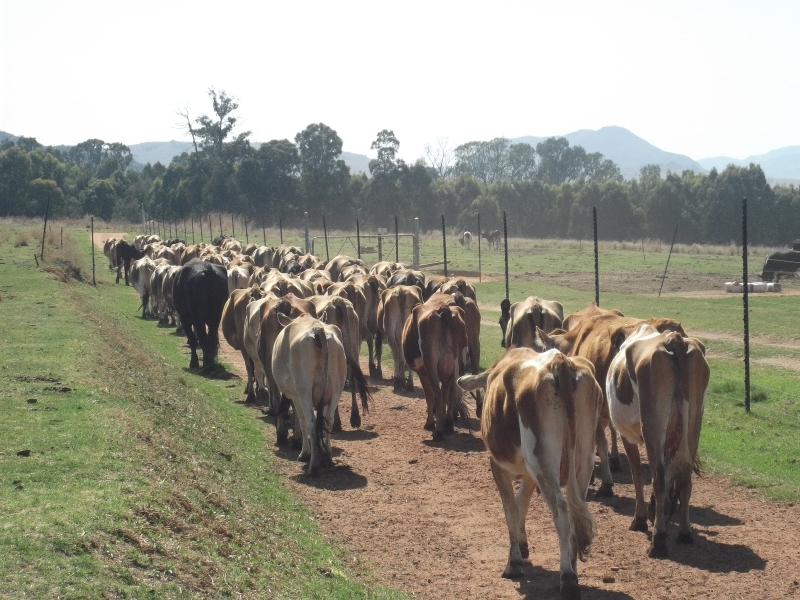
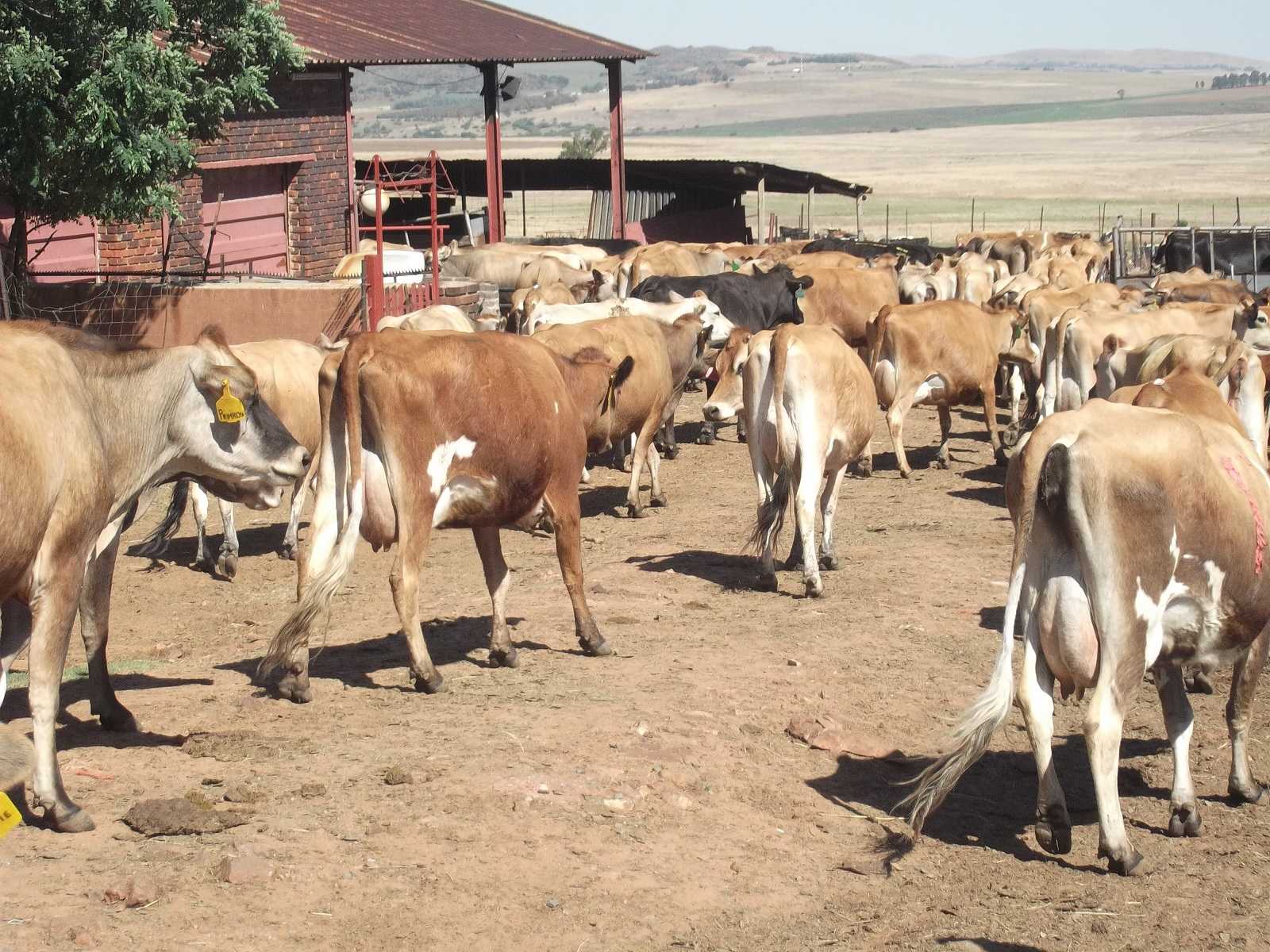
After being milked, we wait in a paddock until milking is finished. I’m usually one of the last cows to be milked because I’m smaller and younger than the others, so they push me out of the way and I’ve learned to wait my turn. Once the milking machine has stopped bellowing, our humans open the gates for us so that we can go outside for the day. I love going outside, there’s so much food and space!

Off to the Paddock

Off to the Paddock

Do you see the big black cow on the left? Well, we’re all supposed to be Jersey cows, but he’s not a cow at all; he’s half Holstein and half Jersey, and he’s an ox. He has a little heifer human who keeps him as a pet. She likes to lie on his back and scratch his ears.

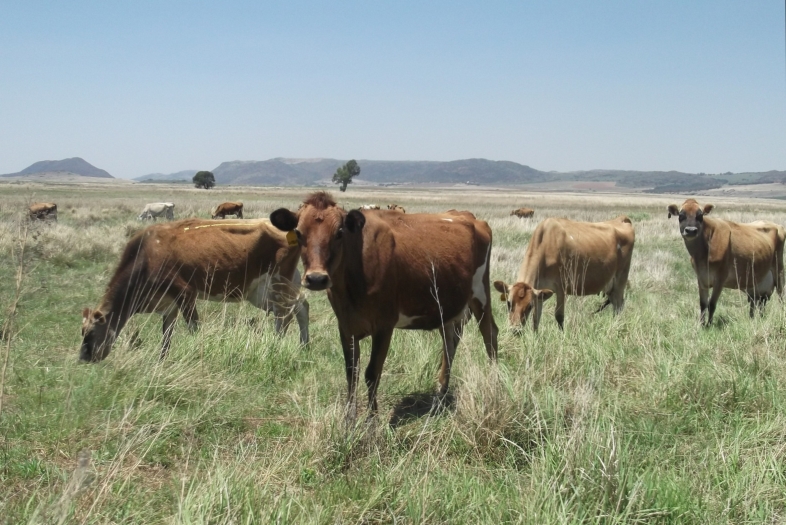
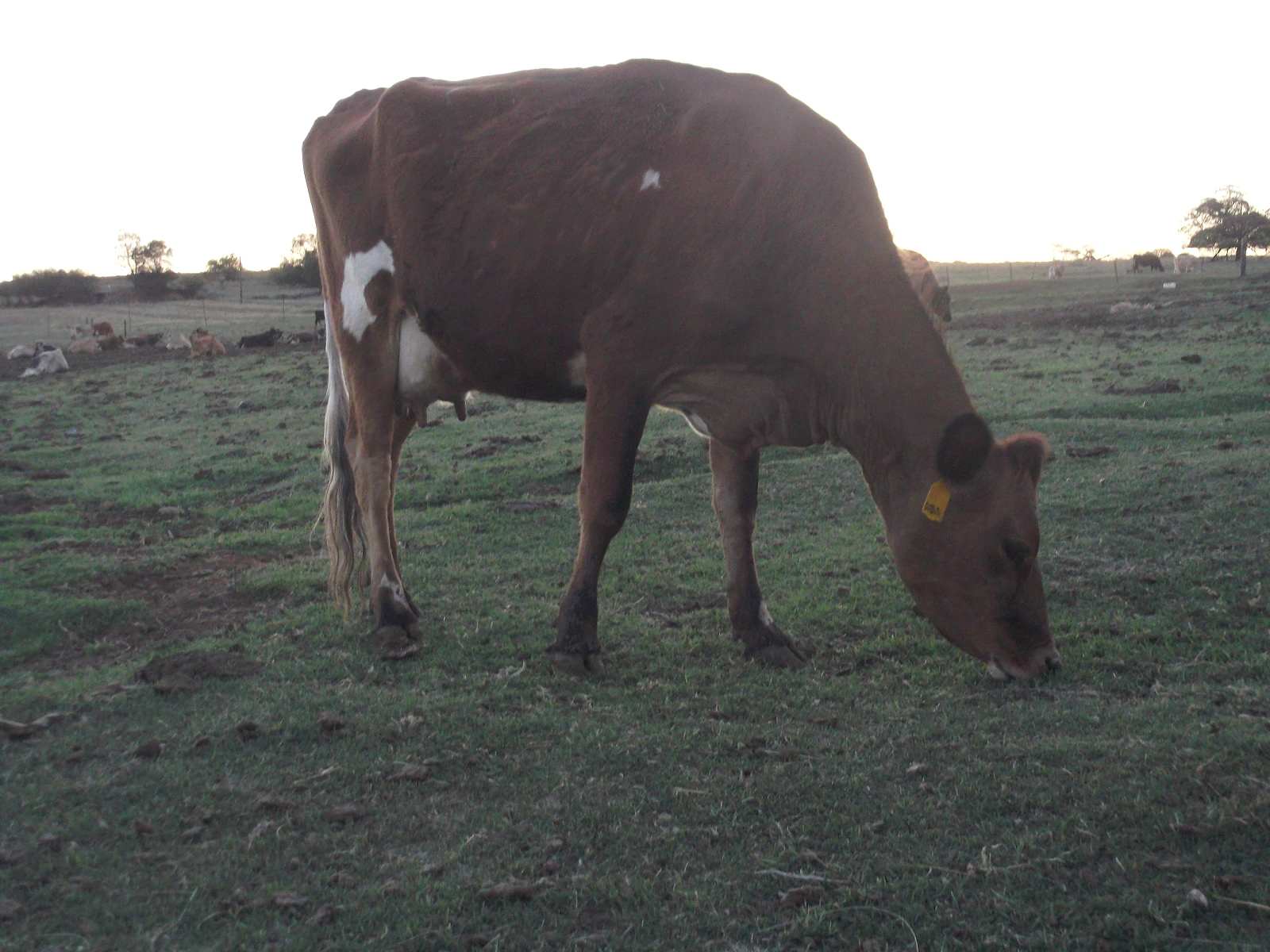
Now we spend the whole day grazing in the veld. Our humans think the grass isn’t good enough for us, but I like it. Here I am with some of my friends.

Barbara with her bovine friends

With friends

The grass tastes really good!

Barbara grazing

Delicious!

It’s not long before our humans come in a tractor to bring us our lunch. We each get our own bowl full of food. There is a bit of squabbling at the start, and sometimes us young cows get pushed out of the way, but there’s enough for everyone.

Lunch

Lunch

We spend a few more hours grazing away before our humans come to fetch us again and escort us back to the milking parlour. By then my udder is all tight and I’m ready for my supper.

Supper time

Supper time

After getting milked again, we go into our paddock for the night. We have two big round bales of hay, but I also like to nibble on the green kikuyu grass that grows there. The milking machine goes quiet and the whole world settles down for the night. As the sun retreats below the horizon and the silence of Africa spreads its wings around us, everything is very peaceful, and I graze among my friends knowing that tomorrow is going to be just as happy as today was for a young Jersey cow on Hydeaway Farm.

Day's end

Day's end

People who drive conservation by walking the talk

Three men drove up to five hours (each way) to get to our farm and then worked tirelessly all day for nothing except the sense of satisfaction that comes with doing something good.

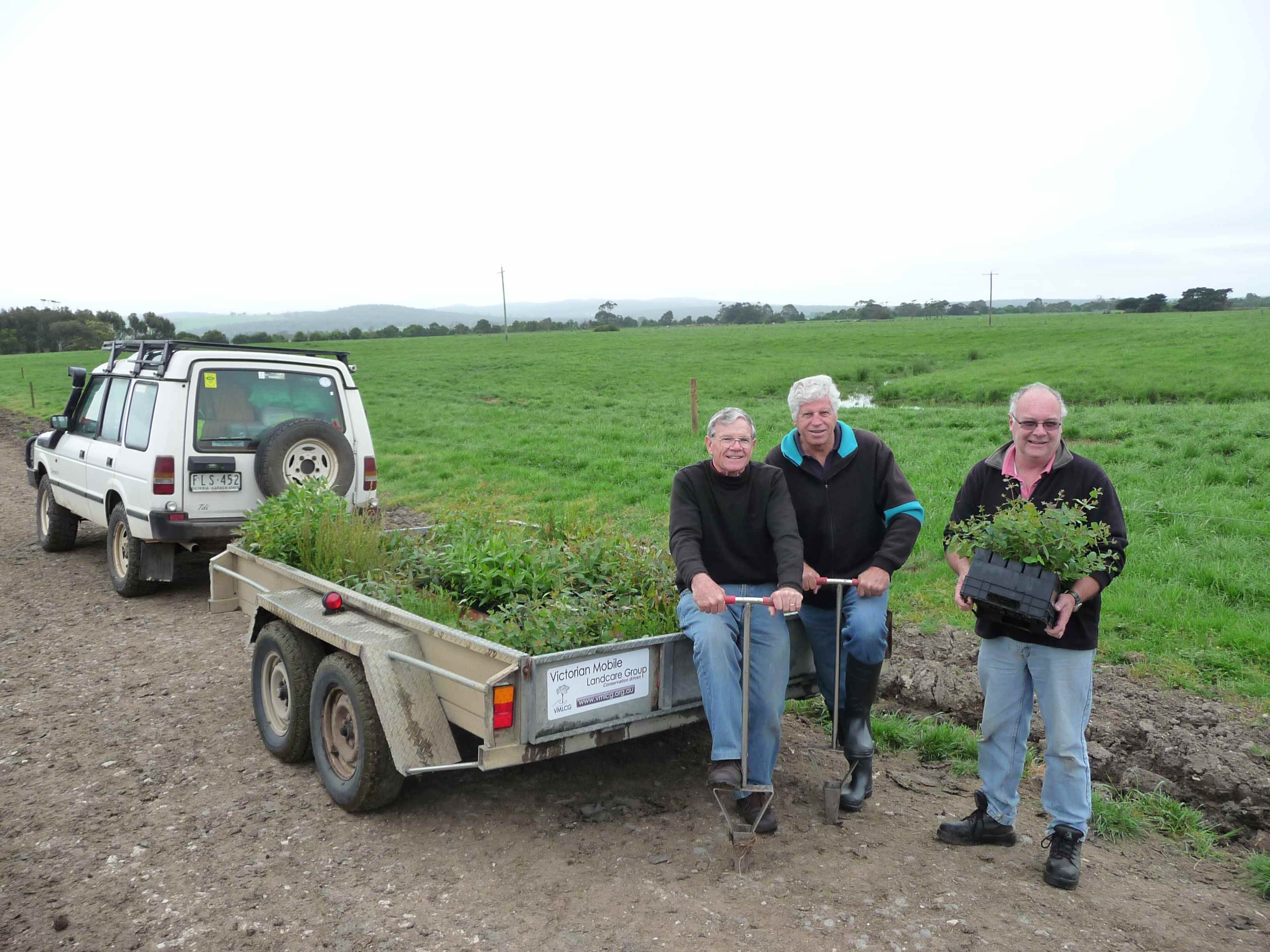
David, Chris and Bruce are members of the Victorian Mobile Landcare Group, which is unique because rather than being a collective of environmentally-aware landholders keen to make their properties more sustainable, this is a group of environmentally-aware volunteers who plant tens of thousands of trees all over the state.

As they explain on the group website, VMLG members are “people passionate about land care through responsible 4WD use, we are a non-profit association tightly affiliated with Landcare Australia and 4WD Victoria”.

Last year, the VMLG helped us plant 800 trees and we were wrapt that they could come again this year to add 1200 more. Here they are at the start of the day, ready to get stuck into planting.

Victorian Mobile Landcare Group volunteers

Victorian Mobile Landcare Group volunteers: Bruce, Chris and David (L-R)

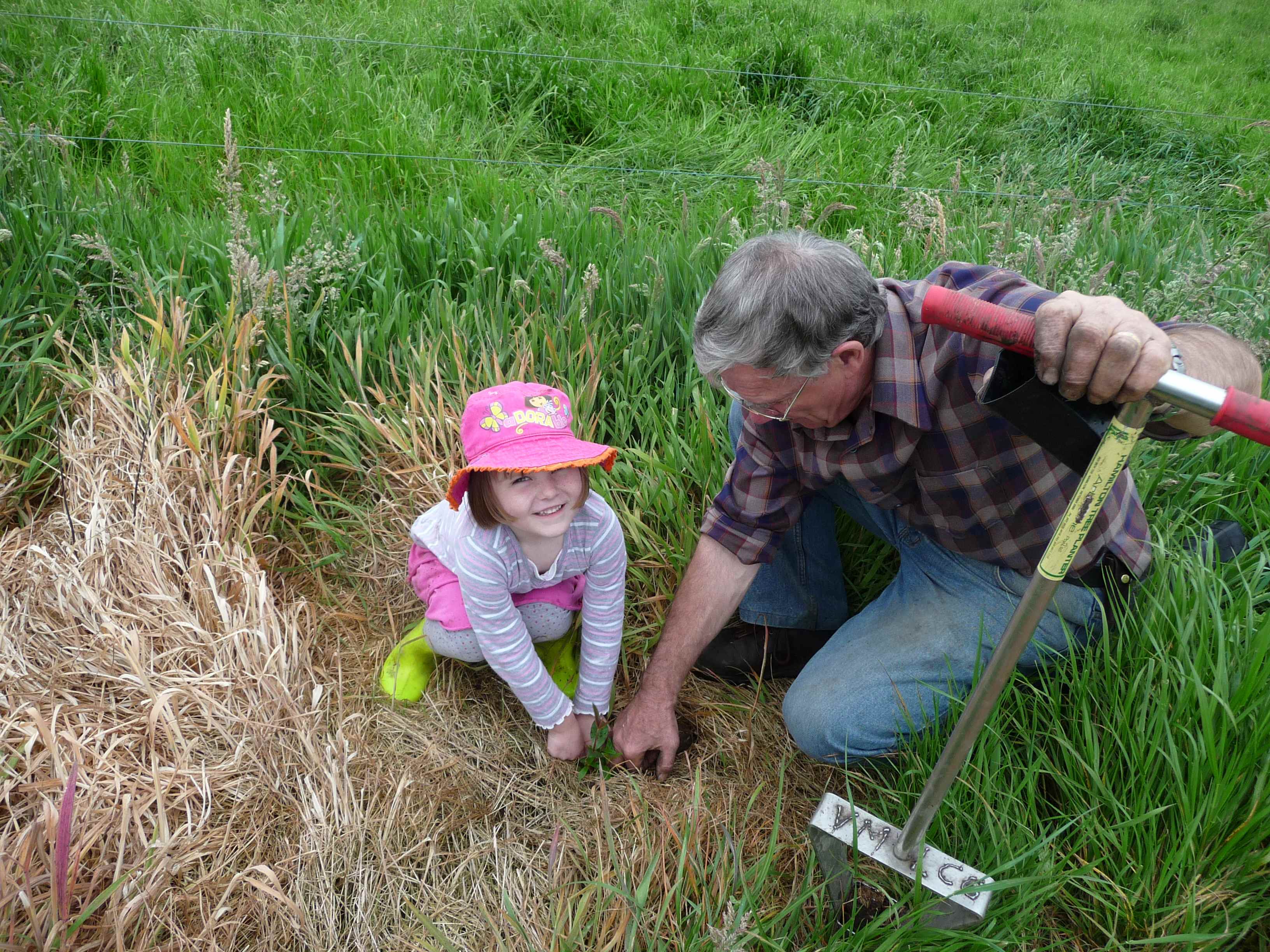
Bruce, Chris and David soldiered on in the rain (“just one more tray,” eh Chris?), stopping only for an hour-long BBQ lunch. I was proud to have Zoe working alongside these fellows who do so much more than talk about their commitment to the environment.

Bruce shows Zoe how to plant trees

Bruce shows Zoe how to plant trees

At the end of the day, we had created two wildlife corridors and shelter for the cows – a great outcome for the environment, our animals and the landscape. One tree was set aside for Zoe and ceremonially planted in the garden to remind us of the day.

Members of the VMLG and Zoe with a ceremonial tree

Members of the VMLG (David, Bruce and Chris) and Zoe with a ceremonial tree

Thanks guys. We couldn’t have got this done without your help. Thanks also to the West Gippsland Catchment Authority for spraying and 800 metres of fencing and to the Yarram Yarram Landcare Network for the donation of 400 trees.

Disgraceful dairy farmer’s skin care regime

A friend of mine, Gary Thexton, passed on this:

Two farmers walking through a field; one stoops down and dips his finger in some cow dung and rubs it across his lips. The second farmer asks him why he did such a disgusting thing. The first one replies, “I have chapped lips!”. The second one asks him, “Does it make them better?” He replies, “No! But it stops you from licking them!”

I couldn’t help laughing. Just for the record, I carry a container of antibacterial wipes in the Bobcat glove-box. I am far from obsessive about cleanliness but when it’s time for a snack and we’re too far away from a tap, they ease my mother guilt.

What wildlife does for farms

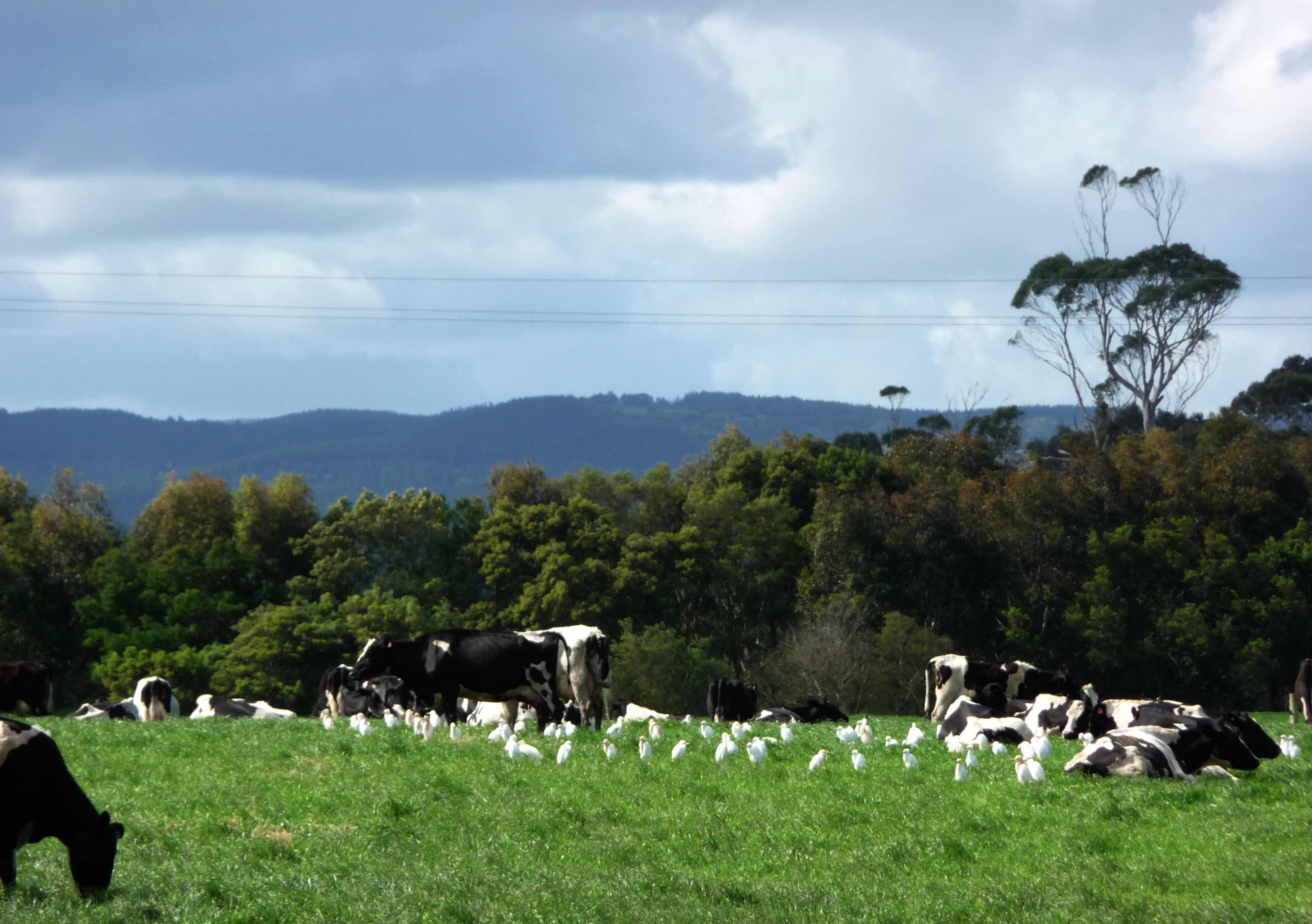
Cattle Egrets

Cattle Egrets in breeding plumage follow the cows everywhere

There’s lots of wildlife on our dairy farm: waterbirds of every description, a chorus of frogs, waddling wombats and lots of lizards from the cute blue-tongue through to the vulnerable goanna!

Sometimes we curse them. Ducks gobble new pastures and crops, cockies eat seed, wombats dig cavernous holes. But we never begrudge them a home and we’re aware they have important roles to play, too. The ibis eat root-eating grubs and aerate pastures with their needle-like beaks while the army of little birds help to manage the insect population.

With this in mind, we’ve created a whole farm plan that incorporates wildlife corridors linking our big environmental assets:

  • The state forest and our remnant vegetation on our southern boundary
  • Our Land for Wildlife dam
  • The wetland
  • The revegetated gully
  • The Albert River on our northern boundary

We’re also proud to participate in the JARR project, which is creating a biodiversity blueprint for this important catchment for the RAMSAR-listed Corner Inlet.

While it’s important to justify planting trees and fencing sensitive areas from a business perspective, the farm is more than that. It’s our home and, if I’m honest about it, we protect and encourage wildlife on the farm because it makes this a much better place to live.

Why doesn’t farm safety gear have the same cred as motorbike leathers?

Motorbike leathers are worn like a badge of honour by some of the toughest (and scariest) blokes in the country. They reek of the danger inherent in their metal steeds.

Farmers don’t share this aura yet spend hours every day on bikes and working inches from hundreds of half-tonne animals. The risks are real and the consequences can be heartbreaking.

Following yesterday’s tragic death of an 11-year-old boy, WorkSafe spokesperson Michael Birt told The Weekly Times there had been 14 workplace deaths in Victoria and five of those were on farms.

“A third of the deaths have happened on farms and it’s people doing routine tasks. You don’t get much more routine than moving cattle on a dairy farm,” Mr Birt said.

Despite all of this, some of us hesitate to protect ourselves. I don’t know why. The other day, someone suggested there’s a fear we might “look like sissies”. By all means call me a sissy for looking after myself but I wouldn’t try running that line by a Hell’s Angel.

Hidden farm hazard

Hidden farm hazards

Hidden farm hazard

Farms are notoriously hazardous workplaces. One of the reasons is the sheer unpredicatbility of what a day will bring. This morning, I drove the UTV across one of our riverflat paddocks. You can see my wheeltracks in the grass but can you see why I had to swerve suddenly? It’s just four metres away from the Bobcat’s bullbar.

When I was almost on top of it, a freshly-dug wombat hole appeared. Wombats are a common sight on the farm and while these podgy-looking recluses are endearing creatures, they’re also very powerful excavators. The holes are typically larger than a wheel and present a serious hazard to anyone riding a quad bike or even driving a 4WD. For this reason, we have a farm speed limit of 30km/hr on the tracks and 10km/hr in the paddocks.

Here’s the wombat hole I so narrowly missed this morning.

Hidden wombat hole hazard

Just missed this wombat hole