What do farmers hide from you?

Faces in the herd

Some of the girls on our team

The other day, my friend Julie emailed me a link to a story about a Kiwi farmer called Tim. Here’s the gist of it:

So convinced is he that farmers have nothing to hide that he urges people to knock on a dairy farmer’s door and ask them about their farm. “They’re welcome to call on me anytime,” he says, then adds: “As long as they come with an open mind, not with any particular axe to grind.”

Animal activists will tell you there is a dark side to dairying and then mostly follow that up with stories about calves being removed from their mothers and forced annual inseminations. It’s true. We do remove calves from their mothers and it’s also true that we hope to get cows in calf every year (although that’s not realistic – we keep dozens every year who don’t fall pregnant). But it’s not cruel.

The point of this blog is to provide a window to another Australian way of living as well as showing you what we do and why. You have a right to know your milk is ethical and safe.

Our top priorities are to look after people, animals and the land while producing the best milk possible and staying afloat. They have to be or we wouldn’t be doing it: we don’t earn nearly as much as Tim does, unfortunately. The farmgate price of milk fluctuates like crazy and in the past three years, it’s varied from 28 cents per litre to 48 cents, so Wayne and I are both working second jobs while we “renovate” the farm (which is, by the way, valued at a fraction of Tim’s).

So, if there are dairy practices you’re wondering about, please hit me with them.

Ministers say DPI extension role is over: big mistake

The government has announced that the “DPI’s days of offering extension services to farmers were over with private-sector consultants taking on the role”. This is a mistake of gargantuan proportions. The farm is not the natural habitat of a propellor head but it wouldn’t be the same farm without them. And, dare I say it, their work wouldn’t be the same without continual and close working relationships with farmers.

Working together ensures the DPI’s work remains relevant and, perhaps even more importantly, we share ideas. Because farming is so practical, so low margin and framed in the unpredictability of nature, it’s critical that information flows back and forth between researchers and practitioners (farmers). In other words, researchers value our experience.

All this is aside from the fact that we simply can’t afford a highly paid buffer between the DPI and the farmers they serve.

According to the same Weekly Times article, Victorian Farmers Federation vice-president Peter Tuohey agreed DPI’s extension role was no longer needed. I’m gobsmacked. My VFF membership subs cheque is sitting on my desk. Should I send it with advocacy like this?

I hope it’s not too late to reverse this policy shift. Many of our brightest DPI people may already have been lost if these numbers quoted by the The Weekly Times are accurate:

“THE Victorian Department of Primary Industries has been stripped of 236 regional staff. But its Melbourne office has grown by 126 in the past three years.  Data seen by The Weekly Times shows DPI’s metropolitan Melbourne workforce surged to 1248 in June this year, equal to almost 48 per cent of all its 2693 employees and contractors.”

I’ll be writing to the VFF, my local member and the Minister. Please add your voice to support our regional DPI programs and experts.

Bank manager comes out on the farm

Our bank manager, Rohan, came out to visit us yesterday and since he’s relatively new in his post, he hadn’t toured the farm before. Seeing as it was sunny, Zoe, Alex and I took the opportunity to show him around.

I’m glad we did. Rohan has a fresh appreciation of the opportunities a stock underpass presents for the farm. About 40 per cent of the property sits across the road from the dairy. This means milking cows can only visit that side of the farm during the day and creates extra risk and work for all of us.

It was also a chance to show him the damage the floods had caused to tracks and demonstrate how we are protecting the pastures from long-term damage while keeping the cows happy and healthy.

When you’re coming out of a crisis like this, it’s a good idea to keep your advisors and everyone who has a stake in the farm close, which of course includes the bank manager. We did nearly bog the Bobcat in a remote paddock with Rohan on board, though. Not a good idea to have your bank manager trudge 800m through mud in leather boots.

About UHT milk

Here’s an interesting AAP newswire story about UHT:

Despite the supermarket heavyweight’s price war on fresh milk, sales of UHT milk are on the rise and now account for nearly 10 per cent of total milk sales. However, statistics from Dairy Australia show that most Australians still prefer fresh milk on their cereal.

UHT milk sales increased eight per cent from 195 million litres to 211 million litres in 2009/2010 over the year before, accounting for 9.3 per cent of total milk sales for the same period.

Associate Professor Frank Zumbo of the University of NSW, said the rise of UHT milk sales was currently not a threat to the big supermarkets as the long life product was low maintenance and did not require refrigeration costs.

“If the trend continued, it would be troubling, but at the moment it’s clear consumers have a strong preference for fresh milk,” he said.

The number was off a low base, where UHT had traditionally had a very low percentage of the market, he told reporters on Friday.

“But we are seeing the owners of UHT brands trying to lift their profile through increased advertising.”

A survey of 2,500 milk drinkers by consumer research centre Canstar Blue found that out of all Australians who had purchased milk in the past six months, those drinking Devondale UHT milk said they were happier than consumers of other brands, based on overall satisfaction, taste, health benefits and packaging.

Canstar Blue manager Rebecca Logan said the results were surprising, given the attractive prices offered by major supermarkets on fresh milk.

“There’s no doubt long life milk has come a long way over the years and consumers are responding to its convenience and long shelf life,” Logan said in a statement on Friday.

The average Australian drinks 102 litres of milk a year, according to Australian Dairy Farmers.

So, what is UHT milk?

UHT stands for Ultra-High Temperature and refers to the pasteurisation process – the heating of milk to ensure it is free from nasty bugs. Rather than being heated at 74 degrees Celsius for about 15 seconds, it is heated at about 140 degrees Celsius for just two seconds.

There is little nutritional difference between “fresh” and “long life” milk and according to Curtin University scientists, UHT milk is more environmentally-friendly than “fresh” milk.

Which milk do we drink at the farm?

I’m often asked whether we drink milk straight from the vat. Well, no, actually we drink Devondale UHT milk, which is where some of our milk ends up, anyhow. It’s safer than raw milk and easier to get out of the pantry than out of a 17,500 litre vat!

Getting ready for another downpour (will it flood again?)

Signs of the flood on gates

The hallmarks of the last flood remain while we prepare for the next one

We’ve been flat chat the last couple of days, preparing for the rain forecast for tonight and this week: another couple of inches, although the expected totals seem to be changing every few hours. I suspect this means it could be anything!

Fresh sawdust has been added to the calf shed while it’s dry. We’ve been grazing the most low-lying and distant pastures first, while setting up temporary fences on the higher ground. Repairs to the fences on the river flat have been called to a halt for now. Extra silage has been delivered while it’s accessible.

In fact, any outdoor job that could be done is being done. Now we can only cross our fingers.


Animal welfare is not just about dairy farmers doing the right thing

“If not appropriately handled, animal welfare concerns could threaten the long-term viability of several livestock industries. Even though the industries operate within their legislated requirements, there is a real risk they could lose public acceptance.”

This excerpt reportedly from a brief by the Agriculture, Fisheries and Forestry Department for the incoming Minister Ludwig makes sense. Farmers don’t have a monopoly on caring about animals and everyone has a right to feel comfortable that the food they’re eating is ethical. At the moment, much of that is based on trust that we farmers will do the right thing but when that trust is sufficiently shaken, Aussies will understandably demand that we are made to do the right thing.

In the wake of the Indonesian cruelty revelations, who could blame urban Australians for asking more questions about animal welfare, whether at the abattoir on the farm? Rather than being defensive about farming practices, I think it’s time to open the “farm gates” and show everyone what really goes on so they can judge how we are doing for themselves.

Timing makes good suppliers golden

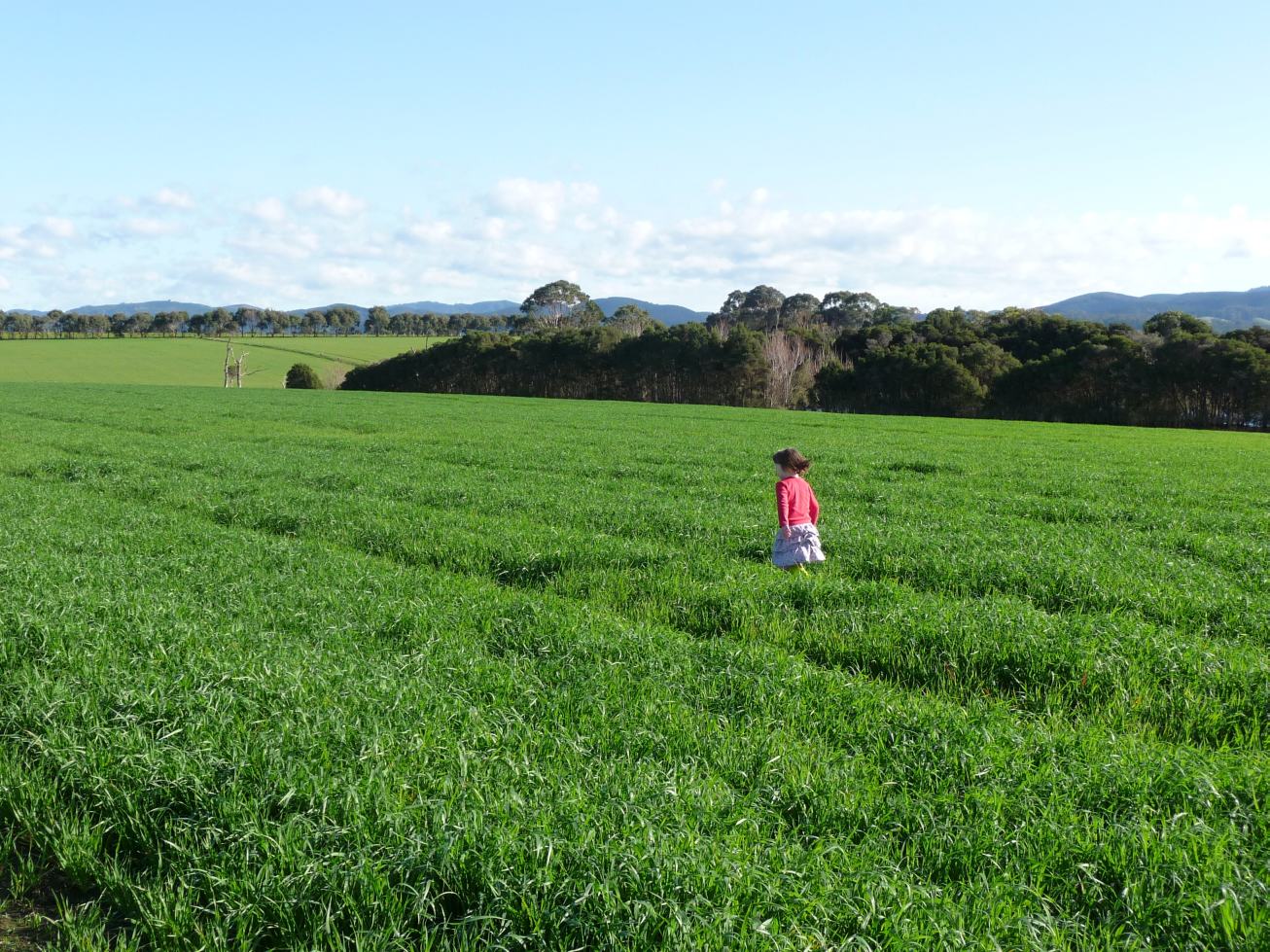
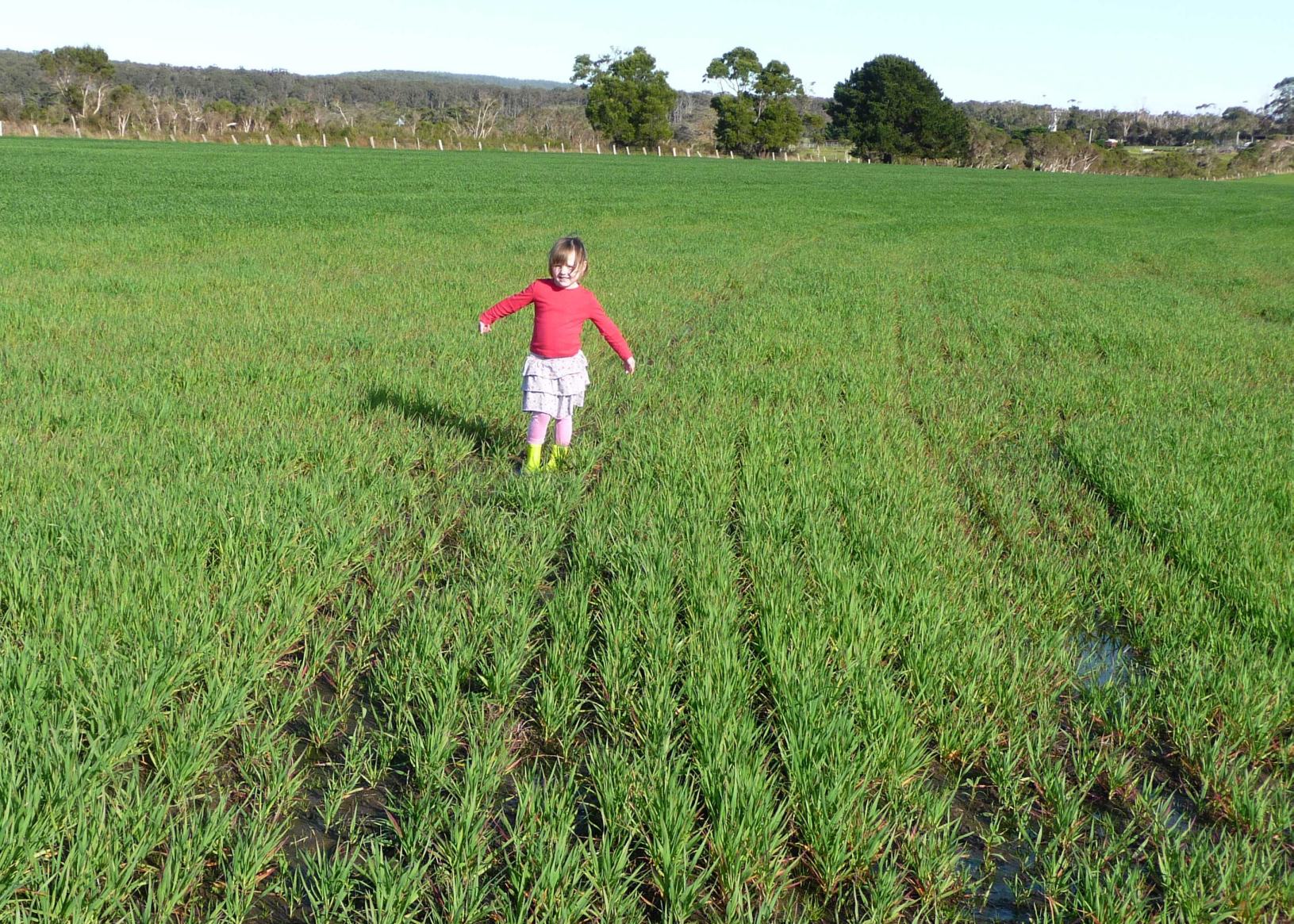
Healthy oats where it's not too wet

Healthy oats where it's not too wet

Too much water has stunted these oats

Too much water has stunted these oats

On Monday, I realised a fantastic opportunity was about to pass me by. For months now, most of our newly sown pastures have sulkily refused to grow in their sodden paddocks. The wet interferes with their ability to take up nutrients from the soil and also prevents me getting fertiliser on. Each of the massive fert trucks weighs 8000kg unloaded! Not pretty if they get bogged.

All the same, I decided to take a walk and survey the scene up close. I was astonished to find three of the paddocks were just trafficable but, with 25 to 30mm of rain forecast over the next few days starting in the next few hours, they wouldn’t be for long. A quick call to fertiliser supplier Robert had the urea and potash on in two hours.

Timing is everything in farming because we’re at the mercy of the very temperamental Mother Nature. That’s why we rely so heavily on the responsiveness of our suppliers; from the people who plant the seed just in time for a break in the weather (thanks Wayne) to the vets who rush to the aid of our cows in an emergency.

Thanks guys – you are appreciated.

One woman down just when the farm (and the man) needs her

Fix fence with baby on board

Fix fence with baby on board

I’ve agonised over this post but, as a neighbour reminded me, it’s important to let non-farmers hear what life’s really like on farm, warts and all. And the wart-encrusted truth is that, right now, my frustration is matched only by the desperation of my husband.

He hasn’t been back to the house for a break since he left at 5am. Since then, he’s rounded up, milked, washed up, fed the calves, fed out 60kg of grain to the springers, fed four rolls of silage to the milkers and another three to the dry and young ones, rescued a sick cow, buried a still-born calf, and with our help, brought in a new calf and cow. He still has to muck out the calf pens before rounding up again at 3pm. It’s 1.50 as I type.

Still on doctor’s orders not to lift anything, plus a five-week-old strapped to my front and a five-year-old beside me, the list of things I must not do is far, far longer than the list of things I can. I’ve been doing the finances while feeding Alex, fixing fences, working out pasture rotations and shifting stock. Nothing like my normal contribution or even what I did during late pregnancy. Not enough to make a dent on my husband’s workload. Not enough to avert a creeping sense of failure.

The rational me alternates between the compassionate “you’re doing everything you can” and the sterner “just get on with it” stiff upper lip. We’ve faced tougher tests and will get  through this one but if anyone thinks life on the land is cruisy, think again.

The whingeing farmer

Farmers are infamous for never being happy with the weather. For years, we’ve been battling awful conditions – unreliable or non-existent autumn breaks, short springs and searing summers. The one blessing has been warmer and therefore more productive than normal winters.

This year, though, has been one out of the box. The landscape remained a verdant green right through summer and, with a precious bank of water in the soil, I took the opportunity to convert plenty of pastures from annual to perennials and when the “whole hog”, fully cultivating beautiful seed beds.

My gamble may still pay off but right now, the strategy has come back to bite me. The sun refuses to shine, the rain continues and that bank of soil moisture has been continually topped up to the point that very little of the new pasture is trafficable at a time when it desperately needs fertiliser and a trim. We may not be able to let the cows into some paddocks until spring.

So, as I type this post on a cold, wet, sunless day, I’m afraid I live up to the stereotype of the whinger. I have a good excuse but no good reason –  exposed to commodity price cycles, currency fluctuations, all the normal business hazards and mother nature herself, farming is innately a risky business but still we choose it as a way of life. After all, an affinity with mother nature is what binds us to it.