Weaned calves acclimatise to new surroundings with maremma guardians

Weaned calves take in their new surroundings

Weaned calves take in their new surroundings

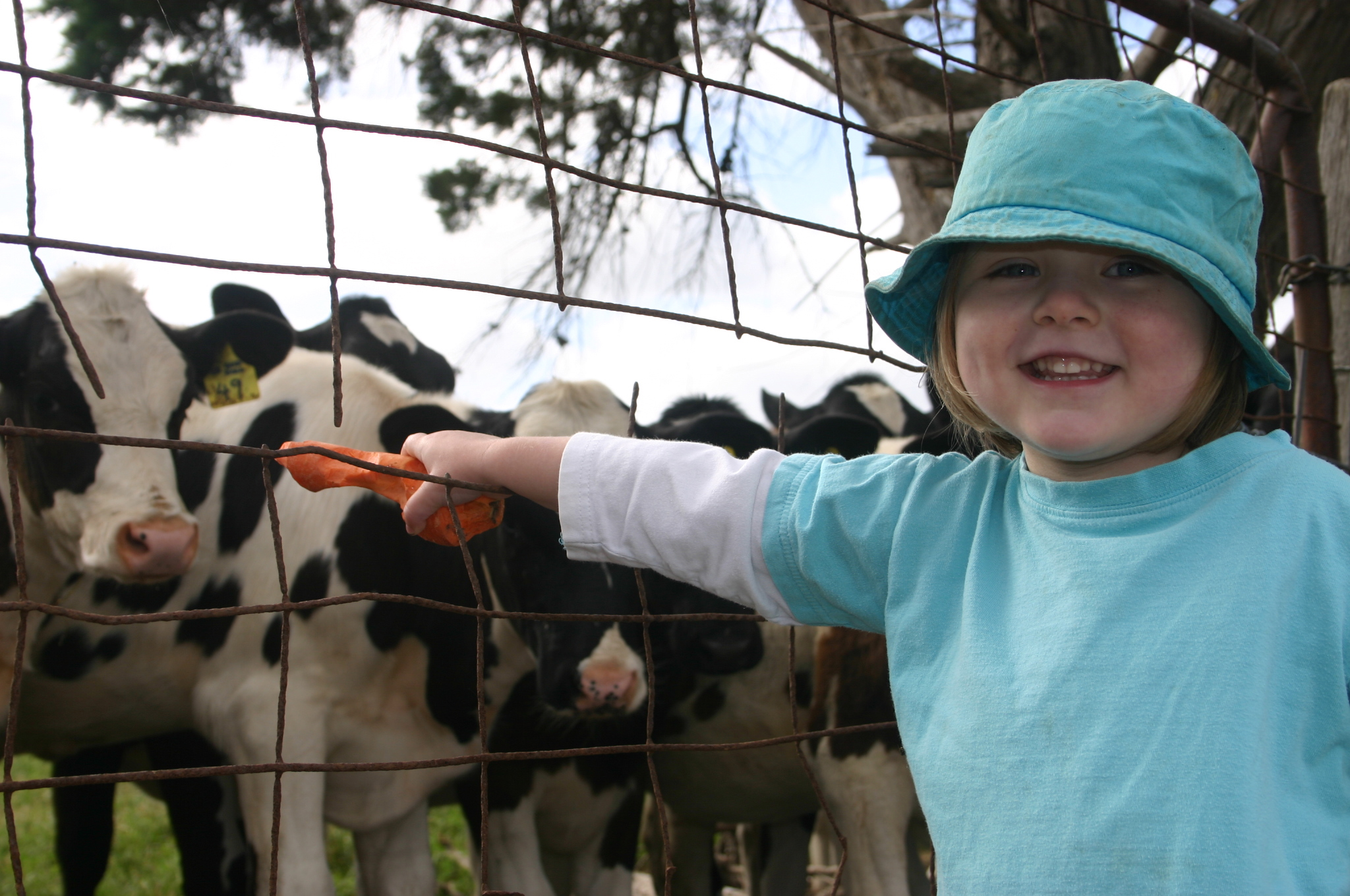
We’ve weaned a bunch of calves and they love their new surroundings by the forest. When I took this picture, they were still a little overwhelmed, walking quietly around the paddock.

At our farm, calves are weaned relatively late. The calf rearing experts say you can wean a calf as soon as she’s eating at least 1.5kg of grain or pellets per day but, in my view, it doesn’t hurt to offer them milk for a bit longer. Calves are the future of our dairy farm and we don’t skimp on their wellbeing.

We’ve chosen a paddock far from the dairy that offers shelter from cold weather and shade from the sun. Cows are kept off this pasture to minimise the risk of transmitting disease like Bovine Johnes Disease from one generation to another. Aside from buying in bulls to preserve genetic diversity, we have a closed herd and no history of the muscle-wasting BJD but it’s good practice to keep stock under 12 months old off pasture that’s been grazed by mature cows.

While the pic doesn’t show them, maremmas Charlie and Lola have been staying close to their charges and I’m hopeful the transition will extend their range.

About UHT milk

Here’s an interesting AAP newswire story about UHT:

Despite the supermarket heavyweight’s price war on fresh milk, sales of UHT milk are on the rise and now account for nearly 10 per cent of total milk sales. However, statistics from Dairy Australia show that most Australians still prefer fresh milk on their cereal.

UHT milk sales increased eight per cent from 195 million litres to 211 million litres in 2009/2010 over the year before, accounting for 9.3 per cent of total milk sales for the same period.

Associate Professor Frank Zumbo of the University of NSW, said the rise of UHT milk sales was currently not a threat to the big supermarkets as the long life product was low maintenance and did not require refrigeration costs.

“If the trend continued, it would be troubling, but at the moment it’s clear consumers have a strong preference for fresh milk,” he said.

The number was off a low base, where UHT had traditionally had a very low percentage of the market, he told reporters on Friday.

“But we are seeing the owners of UHT brands trying to lift their profile through increased advertising.”

A survey of 2,500 milk drinkers by consumer research centre Canstar Blue found that out of all Australians who had purchased milk in the past six months, those drinking Devondale UHT milk said they were happier than consumers of other brands, based on overall satisfaction, taste, health benefits and packaging.

Canstar Blue manager Rebecca Logan said the results were surprising, given the attractive prices offered by major supermarkets on fresh milk.

“There’s no doubt long life milk has come a long way over the years and consumers are responding to its convenience and long shelf life,” Logan said in a statement on Friday.

The average Australian drinks 102 litres of milk a year, according to Australian Dairy Farmers.

So, what is UHT milk?

UHT stands for Ultra-High Temperature and refers to the pasteurisation process – the heating of milk to ensure it is free from nasty bugs. Rather than being heated at 74 degrees Celsius for about 15 seconds, it is heated at about 140 degrees Celsius for just two seconds.

There is little nutritional difference between “fresh” and “long life” milk and according to Curtin University scientists, UHT milk is more environmentally-friendly than “fresh” milk.

Which milk do we drink at the farm?

I’m often asked whether we drink milk straight from the vat. Well, no, actually we drink Devondale UHT milk, which is where some of our milk ends up, anyhow. It’s safer than raw milk and easier to get out of the pantry than out of a 17,500 litre vat!

Big supermarkets, little farmers: the UK story

In the wake of the milk price war here in Australia, this story about the influence of supermarkets in the UK (click the underlined link) is a little unnerving. How can we prevent this happening here? Victorian farmers are less vulnerable to predatory tactics by big retailers for two reasons:

1. Much of our milk is exported; and

2. Victorian processing is dominated by a powerful 100% farmer-owned co-operative.

Having said that, we do share some concerns regarding the profitability of milk pricing.

Dairy Australia’s Australian Dairy Industry In Focus 2010 report says:

“At an average of approximately US$29 per 100kg of milk last year, Australian dairy farmers generally receive among the lowest prices compared to many major producing countries and so must operate highly cost-efficient production systems.  This is regularly borne out by international comparisons; where Australian farms consistently have costs of production in the lower cost category of all farms in such surveys. The fact that around half of Australia’s milk production has been exported over the last decade reflects this high level of competitiveness.

However, this has become increasingly difficult in recent years. Farm cost structures have increased in response to the need to adapt to drier conditions where rain fed pastures are regularly contributing a lower proportion of the total feed base available to the herd. Consequently, Australia’s share of international trade has trended lower as local milk production has contracted over the past decade.” (p. 10)

About A2 milk

Thank you to Fussy Eater’s Mum for asking about A2 milk, which has been expertly marketed in Australia as the solution to everything from autism through to digestive discomfort.

First, what is a2 milk? A trademark owned by A2 Dairy Products Australia, a2 milk is a brand of milk sourced from cows that only produce one particular type of protein. As the company explains on its website:

“Most dairy milk today contains 2 main types of beta-casein protein, A2 and A1, while originally all dairy cows produced milk containing only the A2 type of beta-casein protein. a2 Milk™ comes from cows specially selected to produce A2 beta-casein protein rather than A1. Because a2 Milk™ is rich in A2 beta-casein protein, it may assist with your digestive wellbeing.

Regular milk is about 60 per cent A2 beta-casein protein and 40 per cent A1 beta-casein protein.

Dairy Australia, Food Standards Australia New Zealand, and the European Food Safety Authority reject the claims that milk containing A1 beta-casein protein poses any cause for concern.

Unfortunately, there is also a perception that milk containing only A2 proteins can be tolerated by those with cows milk allergies. Not so, according to a study by AllergySA reported in the Medical Journal of Australia. To be fair, even A2 Dairy Products Australia warns on its site that: “If you have been diagnosed with lactose intolerance by your doctor, a2 Milk™ will not resolve any digestion problems.”

It seems milk containing only A2 beta-casein protein is no silver bullet for those missing out on a refreshing glass of milk due to allergy. If you do suspect an intolerance or allergic reaction to dairy products,  I really recommend taking a look at the very informative fact sheets on cows milk allergy by the Australasian Society of Clinical Immunology and Allergy (ASCIA) and Dairy Australia.

Milk free from growth hormones

The internet is awash with scary stories about growth hormones in milk. They are said to cause cancer and even breast development in babies fed a milk-based formula. Cows injected with growth hormones are also said to have much shorter lifespans than the 12-plus years ours enjoy.

I’m happy to say I can’t offer you any insight into this bitterly debated issue. Although bovine growth hormone (BGH)  is commonly used in the US, it and BST or bovine somatotropin are outlawed here in Australia.

Every litre of Aussie milk is guaranteed to be free from growth hormones!

Farming and the carbon tax

Cow wearing a monitor to detect methane gas production

Cow wearing a monitor to detect methane gas production - pic by DPI Victoria

Donald Rumsfeld could have been talking about the impact of the carbon tax on farming and agriculture when he infamously said:

“Reports that say that something hasn’t happened are always interesting to me, because as we know, there are known knowns; there are things we know we know. We also know there are known unknowns; that is to say we know there are some things we do not know. But there are also unknown unknowns — the ones we don’t know we don’t know.”

The politics of carbon are still in full swing and it’s too early to say for sure how we will be affected but there are some things we do know:

1. Agriculture is the second biggest source of Australia’s greenhouse gas emissions – just ahead of transport

2. Much of current best-practice farming minimises emissions

In a recent study (see link at point 2 above), Department of Primary Industry researchers say:

“We calculate, therefore, that in 1980 an Australian dairy cow emitted approximately 33 gm of methane for each litre of milk produced. But, in 2010, because of better feeding practices, genetic improvements, higher per cow milk production, and efficiency improvements adopted by the Australian dairy industry, this number has fallen to approximately 24 gm of methane per litre of milk produced.”

Great news! We are doing well, you say? The only problem is that until science provides us with some more tools, we cannot achieve a lot more. As the researchers go on to say:

“As a greenhouse gas, methane is about 25 times more powerful than carbon dioxide and methane emissions from cows constitute about 65 per cent of the total dairy farm greenhouse gas emissions.”

Meanwhile, as Neil Lane of the Carbon Ready Dairy Demonstration Project notes:

“Highly digestible feed and cereal supplements, along with products like Rumensin, are the best way to minimise emissions at the moment. Many dairy farmers are already doing this.”

This may be why agriculture has been excluded from the carbon tax, although our inputs, like fertiliser and fuel will not be exempt. On the other hand, the much-touted Carbon Farming Inititiative seems equally as impotent to this dairy farmer.

Reforestation and revegetation isn’t really an option because each planting needs to be at least 2ha and 10 metres wide. Soil sequestration sounds wonderful but the fact is that the rich fertile soils of dairy farms are generally already high in carbon content. The other options of reduced fertiliser emissions and effluent management are already being practised on our farm and, as I understand it, would therefore be ineligible under the CFI.

Will be interesting to see how it all pans out and I would love to hear from anyone who sees lots of emerging opportunities for dairy farmers to actively participate in the carbon economy.

What’s in your milk and why permeate is a dirty word

“We only drink milk that doesn’t have any of that permeate stuff you guys add to your milk,” a friend told my husband yesterday.

We don’t add anything to milk. At the farm, milk comes straight from the cows through a cooler into a refrigerated stainless steel vat for collection by the co-op. What happens there is more complex but no more sinister. Basically, fresh milk on Australia’s supermarket shelves has been heated (pasteurised) to make sure any bugs are killed, mixed so the cream doesn’t rise to the top (homogenised) and filtered.

Filtering the milk means you get to choose milk with your favourite protein and fat content – whether that’s skim or milk with an “extra dollop of cream”. It also helps the co-op deal with the natural variation in the protein and fat content of milk over a season. Yesterday, for example, our herd averaged 4.49 per cent butterfat and 3.39 per cent protein whereas, back in October, it got as low as 3.57 per cent butterfat and 3.28 per cent protein.

Dairies have been dealing with this variation in milk production and tastes for hundreds of years by separating cream from milk to make other foods like butter, cream and yoghurt.

So, where does “permeate” come into it? When the milk is filtered to even out fat and protein, the sugars, minerals and vitamins in milk are separated before going back into the milk. Some nerd gave them this ugly name (I think it sounds like plastic) and it’s been used and abused ever since.

The farming community celebrates

Zoe's first Tarra Festival parade

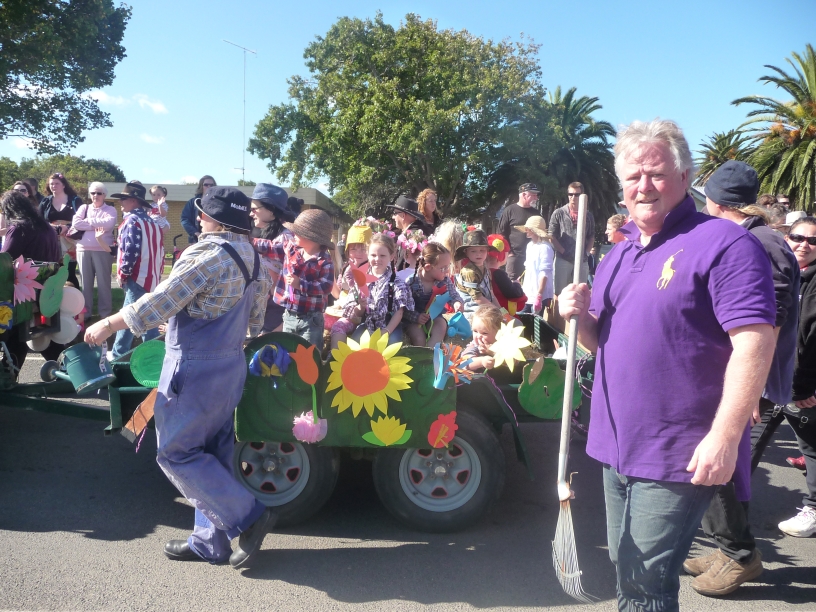
Today was huge. Every Easter our local town, Yarram, celebrates the Tarra Festival and at its heart is the parade. Colourful floats representing just about every facet of community life pass by thousands gathered on the footpaths and the centre plots. This morning, Zoe sat proudly among her friends on the kindergarten float, resplendent in yellow gardening hat and apron while waving a paper sunflower regally at the crowds. It was something of a rite of passage – I still remember clumsily twirling a Calesthenics baton decades ago along the same route – and she was in awe.

At the tail of the parade came three trucks: two B-Double milk co-op trucks and one belonging to the parade sponsor. The milk trucks are part of the community too and were warmly applauded.

The co-op's milk trucks are part of Yarram

The co-op's milk trucks part of the festival parade

After face-painting, slides, marvelling at the magicians, laughing at the clowns, catching up with friends and gobbling way too much fairy floss, we headed home to round up the cows. I was very proud of my tired little girl. She walked the cows in to the yard over 1.7 kilometres while making up lots of silly songs and giving me important directions.

Madame Butterfly stops traffic at the trough

We have a rule to let the cows drink for as long as they like on their way into the yard and in the picture you’ll see Madame Butterfly giving orders to stay clear of the drinking cows. After that, we checked two groups of cows, got in two mums and their newborns, fed grain to the yearlings and the springers, shifted the rising two-year-olds into a fresh paddock and checked in on a very sleepy and well-fed Laura.

Zoe will sleep well tonight!

Cycle of life adapts to a new climate

The calves are offered a special treat


Whether you call it climate variability or climate change, one thing’s for sure: we’re dealing with very different weather patterns in our part of Gippsland. The summers are hotter and tougher. The dryness now often begins in November and sometimes stretches into May. On the other hand, winter is warmer and grass grows far better in June and July than ever before.

This has fundamentally changed the farm, right down to the cycle of life. Instead of planning the calving season to begin in mid-July, we’ve decided to begin on April 20 this year. We’ve been surprised to see four premature calves (including twins Ella and Bella) born already – best laid plans often come undone at the hands of mother nature.

The reasoning is that we want to match the cows’ need for grass with the time when it grows best. Naturally, cows need the most energy when they produce the most milk, so we’re hoping to hit peak production in July/August/September, which is the period when the farm’s pastures are most productive under the new conditions.

The cows will have their two-month annual holiday from mid-February until calving begins in April – the time when grass is hardest to grow and when the cows’ energy needs are lessened. It will take time (two or three years) for us to get the whole herd into this pattern but it will be worth it. There will be less pressure on all of us.