Getting ready for another downpour (will it flood again?)

Signs of the flood on gates

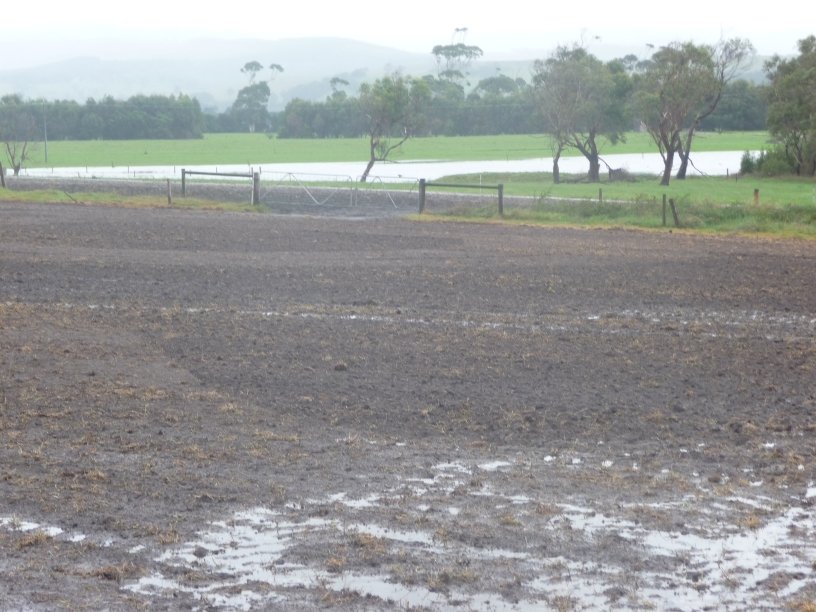
The hallmarks of the last flood remain while we prepare for the next one

We’ve been flat chat the last couple of days, preparing for the rain forecast for tonight and this week: another couple of inches, although the expected totals seem to be changing every few hours. I suspect this means it could be anything!

Fresh sawdust has been added to the calf shed while it’s dry. We’ve been grazing the most low-lying and distant pastures first, while setting up temporary fences on the higher ground. Repairs to the fences on the river flat have been called to a halt for now. Extra silage has been delivered while it’s accessible.

In fact, any outdoor job that could be done is being done. Now we can only cross our fingers.


Floods, bogs and mud, mud, mud

Flood 22 July

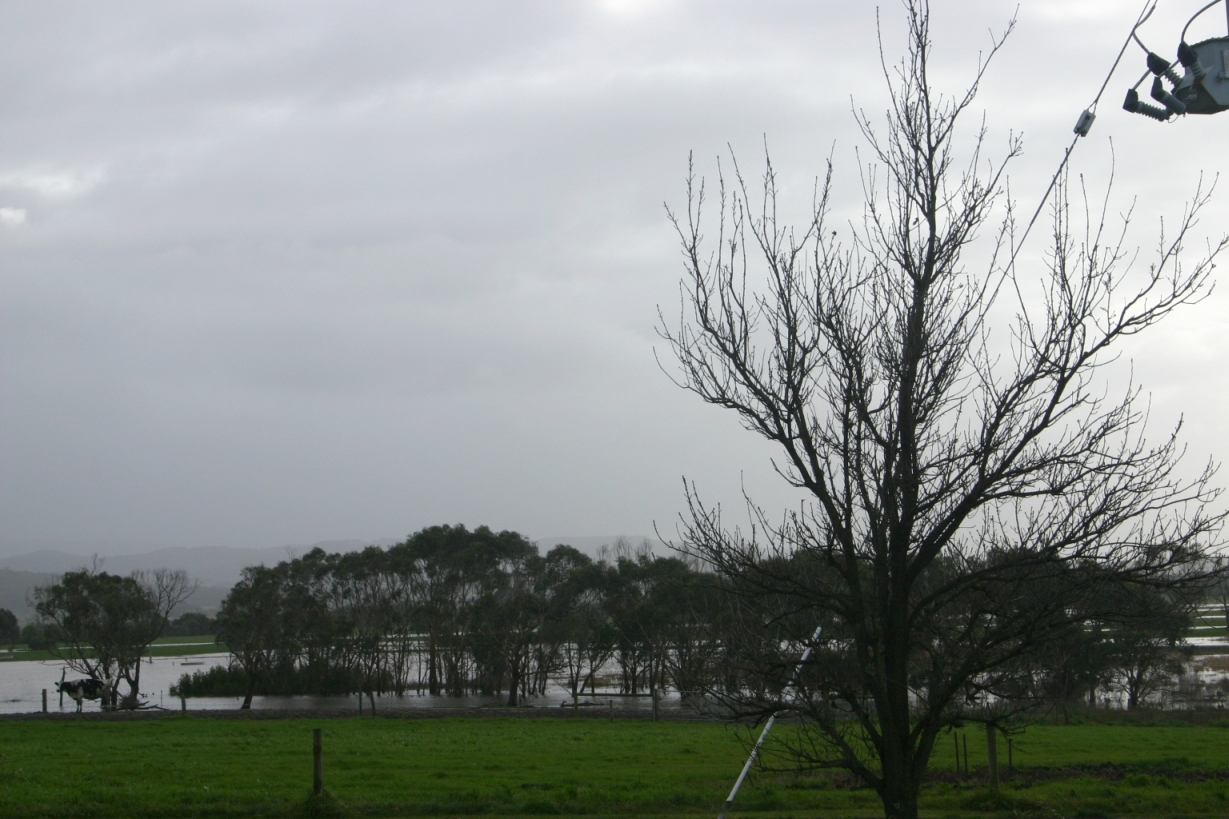
Partial view of the flood from the house this morning

The rain came…again. Yesterday, Yarram airport received 48.5mm and today, all the roads to town are closed, a third of the farm is cut off with at least another four paddocks underwater and the car is still sitting bogged in the driveway. Thankfully, the house is nice and high, so no sand bags needed (but thanks for the offer, Julie and Doug)!

Most of this is a temporary inconvenience. The good news is that the local rivers are short and empty into the sea quickly, so the roads should be open again in the next day or so. More important is the longer lasting issue of saturated pastures and muddy tracks.

Saturated pastures (they were already saturated before this jolly east coast low pressure system decided to pay us a visit) are very vulnerable. The damage done now by cows’ hooves will cause compaction of the soil so that, come summer, water will run off rather than soak in and roots will find it harder to penetrate the soil, exposing them to heat and denying them sub-surface moisture. If you’re a gardener, you’ll understand!

Muddy pastures and tracks are also a perfect recipe for lameness and mastitis, both painful conditions that are difficult and expensive to treat.

Of course, sopping wet soil is also no good for growing grass, which means we must step up our imported feed. This means more cost, long days and heavy tractors on fragile pastures.

Those weather gods need an urgent performance review so they can refocus on their KPIs!

At least there aren’t white caps in paddock 17 today

Flooded paddock 17

Flooded paddock 17

Paddock 17 and part of 18 are underwater today but at least there are no white caps. White caps? Yes, the ones sailors dread on an angry sea were whipped up in paddock 17 a week ago. The waters have barely subsided since then and all of the three forecast models I follow on OzForecast.com.au are predicting lots more rain in the next few days.

I’m a weather geek at the best of times but now I’m now compulsive about checking the forecast. Almost all our ready-to-graze pastures are on the river flats across the gully, which is infamous for flash flooding. A big downpour on the range to our south would see the cows marooned. There’s no bridge – only a concrete fjord – and I reckon building one would certainly usher in a drought!

Seriously though, I know many dairy farmers are facing much tougher times than we are with this amazingly wet season. Good luck to those still struggling with floods. Our thoughts are with you.

Just because I told you the climate was getting drier…

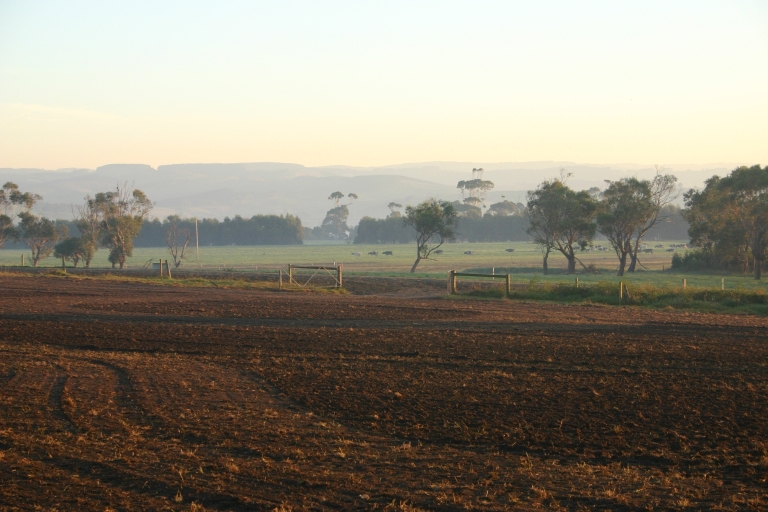
It must have been because I wrote about dry summers and autumns in my previous post – the weather gods have once again turned on the rain. Paddock 17 is today better known as “Lake 17”. Compare this pic taken this morning with the one I shot just a few days ago.

It’s nice to have the moisture but this much rain certainly calls a halt to our pasture renovation for now. I’m also wondering how many more times the 800 trees we planted in paddock 17 last October can cope with going underwater.

What a difference a few days make!

The same view just a few days ago