Painful fall as Ball Face ousted as king of the bulls

The farm’s most aggressive bull has reigned for about two years as no other bull, even those who stood several inches taller, were as mean as Ball Face.

Wayne put him in the bull paddock last night. This morning Ball Face was missing. We discovered snapped wires along the laneway and figured the grader had clipped the fence, shorting out the power, so after the afternoon rounding up, it fell to me and the kids to restore the circuit and find the errant king while Wayne milked.

I fixed the laneway and found Ball Face and Fernando in the newly planted-out wetland. Aargh! Not my precious revegetation!!! The pair of them had left a trail of sagging wires and were busily roughing up some melaleucas. Can you spot them?

BullsInWetland

I sallied forth armed with a pigtail post and a long piece of poly pipe, leaving strict instructions for Zoe to stay on top of the Bobcat. I tried to look big and summoned my growliest voice. Magically, the two of them hopped out quite obediently. All that was left was to strain the three wires and turn the fence back on. Until this.
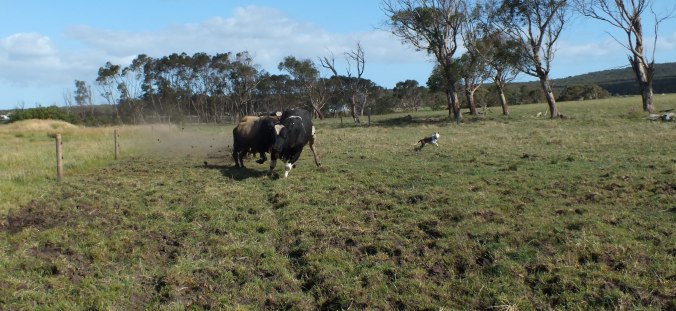
BallFaceChase

No one bull may have been game to take Ball Face on but a pack of them wanted him dead. Shrieking but quick, Zoe snapped this pic as the group charged towards us and I scrambled back onto the Bobcat. They thundered right around us and pursued Ball Face, literally pushing him through the fence (again) a hundred metres further up the paddock.

The fence strainer got a workout and then it was off, again, with pigtail post and poly pipe to remove Ball Face from his refuge. The gang stayed close to the fence and it was painfully obvious they would give him the medicine all over again, so I put him on the far side of the wetland, nine strands of hotwire away.

I don’t think I’ve ever seen a king deposed by a gang. Normally, it happens when an upstart matures, challenging the patriarch to a one-on-one duel with the rest watching. But then, Ball Face is something extraordinary. Maybe it really is time for him to go.

Angry mob stages a mootiny

They were right. There simply wasn’t enough grass left in the paddock for a repeat visit and, in the wash up of a riotously great 6-year-old birthday party, we were late on the scene.

We arrived on the river flats to find the first 50 or so cows out of the dairy staging a “stand-in” outside the entrance to the rejected paddock. I turned to set up an alternative just 100 metres the other direction and they marched towards us, disgusted to find I had taped off the lane behind us. While I set everything up and my little party-goer took a siesta, a few members of the mob broke ranks and began to filter in to graze the drabs.

After the party

She’d partied hard.

Of course, that meant we had to get them out and that’s when the trouble really started. Everyone else followed us in and were totally confused when we wheeled around and tried to push the surging mob back out from whence they came. Well, it took five minutes and a lot of determination to move them 40 metres.

Then they went the wrong way up the lane and it was my tough little farmer who convinced them to, very reluctantly, turn once again.

Angry mob of dairy cows

The ragged party goer came to life when presented with a challenge and was there behind them in the dust

A heartbeat after I took this pic, the leaders saw the opening to the fresh paddock and, like a stampede of New Years’ Day shoppers, they were off.

How a girl becomes a cow-girl

Zoe gets cows. She really undersands them but there’s still lots to learn and, early this morning, we had a fun little lesson with the “teenagers” on the farm.

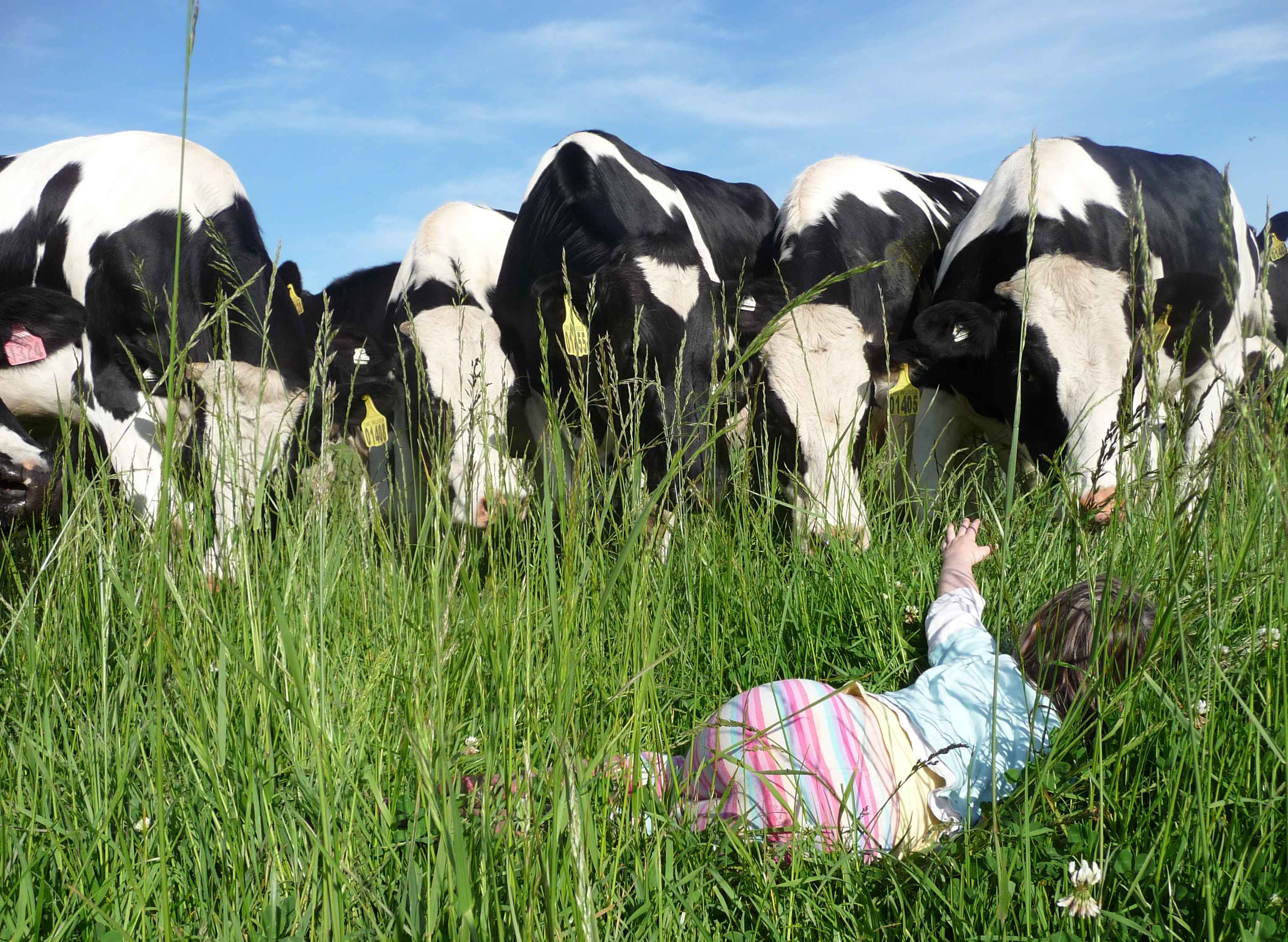
Step one is to lie down nice and still in the grass. Step two is to stay still (and quiet). Step three is to wait a little bit longer.

Heifers and Zoe reach out

“You can trust me”

If you’re patient enough, they’ll come. Snuffling, chewing their cud and nudging forward little by little with unbridled curiosity. It’s not exactly “Gorillas in the Mist” but it is an awesome, humbling experience and everybody should try it.

It’s not all black and white at the Royal Melbourne Dairy Show

There hasn’t been a lot of activity on the Milk Maid Marian dairy blog of late because we’ve taken a family mini-break centred around the Royal Melbourne Dairy Show. Held a week or so before the big public Royal Melbourne Show, this event is the opportunity for dairy breeders to strut their stuff.

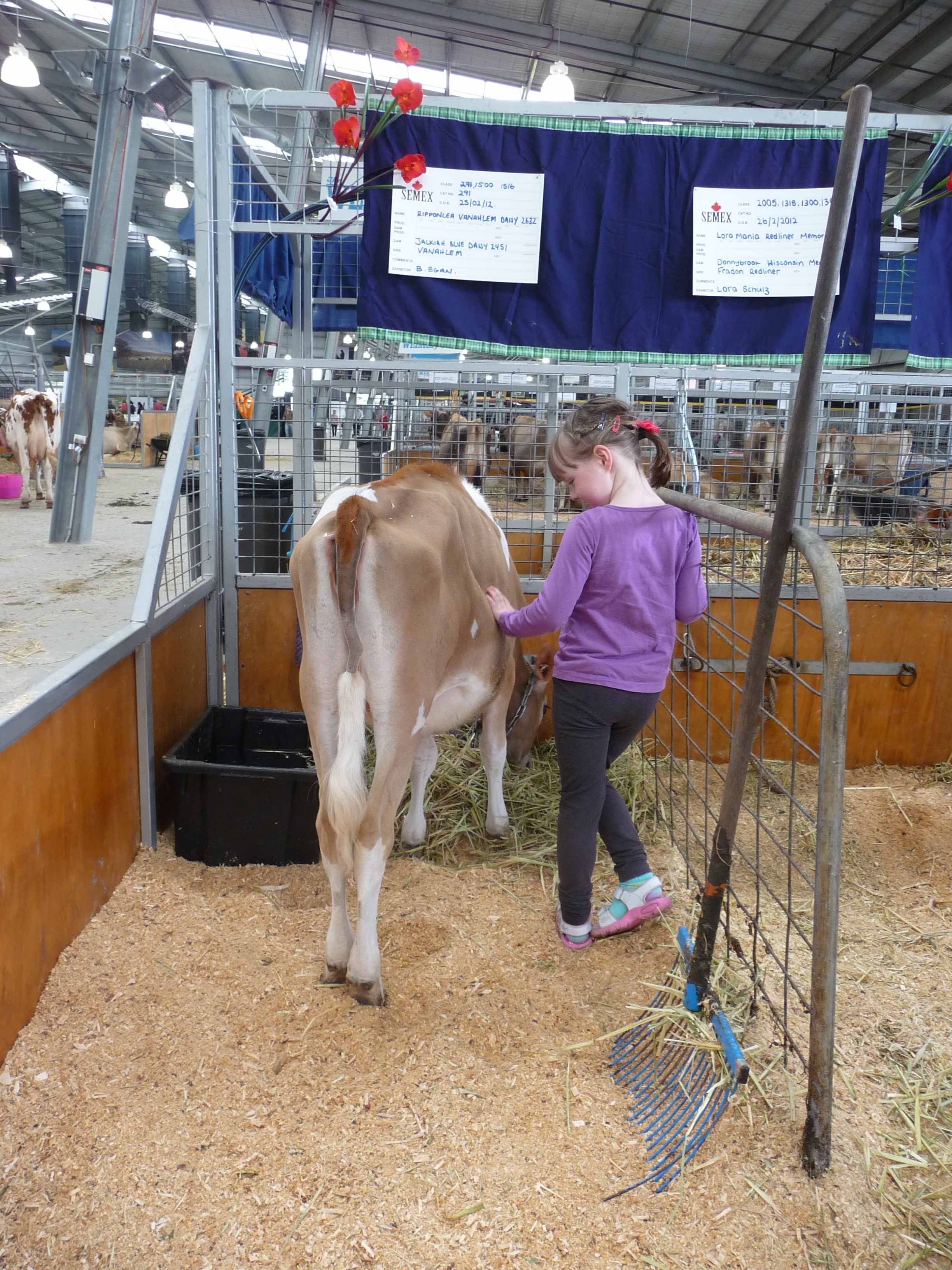
What struck us as “commercial” dairy farmers rather than showies was the variety of cows and the sheer size of the Holsteins. Just take a look at this cow!

Huge Holstein cow

The guy handling the cow was not a midget

We also fell in love with a few gorgeous cows.

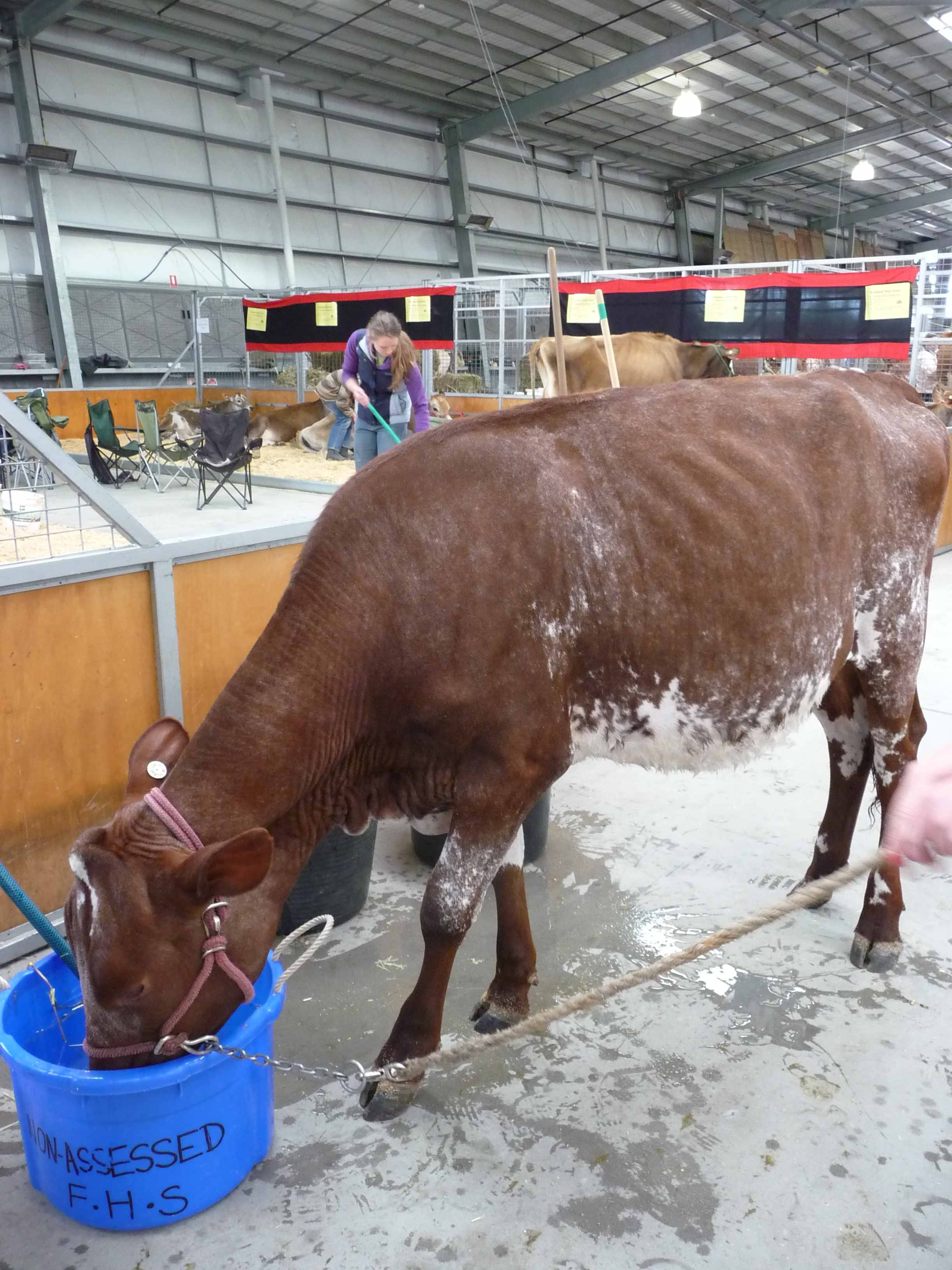
Illawarra cow

Young Illawarra cow – Australia’s own dairy breed

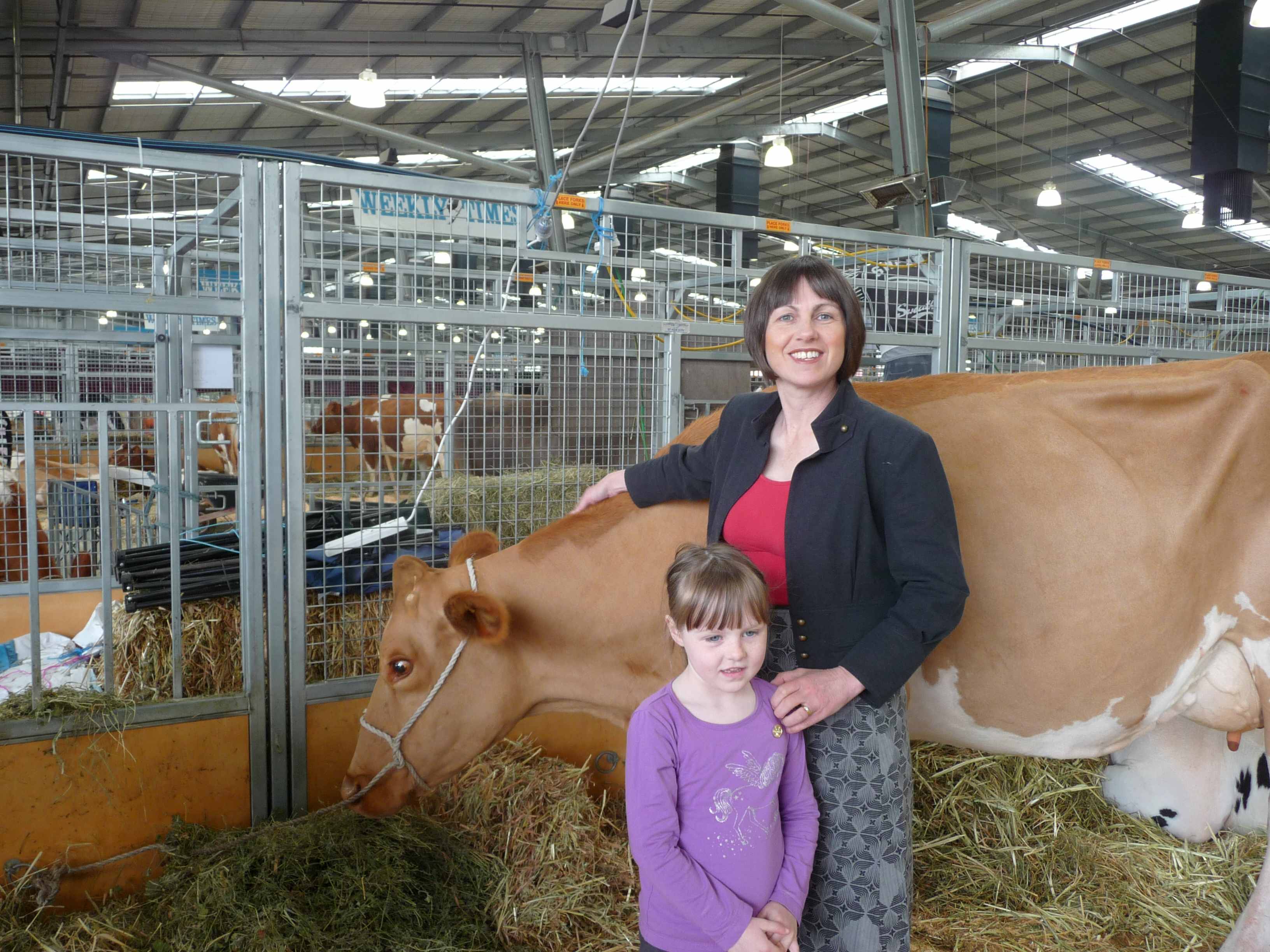
Guernsey cow

A gentle Guernsey called “Bling”

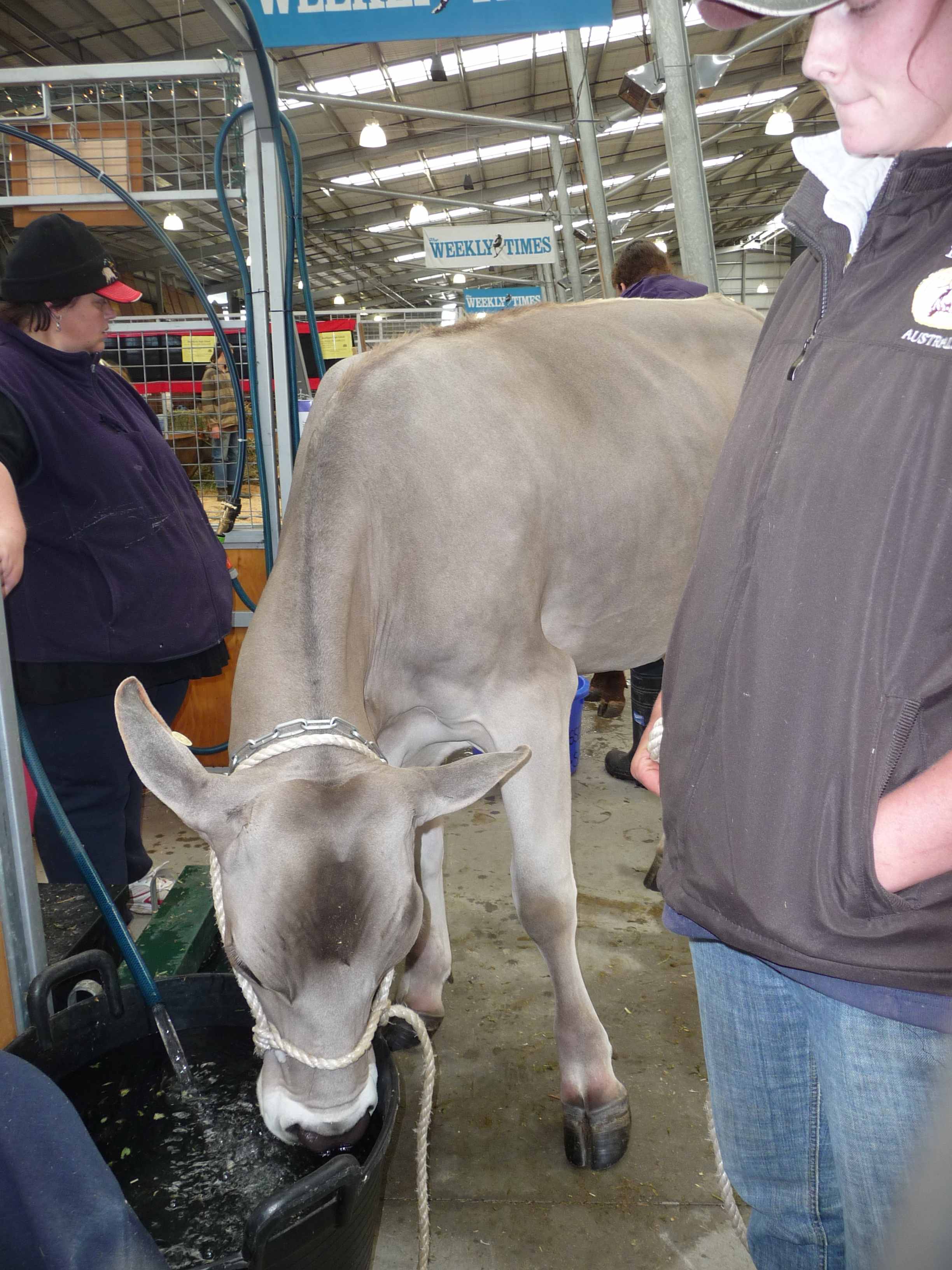
Brown Swiss cow

Beautiful Brown Swiss

Jersey Heifer

Zoe with a dear little Jersey yearling

It’s a great reminder that even though 1.4 million of Australia’s 1.7 million dairy cows are Holsteins, there’s a whole kaleidoscope of cows out there.

First day of spring and the bulls are a-leaping

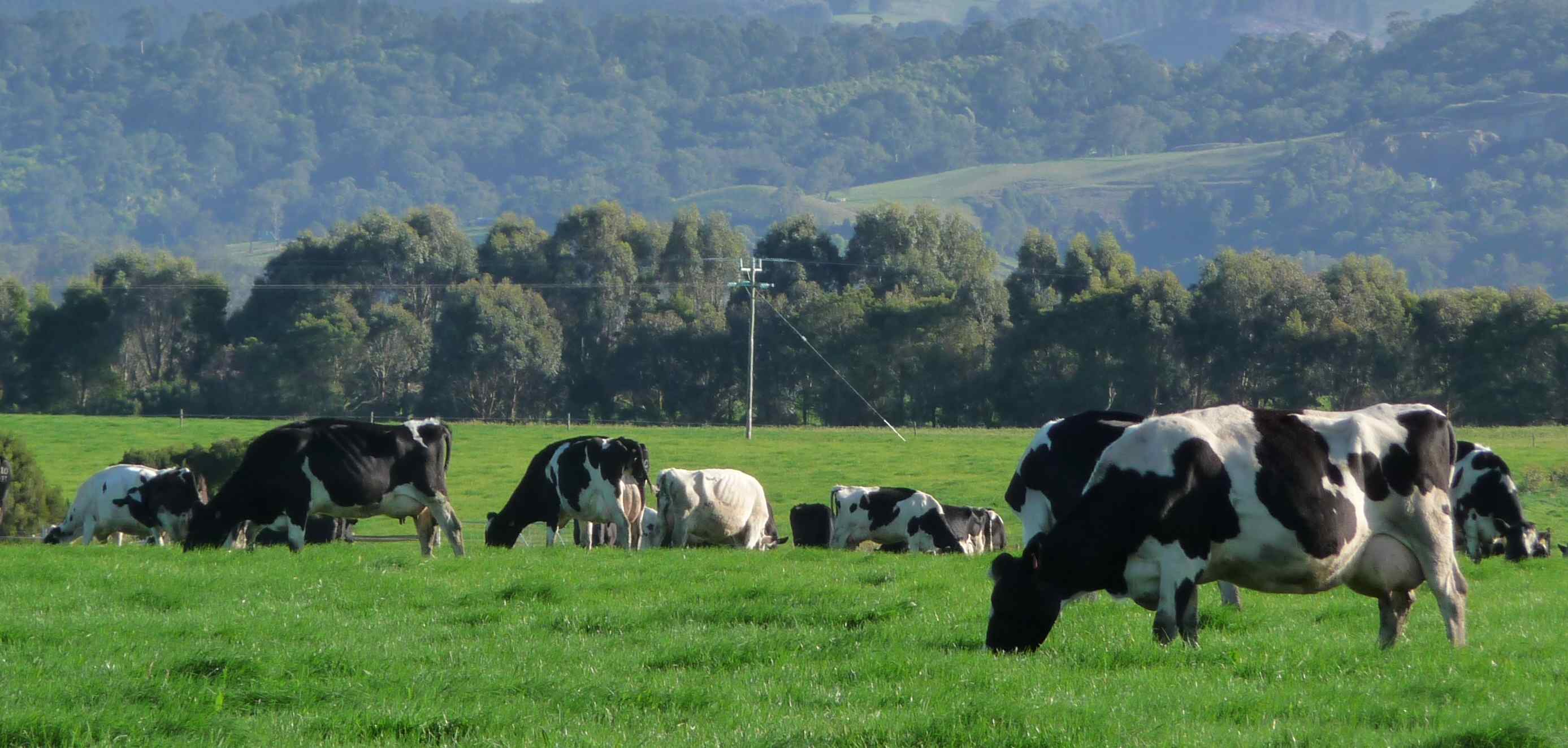
It’s officially the first day of Spring in Australia and it feels like it, too. This was the view from the garden this morning. I almost wanted grass on my rice cakes!

House paddock

Welcome to Spring!

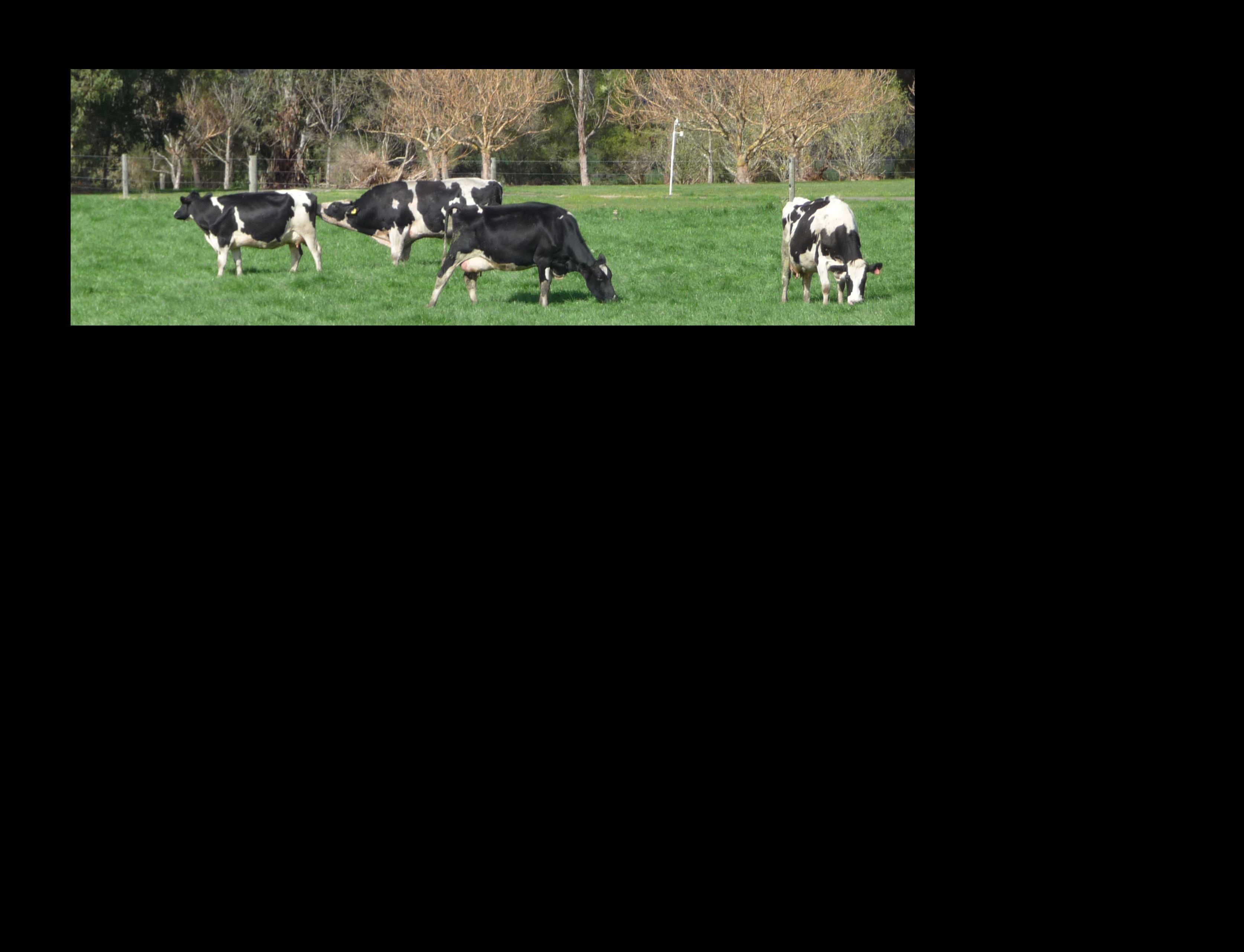
The cows seem to feel it, too. They play “butter-heads” (as Zoe calls it) at almost every turn and are shedding their scruffy winter coats, revealing glossy new hair underneath. The male of the species, I must say, is also enjoying himself.

We run three bulls with the herd while resting another group of four at any one time because it’s hard work jumping on cows all day (yes, I know what you’re thinking). There was a change of shift for the bulls this morning and I thought I’d capture a little of the courting game for you.

The first bull opened with an impressive display, enrapturing the cows, well not quite…Oh dear – I have a video but YouTube is taking all afternoon – sorry. Let me put it this way, while Buster bull roared, sang and dug up dirt, the cows simply continued to eat. I told you the grass was good!

The next step is to have a good sniff of everyone.

Sniffing bull

Ooooh, you smell gooooohd!

The curled lip is called the “Flehmen Response” and shows the bull thinks she might just be “in the mood”.

Sadly, she wasn’t. He got it wrong and she quickly scurried off. Oh well, Bully Boy, better luck next time!

O-week for a young cow

The first member of the class of 2012 has calved and she’s lovely! To help her learn the ropes, we’ve had her with the milking herd for a couple of weeks prior to calving. The noises of the dairy are already familiar and the dinner served during milking must have been divine because she only kicked at the cups once – even though it’s the first time anyone’s handled her teats, let alone milked her.

That’s a big deal for us as farmers. A quiet cow is a happy cow and that means she lets down her milk readily and is less likely to suffer mastitis. And we are less likely to get hurt. In the dairy, we have to reach between the powerful hind legs of 550 kg cows, 500 times a day. Getting kicked can mean broken fingers, hands, arms and faces.

Anyhow, this young cow is a pretty cool customer, even when being pestered by a silly pup who wants to slurp up some delicious cow poo (never let a farm dog lick your face).

Do you have the stomach to adopt a heifer?

I was amazed by Mike’s comment suggesting an “adopt a heifer” program following my last post about the impact of falling milk prices on my dairy cows and even more amazed by the responses it generated.

One of my fellow dairy farmers, Jessa, has had the same thought but a few reservations have held her back. The biggie is: “What if the heifer dies?”.

To that, I’d add: “What if the heifer turns out to be infertile, bad feet that send her lame often or gets intractable mastitis?”. The reality is that, ordinarily, she’d be sent to market. There is no ‘fat’ in the price farmers are paid for their milk and, consequently, no room for infirm passengers on farm. How would you feel if your adopted heifer had to go? Especially if I posted a picture of her big brown eyes.

The scenario gets at the heart of what it is to be a farmer. We love animals. But we can only look after them properly if we are profitable farmers and that means some animals are created more equal than others (with apologies to Mr Orwell).

Farm animals are cherished but not in the same way as pets – mostly. I still remember the day 30 years ago when my father sent Queen Bessie to market. For a decade or more, Queen Bessie stood regally at the head of the dairy entrance demanding scratches until she simply became too old to thrive. Dad was shattered for weeks but, nevertheless, she was sold.

It’s only with a philosopher’s eye for the big picture that farmers manage the balancing act of love, business and the welfare of the herd. Could you stomach it or is that where the “adopt a heifer” experiment would come unstuck?


How falling milk prices affect my dairy cows

When milk prices fall, the first ones to suffer are the members of dairy farming families – Alex, Zoe, Wayne and me. The second ones are the people who make an income from supplying dairy farmers: feed merchants, vets, milking machine mechanics, fertiliser suppliers, the local newsagent and so on – our friends and neighbours. The next ones to suffer are cows.

With the price we are paid for our milk falling below the cost of production this year, I have some tough decisions to make and they come down to this: sell milkers, sell young cows, try to produce even more to meet our fixed costs (like the mortgage) or feed the cows less. Feeding the cows equates to about 40% of our income, so that’s a pretty obvious target and so is selling young stock.

It costs a lot (say $1500) to feed a young cow for two years until she’s ready to calve but, at about 12 months, I can sell her for about $1000. That’s very handy money when milk alone won’t pay the bills. Yes, it equates to selling the silverware but at least we live to fight another day.

Here’s the catch: if I sell her locally, she’ll probably be slaughtered at a value of, say, $500. If I sell her to a Chinese dairy farmer, I get the $1000. I’m assured that, as precious breeding stock, she’ll have a wonderful trip on the air-conditioned boat and she’ll join a herd of up to 30,000 other cows, with feed that arrives on a conveyor belt at their noses and whose manure is carried away by another conveyor belt at their tails. A very different life to the free range pasture based one she’d have here in Australia.

What should I do?


Splat!

After a nose dive

Even where it’s not wet, we manage to get nice and dirty

Today was one of those days.

Zoe fell over in the yard and got her left side covered in muck. Then she fell into a drain and got her belly muddy. Then this!

Save me

Save me, Mama!

Apparently, a good daily diet of dirt is good for you, innoculating you with beneficial bacteria. If so, Zoe is already set up for life!

It’s been another busy day. Aside from the normal milkings and feeding, this typical winter’s day on our dairy farm brought:

  • Four new calves and one assisted birth
  • The job of sorting heavily pregnant cows from those who are on “holidays”
  • Repairs to a quad bike after its electrics were savaged by hayshed rats
  • Feeding our 47 new calves
  • Moving young stock around to eat new pastures
  • Mucking out calf sheds
  • A little drama

A little drama? Yes, while we were sorting out the “springers” (cows about to calve) from the mob of dry cows, somebody decided to try out for the Bovine Olympics and crash over/through a six-strand barbed wire fence. The culprit was a cow who’d clearly had enough of Romeo the Bull. Unfortunately, she – and Romeo in turn – blundered into a paddock of yearlings, who found the whole affair incredibly exciting.

The whole scene must have looked rather comical: cow desperately zig-zagging through the paddock hotly pursued by Romeo, visibly equipped and amorous, followed by a roaring Bobcat staffed by a giggling 6 year old and white-knuckled mud-spattered farmer, plus a teen on another quad, Patch the yip-yapping pup and 60 bucking yearlings.

Thankfully, the besotted Romeo didn’t latch onto any of the yearlings and the cow seemed relieved to be out of there, so the carnival was over almost as quickly as it began.

You have to laugh!

Heifers home from boarding school

Heifers return home

“State your business!”

Youngsters of practically any species are funny, curious creatures and young cows are no different. These are our calves of 2010, back home after spending a season with Madeline, a farmer an hour up the road. Does home feel familiar? I hope so but in any case, these little cows have a bravado beyond their years and they weren’t showing any nerves as we sidled up to them.

At two years, they are about to calve for the first time and join the milking herd. It’s bound to be an exciting time for all concerned. Suffice to say, I’m rushing around the milker’s paddocks shoring up all the fencing for a good workout over the next couple of months and hoping they will be as quiet and gentle as the class of 2011!