Life goes on

Daily tasks on a dairy farm are a great reminder that, no matter what happens, life goes on.

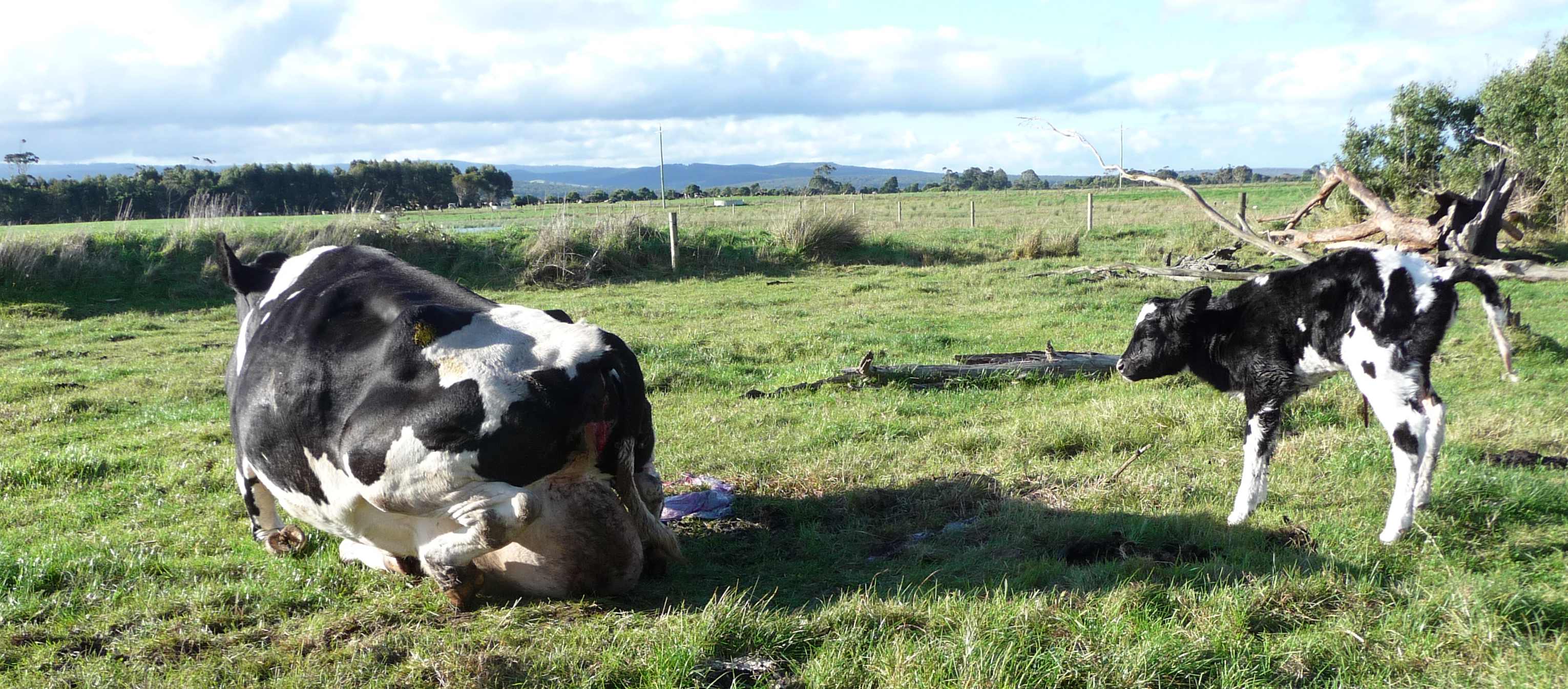
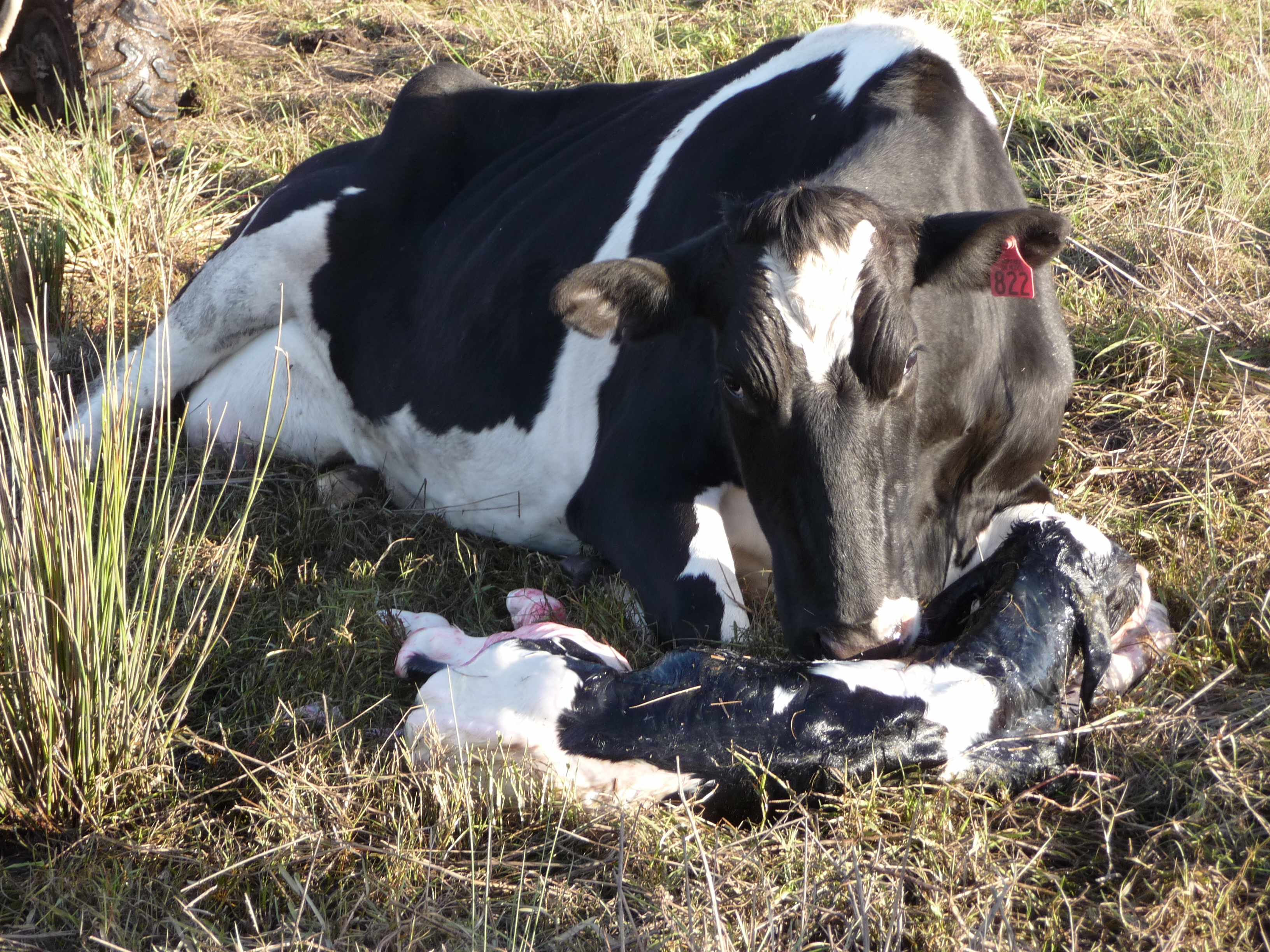
Newborn calf welcomed by the cow

New life

While the floods have given us a good shaking, the circle of life continues to turn. We lost one cow last night because her calf tried to come out with all four feet at once but were delighted to assist the delivery of this lovely little calf.

Most cows manage calving on their own with ease (at least relative ease compared to human birth) and we don’t intervene unless we must for the sake of the cow and calf.

Typically, cows tend to head off to a quiet spot on their own to calve, often pacing around and around as the contractions begin. We look for two front feet first, then a nose. The calf should seem to be diving out of the cow! The whole labour shouldn’t take more than two hours or so.

Wow! After seeing thousands of calves born over my lifetime, it still amazes me.

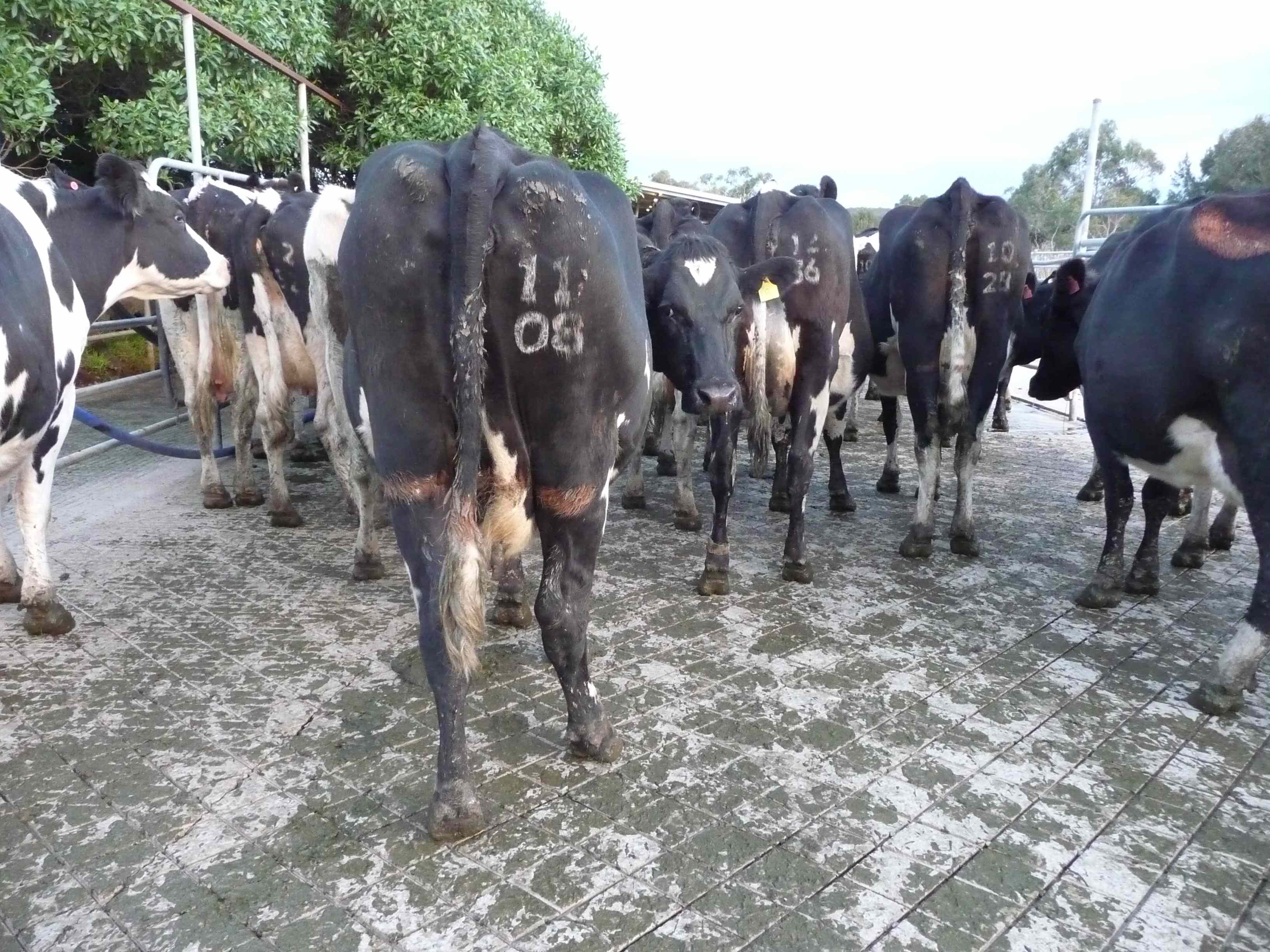
Does my bum look fat in this? Absolutely, sorry Honey

Cow rear

“Does my bum look fat in this?”

Yes, 1108, I’m afraid it does.

How do you know when a cow is fat? It’s not the size of her belly that counts – it is the hollows around her tail and 1108 barely has any. Come to that, she barely has any milk either, which is why she’s got a red stripe painted on her rear. 1108 should be in calf but my suspicion is that she’s not.

We have her and another five cows booked in for pregnancy tests on Tuesday and if she’s in calf, we’ll treat her with a mastitis preventative and send her on holiday to a paddock across the road. If there’s no calf, she will have to be sold.

While many of our cows do not fall pregnant every year, most of them milk well until they are blessed by the bull the next season. In fact, joining cows only every 18 months (“extended lactation“) is now considered a viable strategy for Victorian farmers.

It’s something that we have adopted here for cows that don’t conceive quickly and it works for almost the entire herd.

Fingers crossed, 1108.

Robotic milking: the gentle touch of machine on moo?

FutureDairy project leader Dr Kendra Kerrisk is something of an icon in her field of milking automation and so it’s very exciting to have her write this guest post for Milk Maid Marian. There are already a handful of robotic dairies in Australia and this looks to be the way of the future. Ironically, Kendra explains, it may allow dairy farmers to spend even more “quality time” with their cows.

Robotic milking is a relatively new concept for Australian dairy farmers even though our European counterparts are well accustomed to the idea. It is a technology that I have had the honour of working with for 10 years now and there a lot to be send for this new way of milking cows.

To the less informed, the concept may conjure up images of metal on flesh that are less appealing than the tender human touch. In fact the contact with the cow is every bit at gentle as the conventional approach and one of my fondest observations is that robotic milking farmers have an increased ability to enjoy the time that they spend with their cows when they no longer have to attach milking cups to every teat of every cow twice every day. It seems that the saying “quality not quantity” has a place when it comes to farmer/cow interactions.

Robotic milking farmers are unanimous in their opinion that the technology creates a farm system that results in very relaxed and laid back cows. The idea of robotic milking is that milking occurs 24 hours per day and that the process is voluntary (i.e. the cow completes the process without human intervention). Whenever I spend time with visitors at a robotic dairy (either our research facility or on commercial farms) the visitors are always deeply influenced by how quite and calm the milking process is with robots.

With robotic milking the cow chooses when to be milked and moves around the farm system at ‘cow pace’.

Cows in paddock with robotic milker in background

The cows are moving one by one hoorah hoorah…

Whilst I have been involved in researching the application of robotic milking I have also had the pleasure of being involved with many commercial farmers as they adopt this new way of farming. The farmer must learn a new management style whereby the farm is managed in such a way that the cows makes choices that suit the farmer and the farm targets. Cows move around the farm to gain access to incentives and by default can find themselves at the dairy for milking when their time is due.

Cow walks through robotic gates

With robotic milking the cows bring themselves to the dairy (they even operate specially designed one-way gates themselves) and take themselves back to the paddock.

The concept of robotic milking is creating a work environment that allows farmers and their employees to focus on higher level management tasks. In this manner they have the opportunity to manage their herd through an increase in the level of real time data that becomes available to them allowing them to focus on individual cows that require attention. The real attraction is the more flexible working hours that reduce the need for the early morning starts and commitment to milking cows twice a day. And the bonus for the cows is that they can now manage themselves in a manner that best suits them as individuals or as social groups.

Robotic dairy

These ladies know exactly how to manage the system to ensure they don’t miss out on the “treats” and “rewards” that are available to them.

Cows are creatures of habit and they truly appreciate a predictable environment. Robotic milking is exactly that and the outcome is a herd of cows that are very easy to work with since they become extremely calm and ‘chilled out’. With all of my experience in the area of robotic milking I have absolutely no doubt that this is a way of farming that is going to be increasingly adopted on commercial dairy farms in Australia and around the world.

Possibly one of the greatest bonuses is that I reckon dairy farming is going to increase in appeal with the younger generation which is exactly what our industry needs if we are to remain sustainable far into the future. If we achieve that they we are all winners because it goes a long way to securing our ability to continue to provide Australians with fresh, safe and nutritious dairy products that are produced in our own backyard!

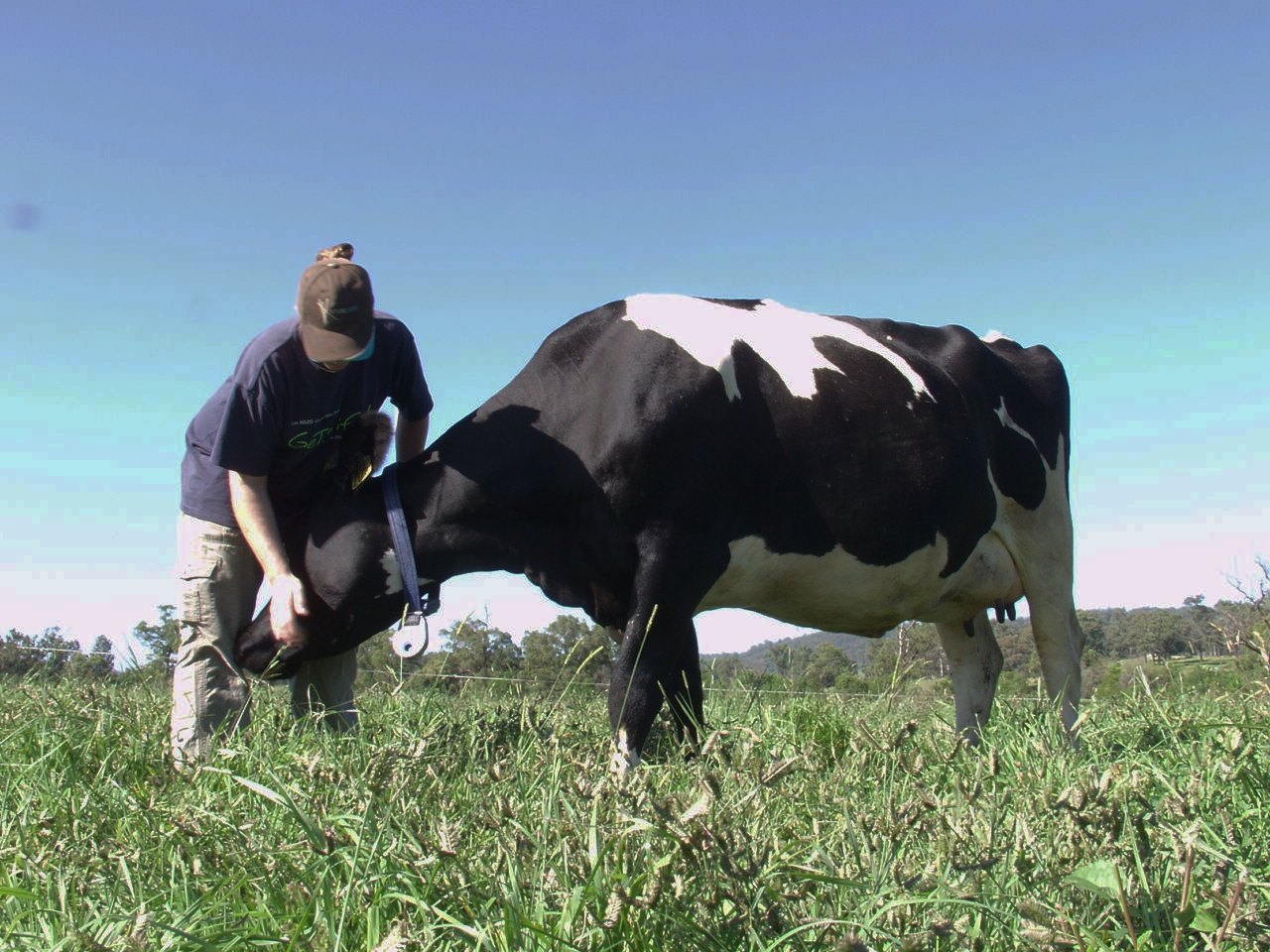
There’s always time for a good scratch!!

There’s always time for a good scratch!!

What’s so special about this calf?

Emily Brown of Linderlan Brown Swiss is a very clever young woman and dairy farmer and I am really pleased she accepted an invitation to write a guest post for me. Over to you, Emily!

First I’d like to thank The Milk Maid Marian for inviting me to do a guest blog! I feel very honoured and somewhat famous…

I’d like to introduced you to Olga, a brand new baby calf born recently, what’s so special about her you ask? (apart from how obviously adorable she is of course!) Well lots of things!

Olga the calf

Olga


Olga is a pure bred Brown Swiss dairy calf, she is four weeks old and loves to drink milk, eat grain and hay, and run circuits of the calf paddock at full speed with all her mates, but that’s not all, Olga came into the world in a very unusual way!

Olga was born via embryo transfer. This is where a superior cow is selected to produce embryos which get implanted into other, less valuable cows, resulting in more offspring from the very best cows. This is done by a special vet who gives the mother or ‘donor cow’ injections to stimulate multiple eggs to be formed, kind of like when someone has twins or triplets. They are then fertilised via artificial insemination, and after seven days flushed out and either implanted into another cow, or frozen to be implanted at a later date. Olga’s mum made six in one go!

So why do dairy farmers sometimes do embryo transfer? Well, we are always looking to use the best technology to ensure that we are breeding the healthiest, most productive animals we can. This enables them to live longer and better lives, which is great for the animal and the farmer!

But there’s another reason Olga’s mum was selected to produce embryos: not only has she lived a long time and produced a lot of high quality milk but two of her daughters and one of her grand-daughters have won Champion of their age groups at the biggest and most glamorous dairy show in Australia – International Dairy Week. This is where the most beautiful cows of the six dairy breeds strut their stuff every year.

Olga's Mum

Olga’s Mum

Let’s hope little Olga follows in her big sisters footsteps in the future, but with a little brother or sister on the way 10 weeks after she was born she might have some competition!!!

Olga's crew

Olga’s crew

What is going on in the calving paddock?

Calving trouble

Trouble with a capital T

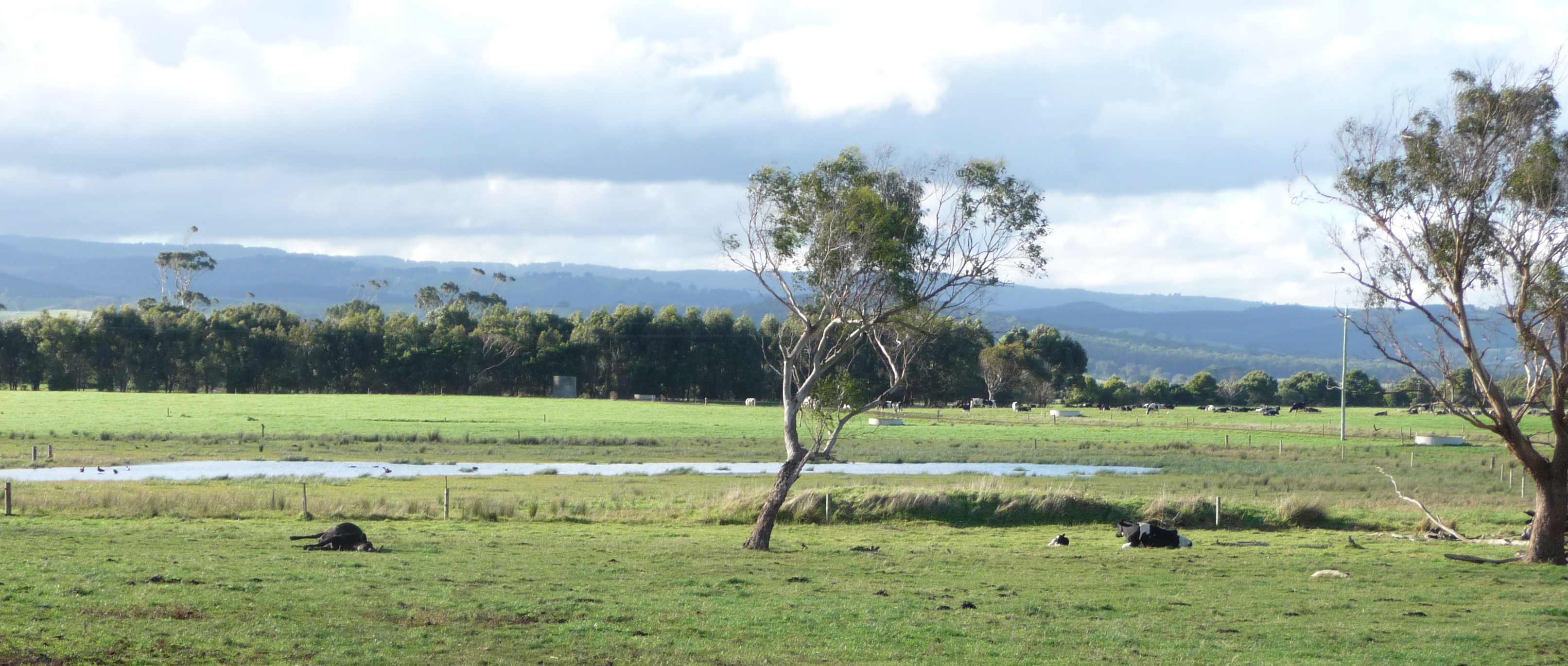
A cow lying on her side with her legs stuck straight out like this is not a good sign. “She’ll just be in the throes of calving,” I told myself as Zoe, baby and I bounced across the calving paddock.

It was not to be – the little cow was trying to push out a massive bull calf who had become stuck just after his shoulders. His tongue was pink, his eyes shone but, sadly, he was gone. Our attention turned immediately to the cow for if left too long, she would almost certainly suffer paralysis.

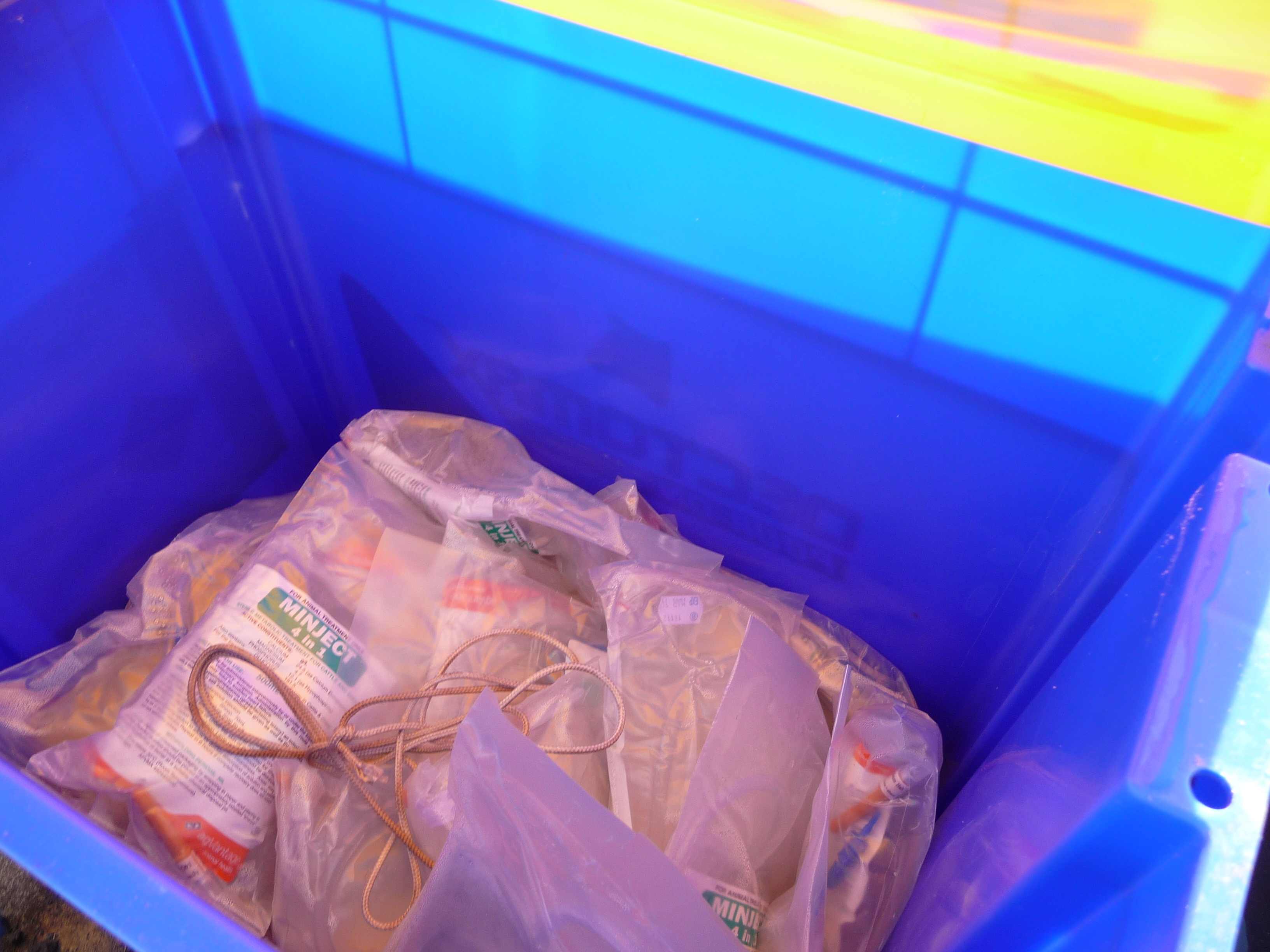
We keep a strong rope in the calving paddock’s medicine chest to help with calvings when necessary. Although we select bulls with smooth shoulders and of medium stature in an attempt to avoid trouble, calves are sometimes just too big, turned the wrong way or the cow is simply too weary to manage it on her own.

Dairy cow calving medicine chest

Emergency supplies are kept in a chest in the calving paddock

I looped the ends of the cord around the calf’s feet, stepped into the circle and eased back with the cow’s contractions. Nothing. I tried again but the calf could not be budged. Heavy reinforcements in the shape of husband Wayne were called in and, thankfully, the calf was out.

By then, I’d discovered there was another cow in trouble. 196, who is 14 years old, had earlier given birth to a beautiful heifer calf and when I went to check on her, this is all she could manage.

Milk fever

My legs aren’t working!

Dear old 196 was suffering from milk fever. This is really a metabolic disorder suffered by cows who just can’t get enough calcium into their blood streams after calving. Calcium is vital in the control of muscles, which is why she didn’t have the energy to stand up. Because the heart is a giant muscle, milk fever can also cause heart failure and immediate treatment is vital.

We minimise the risk of milk fever by feeding the cows very differently in the three weeks before calving. Instead of grass, they get hay that’s low in potassium and grain, while we add anionic salts to their water. This regimen encourages the cows to release calcium into their bloodstream so it’s available in the hours of peak demand after calving. When milk fever does strike, we give the cows a drip that includes calcium and sugar. Most cows are as right as rain again in no time, as was 196!

Both cows taken care of, we turned around to go and goodness gracious, it was all happening, including yet another calving underway!
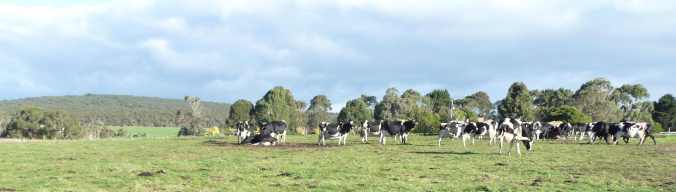
Calving Paddock

It’s all happening in the calving paddock!
The love drug

Cows and women both fall under the spell of an amazing love drug every time they produce milk: oxytocin. As a breastfeeding mother, I know the dreamy feeling that it brings first-hand and the cows might just enjoy the same sensation in the dairy.

Oxytocin triggers the “let down” reflex amongst other things (sexual arousal included!) but its action is pretty much blocked by stress hormone, adrenaline.

This is really obvious in the dairy. We make sure there aren’t too many people in the dairy, avoid shouting or having barking dogs nearby and even keep the radio on the same station. Upset the routine at all and the cows start to get jumpy. And that means lots of cow poo and golden showers plus a very slow milking coupled with less milk in the vat.

So, if you visit your local dairy farmer, try not to get too excited in the shed. Walk slowly and gently and, if you must make noise, make it a lullaby.

Twin calves confuse cows as well as the cocky

This is what I found when I got to the calving paddock:

Who's who?

Too many calves, not enough cows.

 
Yep, two calves having a drink but what about that one over there sitting down? Twice the size of the other two but clearly still a newborn…

I watched the cows and calves for a few minutes while shifting the fence and during that time, the big one took a fancy to me as the mother cow (yes, I know what you’re thinking!).

Are you my Mother?

Are you my Mother?

Having decided I wasn’t much chop as a mother cow, this suckie decided to try his luck with another cow. A serious tussle ensued between the two mother cows over the same calf and eventually, this girl ended up with two heifer (female) calves about the same size and the other cow claimed the big bull calf. Phew!

No rest for the mother of twins

A perfect multi-tasking mother!

I say “Phew!” because the female twin of a bull calf is likely to be an infertile “freemartin” so it was extra important that the pair was two females.

And did you say “eew” when you saw the first photo? Apologies if you were eating! If not and you have a strong stomach, consider this article on eating your own placenta.

The positives of being a dairy farmer

It’s one year since I started Milk Maid Marian and seeing as I’ve just finished reconciling our accounts for March, I thought it perfect timing to do the same for my life as a dairy farmer, beginning with the top five positives.

Love of the land
The first one has to be love of land. I am connected to this place and think of myself as its custodian. Just being here is good for the soul.

Farm children have something special
The farm allows me to work with Zoe and Alex, even in those precious early years. The farm’s also a great teacher: respect for work, respect for the environment, animals and nature. They have seen birth, life and death first-hand and I hope they have learned to accept life with good grace yet develop inquiring minds. There’s a palpable sense of responsibility about farm kids that’s matched with the enormous freedoms of farm life.

Working with animals
Cows, calves, bulls and dogs all have their own personalities but none of them play office politics around the water cooler. Because we work with our cows at least twice a day, we get to know and appreciate the characters!

Exercise for mind, body and soul
Farming is not for dummies, lazybones or fragile souls. The challenges are immense and that can be enervating because there is always something new to learn and do.

Knowing that we are making a difference
We produce great, clean, healthy food while looking after our animals and the land. That’s very satisfying.

Herd meets hound

Our dairy cows are used to being rounded up morning and night, seven days per week and love routine. They amble in at a very leisurely pace at about 1.5 to 2km an hour. This is frustratingly slow if you’re in a hurry but it’s great for their well-being.

Now, we took Patch out with us (tied up in the back of the Bobcat) to round up the cows for milking last night. As soon as we got to the paddock, he decided to bark in a very commanding fashion and I had to growl and rap him on the nose. Ignoring my warnings, he barked again. It was then that the herd decided to take control.

Took moments for Patch to get the message, sit down and stay quiet. Took a long time to get the cows heading in the right direction. I suspect today Patch will be a better dairy dog.

New season has us rushing around like squirrels

It’s autumn and our dairy farm is buzzing with activity before calving starts and winter sets in.

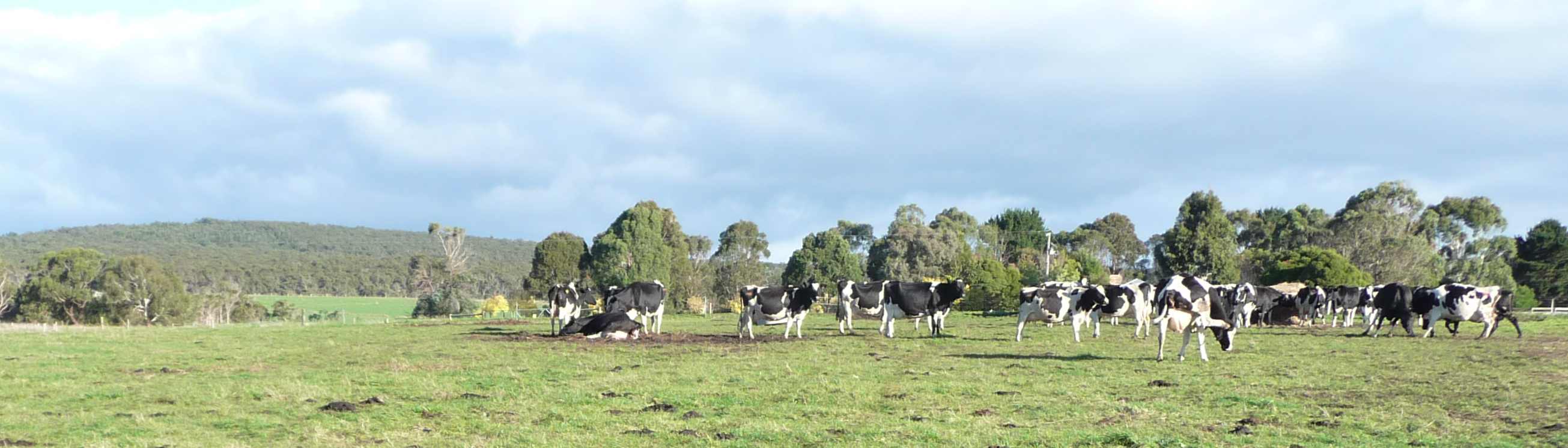
We have sent about 50 cows off to the other side of the farm for their annual two-month holidays. Before they go, they are given long-acting antibiotic therapy and teat seal to reduce the risk of mastitis when they calve.

Dry cows go on holiday

"Yay! Holidays!"

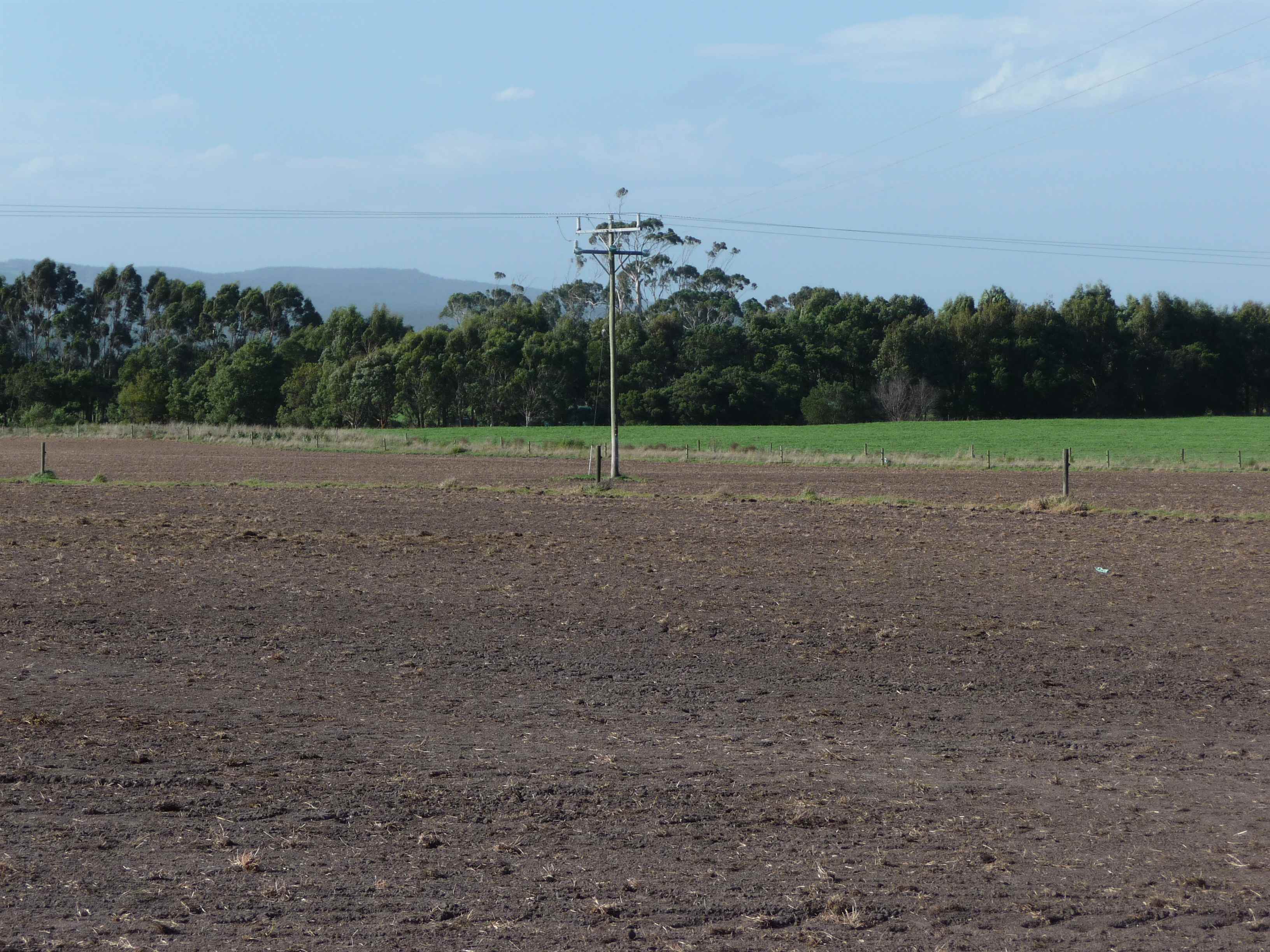
New pastures have been sown. Those (like this one) that were too rough have been fully cultivated with discs, power harrowed and rolled. This paddock has also had lime because its pH needs to be lifted a little higher. I’ll keep a photographic log of the paddock’s progress.

Newly sown paddock April 1st

Here it is, one day after sowing on April 1

We’ve invested in new stone and gravel for sections of the cow tracks and gateways.

New gravel

La la lush new gateway gravel!

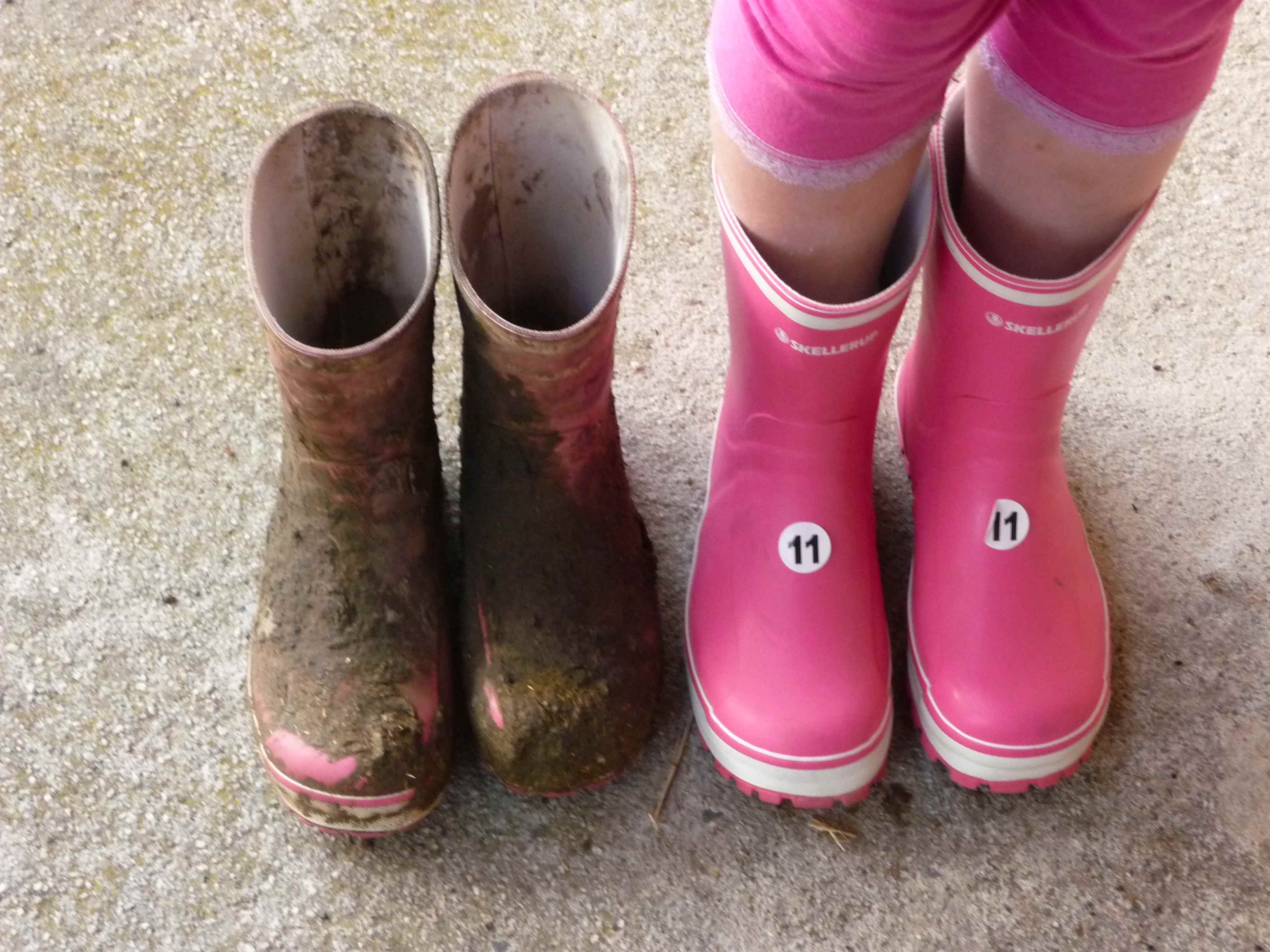
And, last but not least, a new pair of boots.

New rubber boots

How long 'til the pink turns khaki?

By the way, how do you know when your boots are too tight (especially when they were too loose the day before)?
“When you can’t do what you used to do with your boots.”
“What’s that, Zoe?”
“Put your big toe on top of the toe next to it.”
Obviously!