Cows are discerning diners

Dairy cows are every bit as discerning about their food as a MasterChef judge. They don’t like grass that’s too long, a species that’s unfamiliar and, less surprisingly, anything that’s got mud, manure or urine on it.

They don’t like longer grass because it gets fibrous. Our girls are thoroughly spoilt and only lush and juicy will do – so much so, they’d rather make a bed of it than eat stalky pasture.

This means that if you don’t have the grass eaten down far enough, it will get stalkier and stalkier as time goes by and the cows continue to refuse it.

According to the gurus, we should aim for a residual of four to six centimetres after the cows have left the paddock. If there’s only enough grass for half a grazing, you’re left with the dilemma of leaving it too long and seeing quality spiral or running out of feed. The textbook answer is to skip the paddock and “top” it with a mower but we don’t have enough people to do those types of jobs.

My alternatives are to save it for silage (topping’s automatically thrown in) or graze it and move them at lunchtime. And here they are:

Moving the cows

Mmmm...dessert!

Most of our farm’s internal fences are single-strand electric, which lends them perfectly to this type of manoeuvre. It took the cows five minutes or so to realise what I’d done but you can see how enthusiastic they were about their “second course” once the first pioneering diner ventured into cow nirvana.

How big are Australian dairy farms? And what is a “mega dairy”?

There’s a lot of talk of factory farming at the moment. Animal activists use the phrase to shock us and judging by the comments in response to John Bunting’s Journal, average US dairy farmers are afraid of being overtaken by “mega dairies”.

While Australia’s dairy farms are getting bigger, I haven’t heard of anything on the scale discussed by our American counterparts, so I thought I’d ask the gurus at Dairy Australia for the official stats.

It turns out that the vast majority of Australian dairy farms are still family-owned. Only 2 per cent are corporate. This does not surprise me. As leading farm consultant John Mulvany points out, corporate investors demand higher returns on their assets than the meagre 1 or 2 per cent that most dairy farms achieve. Second, paid labour is both expensive and inflexible in this highly volatile industry. This bothers me because it assumes that farm families should not expect the same standard of living as their employees.

The average Australian dairy herd has 220 milkers and here is the breakdown of herds across the spectrum:

small

medium

large

x-large

xx-large

total

% farms

26%

38%

24%

6%

5%

100%

% milk

8%

27%

31%

13%

20%

100%

What’s perhaps even more interesting (and heartening) are the definitions of size.

Small: Herd size of less than 150

Medium: Herd size between 150 – 300

Large: Herd size between 301 – 500

X-large: Herd size between 501 – 700

XX-large: Herd size greater than 700

So, when the US talks of mega-dairies milking thousands and thousands of cows, Aussies talk of XXL dairies milking more than 700.

I knew our heifers would be okay but I had to check

Yearling heifers

Our yearlings look lovely in their holiday home

Back in June, we were in big trouble. We’d had waaaay too much rain and there literally wasn’t enough dry pasture on the farm to feed all our animals.

I decided we had to send our precious heifers away on agistment. We were lucky enough to find a caring farmer just an hour away with just the right amount of land. While we know they are in good hands, it’s our responsibility to check in on them every few weeks and see how they’re going. Well, here they were today – looking great!

You can tell when yearlings are feeling good. They literally jump out of their skins. I walked into their paddock and caused massive excitement as they leapt and frolicked all over the place.

It’s been 12 weeks since their last drench and vaccinations, so we’ll organise another dose in the next fortnight to keep them looking terrific. They’ll meet their Jersey beaux later in the spring.

Teen tells her personal story of dairying in South Africa

I’ve been mightily impressed by the incredibly entertaining dairy blog of one very clever South African teenager, Firn Hyde, and asked her to send in a guest post.

Hello everyone in Australia and beyond. First of all I’d like to thank Marian for the very kind invitation to contribute to her fabulous blog. It’s much appreciated!

I’m Firn Hyde, the teenager of Hyde Family. We live in the Highveld of South Africa and run a small dairy called Hydeaway Farm, where we embrace our slogan – “Names Not Numbers”. My mom, Dinki, and dad, Jon, run it together; Dad is also a computer programmer and works in Johannesburg, so Mom does a lot of the daily management while Dad works on maintaining machinery and fences. Their two daughters, myself (fourteen years old) and Rain (twelve) complete the Hyde Family.
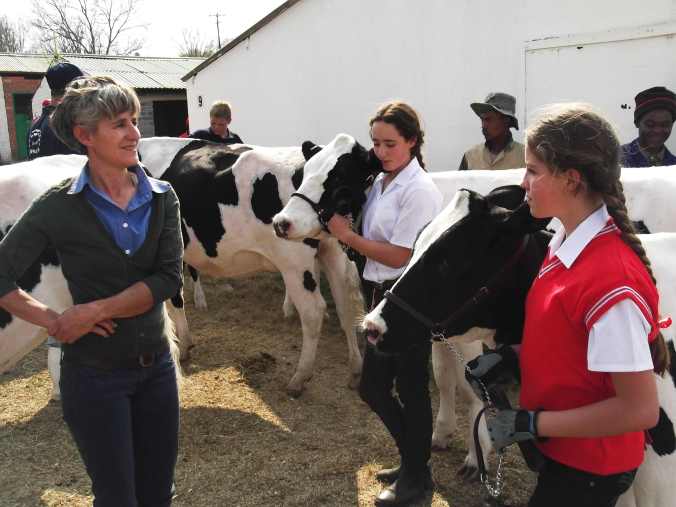
Firn Hyde

Dinki, Firn and Rain Hyde with Holstein heifers, Hermoine and Kaleidoscope, bred by Brett Gordon at the Standerton show

Mom and Dad chose to homeschool the two of us and in doing so gained two valuable farm labourers. Whilst Rain is a ballet dancer and does the more domestic jobs, I like to get dirty and work with the animals. This is definitely a family business. It’s a dream we all chase together.

We milk 90 registered cows and own Hydeaway Jersey Stud. We love Jerseys for several reasons, among them size, calving ease, temperament and their golden, creamy milk. The cows and many of the Jersey heifers go out to graze during the day. We would love to have beautiful pastures like Marian’s, but at present the best word for our grazing is “veld”, which is something between “grassland” and “wilderness” in our native language, Afrikaans. Due to the poor quality grass we supplement them with good eragrostis hay.

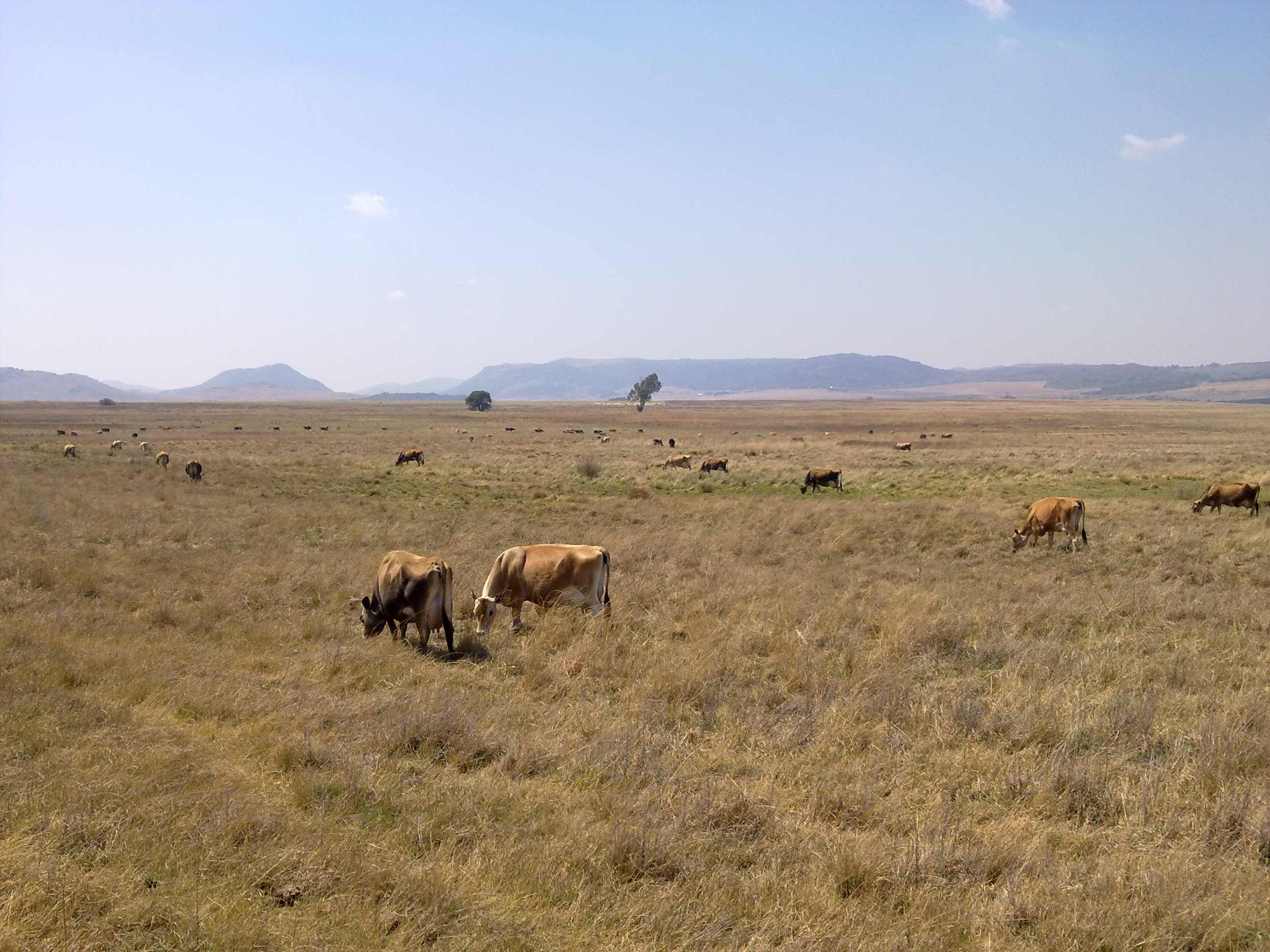
Hydeaway Jerseys grazing on the veld

Hydeaway Jerseys grazing on the veld

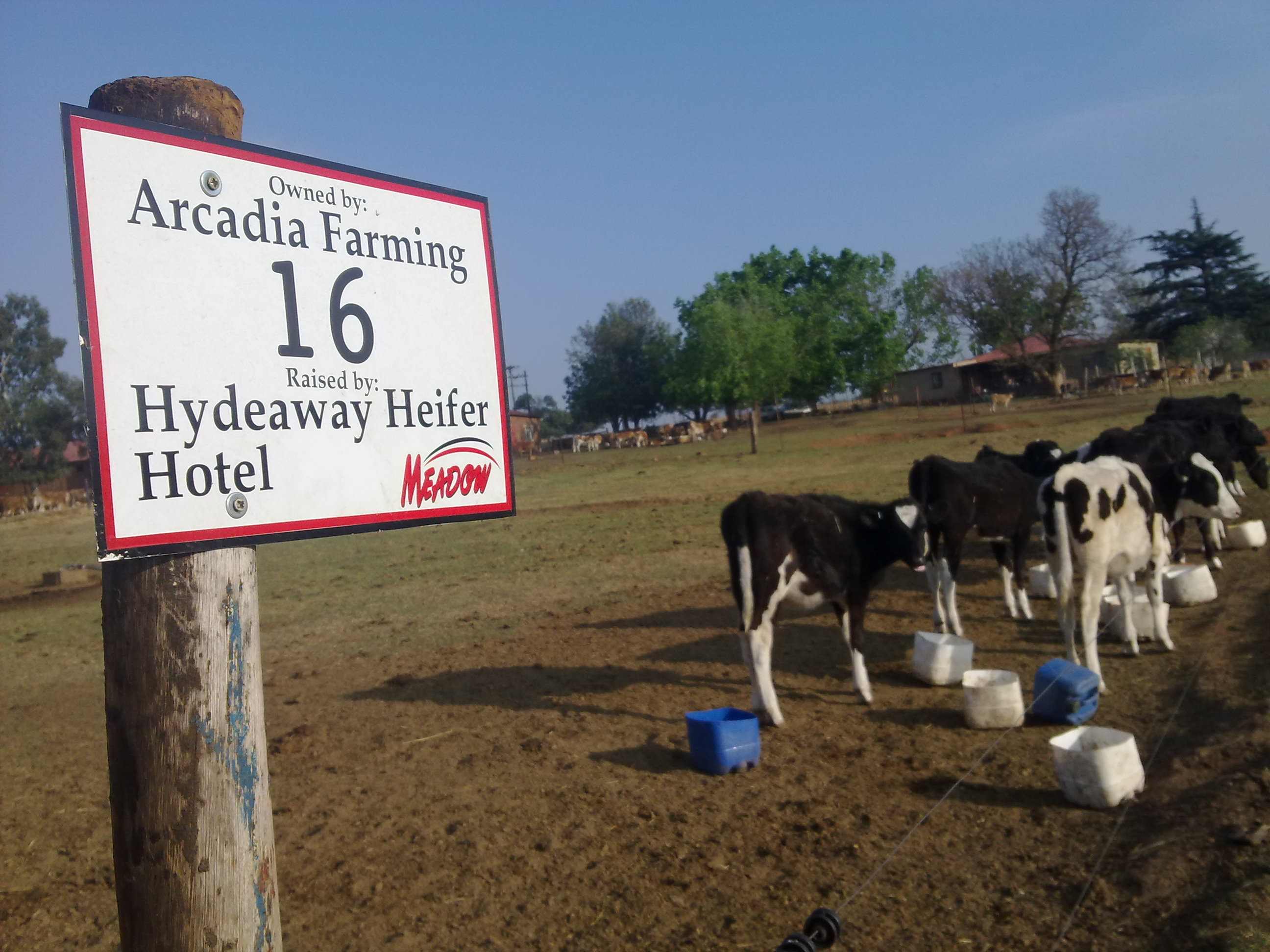
By far the more successful part of our farming operation is the heifer raising. Holstein heifers arrive here at 3 months of age. They live in small but grassy paddocks and eat pellets and hay, growing to about 350kg at the age of 12 months, when they are artificially inseminated by yours truly. We keep them until they’re 7 months pregnant, then their owner takes them home to be milked.

Hydeaway Farm raises heifers for other South African dairy farmers

Hydeaway Farm raises heifers for other South African dairy farmers

In S. A., it’s generally the big farmers that do the best; they say you can only do it profitably if you milk upwards of 300 cows and grow your own feed. Total mixed ration is more popular than pastures, and cow housing is apparently the way to go but we find the idea of keeping cows inside 24/7 positively sickening. Yes, we are sentimental, but the cows are happy doing what cows are supposed to do; graze and interact in a herd.

Altogether, there are roughly 500 cattle living on our farm. Oh yes, and they all have names, every last one. Walking through the paddocks is asking to be thoroughly licked and slobbered on.

The single greatest difference between dairying in Australia and S. A. is probably the labour. Labour in our country is relatively cheap, but unskilled. We have 13 workers, with at least 11 on the farm at any one time, and in harvest season other farmers can have over 40.

I’ll wrap up by telling all the dairy farmers out there to hang on. With just 2600 dairy farmers left in South Africa, we’re a declining breed. Those that are left are, for the most part, pretty special.
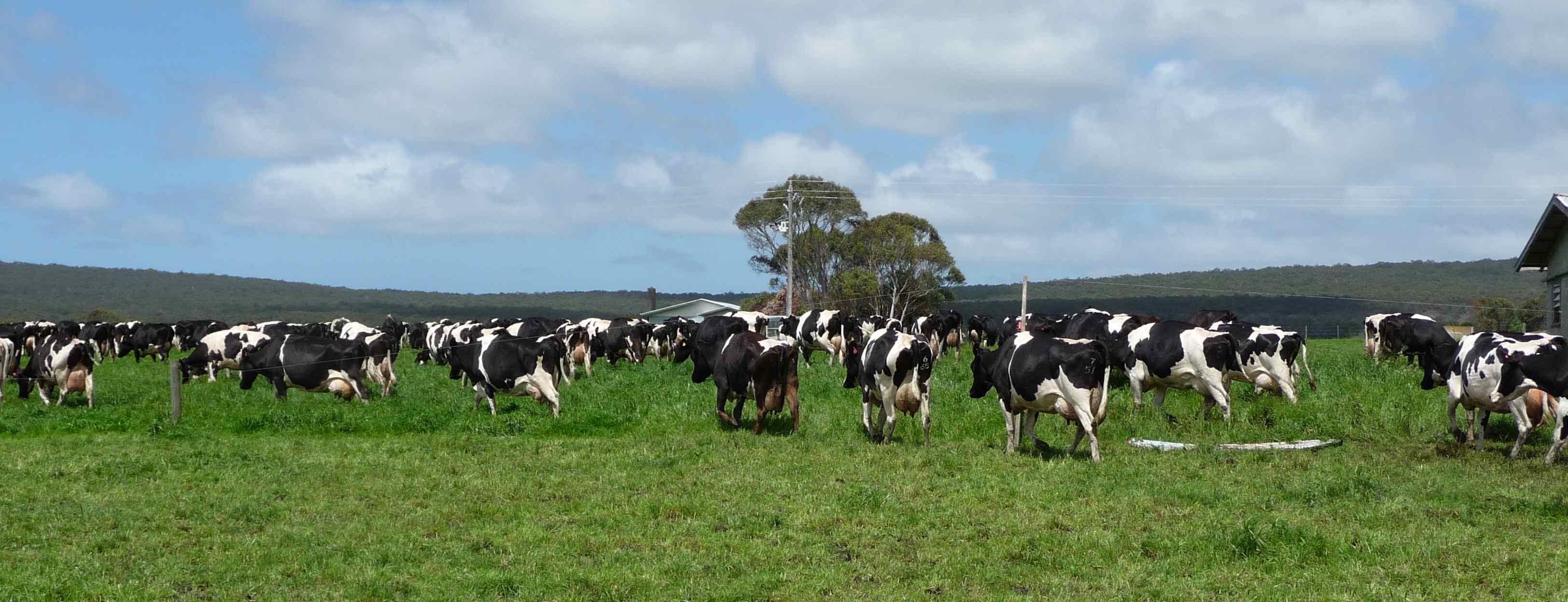
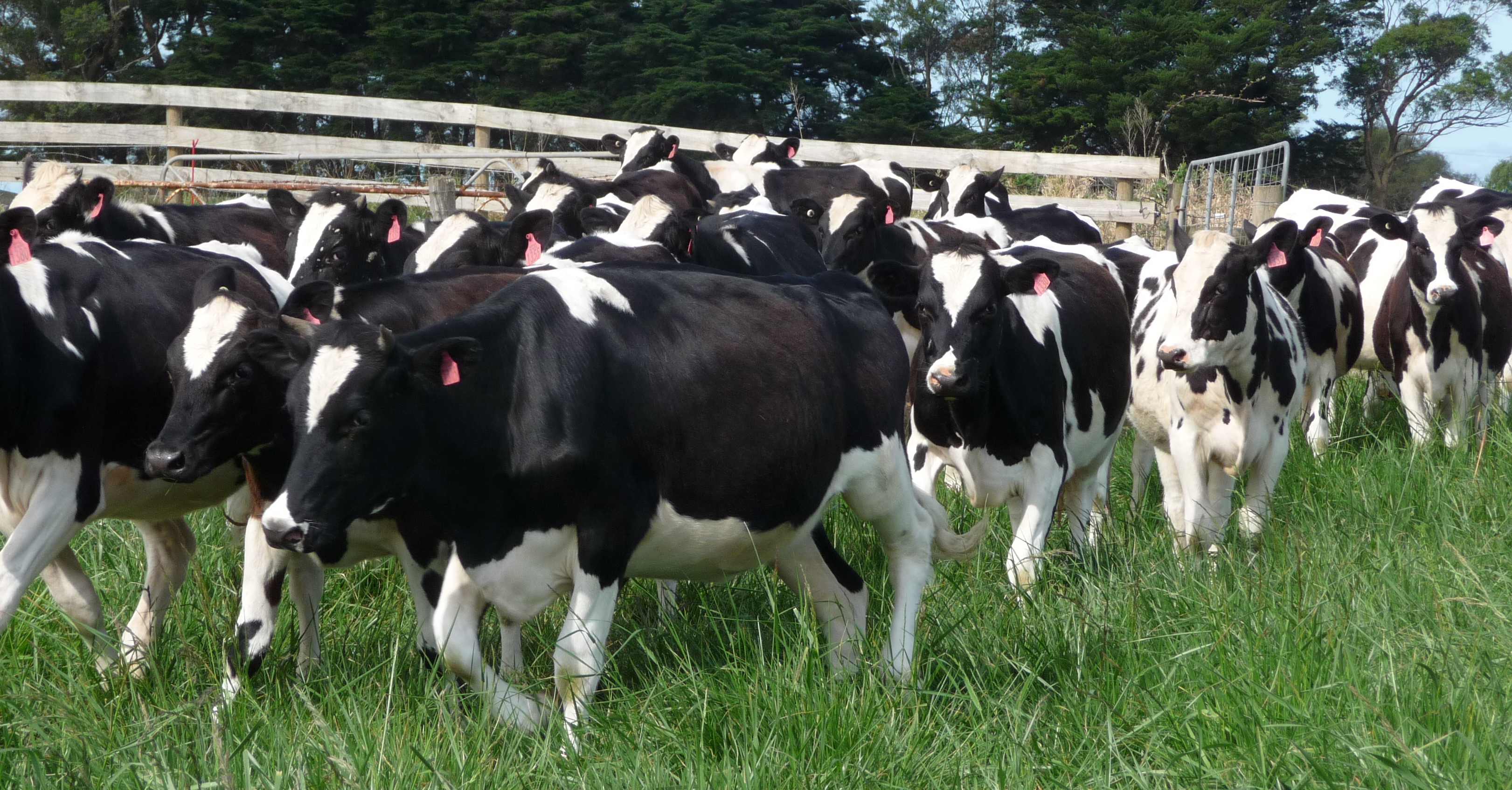
Daylight savings catches the cows napping and we Unleash The Zoe

Cows are creatures of habit, that’s for sure. If we’re half an hour late to round them up, they start arriving at the dairy demanding to know why, so you can imagine the annoyance when we are a whole hour early.

Daylight savings may not fade the curtains but it does confuse the cows for a day or two. Couple this with the luxury of a doze in the afternoon sun after a really good feed and you have cows that don’t want to get up for anyone.

Daylight savings does not impress our cows

Daylight savings brings no sense of urgency to our cows

We decided there was nothing for it but to “Unleash The Zoe”. Our little girl has a commanding presence with the cows and her lion’s roar is known to scare everyone from baby Alex to silage contractors!

Unleash The Zoe

Unleash The Zoe gets results

Dogs and ducks, genomics and designer bulls

Training working dogs with ducks

Paul McPhail training working dogs with ducks

Outside the pavilion, hundreds watched working dog trainer Paul McPhail show how young dogs are schooled herding ducks. Inside the pavilion, a small crowd lunched with researchers investigating genomic testing of bulls.

This scene from the Dairy Expo at Korumburra yesterday struck me as a really interesting statement about modern farming. It’s the meshing of age-old skills and cutting-edge science.

Zoe and I couldn’t resist watching the pups – one just four months old – rounding up the ducks. The warmth of Paul McPhail’s training and the dedication of his dogs were mesmerising. Nor could I resist the chance to find out what science will bring to our dairy farm in the next few years. One of the most interesting was the genomic testing – as distinct from genetic modification – of bulls.

Normally, bull calves are selected for breeding based on pedigree and their conformation or “type score”. Their semen is then collected and used to breed daughters, who must then get in calf so we know how fertile they are, and then be milked at age three before we know the real value of the bull as a sire.

It’s all based on observed and measured performance. On the other hand, genomic testing compares the DNA of new sires with the DNA of historically well-performing sires as a benchmark. More work needs to be done to increase the reliability of this testing but it promises a shortening of that four-year timeframe.

There is also hope that the testing will soon be affordable for mass screening of our cows. We will be able to verify the parentage of our animals and gauge their genetic merit very early on. This should “speed up” improvements in our herd with powerful animal welfare outcomes. By better selecting cows for breeding, we should be able to reduce the number that become lame, have bad udders and need to be treated for mastitis.

The scientists, who were from the DairyFutures CRC and are also working on designer forages, will help Australia’s dairy farmers remain competitive on the world stage.

Exciting stuff!

Feeding the cows who feed us

Gone are the days when dairy cows just ate grass. These days, there are people who get really geeky about feeding cows. Starch, protein, fat, fibre (only the right type, mind you) and energy levels can be perfected for optimal health and milk production.

This can really only be achieved when cows are fed a total mixed ration (TMR) and is more tricky when cows like ours are largely pasture-fed. Still, we can do better, so I was delighted when local DPI extension officer David Shambrook visited today to talk about what we’re feeding.

At the moment, the cows each eat just over 7kg of a rolled wheat, triticale, canola oil, limestone and salts mix during milking. The herd is also allocated about 2.9 hectares of fresh grass per day and fed two bales of top quality vetch hay (10.3 megajoules of energy and 22.8% crude protein for the benefit of farmer readers).

David had a look at the pasture they’ve left in the paddock, the pasture they’ll go to next, the milk production stats, the cows’ body condition score, whether they are chewing their cuds, their manure and rumen fill (indicated by how much a triangle of flesh bulges out). All these signs point to whether the cows are being well fed.

I have a gut feel (forgive the pun) for all of this but am determined to learn more about dairy cow nutrition. The combination of intellectual and physical challenges is one of the things I love most about dairy farming.

New part of the farm opens up

First grazing since the wet

The first time this paddock's been grazed since autumn

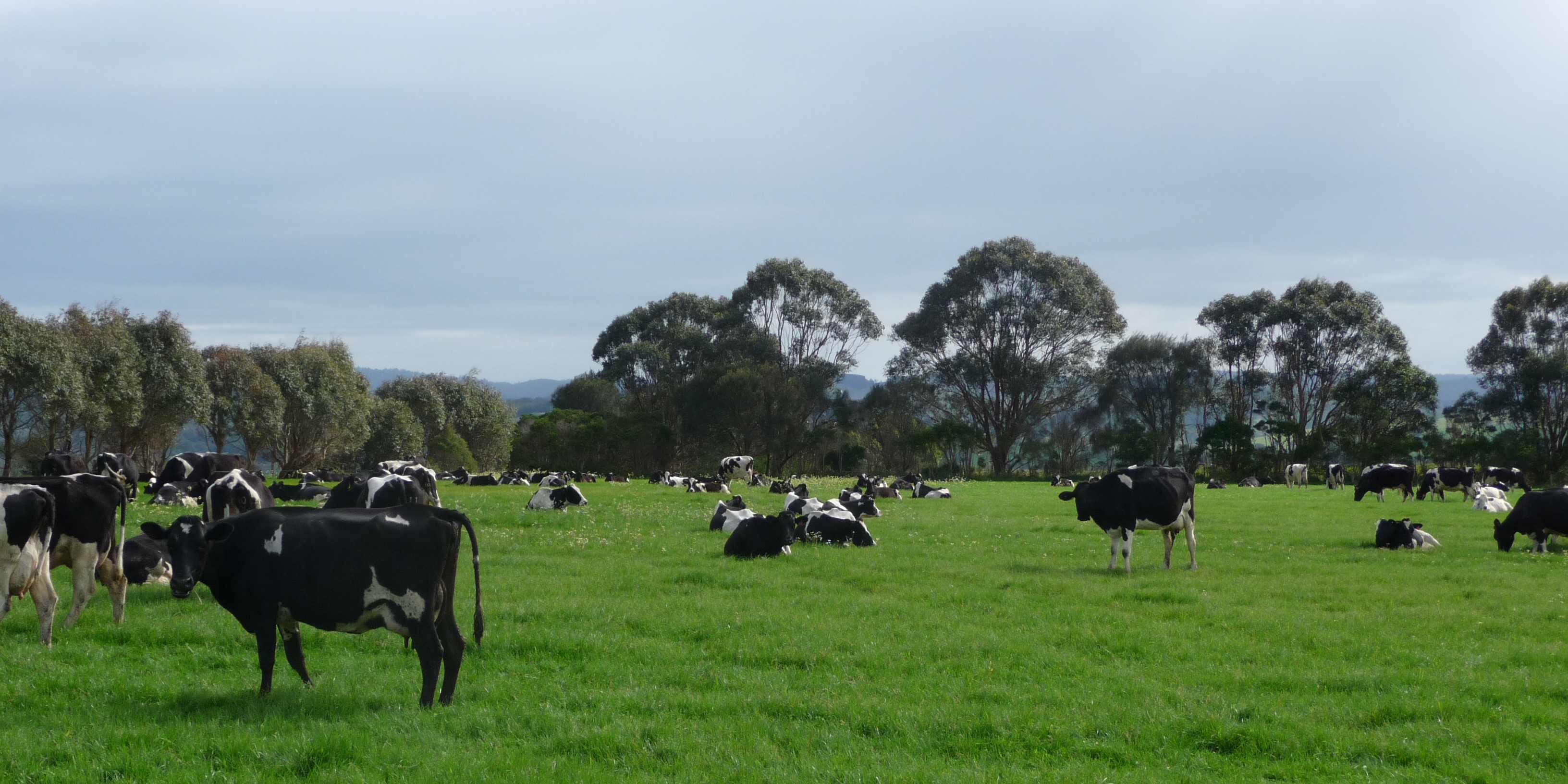
Here’s a view of the farm you haven’t seen before simply because it’s been too wet to get there until now! Spring has arrived and suddenly, there are four paddocks we can access that have been out of action since they were renovated in autumn. And don’t the cows love them! The pic above shows cows that have just left the dairy, while the ladies below have left the dairy, eaten their fill and decided it’s time for a snooze.

According to scientists quoted in The Weekly Times, rest time is really important for cows:

Promoting the idea that “cows should be cows”, Dr Burgi said on a daily basis a cow should spend five to five and a half hours eating, 12-14 hours lying down, two to three hours resting, standing or walking, half an hour drinking and two and a half to three and a half hours milking.

Cows resting in the paddock

Cows resting in the paddock after milking

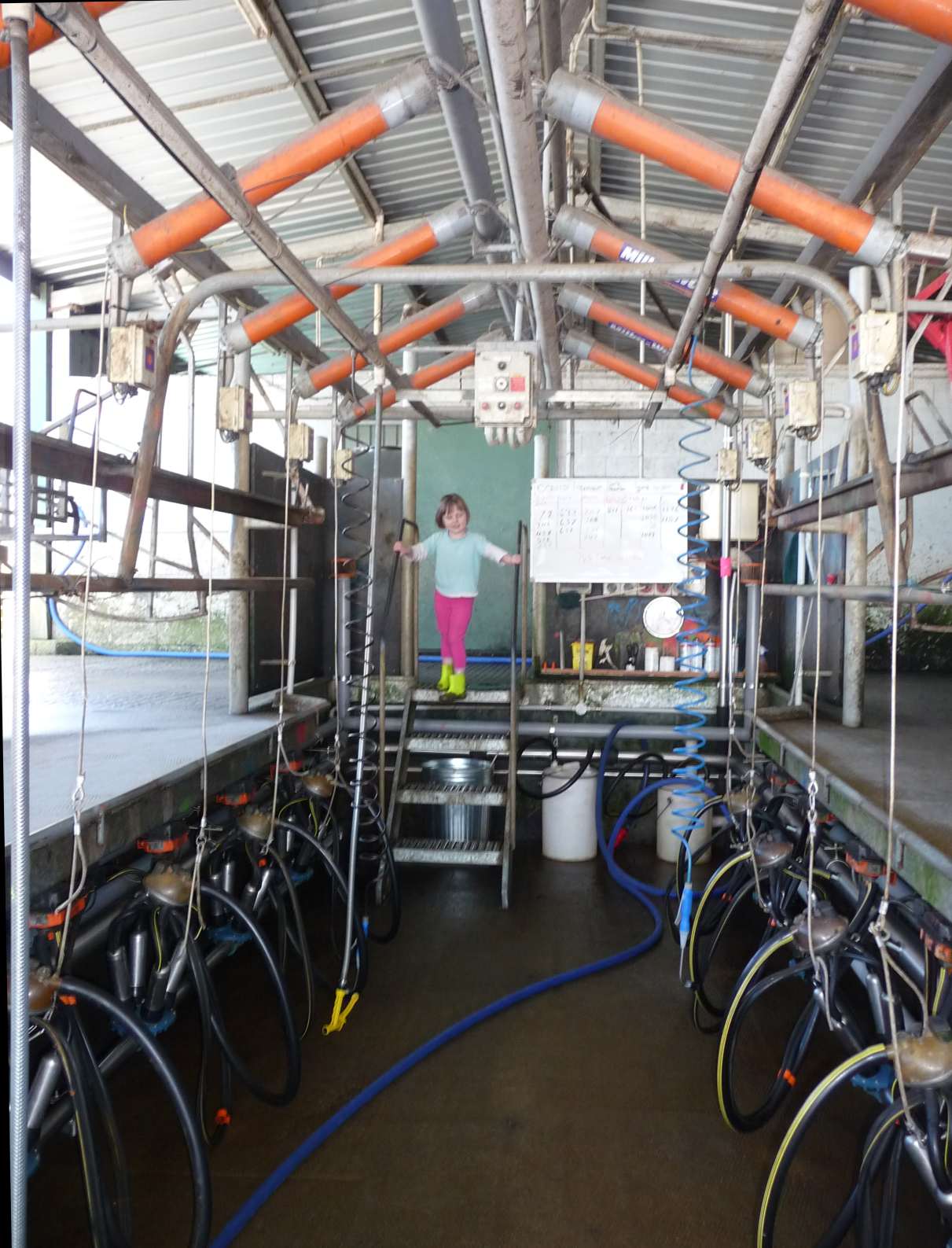
Inside the dairy

Inside the dairy

View from the dairy pit

I realised there’s something missing from this blog about the daily life of a dairy farmer and that’s the one job that must be done twice a day, every day: milking! So, here’s a pic of the spot where it all happens. Ours is what’s called a herringbone dairy. The cows stand on platforms on either side of the pit with their tails facing us. Each cow has a stall to herself to make sure she isn’t squashed or bossed off her feed by bigger or more dominant cows.

Our dairy has 32 sets of milking machines, so we can have 16 cows on each side and is equipped with automatic cup removers (those orange cylinders overhead) that take the machines off when the flow of milk decreases. This is a labour-saving device that also means there’s less risk of cows being over-milked. The curly blue cords hanging down are dispensers for a mix of iodine and glycerine that we spray on the cows’ teats to keep them soft, crack-free and hygienic.

At the nose of each cow is a bail that holds grain for her to eat while she’s being milked. It’s a nice way of helping cows enjoy their time in the dairy and ensures nobody misses out on her ration of supplementary (that is, additional to grass) high-energy, high-protein feed. We control the amount of grain that’s dispensed with a timer dial on the white box overhead at the centre of the pit.

You’ll also see a whiteboard near Zoe. We write notes on this about which cow needs treatment, with what, and for how long.

I took this pic without cows because it’s nice and light that way but am working on a video to show you what happens when the dairy’s in action. Let me know if there’s anything you particularly want to see.

Calving slows, now, when to take the bulls out?

Over the past week, only half a dozen cows have calved. The next decision will be when to take the bulls out of the herd.

Traditionally, our herd begins to calve in mid-July but we’re in transition towards a new start date. Because the winters seem to be warmer and the springs shorter here, we began to mate the cows last July for an April 20 start to calving (like people, cows have a nine-month gestation period).

This is designed to match the cows’ peak production of milk with the peak growth of grass and reduce the need to maintain high energy levels over summer, which is a tough time to keep fodder up to the cows on a rain-fed rather than an irrigated farm.

So, when to stop? Some farmers arrange mating dates to have a couple of batches of calves throughout the year, relatively few calve all year round and most aim for seasonal calving over a period of eight to 12 weeks. These days, it’s becoming increasingly hard to get all the cows in calf each year and not all cows need to be pregnant annually to produce well. Extended lactation, as it’s called, is now very common for a portion of dairy herds and, according to the gurus like Greg O’Brien at the Department of Primary Industries, could be quite viable.

Since I want to shift our start date and rapidly shorten the calving season from our current transitory (and excruciating) six months, I’m inclined to be reassured by Greg’s advice and pull the bulls out earlier rather than later. Last year, it was New Year’s Day, this year, I’m considering mid-November. It’ll be mostly the late calvers who miss out under this regime and because we’ll be mating again in July, extended lactation is even less of an issue – it’s not a two-year lactation, anyhow.

In the next couple of weeks, we’ll arrange a pregnancy test for the cows who either calved early this year or didn’t calve at all. The vets are confident of due dates when pregnancies are at least eight weeks.

Wish me luck!