And the rollercoaster goes up!

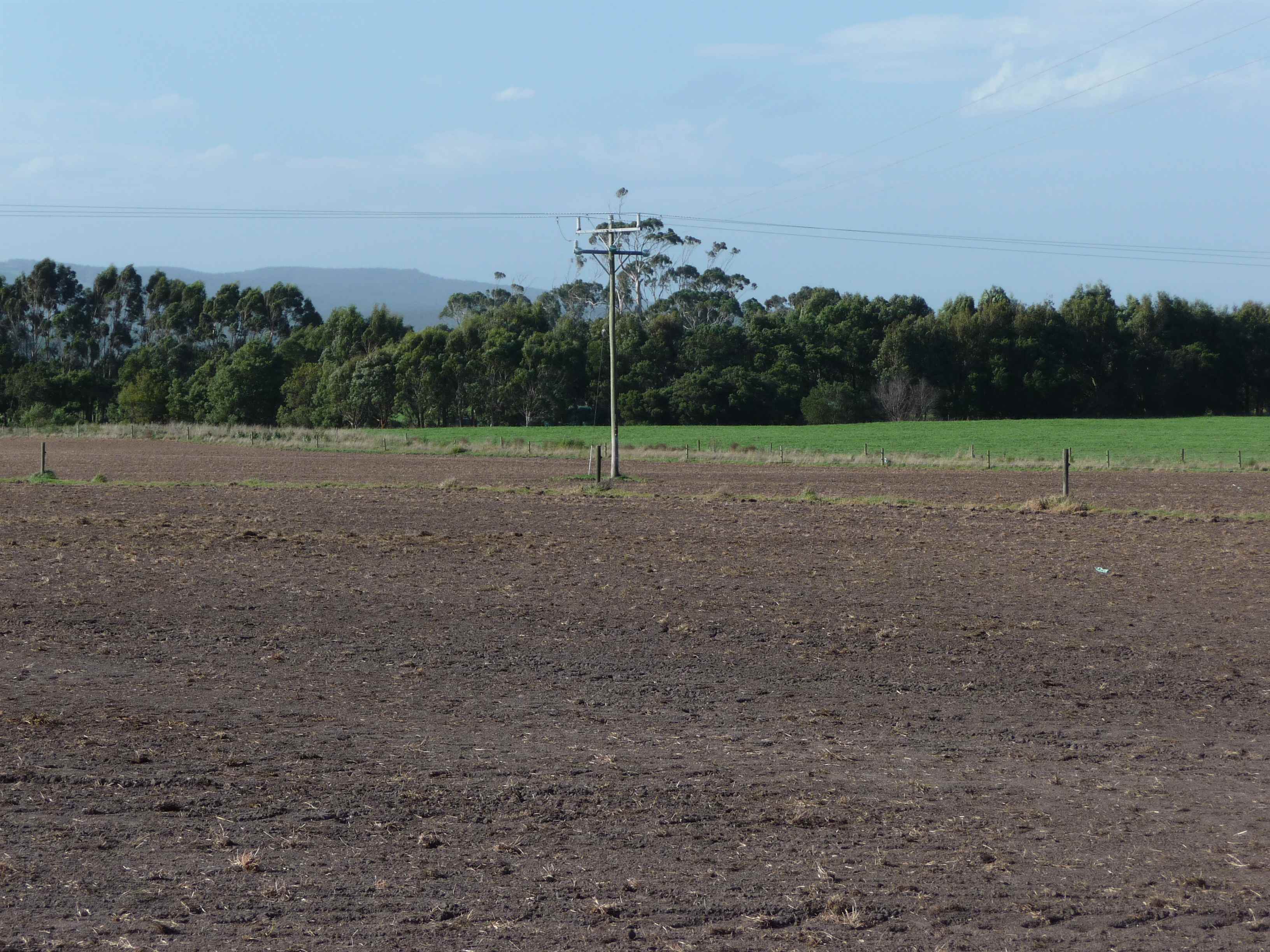
This was the farm 48 hours ago. Shrouded in smoke from the bushfires, the place was tinder dry.

January 25

January 25

I went to bed last night with 4 inches of water in the house tank and hoped like hell that the easterly over Bairnsdale would grace us with its presence. We had gone all out, after all. The cairn dedicated to Thor is almost complete, the washing line was full of dry clothes and, to top it off, Wayne left the quad bike in the centre of the lawn with his helmet upturned like a giant goblet, ready to receive the sacrament.

Thor delivered.

Almost 18mm of gentle rain!

Almost 18mm of gentle rain!

There is not a puddle to be seen but the place smells wonderful and the plants are already responding.

What a difference 12 hours makes

What a difference 12 hours makes

We had to celebrate!
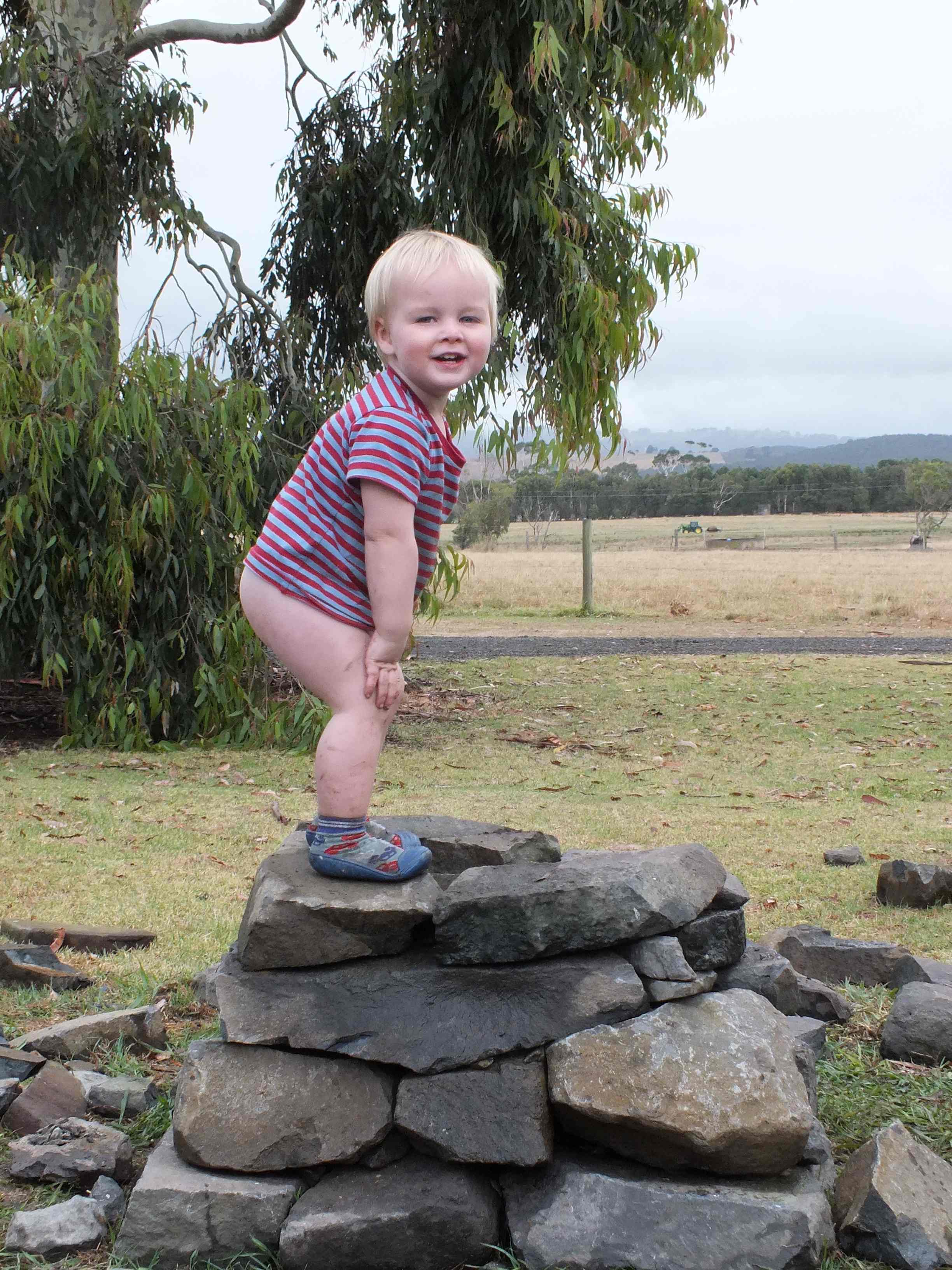
The Thor Cairn was the perfect place to celebrate and pay homage

The Thor Cairn was the perfect place to celebrate and pay homage

What makes this rain even more special is that there is more rain forecast over the next week and not a day over 30 degrees. The cows will love it! Can’t wait to snap another panorama at the end of the week to see new life breathed into the farm.
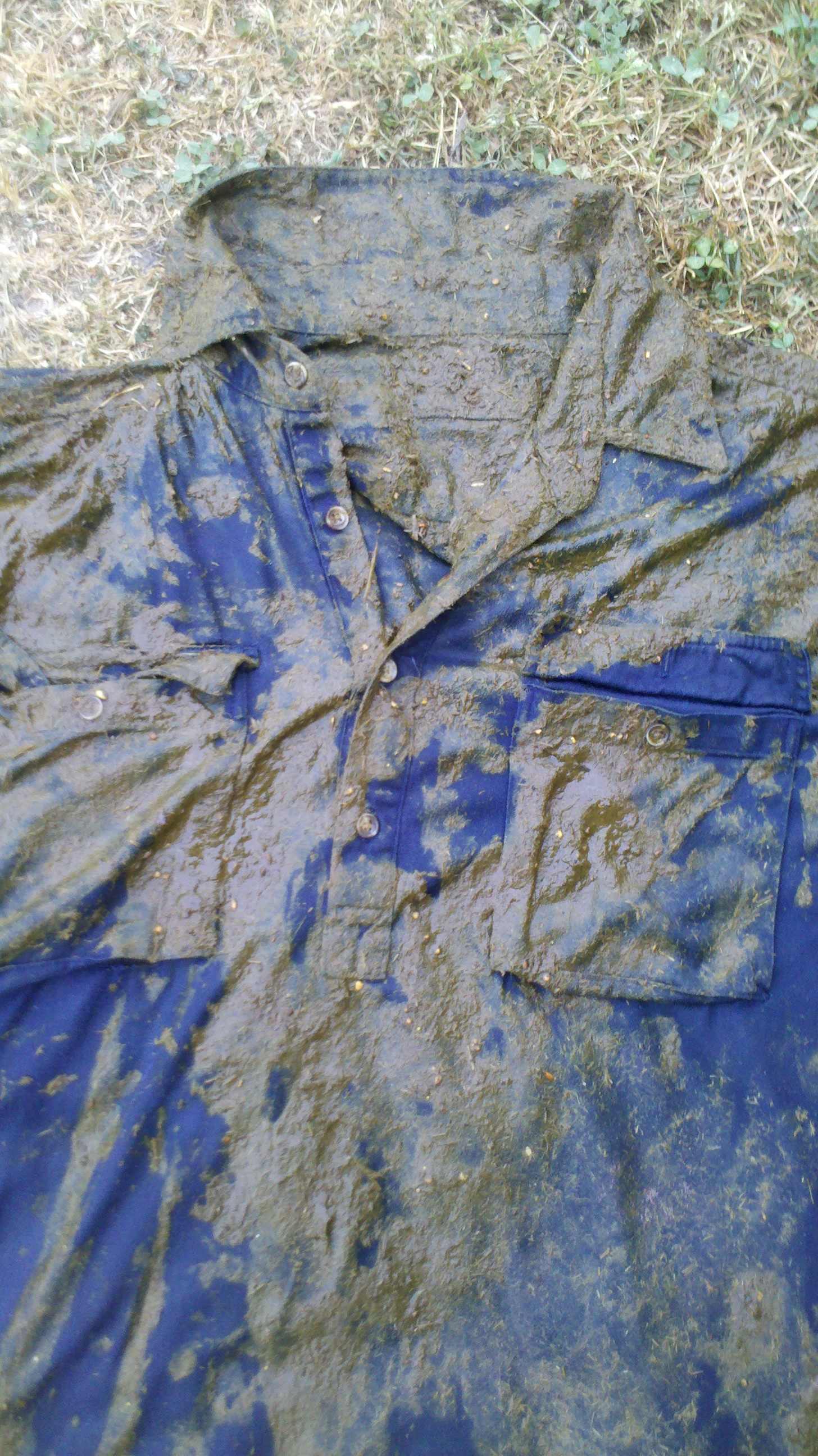
What does the missing dairy farmer look like?

Shi#t

Shi#t

This is the shirt that had to be left on the lawn because it was too dirty for the laundry. Check out the collar. He was wearing it when it became…soiled. Imagine the man.

Me: “So, who got you? Was it 1257 or 800?”

Him: “I don’t know – it was too quick, I was blinded and they were firing at me from all directions – in front and behind.”

Me: (Trying desperately not to laugh) “What did you do?”

Him: “I groped about and found something really thick and thought, ‘Great, that’s a hose’ and just blasted myself with the fire hose for a few minutes. And a few minutes later, another one got me from behind and it flowed down over my eyes before I could stop it, so I don’t know who that was either.”

Me: “Oh, you poor thing. But you seem in good spirits…”

Him: “Yeah. I decided that s#$t happens, so I might as well just take a break and have a drink. I peeled off my shirt, hosed myself down again, had that drink, and milked like this.”

Me: “What – in the nude?”

Him: (Indignantly) “With my shorts and gumboots on! I added an apron when the tanker arrived in case I scared the driver.”

Me: Raucous laughter.

Him: “Feel my hair”

Me: “Ah, no thanks.”

Him: “Go on, feel it…Don’t look at me like that…Okay, smell it then.”

Me: “It smells like Ovaltine – go and have a shower, for goodness’ sake.”

Milking cows certainly has its moments and there were quite a few of those “moments” for Wayne because now that the grass has pretty much shrivelled up, the cows have been dining on a divine, juicy crop of rape and tender young millet. Never mind, it’ll settle in a day or two…

Cows grazing millet

They can barely walk because their pants are suddenly too tight

Farm meets laboratory

It takes a lot of science to make our dairy farm tick these days. Our place is no factory farm either. With around 250 free-range milking cows, it’s a very typical Australian dairy farm.
Yet, only today, I have been keeping four different labs busy:

Environmental lab: what’s in our water?

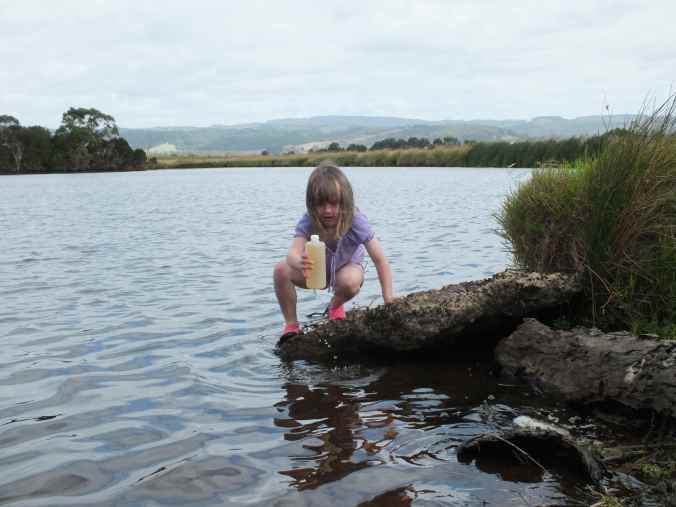
Sampling water from the farm dam

Don’t fall in!

We’re considering moving the water supply from the river to the dam but need to be sure the water is up to scratch first. While we don’t irrigate our farm, we need high quality water for the cows to drink and to keep the milking machinery hygienic and sparkling clean. We’re having it tested for minerals and nasty bugs like e-coli.

Animal health testing lab – looking for hand grenades in the grass

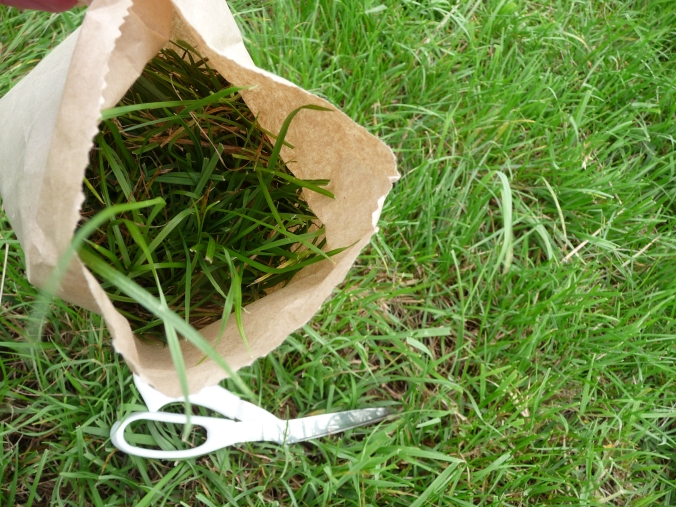
GrassClippingsOur farm has volunteered to be a ‘sentinel’ for the spores that cause the life-threatening condition of facial eczema. Collecting samples from a couple of paddocks only takes a few minutes but it could save hundreds of cows untold suffering.

Dairy nutrition lab – feeding the bugs that feed the cows

Yesterday, someone on Twitter asked Dr Karl how cows manage to get fat on grass while humans lose weight on veggies. The secret lies in four-chambered guts filled with life-giving bugs that do a lot of the work for the cows.

Our bovine ladies are athletes – each gives us around 7,000 litres of milk per year – and they and their bugs demand nothing short of perfection from us as chefs! Feed reports allow me to balance the cows’ diets with the right mix of fibre, energy and protein.

Soil nutrient lab – getting the dirt on our soils

Soil data allows me to apply the right fertiliser in the right amounts to the right places – lifting the productivity of our farm, reducing costs and preventing leaching into the river. I test the soils of all our paddocks every year. Some would regard that as wildly extravagant but a $110 test is nothing compared to the cost of a tonne of excess fertiliser.

Dairy farming is still the earthy, honest lifestyle it always has been but, these days, it pays to be a touch tech-savvy as well.

EDIT: Oh my goodness! Mike Russell (@mikerussell_) just pointed out that I forgot the bleeding obvious: the testing of our milk! It’s tested to an inch of its life – fat and protein content, sugars and cell counts are all tracked daily. Thanks Mike!

The dairy farmer’s calendar

Summer is the laziest time of year for a dairy farmer but when Wayne and I started writing a “to do” list yesterday, my head began to spin a little. Not satisfied with a mild head rush, I went on to draft a rough calendar:

The Annual Milk Maid’s To-Do List

Lazy Summer Days

  • Milk cows
  • Pay bills
  • Deal with crises (pump breakdowns are popular this season)
  • Begin drying cows off for their annual holiday
  • Make hay
  • Have we conserved enough fodder? Consider buying more
  • Begin feeding silage, crops and hay
  • Return cow effluent back to pastures
  • Spend a day changing rubberware in the dairy
  • Control blackberries
  • Vaccinations, drenching, branding, preg testing
  • Big maintenance projects (the stuff you put off the rest of the year)
  • Dream of the next Great Leap Forward

Autumn Anxieties

  • Milk cows
  • Pay bills
  • Deal with crises (milk quality issues popular this season)
  • Continue drying cows off for their annual holiday
  • Special feeding regime for expectant cows
  • Welcome and nurture new calves
  • Test soils for nutrient levels
  • Repair cow tracks
  • Sow new pastures
  • Fertilise pastures
  • Return cow effluent back to pastures
  • Chase revegetation grants and order trees
  • Maintenance
  • Still feeding silage and hay
  • Nude rain dancing in full swing

Winter Woes

  • Milk cows
  • Pay bills
  • Deal with crises (calving emergencies popular this season)
  • Welcome and nurture new calves
  • Fence and spray areas for revegetation
  • Spend a day changing rubberware in the dairy
  • Feed three groups of cows different rations
  • Mating program in full swing
  • Consider another drenching
  • Buy new gumboots and practise rain dancing in reverse
  • Redo budgets after milk factory announces opening price
  • Keep chin up

Supercharged Spring

  • Milk cows
  • Pay bills
  • Deal with crises (unpredictable weather popular this season)
  • Train the new members of the herd
  • Visit the accountant (and maybe the banker)
  • Fertilise, fertilise, fertilise
  • Vaccinate and wean calves
  • Thoroughly clean and disinfect the calf shed
  • Plant trees
  • Control thistles
  • Make silage
  • Sow summer crops
  • Make grass angels

I know I’ve missed stuff – lots of it – but it should give you an idea of what happens day-to-day and season-to-season on our very average Australian dairy farm. So, dear Reader, as we head into 2013, what do you want to know more about?

Plastic in the paddock

I may not be able to look my fellow farmers in the eye after publishing the next photo, especially those of the calibre of @Hoddlecows of Montrose Dairy, for I have committed a dairy farming sin.

Grass ready for ensiling

Not quite “the more the merrier”

If you ever needed proof that farmers are a hard lot to please, this is it: we want our grass to be lush but not this lush. It’s past its best and I should never have let it get so long. Now that it is this long, I should not be spending lots of money to have it cut, tedded, baled and wrapped in plastic to create that fermented delicacy called “silage”. It’s too crappy. Oh, the tut-tutting.

How did I get to this point? Well, the farm has been so wet that I simply wouldn’t have been able to get this paddock grazed without bogging a few bovines along the way, so I just looked the other way until we had this tiny window of almost-good-enough silage-making weather. I’m told it’s only me and one other farmer on the other side of town who have ventured into silage making around here so far this season.

“Fools rush in…etc, etc, etc.”

Thankfully, the team at Bowden’s Ag Contracting got it done for us, just in the nick of time. Even though it’s creating more mud and misery out there, it sure feels good listening to the rain on the roof tonight, knowing that it will be pattering on plastic in the paddock. So there!

The perfect farmer’s body

What does the perfect body look like? Not mine, that’s for sure! Yesterday, I was reminded just how bad my genes are for farming. Allergies run on both sides of my family and the worst irritant of all looks like this:

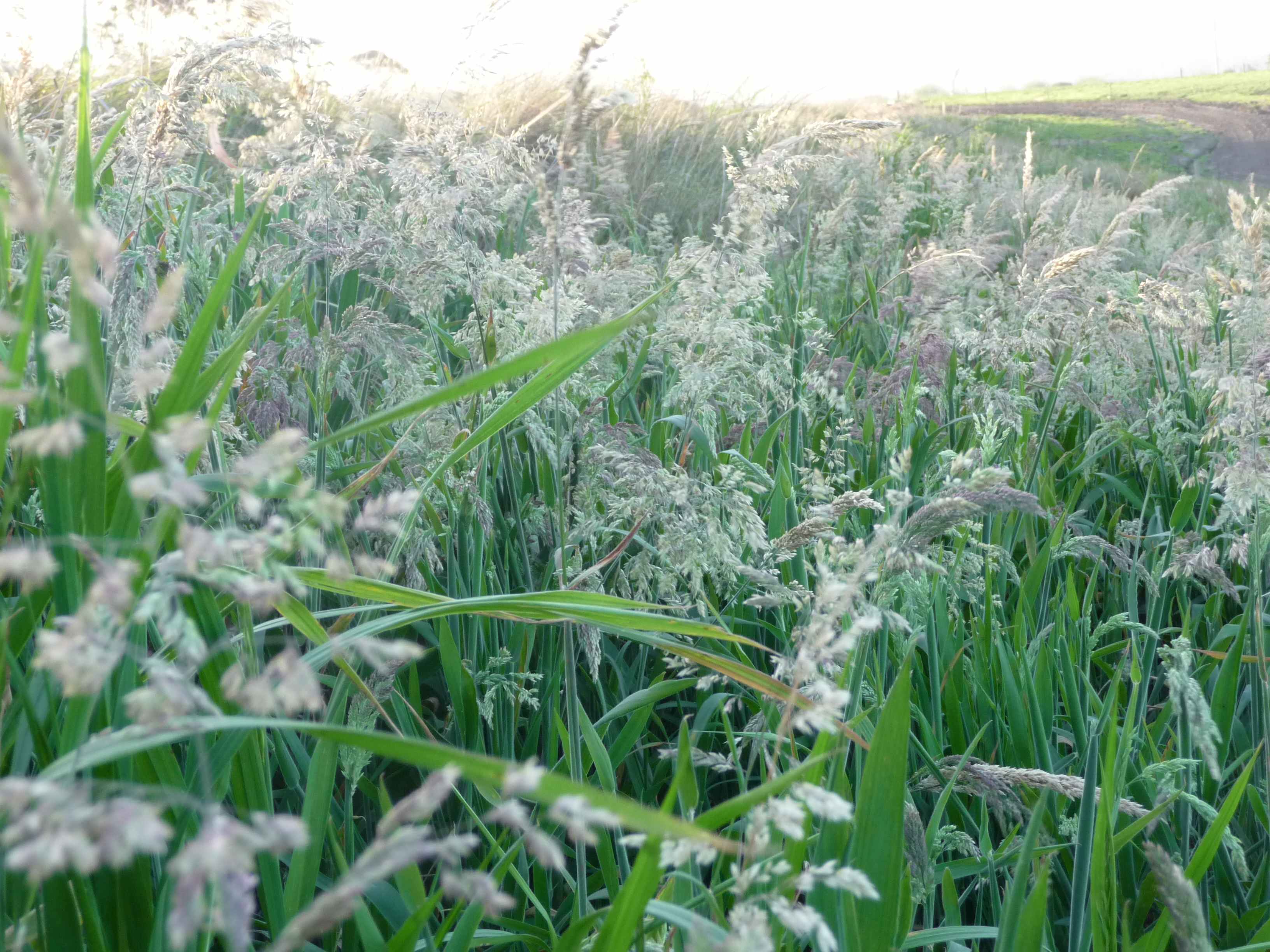
Yorkshire fog grass

Yorkshire fog grass: one UK expat we could do without!

I’m told it’s called “fog” grass because the pollen is released in such huge quantities, it makes everything go misty. Dynamite! Yesterday, I had to wander through thigh-high forests of it to get the dam siphon running again. My scalp, eyes, nose, mouth and arms are all still desperately itchy 15 hours later.

The cows don’t like it either. Fog grass is covered in thick velvety “fur” that understandably is most unpalatable.

Thankfully, we have a lot less of this hideous grass nowdays. It was everywhere when I was a girl but much better grazing management has seen it restricted to untouched pockets of dampness (like the dam wall).

Grass management is a big deal for Australian dairy farmers because it is the greatest predictor of profitability. We count leaves, we estimate the tonnes of pasture in paddocks and aim for the magic nexus of quality and quantity. Somehow, it’s reassuring to know that nothing beats the simplicity of grazing grass for high performance dairy farming, even in 2012.

People and animals tell the farm’s story

This was Zoe on the Bobcat as I moved the electric tape in paddock 6 on Friday. It really was sunny enough to dig out the zinc!

Yes, two pairs of oversized sunglasses are apparently “hot” right now

I’d been away from the paddock for a week and things had got away. It’s newly sown to a high performance grass and zoomed off once the saturated soil turned to plasticene over a balmy few days. We had to get the cows in at once if there was any chance of keeping grass quality levels up over Spring.

At this time of the year, it’s really important to divide the paddock into small strips. Let them into the whole lot at once and most will be wasted as the engorged cows make nests to sleep it off. The trick is to have the cows absolutely full to pussy’s bow, but only just. It’s good for the cows, good for milk production and good for the grass.

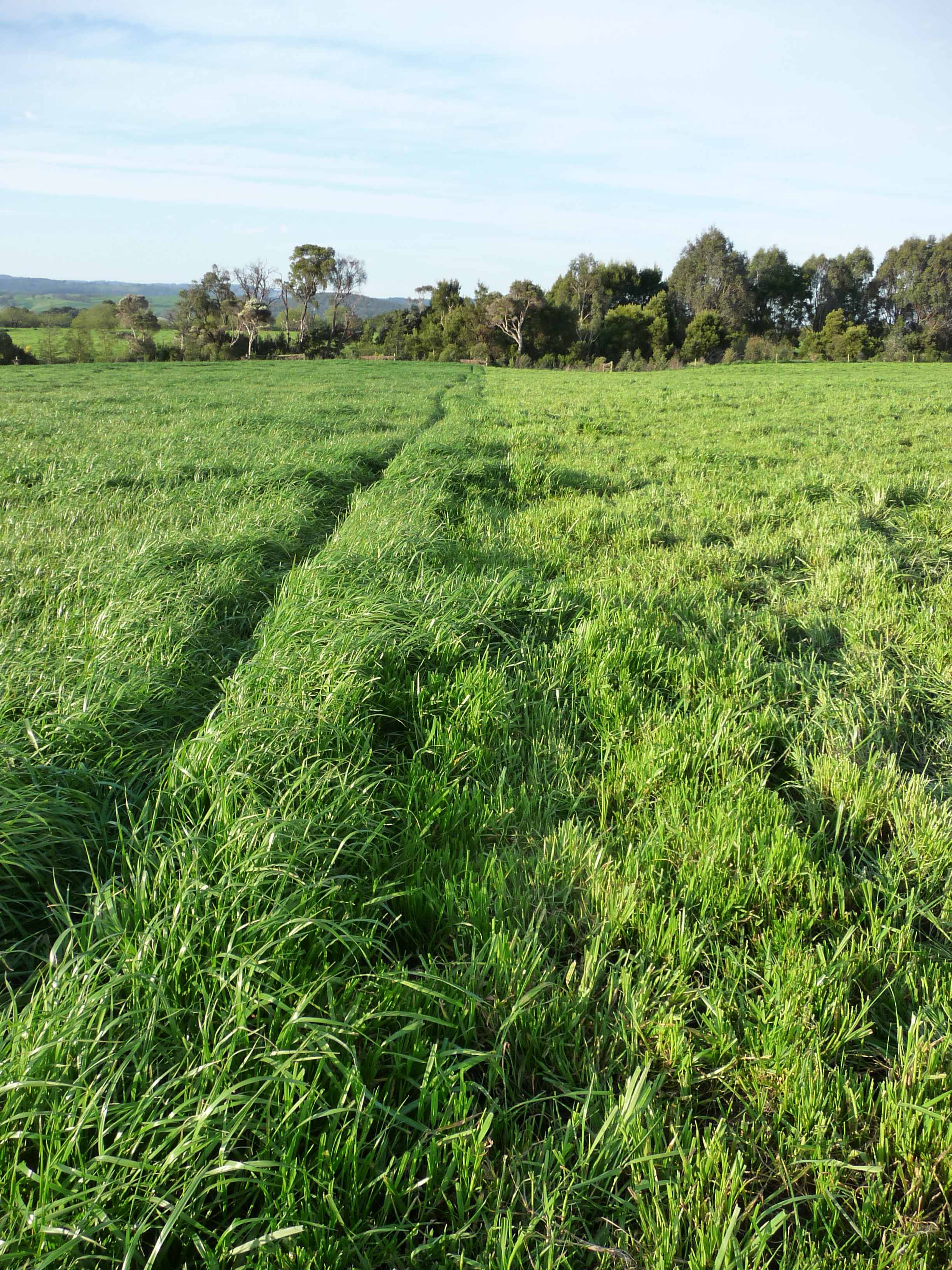
The grass on the right has just been grazed, the grass on the left is for dinner

Grass growth will have come to a skidding halt over the last couple of glacial days though. Everything is mushy and muddy all over again. Including Patch.

Whadda you mean I can’t come inside?


New season has us rushing around like squirrels

It’s autumn and our dairy farm is buzzing with activity before calving starts and winter sets in.

We have sent about 50 cows off to the other side of the farm for their annual two-month holidays. Before they go, they are given long-acting antibiotic therapy and teat seal to reduce the risk of mastitis when they calve.

Dry cows go on holiday

"Yay! Holidays!"

New pastures have been sown. Those (like this one) that were too rough have been fully cultivated with discs, power harrowed and rolled. This paddock has also had lime because its pH needs to be lifted a little higher. I’ll keep a photographic log of the paddock’s progress.

Newly sown paddock April 1st

Here it is, one day after sowing on April 1

We’ve invested in new stone and gravel for sections of the cow tracks and gateways.

New gravel

La la lush new gateway gravel!

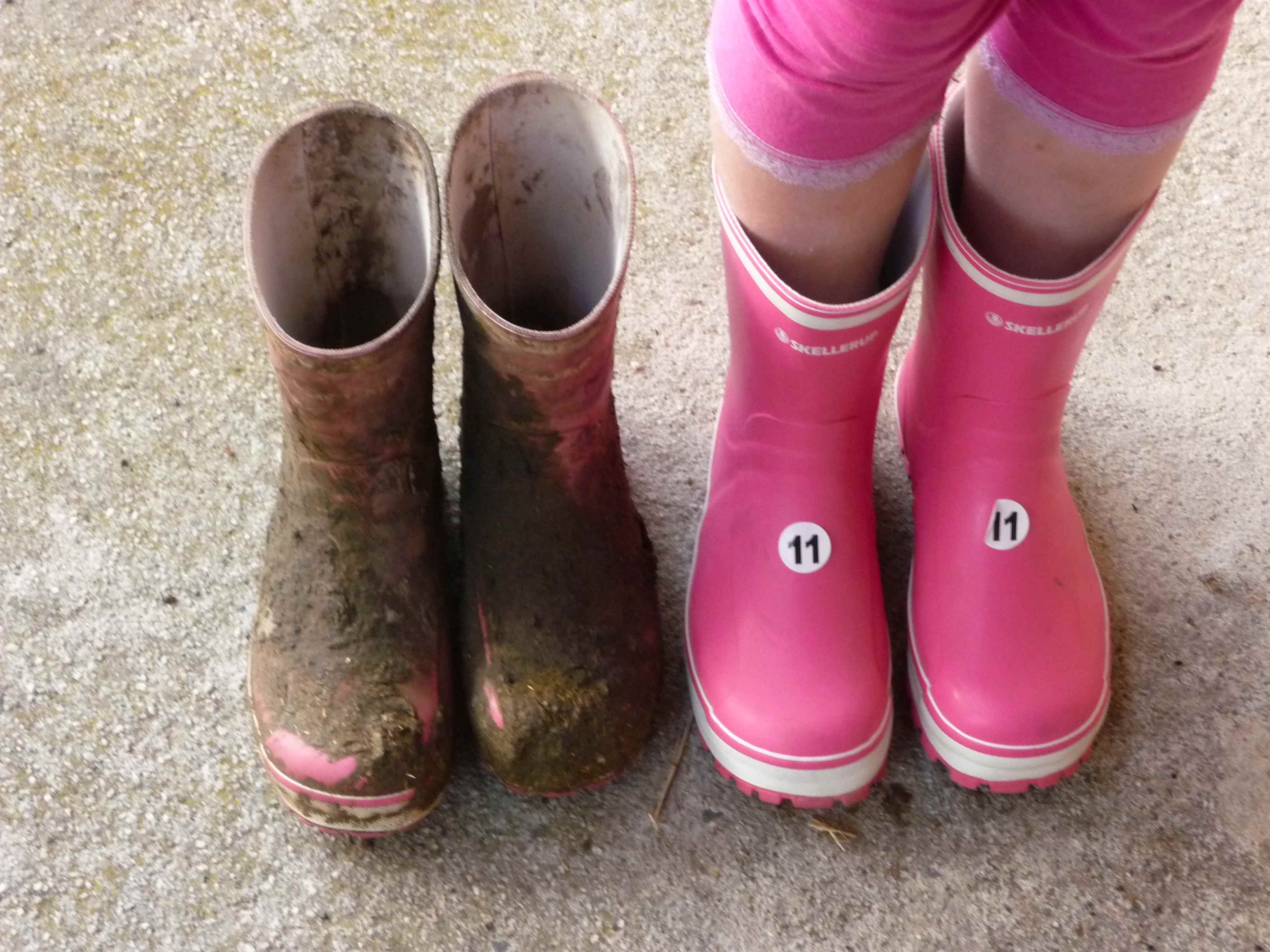
And, last but not least, a new pair of boots.

New rubber boots

How long 'til the pink turns khaki?

By the way, how do you know when your boots are too tight (especially when they were too loose the day before)?
“When you can’t do what you used to do with your boots.”
“What’s that, Zoe?”
“Put your big toe on top of the toe next to it.”
Obviously!

How much did you get?

“How much did you get?” will be the standard greeting in town for the next week or so.

What a downpour

Bikini weather

If not for Alex, I would have stripped off and run outside when the thunderstorm hit this afternoon. Until today, we’d been well settled into a very dry weather pattern typical of a traditional scorching summer. The grass was going backwards fast and the amount of milk we’ve been sending has been shrinking every week. My trusty forecasting website, Oz Forecast, had seen it coming for almost a week though and I was ready.

Feeling bold but a little nervous, I’d laid thousands of dollars on the line by having urea (a fertiliser that is 46% nitrogen) spread across a swathe of paddocks last Friday. Nitrogen is amazing stuff, more like water than fertiliser really: its effect lasts only a few weeks so you need continual top-ups but under the right conditions, it makes grass grow like nothing else.

It’s not cheap though and the wrong conditions can see it quite literally evaporate, or “volatilise”. A fact sheet by esteemed University of Melbourne scientist, Richard Eckard sums it up this way:

What is Volatilisation?
This occurs when urea fertiliser is converted to ammonia gas, a process which takes place in the first 48 hours after application. Conditions during that first 48 hours are critical to the amount of nitrogen lost.
How much is lost?
Trials conducted recently at Ellinbank showed losses to volatilisation are highest in February and are commonly around 14% on the nitrogen applied as urea. However, loss between May and November are substantially less, being between 3 and 6% of the nitrogen applied as urea. Other sources of nitrogen do not volatilise under our conditions, although on DAP would justify the price difference if only 14% is lost from urea.
How to minimise volatilisation losses?
1) Low wind speed: In one experiment a 14% loss was reduced to around 4% the next week where there was almost no wind. One strategy, adopted by some farmers, is to apply nitrogen a few days before grazing. This reduces wind speed at ground level almost zero due to the longer grass and any surplus ammonia gas produced is absorbed direct into the leaves of the pasture.
2) Lime application: In a similar experiment a loss of 12.5 % of nitrogen from urea was increased to 22.5 % by applying urea where 2.5 t/ha of lime had recently been applied. A simple solution where both urea and lime are required would be to apply the urea first, then apply the lime a week later.
3) Rainfall: In another experiment at Ellinbank rainfall was simulated in February by irrigating after applying urea. Urea volatilisation losses were only 4 % where 23 mm ‘rain’ was applied within 24 hours of the application of urea. Likewise with 9mm ‘rain’ losses were 7 % and with 3mm ‘rain’ losses were 14 %. However, applying urea the day after 23mm ‘rain’ resulted in a 21% loss!

Those nerves when I ordered the urea were justified. I would have lost a lot of nitrogen in those first 48 hours but I’d paid an extra $15 per tonne of “insurance” in the form of Green Urea. According to its manufacturer, Green Urea is “treated with the urease inhibitor, N-(n-butyl) thiophosphoric triamide (NBPT), to delay hydrolysis of urea into nitrogen forms that may be lost to the atmosphere”. In other words, we had seven days to get the weather right rather than 48 hours.

If the forecasters continue to excel and deliver the promised mild conditions over the next week, the grass will rocket away, pleasing the cows, the farmer and her banker no end!

Find out why these cows are soooo excited

Do you know why these cows are so excited? Surprisingly, it’s not my cinematography skills (apologies) but the prospect of a wonderful meal of luscious green rape.

We planted the rape crop on November 19 to provide some quick, high energy, high protein food for the cows during summer. It was done at low cost and with the intention of grazing it off as soon as the caterpillars launched an attack because I don’t have the stomach for chemical warfare on farm.

With clouds of white butterflies hovering over the crop, I decided today was the day. We sectioned off a small part of the crop with a temporary electric fence and let the cows in for a belated Christmas feast. Really, it was more of an appetizer because you have to make sure cows don’t gorge themselves on brassicas to prevent the dreadful kale anemia.

Cows grazing forage rape

Delicioso!