Check out The Udder Side: Secret Agent Cows Exposing the Truth About Dairy Farms.
Why are so many people interested in a cow’s vulva?
There have been just over 10,000 views of my blog since I started it in April and I’m delighted to have struck up conversations with so many people in such a short time but something has got me stumped.
The second most common term people used to reach the Milk Maid Marian dairy blog via a search engine was “cow vulva”. Why is this so fascinating? I’ve only referred to it once in passing in the blog. If my naivety is telling and I have offended anyone with its mention, please accept my apologies.
Farm life is educational but not “discreet”. Five-year-old Zoe knows how babies are made and, equally, what it means to die, simply by observing the cycle of life as it unfolds here every year.
I’d love some suggestions about future posts, so please don’t be coy!
Cows are discerning diners
Dairy cows are every bit as discerning about their food as a MasterChef judge. They don’t like grass that’s too long, a species that’s unfamiliar and, less surprisingly, anything that’s got mud, manure or urine on it.
They don’t like longer grass because it gets fibrous. Our girls are thoroughly spoilt and only lush and juicy will do – so much so, they’d rather make a bed of it than eat stalky pasture.
This means that if you don’t have the grass eaten down far enough, it will get stalkier and stalkier as time goes by and the cows continue to refuse it.
According to the gurus, we should aim for a residual of four to six centimetres after the cows have left the paddock. If there’s only enough grass for half a grazing, you’re left with the dilemma of leaving it too long and seeing quality spiral or running out of feed. The textbook answer is to skip the paddock and “top” it with a mower but we don’t have enough people to do those types of jobs.
My alternatives are to save it for silage (topping’s automatically thrown in) or graze it and move them at lunchtime. And here they are:
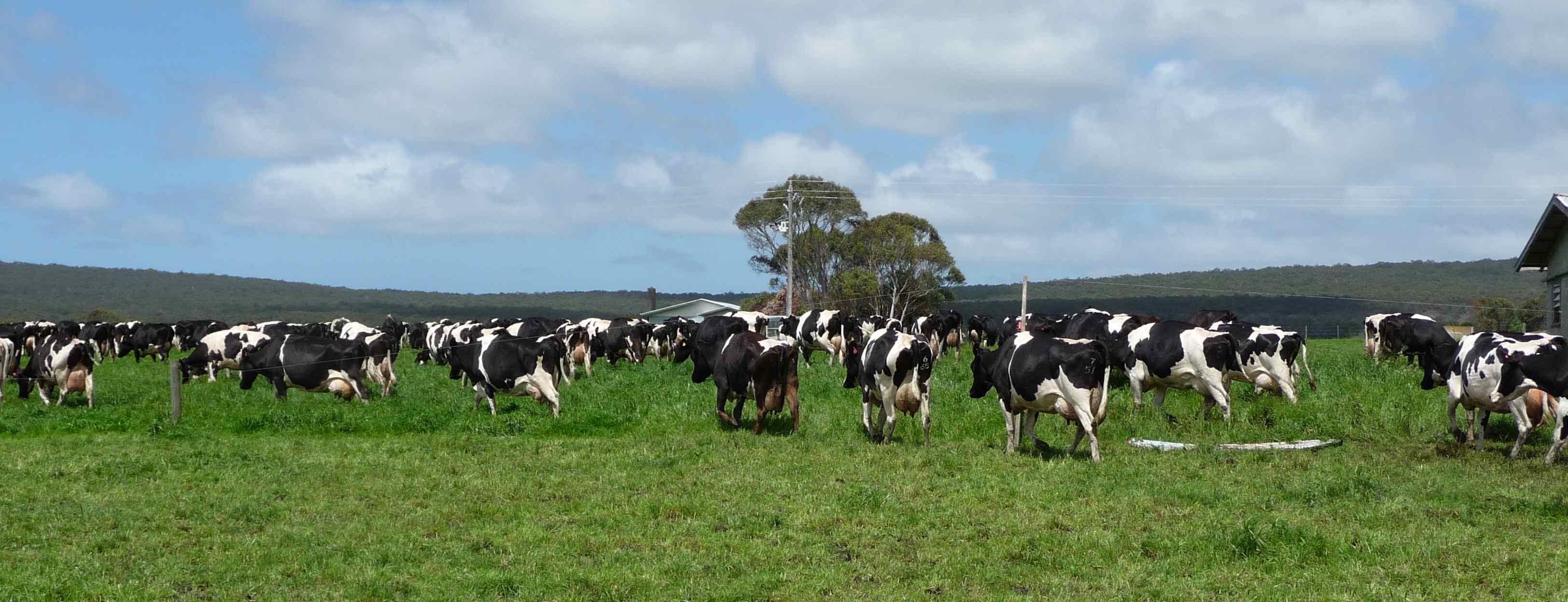
Mmmm...dessert!
Most of our farm’s internal fences are single-strand electric, which lends them perfectly to this type of manoeuvre. It took the cows five minutes or so to realise what I’d done but you can see how enthusiastic they were about their “second course” once the first pioneering diner ventured into cow nirvana.
Can you guess what the most commonly shoplifted product in the world is?
A report has revealed the most commonly stolen food around the world, and you may be surprised to find it’s not bread, flour, milk, meat or other essential staples, but rather cheese.
– Food Magazine
Can you believe it? Cheese stores well, goes with anything and is the ultimate treat that’s good for you. Humble grilled cheese on toast is my to-die-for breakfast.
People who drive conservation by walking the talk
Three men drove up to five hours (each way) to get to our farm and then worked tirelessly all day for nothing except the sense of satisfaction that comes with doing something good.
David, Chris and Bruce are members of the Victorian Mobile Landcare Group, which is unique because rather than being a collective of environmentally-aware landholders keen to make their properties more sustainable, this is a group of environmentally-aware volunteers who plant tens of thousands of trees all over the state.
As they explain on the group website, VMLG members are “people passionate about land care through responsible 4WD use, we are a non-profit association tightly affiliated with Landcare Australia and 4WD Victoria”.
Last year, the VMLG helped us plant 800 trees and we were wrapt that they could come again this year to add 1200 more. Here they are at the start of the day, ready to get stuck into planting.
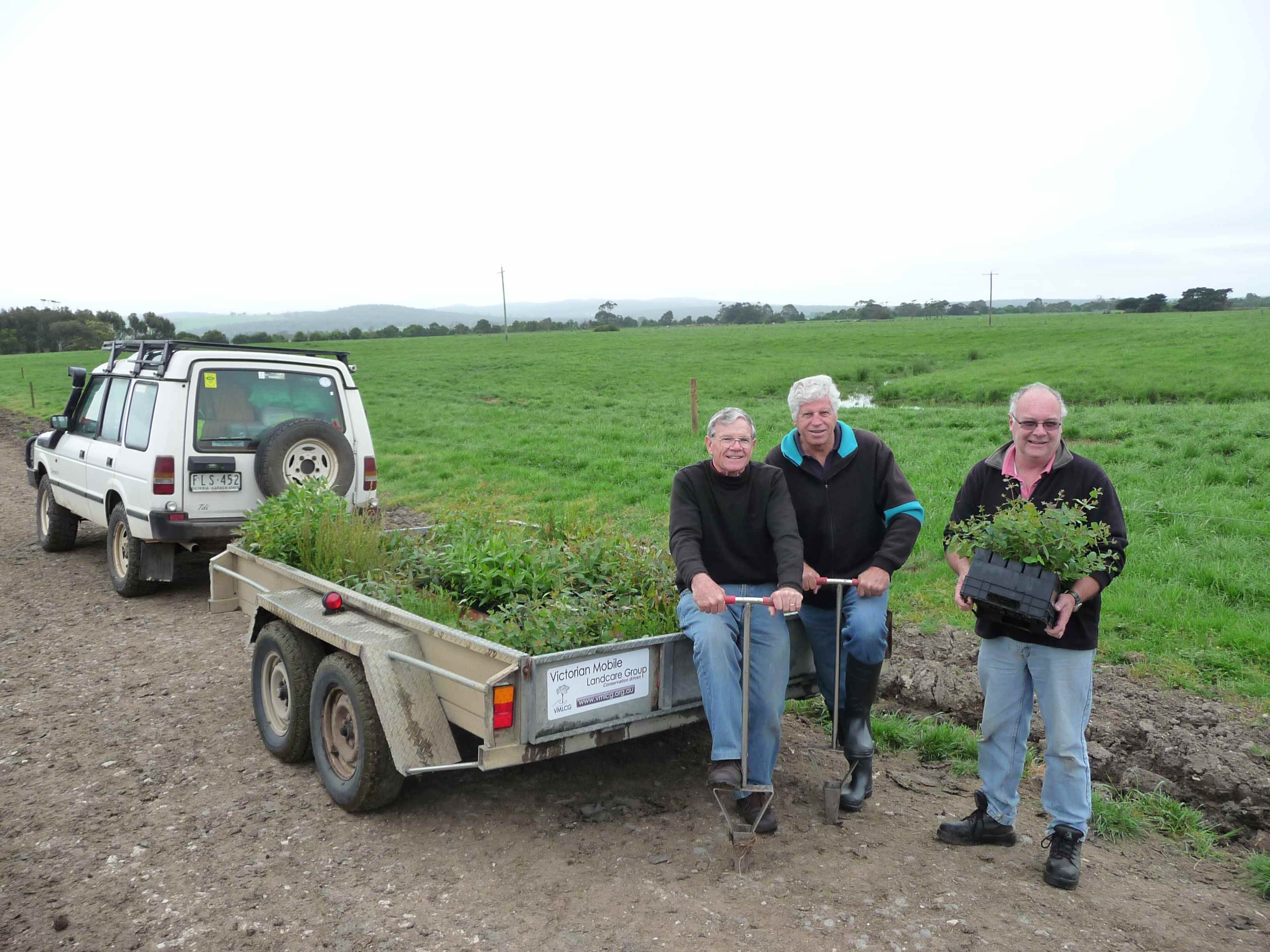
Victorian Mobile Landcare Group volunteers: Bruce, Chris and David (L-R)
Bruce, Chris and David soldiered on in the rain (“just one more tray,” eh Chris?), stopping only for an hour-long BBQ lunch. I was proud to have Zoe working alongside these fellows who do so much more than talk about their commitment to the environment.
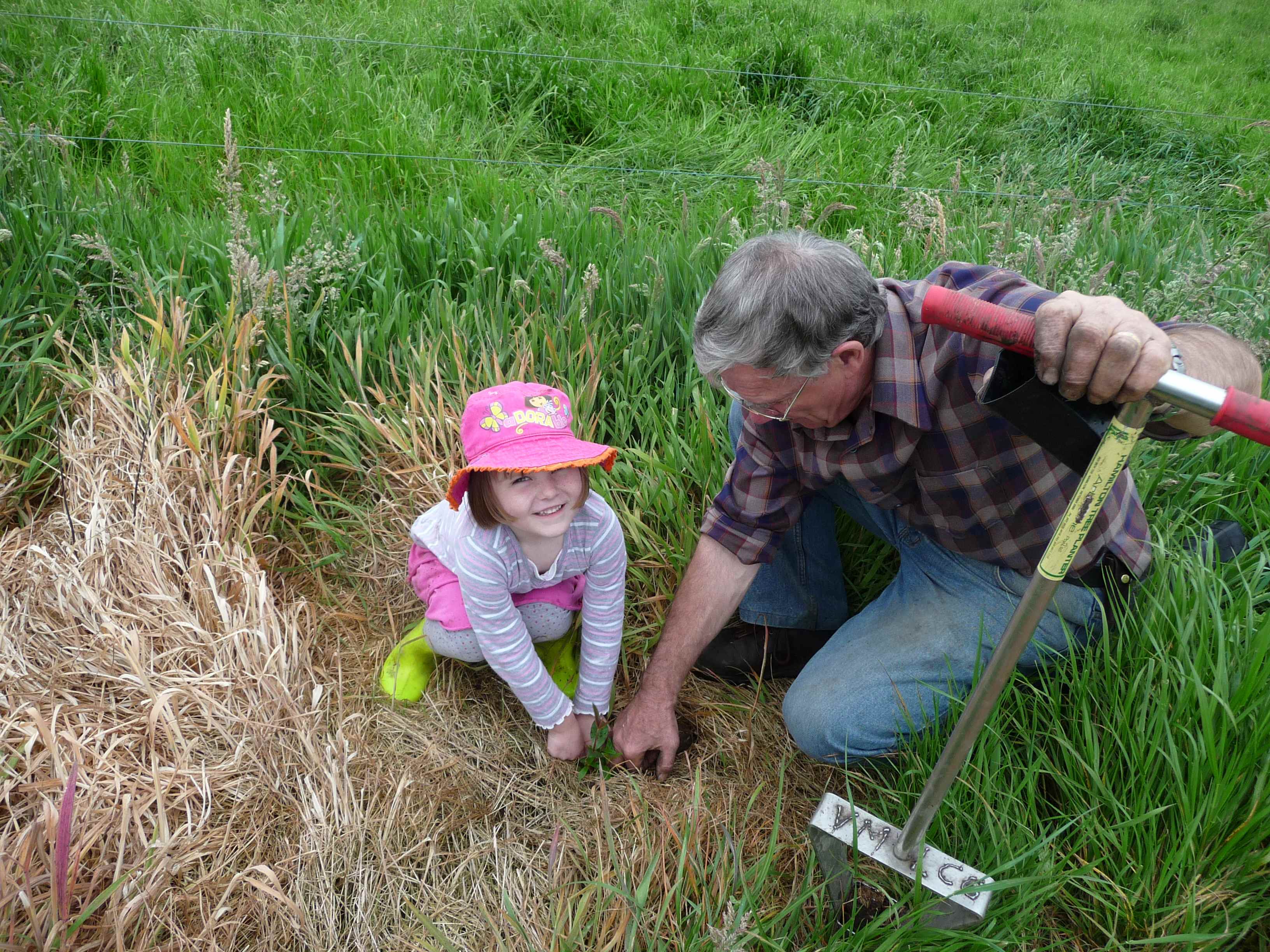
Bruce shows Zoe how to plant trees
At the end of the day, we had created two wildlife corridors and shelter for the cows – a great outcome for the environment, our animals and the landscape. One tree was set aside for Zoe and ceremonially planted in the garden to remind us of the day.

Members of the VMLG (David, Bruce and Chris) and Zoe with a ceremonial tree
Thanks guys. We couldn’t have got this done without your help. Thanks also to the West Gippsland Catchment Authority for spraying and 800 metres of fencing and to the Yarram Yarram Landcare Network for the donation of 400 trees.
Perfect timing, kinda: the brief lifecycle of a forage oat crop
The oats were sown in Autumn and here they were in May:

Oats on May 14
The idea was to provide quick winter feed and open up the soil with their deep roots but it got so wet, we couldn’t graze them and some were stunted.
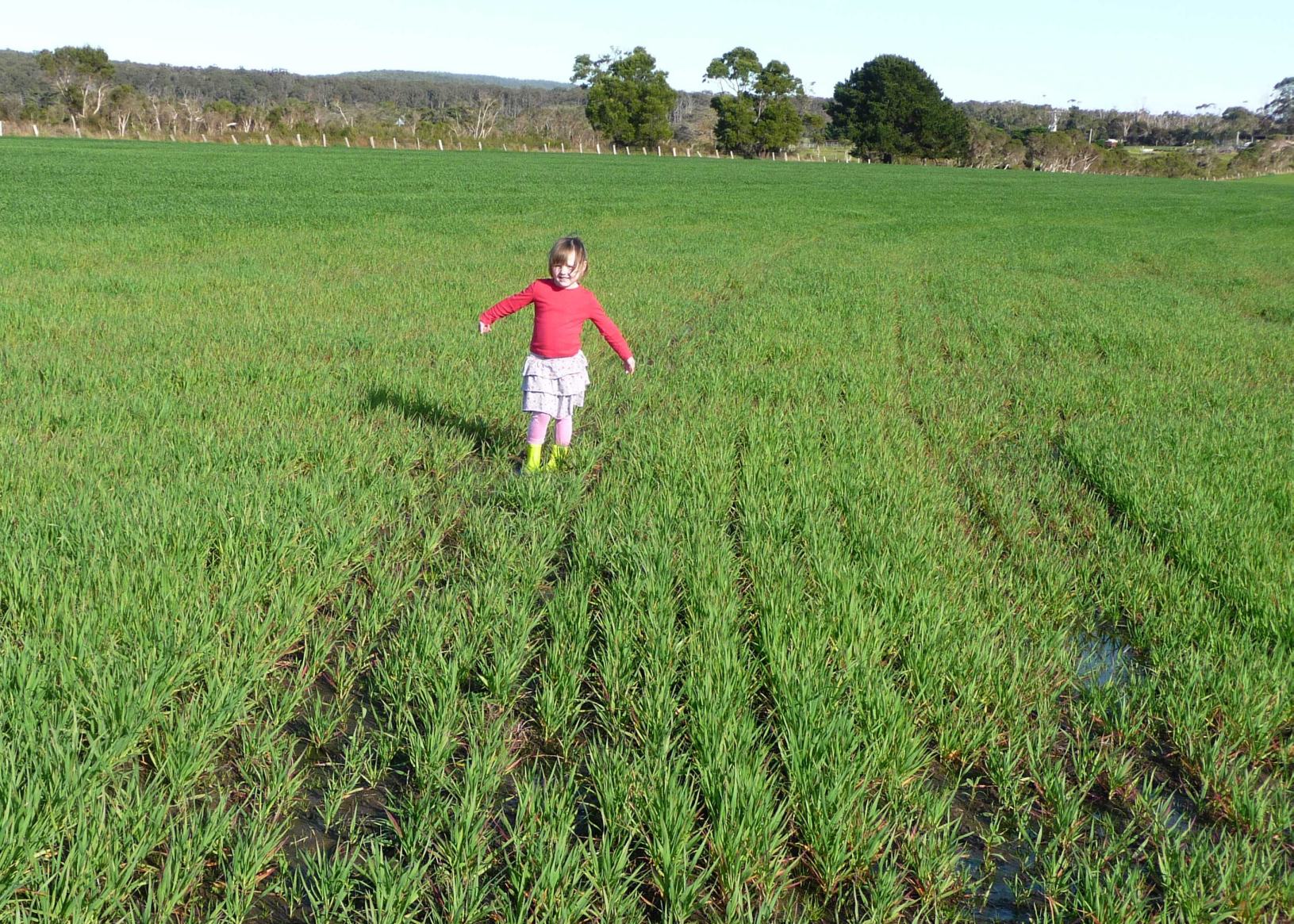
Oats stunted by wet conditions
Most of the paddock looked perfect in August but the soil was still too wet for the cows.
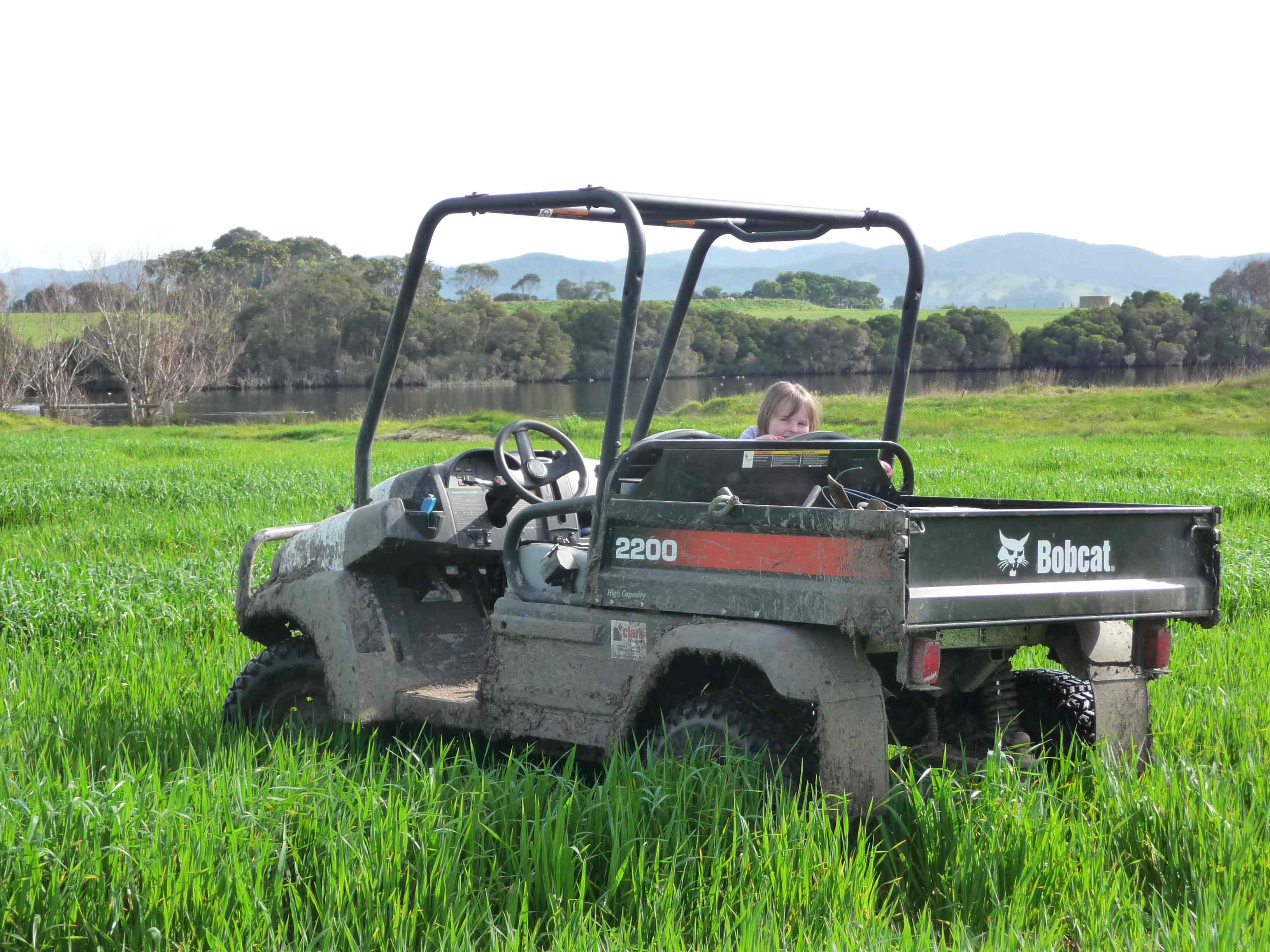
Oats looked great in August but still too wet to graze
This spelled trouble. It meant we’d missed the chance to graze the oats at all. The growing points would be too high. If I ignored that and grazed them anyhow, there would be nothing to bale to feed out next calving season. Oats are great to feed to heavily pregnant cows because they lower the risk of milk fever.
This is how they looked two weeks ago:
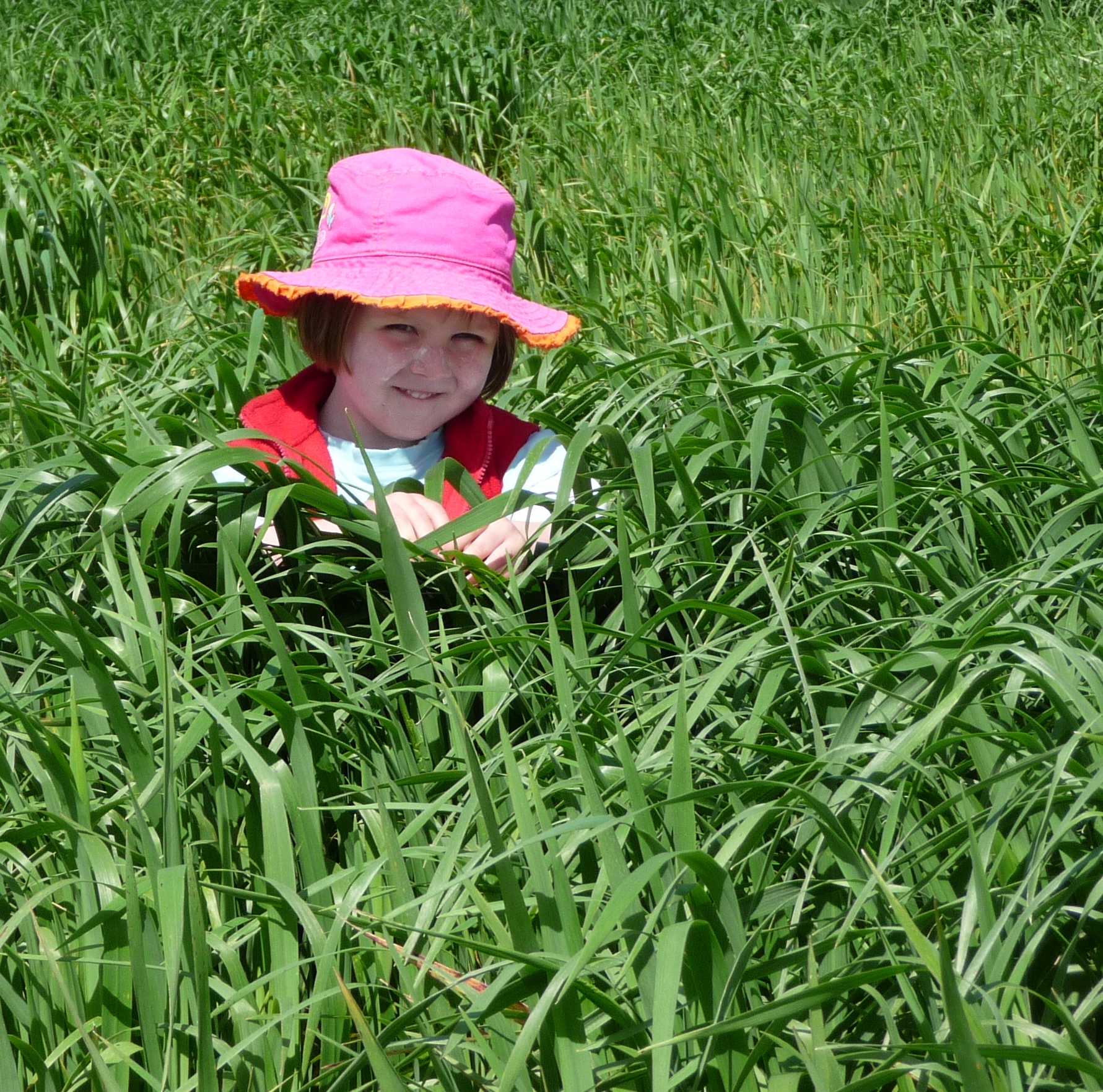
Zoe in the then tall oats
It meant they had to be cut quite quickly and this week was our chance. They were mown on Monday and Tuesday:
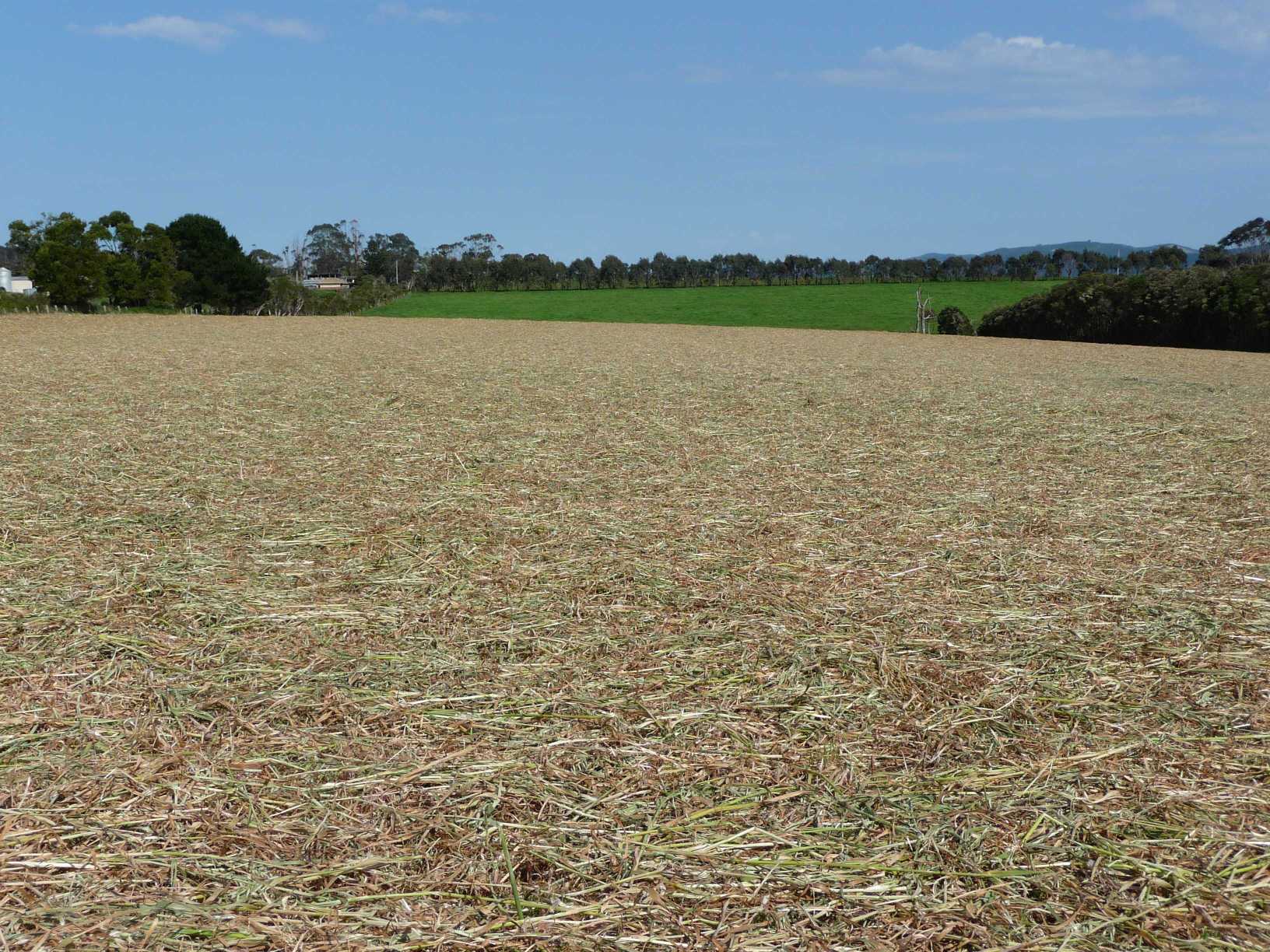
The oats after mowing
By Thursday (yesterday), they were still a little sappy but, while it was 30 degrees Celsius, a cool change was on its way, so we had to wrap it as silage rather than leaving it to dry further to become hay.
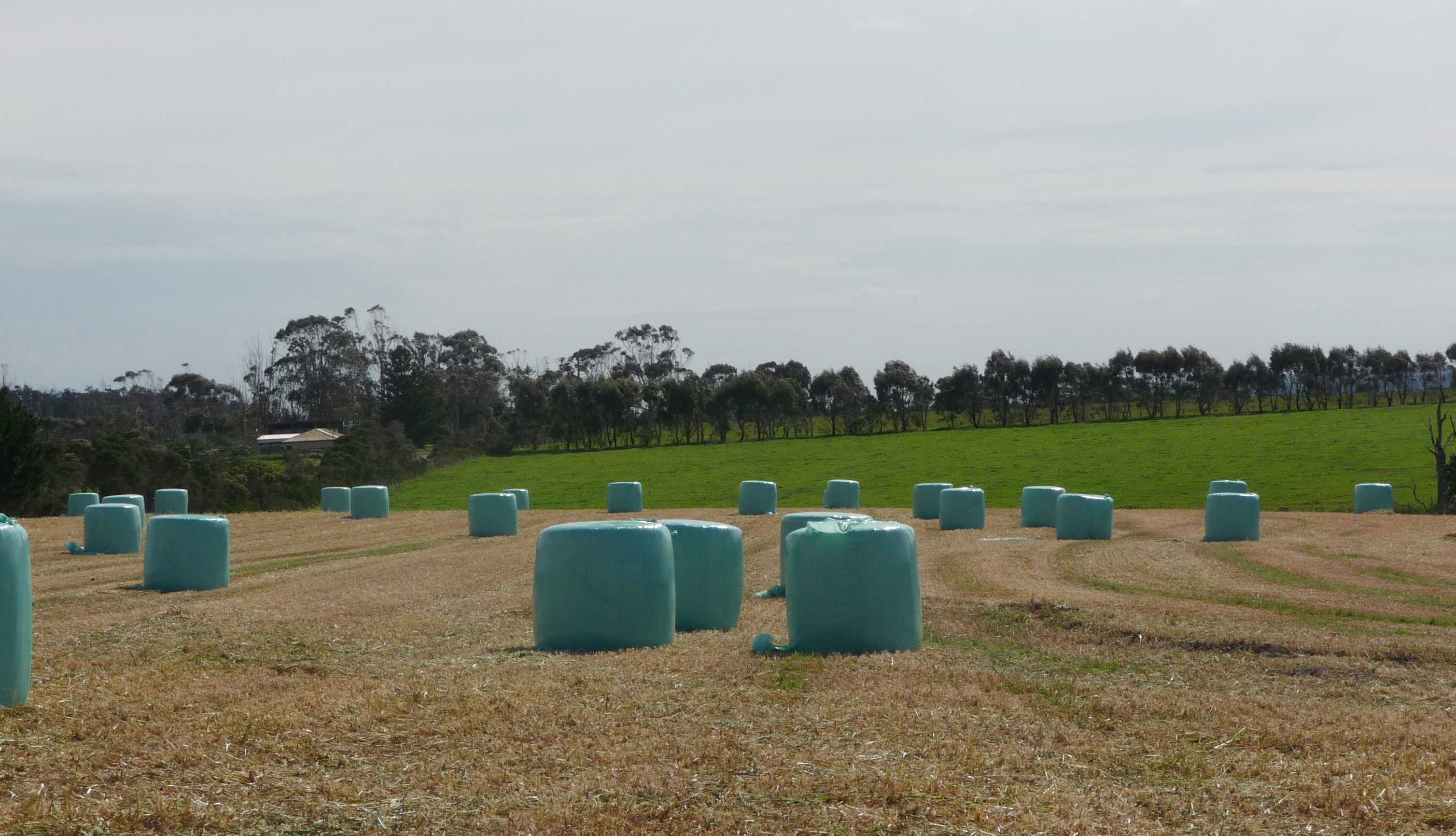
Oats all baled up
It was such a nice feeling to listen to the rain on the roof last night, knowing I had hundreds of sweet silage bales all wrapped up for the girls next autumn!
I’ve discovered a treasure-trove of info on silage making online, by the way. Check out the Dairy Australia “Successful Silage” manifesto. If you’re not thrilled by silage, you could use it to rock yourself off to sleep.
Hang on, aren’t farmers supposed to be whingers? Turns out we’re the happiest workers!
I didn’t see it but a friend of mine at Dairy Australia, Julie Iommi, tells me that the presenters of the Today Show concluded that farmers are whingers because we like to get it all off our chests when leave our isolation and meet someone. Oh dear.
For a start, dairy farmers are not all that isolated. My nearest neighbours are less than a kilometre away. Second, look at this newly reported research and here, on the radio.
“IF you’re whinging about your job and the things that annoy you most, you probably don’t work in farming, event management or the legal profession.”
So why are farm employees so happy? A commentator on UK career happiness research suggests that good jobs have this in common: high interaction with people, are out of a conventional office, and do things that have clear outcomes. Okay, we don’t have high interaction with people but we’ve got something even better – animals!
She contrast this with the least happy professions in administration:
“Admin work usually means a lack of control over what you do. Admin work is part of a clear pecking order (and when you’re constantly reminded you’re low on the ladder, that doesn’t feel great).”
“There is something about that office-admin environment that feels toxic. Office politics, an impenetrable pecking order, stuck in an airless office box with a lack of freedom about your day… plus a question mark over the point of what you actually contribute every day. Sound familiar? It’s not just admin workers is it?”
Farm employees often work either side-by-side with their “bosses” or are given lots of freedom to do their work without anybody breathing down their necks.
No wonder it’s a great career!
Spluttering spring means we start silage three weeks late and take a punt

Cutting grass in style
It’s been so cold and wet that the grass has been slow. We would normally have been seeing the grass take off three weeks ago and have a few hundred rolls of silage.
I’m a bit concerned that rather than simply being late, Spring will be brief. With this in mind, I’ve asked our silage contractor to start cutting a bit earlier (that is, in terms of growth rather than weeks) than I normally would. The grass is reasonably short but it gives me a better chance of achieving a second cut because we will have the maximum number of drying windows (you’ve got to make hay while the sun shines!) and the maximum number of growing days. If the hot weather arrives early, my pastures will be less vulnerable, too.
I’m also acutely aware that with a “compressed” spring season at best, farmers all around the district will be quick to pounce on the next window of fine weather as soon as the grass really gets up and going, so our contractor’s time will be at a premium. Best to get in first!
How big are Australian dairy farms? And what is a “mega dairy”?
There’s a lot of talk of factory farming at the moment. Animal activists use the phrase to shock us and judging by the comments in response to John Bunting’s Journal, average US dairy farmers are afraid of being overtaken by “mega dairies”.
While Australia’s dairy farms are getting bigger, I haven’t heard of anything on the scale discussed by our American counterparts, so I thought I’d ask the gurus at Dairy Australia for the official stats.
It turns out that the vast majority of Australian dairy farms are still family-owned. Only 2 per cent are corporate. This does not surprise me. As leading farm consultant John Mulvany points out, corporate investors demand higher returns on their assets than the meagre 1 or 2 per cent that most dairy farms achieve. Second, paid labour is both expensive and inflexible in this highly volatile industry. This bothers me because it assumes that farm families should not expect the same standard of living as their employees.
The average Australian dairy herd has 220 milkers and here is the breakdown of herds across the spectrum:
|
small |
medium |
large |
x-large |
xx-large |
total |
|
| % farms |
26% |
38% |
24% |
6% |
5% |
100% |
| % milk |
8% |
27% |
31% |
13% |
20% |
100% |
What’s perhaps even more interesting (and heartening) are the definitions of size.
Small: Herd size of less than 150
Medium: Herd size between 150 – 300
Large: Herd size between 301 – 500
X-large: Herd size between 501 – 700
XX-large: Herd size greater than 700
So, when the US talks of mega-dairies milking thousands and thousands of cows, Aussies talk of XXL dairies milking more than 700.
Disgraceful dairy farmer’s skin care regime
A friend of mine, Gary Thexton, passed on this:
Two farmers walking through a field; one stoops down and dips his finger in some cow dung and rubs it across his lips. The second farmer asks him why he did such a disgusting thing. The first one replies, “I have chapped lips!”. The second one asks him, “Does it make them better?” He replies, “No! But it stops you from licking them!”
I couldn’t help laughing. Just for the record, I carry a container of antibacterial wipes in the Bobcat glove-box. I am far from obsessive about cleanliness but when it’s time for a snack and we’re too far away from a tap, they ease my mother guilt.
 The Milk Maid Marian