About UHT milk

Here’s an interesting AAP newswire story about UHT:

Despite the supermarket heavyweight’s price war on fresh milk, sales of UHT milk are on the rise and now account for nearly 10 per cent of total milk sales. However, statistics from Dairy Australia show that most Australians still prefer fresh milk on their cereal.

UHT milk sales increased eight per cent from 195 million litres to 211 million litres in 2009/2010 over the year before, accounting for 9.3 per cent of total milk sales for the same period.

Associate Professor Frank Zumbo of the University of NSW, said the rise of UHT milk sales was currently not a threat to the big supermarkets as the long life product was low maintenance and did not require refrigeration costs.

“If the trend continued, it would be troubling, but at the moment it’s clear consumers have a strong preference for fresh milk,” he said.

The number was off a low base, where UHT had traditionally had a very low percentage of the market, he told reporters on Friday.

“But we are seeing the owners of UHT brands trying to lift their profile through increased advertising.”

A survey of 2,500 milk drinkers by consumer research centre Canstar Blue found that out of all Australians who had purchased milk in the past six months, those drinking Devondale UHT milk said they were happier than consumers of other brands, based on overall satisfaction, taste, health benefits and packaging.

Canstar Blue manager Rebecca Logan said the results were surprising, given the attractive prices offered by major supermarkets on fresh milk.

“There’s no doubt long life milk has come a long way over the years and consumers are responding to its convenience and long shelf life,” Logan said in a statement on Friday.

The average Australian drinks 102 litres of milk a year, according to Australian Dairy Farmers.

So, what is UHT milk?

UHT stands for Ultra-High Temperature and refers to the pasteurisation process – the heating of milk to ensure it is free from nasty bugs. Rather than being heated at 74 degrees Celsius for about 15 seconds, it is heated at about 140 degrees Celsius for just two seconds.

There is little nutritional difference between “fresh” and “long life” milk and according to Curtin University scientists, UHT milk is more environmentally-friendly than “fresh” milk.

Which milk do we drink at the farm?

I’m often asked whether we drink milk straight from the vat. Well, no, actually we drink Devondale UHT milk, which is where some of our milk ends up, anyhow. It’s safer than raw milk and easier to get out of the pantry than out of a 17,500 litre vat!
Big supermarkets, little farmers: the UK story

In the wake of the milk price war here in Australia, this story about the influence of supermarkets in the UK (click the underlined link) is a little unnerving. How can we prevent this happening here? Victorian farmers are less vulnerable to predatory tactics by big retailers for two reasons:

1. Much of our milk is exported; and

2. Victorian processing is dominated by a powerful 100% farmer-owned co-operative.

Having said that, we do share some concerns regarding the profitability of milk pricing.

Dairy Australia’s Australian Dairy Industry In Focus 2010 report says:

“At an average of approximately US$29 per 100kg of milk last year, Australian dairy farmers generally receive among the lowest prices compared to many major producing countries and so must operate highly cost-efficient production systems.  This is regularly borne out by international comparisons; where Australian farms consistently have costs of production in the lower cost category of all farms in such surveys. The fact that around half of Australia’s milk production has been exported over the last decade reflects this high level of competitiveness.

However, this has become increasingly difficult in recent years. Farm cost structures have increased in response to the need to adapt to drier conditions where rain fed pastures are regularly contributing a lower proportion of the total feed base available to the herd. Consequently, Australia’s share of international trade has trended lower as local milk production has contracted over the past decade.” (p. 10)

Have we got your goat?

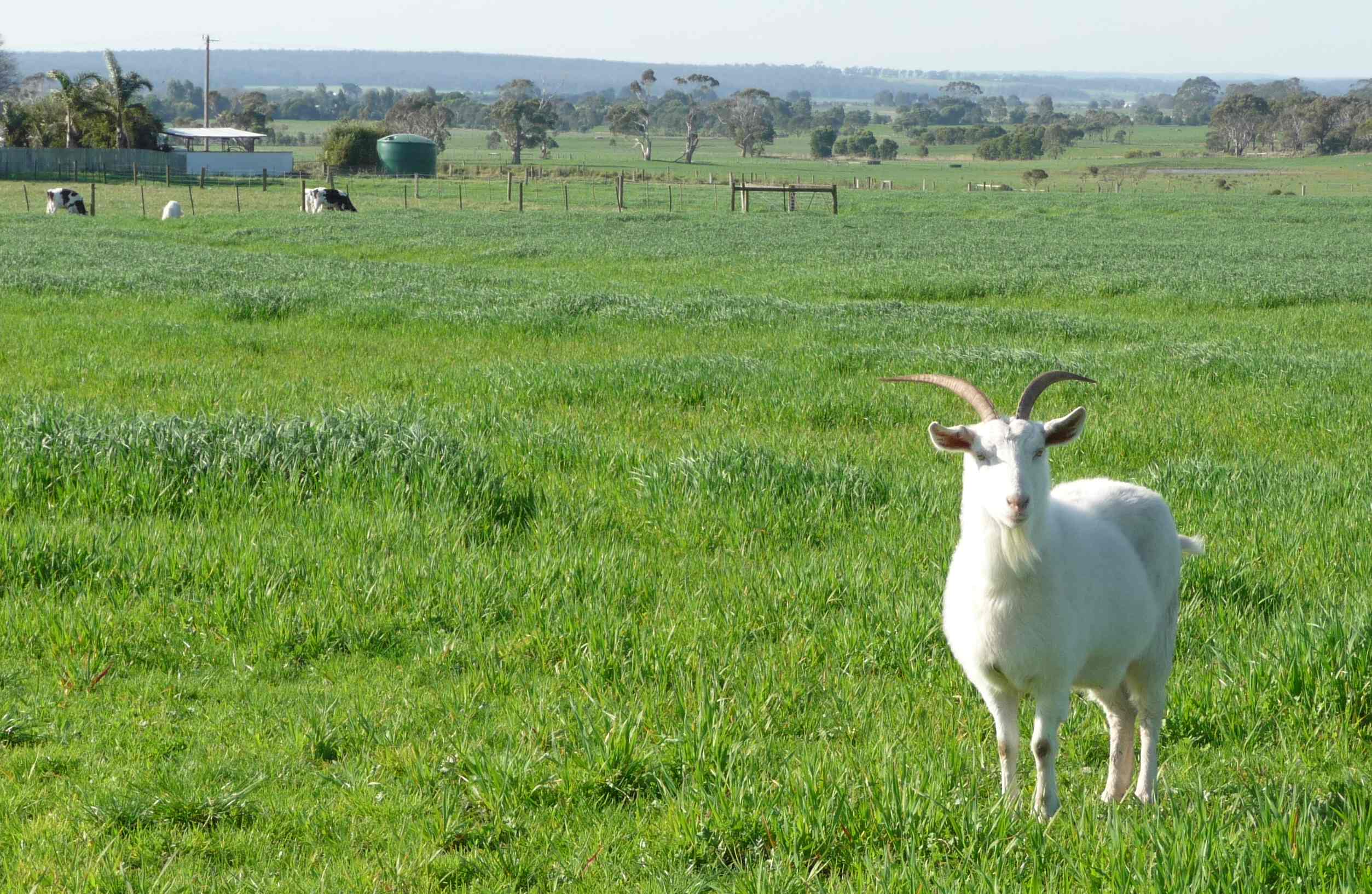
Lost goat

Goatie is extremely friendly so must be missed

This delightful goat arrived yesterday and, after calls to the vet and a dozen families in an eight kilometre radius, we still haven’t found an owner. Goatie is so friendly we’re describing him/her (no, I haven’t looked) as the “labrador with horns”. We don’t want to call the pound but please get in touch if Goatie is your four-legged family member.

Getting ready for another downpour (will it flood again?)

Signs of the flood on gates

The hallmarks of the last flood remain while we prepare for the next one

We’ve been flat chat the last couple of days, preparing for the rain forecast for tonight and this week: another couple of inches, although the expected totals seem to be changing every few hours. I suspect this means it could be anything!

Fresh sawdust has been added to the calf shed while it’s dry. We’ve been grazing the most low-lying and distant pastures first, while setting up temporary fences on the higher ground. Repairs to the fences on the river flat have been called to a halt for now. Extra silage has been delivered while it’s accessible.

In fact, any outdoor job that could be done is being done. Now we can only cross our fingers.


This farmer is a jack of all trades and a dud at fencing

Repair to fence

Fence repairs are clearly not my forte

The skills a dairy farmer – or family – needs are astounding when you start listing them:

  • vet nurse/paramedic
  • animal behaviouralist
  • nutritionist
  • mechanic
  • chemist
  • agronomist
  • biologist
  • environmentalist
  • fencer
  • machinery driver
  • plumber
  • electrical TA
  • project manager
  • accountant/book keeper
  • trainer
  • OHS officer
  • human resources manager

Understandably, nobody’s good at all of these roles and some of us describe ourselves as a “tractor man” or a “cow lady” or “pasture supremo” or whatever takes their fancy. But, unfortunately, we all have to have a go at all of them. One thing I am not is a “fencing fellow” as the pic at the start of the post demonstrates. Our neighbour Rob can tie immaculate reef  knots..in barbed wire…but then he’s both a sailor and engineer!

Sometimes, doing a good job means bringing in specialist expertise and equipment, so I am not shy of engaging good contractors and consultants. Might seem expensive in the short term but there are good savings to be made with the right advice.

By the way, here’s a strange-looking “paddock Yeti” left behind by the flood.

Yeti in the gully

Yeti in the gully


Cows have best friends too

Here’s fascinating research reported in the Daily Mail:  Cows have herd mates and the bonds can affect yields, according to UK researchers.

Krista McLennan, an animal welfare researcher at Northampton University measured heart rates and cortisol levels of cows to see how they cope when isolated, penned with their best friend or with an unfamiliar cow. “When heifers have their preferred partner with them, their heart rates are reduced compared with if they were with a random individual,” McLennan said. “Keep an eye out for those cows which like to keep their friends with them. It could have some real benefits, such as improving their milk yields and reducing stress.”

I’ve noticed this myself. Just the other day, the herd was walked past a paddock of two-year-olds and I watched one of them gallop up to sniff noses across the fence with two herd members. The amazing thing was that their ear tags revealed they were all born in the same year. What I’d assumed was a two-year-old turned out to be a three-year-old late-calver conveniently paddocked with the younger ones. Old friends were catching up!

Online mapping software makes farm planning so much easier

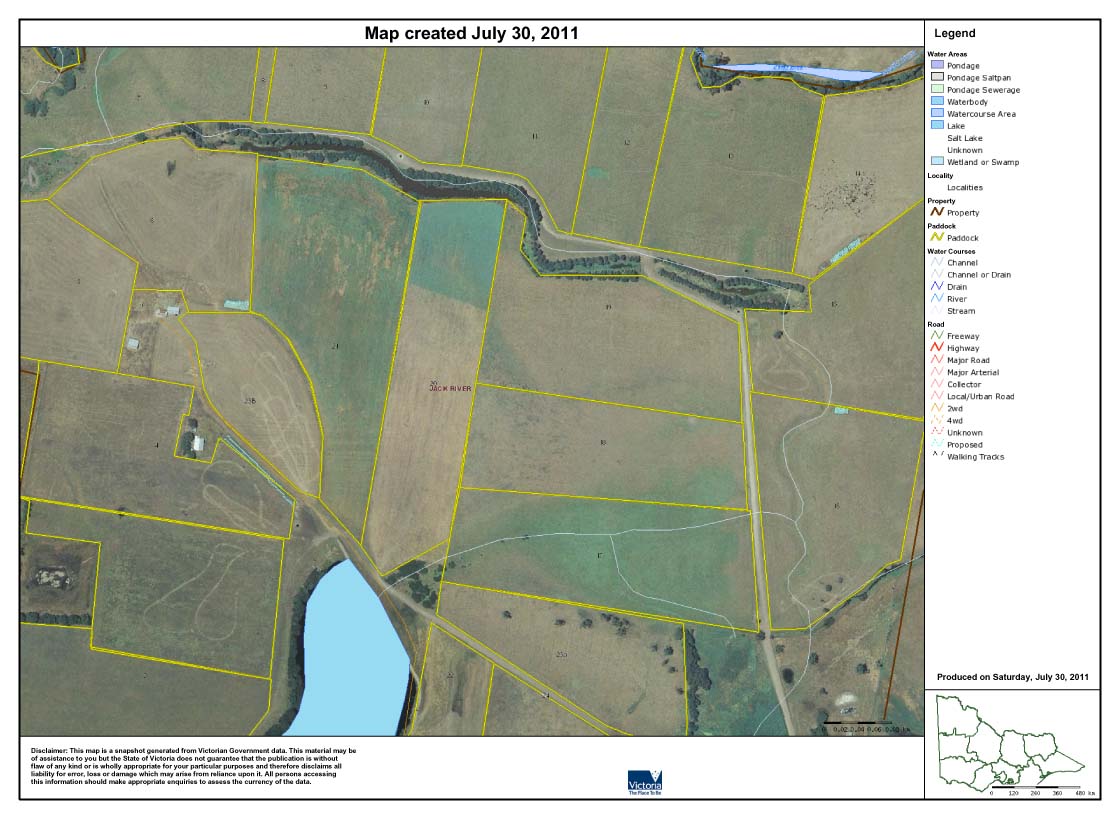
Part of the farm on eFarmer mapping software

Part of the farm on eFarmer mapping software

While most dairy farm work is outdoors, some of our most valuable tools are in the office. In the two years I’ve had access to eFarmer mapping software, I have used it to:

–          plan new fencing (very handy today!)
–          site new stock troughs
–          work out where to put new water lines (and their lengths)
–          plan and carry out pasture renovation
–          plan for a better effluent distribution system
–          map soil types
–          create a map for contractor use (cropping, weeds, fertiliser, fencing, trenching)
–          apply for environmental grants
–          plan and implement revegetation projects
–          accurately specify fertiliser applications

In other words, it has allowed me to be a much better farmer and custodian of the environment.  Thank you to the Victorian DPI and Murray Goulburn for making it happen!

The aftermath of the flood

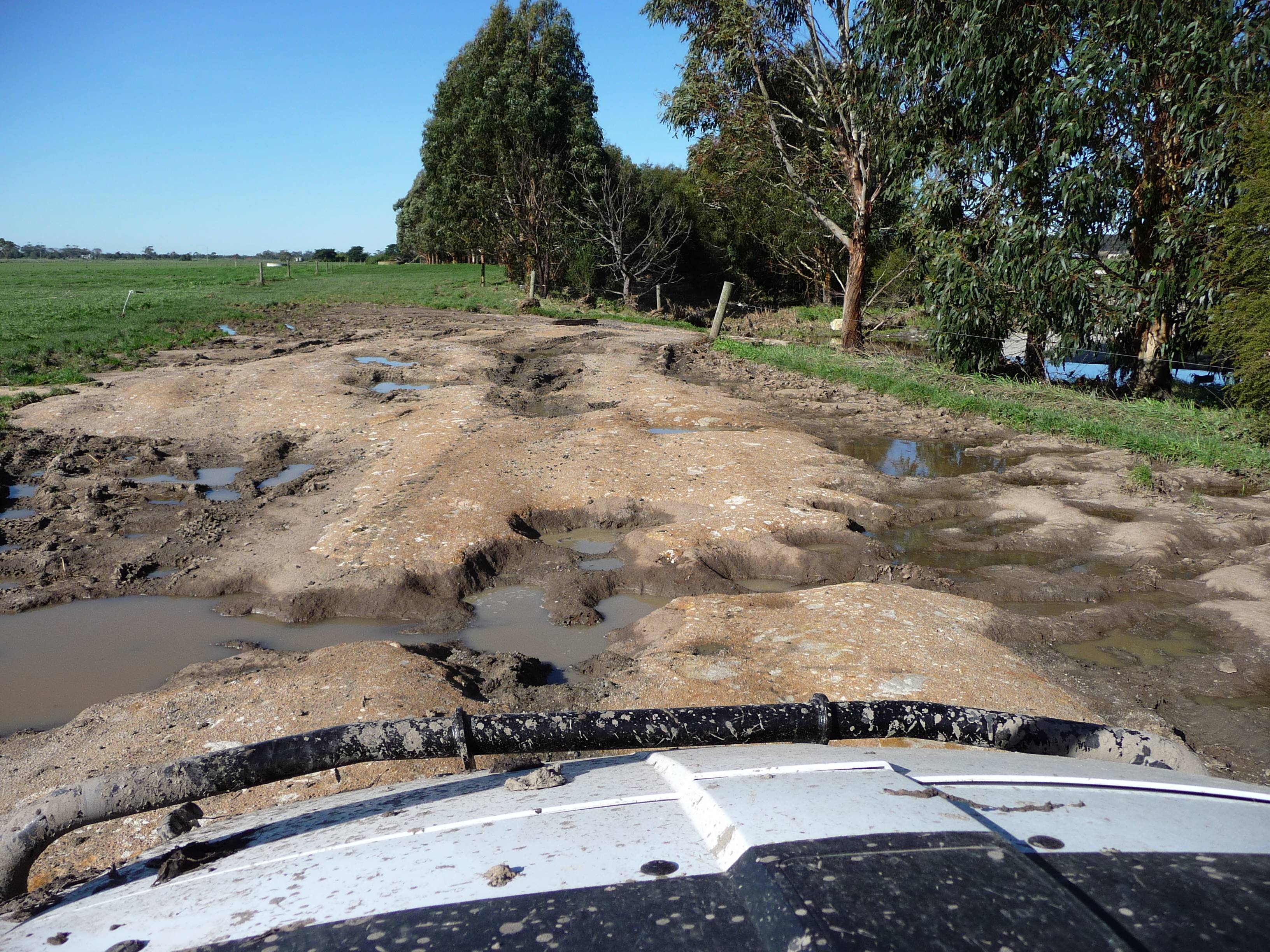
I haven’t posted for a while because the flood left the farm in a big mess that will take time – and a lot of money – to put right. The most obvious cost will be in track repairs.

Farm track after the flood

Farm track after the flood

The other big piece of vulnerable infrastructure is fencing. So, when I went looking for a fresh paddock while Clarkie rounded up (nothing like a little pressure, eh?), I decided to cross the gully and check on the boundary fence. Gone.

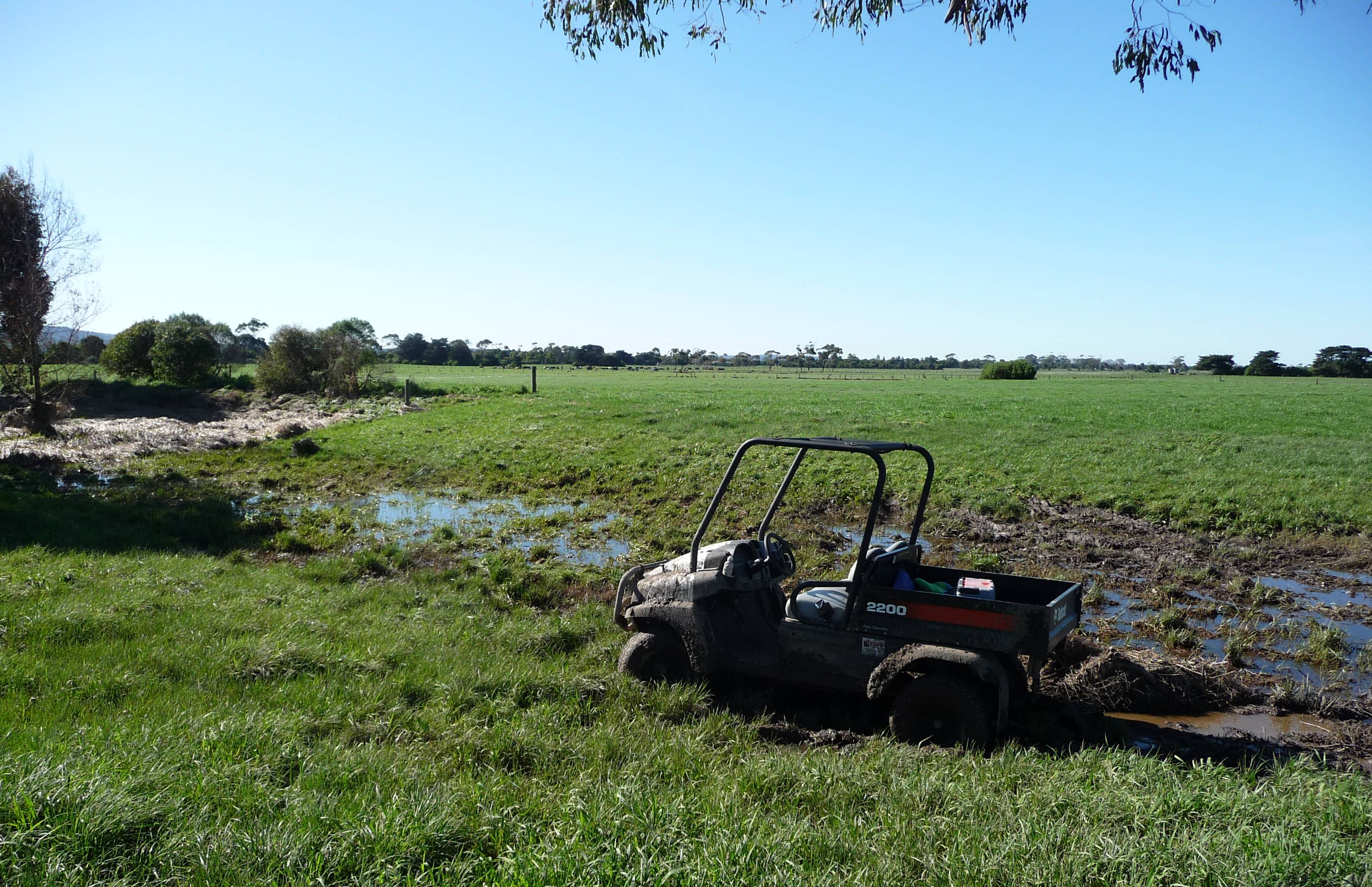
Dashed back across the gully towards the track and, after 10 minutes of showering Zoe, Alex and myself in mud, had to concede defeat. What a miserable day. Nowhere to put the cows, the tractor stuck at the other end of the farm with a tyre blowout, the tracks, the fences…

Bogged farm UTV

The Bobcat slid in the mud for 10 minutes before we pronounced it bogged

On the long march homewards, a pair of kookaburras began to cackle. Zoe said, “Listen Mama, they’re laughing at you for trying to cross the gully and getting bogged.” I felt instantly better.

What a fool I was. Feeling sorry for myself while holding the hand of my lovely little girl with my baby son on my chest as we walked through glorious country in the winter sun. It’s all about perspective.

Floods, bogs and mud, mud, mud

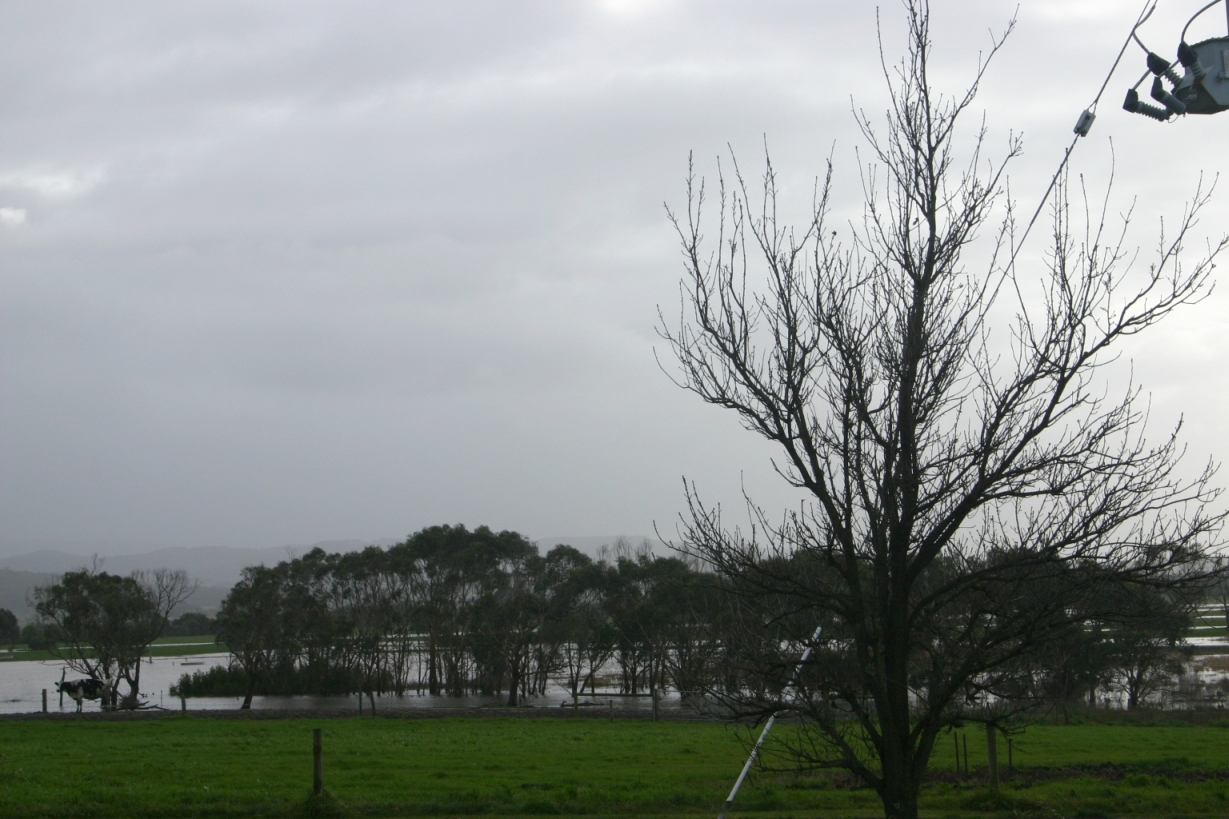
Flood 22 July

Partial view of the flood from the house this morning

The rain came…again. Yesterday, Yarram airport received 48.5mm and today, all the roads to town are closed, a third of the farm is cut off with at least another four paddocks underwater and the car is still sitting bogged in the driveway. Thankfully, the house is nice and high, so no sand bags needed (but thanks for the offer, Julie and Doug)!

Most of this is a temporary inconvenience. The good news is that the local rivers are short and empty into the sea quickly, so the roads should be open again in the next day or so. More important is the longer lasting issue of saturated pastures and muddy tracks.

Saturated pastures (they were already saturated before this jolly east coast low pressure system decided to pay us a visit) are very vulnerable. The damage done now by cows’ hooves will cause compaction of the soil so that, come summer, water will run off rather than soak in and roots will find it harder to penetrate the soil, exposing them to heat and denying them sub-surface moisture. If you’re a gardener, you’ll understand!

Muddy pastures and tracks are also a perfect recipe for lameness and mastitis, both painful conditions that are difficult and expensive to treat.

Of course, sopping wet soil is also no good for growing grass, which means we must step up our imported feed. This means more cost, long days and heavy tractors on fragile pastures.

Those weather gods need an urgent performance review so they can refocus on their KPIs!