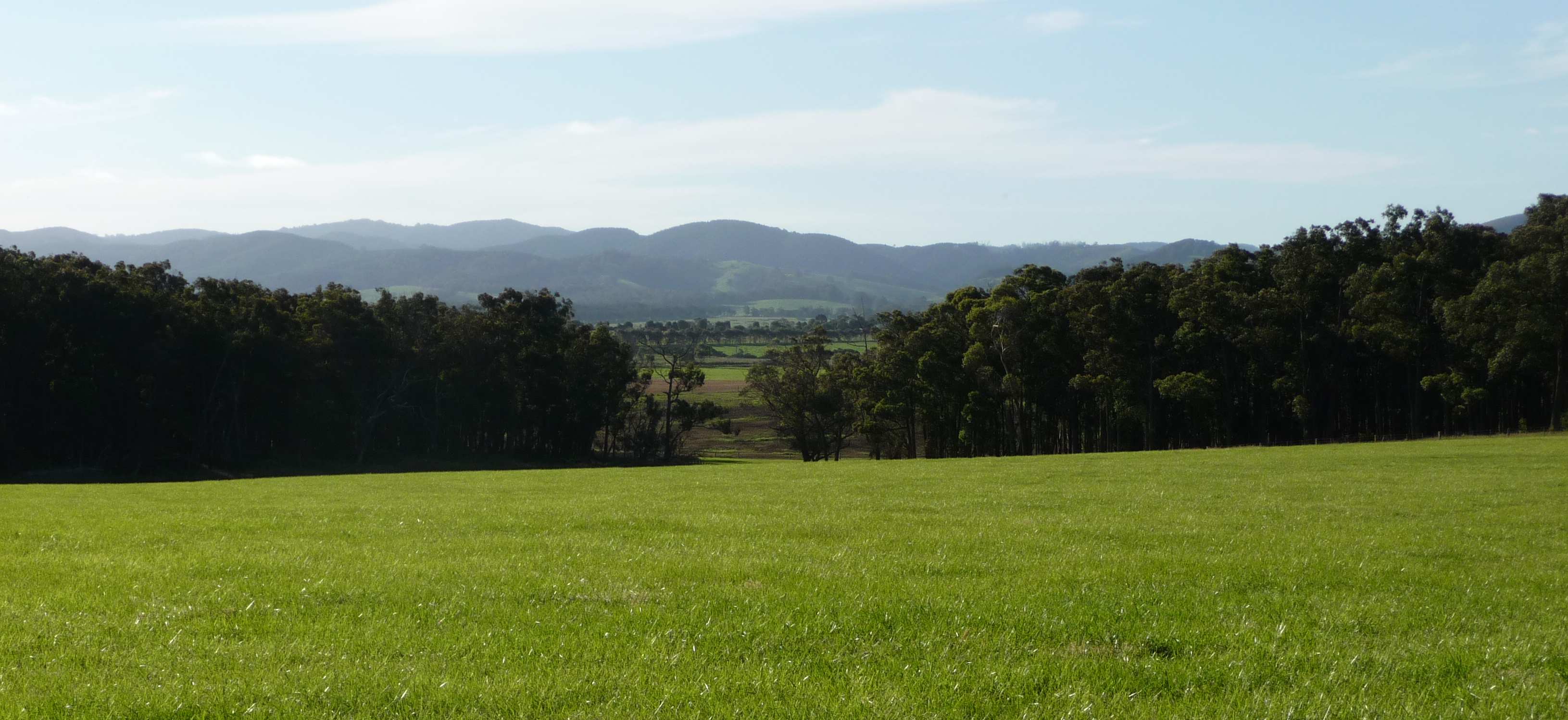
The morning after

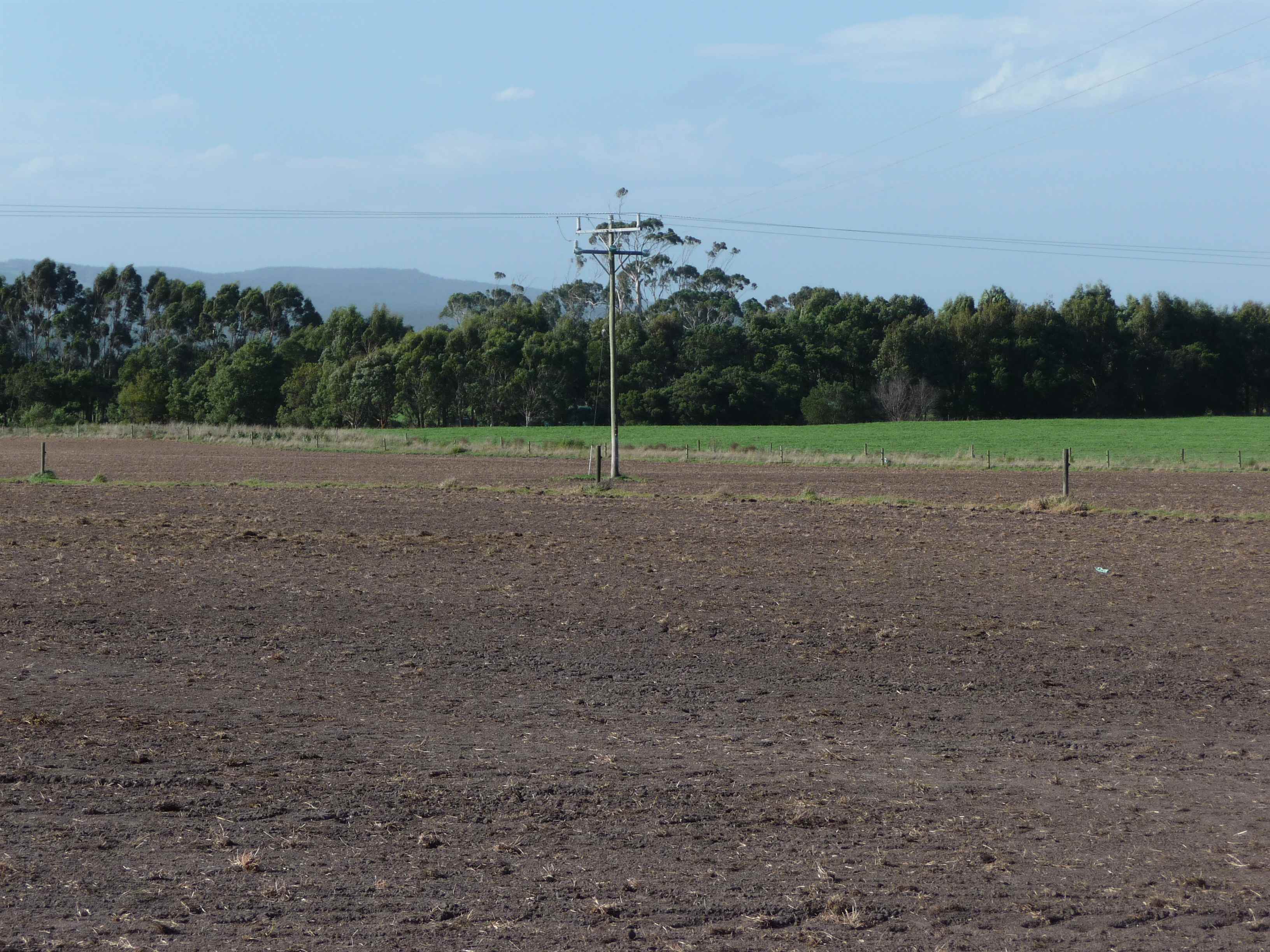
I lay awake listening to rain on the roof and when dawn broke, this was the view that greeted Alex and me yesterday.

Flood June 4

No better than the day before – even the water troughs disappeared!

Wayne was in Melbourne, Zoe still curled up in bed. The cows were missing their milker, Clarkie, who was on the other side of the flood waters. Sticklers for routine, they’d started coming into the yard and would not be happy! As soon as Zoe woke, we packed breakfast and headed off in the car, looking for a way through.

Flooded road

The most likely option

I sat contemplating the water for a couple of minutes and turned back – not worth the risk. After about three-quarters of an hour of back road exploration, we made it to town! A quick call to Clarkie and he was on his way.

Yay! Our patience is rewarded![/caption]

The cows were milked a few hours late but everyone was safe and Zoe made it to school in time for morning tea. The rest of the day was spent hunkered down with farm consultant Matt, poring over spreadsheets, while Alex entertained us with his antics. The waters are still quite high today but this afternoon’s farm tour will reveal the extent of the damage.

All part of the thrills and spills of life on the land and I guess we had better get used to it – if the scientific community has it right, the climate rollercoaster will only get more and more “exciting”.
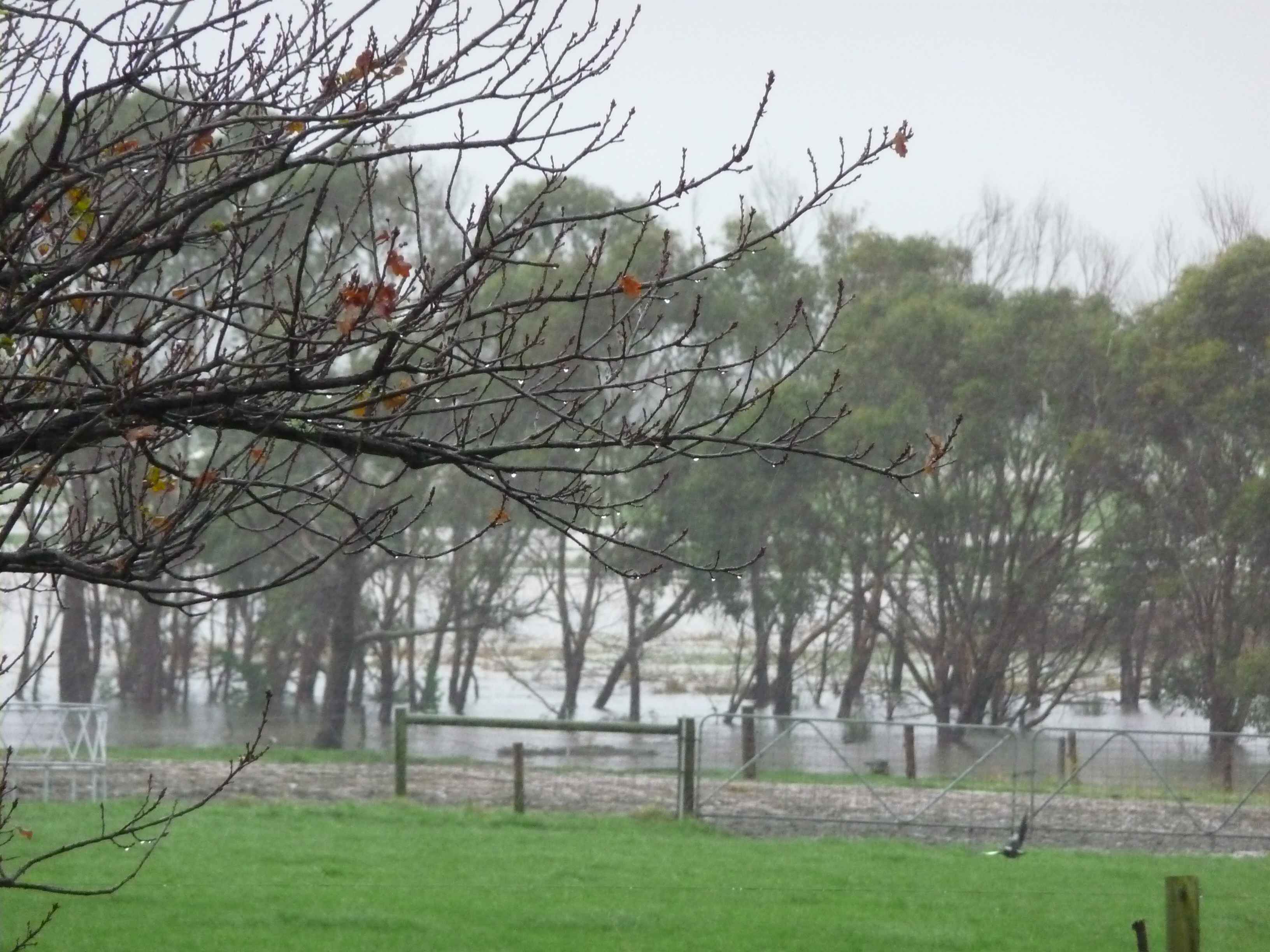
Two floods in ten days

My kitchen is a picture of domestic bliss: gingerbread men fashioned by Zoe in the oven, chicken curry in the pressure cooker. But the reality is that Zoe is home early from school because the roads to town are sure to be cut by now with the second flood in 10 days.

The second flood

Groundhog day

A neighbour tells me he tipped 94mm out of the gauge this morning and it hasn’t stopped raining since. The cows are on high ground (as is the house, thankfully) but they ate those pastures out only a week ago to give the flats a chance to recover and the grass is still short.

What will we do? Redo our budgets, then call the gravel contractor to get first in line for track repairs, followed closely by the fodder supplier.

The cows will have soft, tender feet so we’ll have to take them extra gently along the tracks and we’ve already earmarked a “sacrifice” paddock to spare our saturated soils from pugging and compaction.

None of this would be too, too terrible if it was November but it’s only June 4 and as the wry @Hoddlecows noted on Twitter, optimism about the new season seems to be washing away with the flood waters.

Caring for Our Country requires a team effort

If it takes a village to raise a child, it takes a country to take care of its land.

Our family has set a target of planting at least 1000 trees on our dairy farm every year but we’ve only been able to do it with a lot of help.

  • Greening Australia helped me develop a whole farm plan and funded the refencing of 11ha of remnant vegetation plus 800 trees that our friends helped us to plant.
  • Our local Landcare group provided a good chunk of the funding for fencing off and revegetating a wetland that volunteers from the Victorian Mobile Landcare Group came down from the city and planted with us.
  • The West Gippsland Catchment Management Authority funded kilometres of fencing and thousands of trees along the gully and anabranch, plus connecting wildlife corridors.
  • Again, the volunteers from the Victorian Mobile Landcare Group came and planted 1200 trees for us last year.
  • The Wellington Shire Council funded the planting of trees along the roadside bounding our farm a year ago and has funded more work in the wetland this year.

We are so, so grateful for all this help. Revegetation is an expensive affair that involves a lot of planning and hard yakka. It’s so worthwhile! This is one of the trees planted by Bruce, Chris and David of the VMLG last October.

Six month old tree

The trees will provide wildlife habitats, help to keep the water table healthy, protect our rivers and the ocean and make a small contribution to reducing carbon pollution. They will also make our cows more comfortable in unpleasant weather and enhance the beauty of our landscapes.

With all this in mind, it was a relief to hear that the doomsayers’ predictions of funding cuts to the chief national environmental program, Caring for Our Country, that helps to fund all this work failed to materialise in the federal budget. There are unwelcome cuts (on top of previous cuts) but it is still here.

New season has us rushing around like squirrels

It’s autumn and our dairy farm is buzzing with activity before calving starts and winter sets in.

We have sent about 50 cows off to the other side of the farm for their annual two-month holidays. Before they go, they are given long-acting antibiotic therapy and teat seal to reduce the risk of mastitis when they calve.

Dry cows go on holiday

"Yay! Holidays!"

New pastures have been sown. Those (like this one) that were too rough have been fully cultivated with discs, power harrowed and rolled. This paddock has also had lime because its pH needs to be lifted a little higher. I’ll keep a photographic log of the paddock’s progress.

Newly sown paddock April 1st

Here it is, one day after sowing on April 1

We’ve invested in new stone and gravel for sections of the cow tracks and gateways.

New gravel

La la lush new gateway gravel!

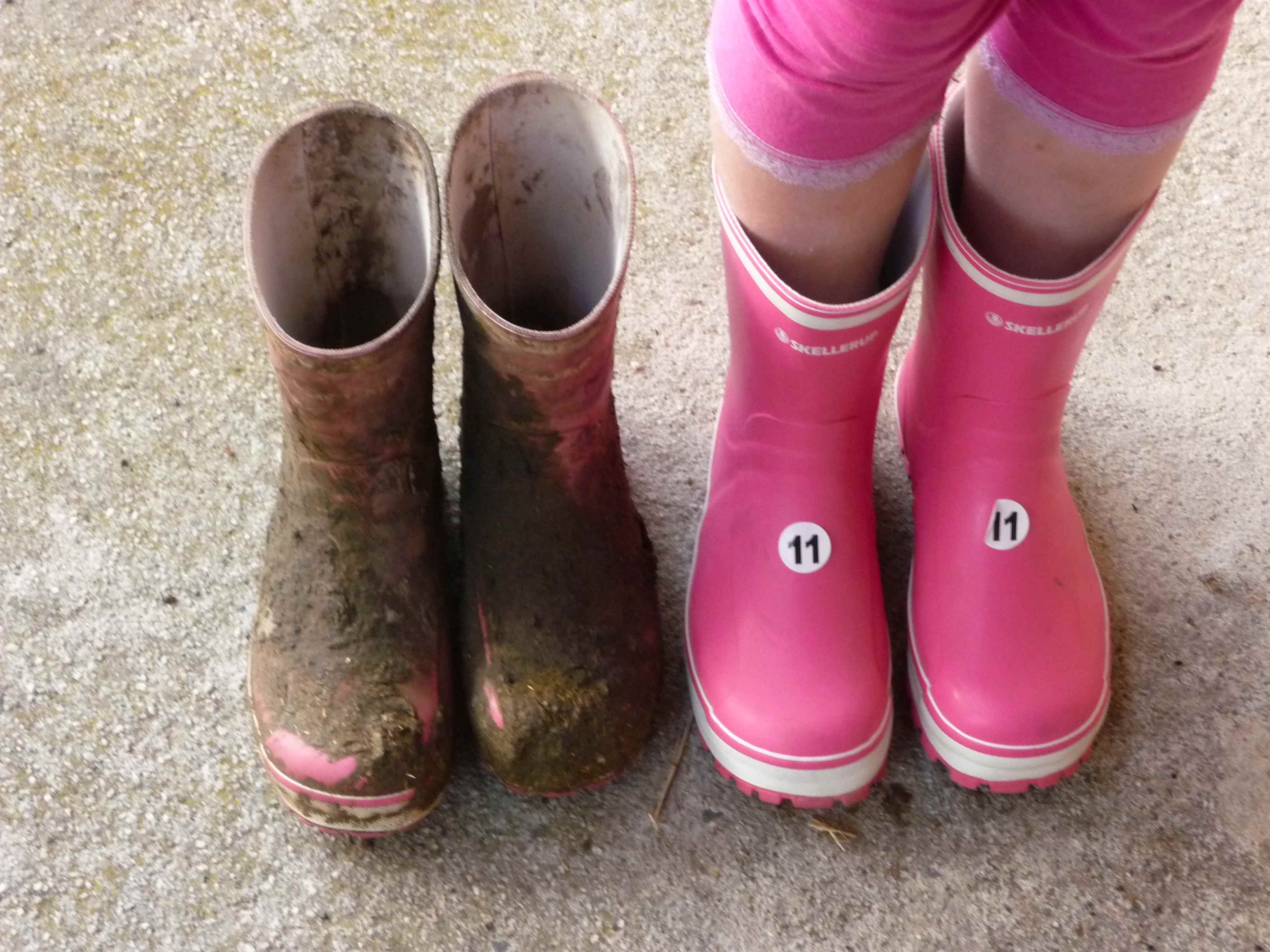
And, last but not least, a new pair of boots.

New rubber boots

How long 'til the pink turns khaki?

By the way, how do you know when your boots are too tight (especially when they were too loose the day before)?
“When you can’t do what you used to do with your boots.”
“What’s that, Zoe?”
“Put your big toe on top of the toe next to it.”
Obviously!

From one farmer to the next

I have no idea whether Zoe and Alex will be farmers but I’m quite sure my father was surprised when I fought to keep the farm in the family after he became gravely ill.

I’d been given a great education and had built a thriving two-person little business that fitted in perfectly with a new baby. He’d decided I was better off not farming and told the lawyer drafting his will that he was going to sell the farm. The thing is, rationally, he was right: I was much better off financially than I am now or am likely to be as a farmer. What Dad had forgotten to factor in was the call of the land.

Life on the land gets in your blood and I’d always wanted – no, expected – to come back to the farm when there was room for me.

Now that I am here and have children of my own growing up on the farm, I sometimes wonder whether they will feel the same pull. Maybe they’ll simply look back happily on a wonderfully free, healthy childhood and move on. Maybe they’ll want to farm. I hope they have the choice.

I tuck little bits of money into share portfolios for Zoe and Alex here and there to build an understanding of the way money works and nest eggs that will free them to hatch their dreams one day. That’s the big picture. Then there’s the little things, like creating digital farm maps and records.

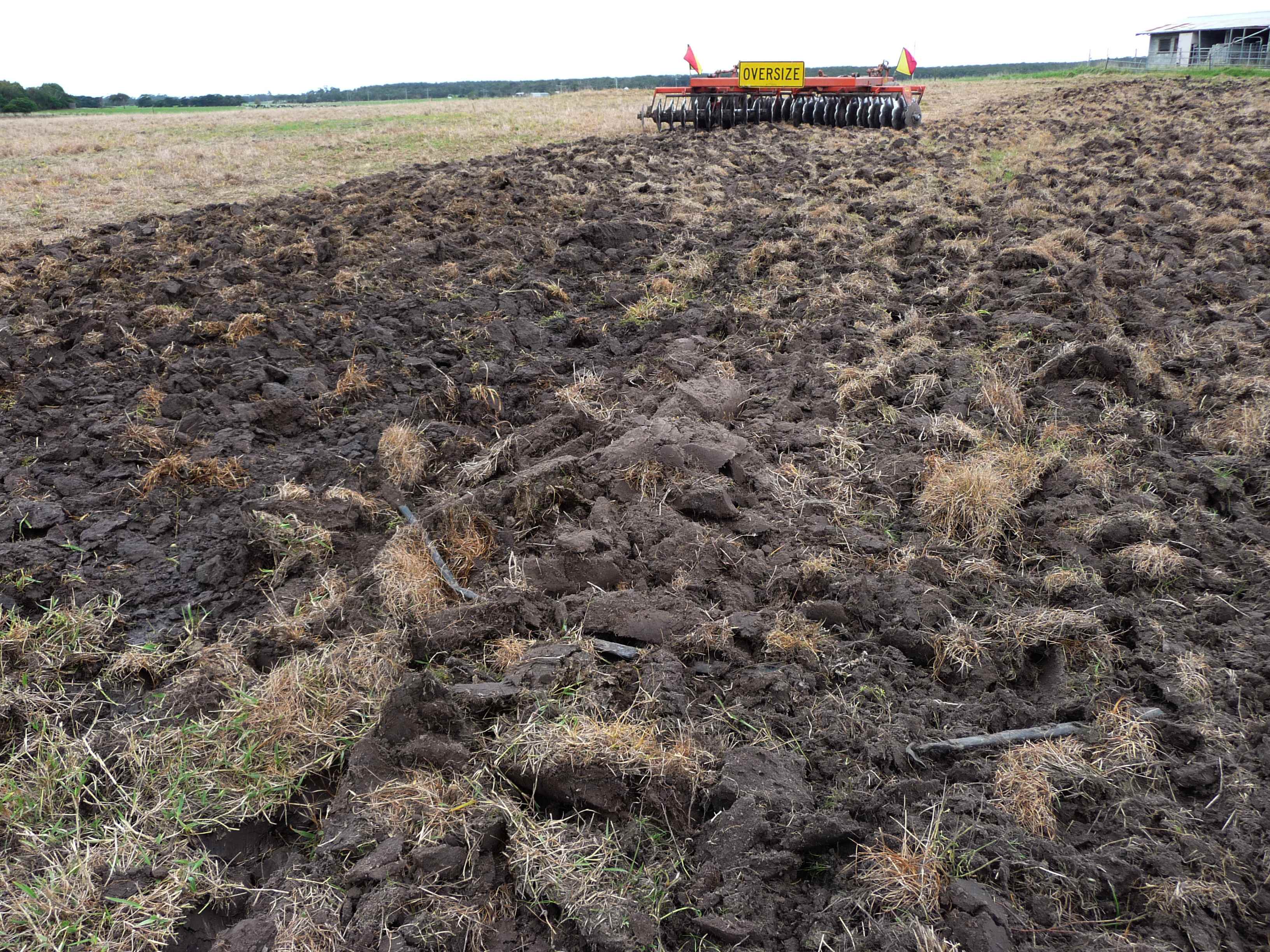
The importance of maps was hammered home just the other day, when I got a call from Wayne, our sowing contractor, just as I was feeding Alex his dinner and while Zoe and my Wayne were out at a piano lesson. The plough had located (chewed up, that is) a water pipe I didn’t even know existed.

Ploughed up pipe

Agricultural archaeology


The water started off as a trickle but soon became a spectacular three-foot-high in-paddock fountain. The break was at the furthermost end of the paddock from the pump and I knew that more ploughing would only mean endless fountains unless I could find the start of the pipe. A hopeless situation, especially at 5.30pm.

In the end, I decided to pretend I was Dad. I stood at the break and looked north in the direction of the river pump. Decided an old blackwood tree on the bank of a gully would be a natural spot for Dad to have a joiner and went for a walk.

Pipe in the Gully

Thank you, Dad!

Dad was a little eccentric but I knew him well. Went to work with a garden saw to get to the joiner and voila, one end cap and some mumbled swearing later, all fixed!

Not a moment too soon

Not a moment too soon

Got back to the house just as the sun was setting and Alex was totally over it but the troughs filled, a quagmire was averted and I smiled a little smile for Dad.

Does bigger equal a better bottom line?

“Get big or get out,” was the mantra often chanted in the 1980s by Gippsland dairy farmers. And they did, sort of. Our farm is a collection of three 1970s family farms but we’re still not truly big – very much average at what is now 252 milkers.

In the November edition of our local dairy newsletter, How Now Gippy Cow, Daniel Gilmour analysed five years of stats from the Dairy Industry Farm Monitor Project to see whether big farms are generally more profitable. They were.

“Over the period average return on assets has been negative 0.6 for small farms…and 7.1 per cent for extra large farms.”

Of course, having an extra-large farm (defined in this case as having more than 500 milkers) is no guarantee of profitability. As Daniel Gilmour points out, “When increases in production are less than the proportional increase in inputs, diseconomies of scale occur.”.

Big farms often mean big overheads and big debts, which can see you come unstuck during volatile times. Having noted that though, the extra-large farms continued to fare the best during the GFC price crash. Makes you wonder.

Little monsters in a crop

Cabbage moth

This picture of bridal purity is actually laying the seeds of destruction

This beautiful butterfly is no fairy. The larvae of the white cabbage moth and her wicked step-sister, the diamond backed moth,  can decimate brassica crops in days. The only way to control the diamond-backed wrigglers is to spray and spray and spray. Every five to seven days for the life of the crop! I’m no buddhist but this is a level of chemical use that scares me (and blows any hope of profitability at the same time).

For this reason, I’m falling out of love with rape. This obscenely-named brassica has long been the darling of dry-land dairy farmers. We’ve come to rely on it for high-quality lush green feed in the height of summer; when little else worthy of our cows’ refined (read “udderly spoilt”) palates will grow without irrigation.

I used to stagger plantings over a dozen hectares of brassicas to provide a constant feed source from January through to early March. Not any more. I’ve planted the oat paddock with Hunter rape and that’s it. Unlike the more hardy Winfred variety, Hunter is safe to graze at any age and when the larvae get a wriggle on, I’ll simply send in the cows and let the caterpillars have the rest. No spraying, no searching under leaves for stealthy marauders and no cow health worries.
 

A beautiful set of numbers

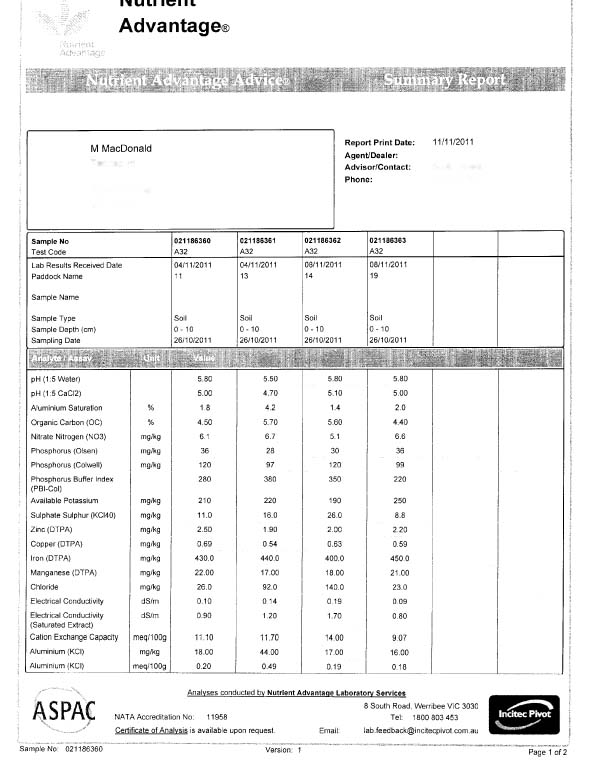
What does a farmer do when the kids are sick with gastro and it’s raining? Paperwork. Although I detest the oceans of sheets that flood my desk, the one batch that carries the same anticipation as a Christmas present is my annual set of soil tests.

Soil test results

The beautiful set of numbers that are the river flats

 
These geeky looking sheets let me know what type of fertiliser to spread and where. Now, once upon a time, the farm’s fertiliser order was pretty basic (3 in 1 on one side of the road and 2 in 1 on the other) and it shows. Some paddocks had luxury levels of phosphorous and a shortfall of potassium, while most had miserably low pH results. Accordingly, we are now spending less on phosphorous and more on potassium and lime (both standard calcium and dolomitic).

The rotten thing about acidic soils associated with high aluminium levels, as ours have been, is that they make many of the nutrients unavailable for the plants.

Getting the nutrient levels right with the help of soil testing and observing the signs of nutrient deficiencies has led to a massive reduction in the volume of inorganic nutrients we apply to the paddocks. This has saved our family tens of thousands of dollars and boosted the growth of our pastures while lowering the risk of leaching into waterways. A big win for the sustainability of the farm.

Ravenous kangaroos don’t eat wattles

A couple of years ago, we renewed the fencing around 11 hectares of remnant forest on the farm with the help of Greening Australia so we could exclude the stock from this high-value goanna habitat.

Paddock flanked by forest

Two blocks of native forest are protected on the farm

Unfortunately, the western sides of the two bush blocks have been impacted by the wind so we moved the fence westwards and friends helped us plant about 800 trees to reinvigorate this section. The kangaroos and wallabies ate almost every tree. Almost. It seems they have a distaste for wattles, which are the only specimens that survived the onslaught.

Wattles survived grazing by kangaroos

Wattles must taste yukky to kangaroos

If you’ve had any experience protecting seedlings from macropods, please share!

Spluttering spring means we start silage three weeks late and take a punt

Silage mower

Cutting grass in style

It’s been so cold and wet that the grass has been slow. We would normally have been seeing the grass take off three weeks ago and have a few hundred rolls of silage.

I’m a bit concerned that rather than simply being late, Spring will be brief. With this in mind, I’ve asked our silage contractor to start cutting a bit earlier (that is, in terms of growth rather than weeks) than I normally would. The grass is reasonably short but it gives me a better chance of achieving a second cut because we will have the maximum number of drying windows (you’ve got to make hay while the sun shines!) and the maximum number of growing days. If the hot weather arrives early, my pastures will be less vulnerable, too.

I’m also acutely aware that with a “compressed” spring season at best, farmers all around the district will be quick to pounce on the next window of fine weather as soon as the grass really gets up and going, so our contractor’s time will be at a premium. Best to get in first!