Dairy pawn

Image from http://enos.deviantart.com/art/Cow-Chess-1353853 by enos of Deviant Art

These days, I feel a little like a chess piece; more pawn than queen.

The Australian federal government has rushed into a free trade agreement with Japan that does next-to-nothing to help Aussie dairy break through tariff barriers, even though Japan is hardly known for a growing dairy industry of its own that deserves protection. I don’t know why we were overlooked but a Sydney Morning Herald story quotes Warren Truss as citing “compromises”.

It’s been an interesting few days for dairy. Coincidentally, the ACCC forced supermarket superpower, Coles, to confess that it was lying when it claimed the $1 milk had not hurt dairy farmers.

At the same time, the media is littered with references to milk as “white gold” and so on, while our co-op, Murray Goulburn, contemplates a partial sell-off to raise capital.

And the milk maid? Yes, I’ve almost recovered financially from last year now but not emotionally.

A Kiwi who’s now dairy farming here in Victoria tells me that one of the differences he’s noticed is that there’s just not the “buzz” around our farmers in a good year that you get in NZ.

Why? First, we’re more battle-weary and risk averse after a decade of drought knocked us around. Second, we’re rightly a little more cynical. In NZ, dairying gets a lot of encouragement from a government that understands dairy’s huge economic impact on the entire nation. The sector accounts for about 3% of NZ’s GDP. Have a look at this economic statement:

“Rebounding dairy production drove a 1.4 percent increase in gross domestic product (GDP) for the September 2013 quarter — the biggest quarterly increase since December 2009, Statistics NZ (SNZ) said.”
The New Zealand Herald, 19 December 2013

Here in Australia, the dairy sector contributes $13 billion to our economy but that’s considered small fry, accounting for less than 1% of our GDP, which totalled $1451.1 billion in 2011–12.

If we are to realise our potential, we need a government that helps dairy grow rather than considering it as a tradeable concession. All eyes are now on the FTA negotiations with China.

A brush with fire

DSCF3954

It’s all a little surreal. We are still being urged to take shelter from a fast-moving bushfire but the cows are in for the evening milking and the kids are watching Ben & Holly’s Little Kingdom. Over a howling south-westerly, I can hear the thudding blades of water bombing helicopters.

All in all, it’s a miracle. After an anxious day spent with friends in town, I can breathe again.

The fires are only about 5kms away but they’re upwind. Just to be sure, the cars are still packed to the gills with our most precious belongings and every few minutes, I trot outside to survey the fire activity.

The cows spent the day in a closely grazed paddock with access to the river and will stay by the dam tonight, in case we lose power and can’t refill the troughs.

That south-westerly change was our salvation but we know it will have been someone else’s menace. Take care.

It’s late

The story of Cliffy Young has just finished on the tele but Wayne is still slogging through his own ultra-marathon at the dairy. It’s 10pm and it’s been a tough day that started at 5am.

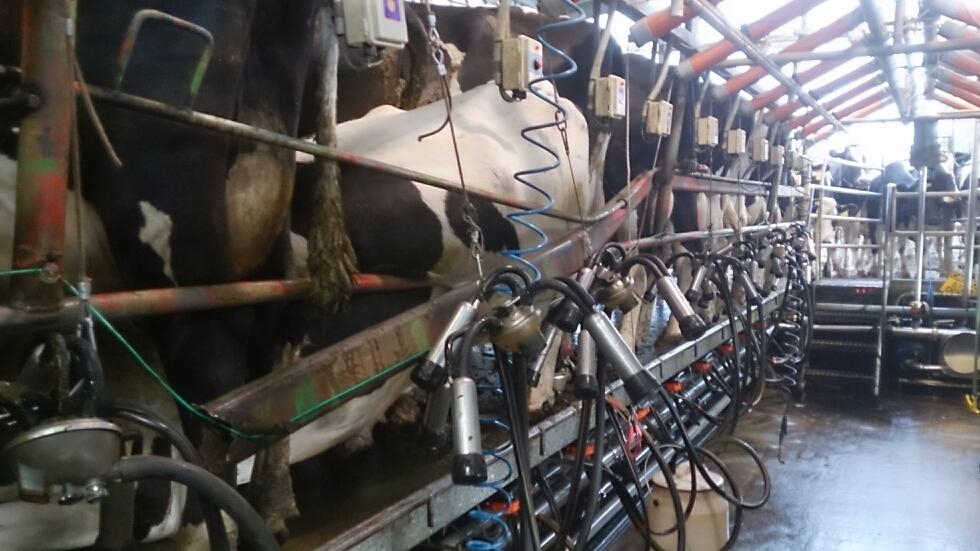
As I was rattling the kids around the house in readiness for Nippers this morning, Wayne was having some youngster trouble of his own. A freshly-calved heifer simply sat down on the milking platform behind her neighbour. Now, if you’ve worked in or watched a herringbone dairy in action, you’ll say that doesn’t happen.

dairydisaster

It did.

The cows are lined up at right angles to the pit we stand in to position the cups, with their buttocks against a “bum rail” that’s designed to guide them into position for milking and prevent a cow from falling onto a milk maid.

It didn’t.

A cow spooked by her reclining sister leapt up and backwards, falling rear-first into the pit, brushing Wayne’s cheek with her hoof on the way down as a weld in the bum rail gave way under the strain of this 550kg crowd-surfer. Thankfully, Wayne and the two cows-a-leaping are fine but the machinery was not. With four machines out and the broken bum-rail, milking took hours longer than normal and the clean-up and repair job was a 6-hour undertaking.

I’m really grateful to Clarkie, who broke his long weekend to come and help wield a welding stick, feed the cows and round up at 6pm.

Wayne will up again at 5am tomorrow. It’s 10.30pm now and, finally, the dairy lights have gone out. What will tomorrow bring, I wonder?

MG makes its move

I used to think of our co-op as a bit like the ABC: your favourite aunty. Comfortable, dowdy, trustworthy and a little quirky.

But Aunty MG has undergone a transformation.

Since it acquired a new CEO, Gary Helou, in October 2011, Murray Goulburn has embarked on lancing $100 million of costs, opened up in Dubai, restructured the way farmers are paid for milk, revamped its retail trading store network, developed assistance packages for the next generation of farmers and forged the spectacular Coles fresh milk deal. At least, these are the “headline acts” that come to mind.

Now, MG is making a $420 million bid for its rival, Warrnambool Cheese & Butter, gazumping Bega Cheese and Canadian dairy giant, Saputo.

According to MG, (if the bid is successful) the new Murray Goulburn Warrnambool:

“Creates a new 100% Australian farmer-controlled dairy food company with over 3,000 supplier shareholders delivering more than 4 billion litres of milk to nine processing sites annually. The business will be positioned for strong growth in both domestic and international dairy markets with forecast revenues in financial year 2014 of $3.2 billion including export sales of $1.4 billion to over 60 countries.”

This, Gary Helou wrote in a letter to MG’s farmer shareholders yesterday, would bring the coop, “…the necessary scale, market reach and competitive strength to capture the benefits of the historic growth opportunity resulting from the consumer affluence of developing Asian economies.”

MG’s triple-jump

The bid is in, it’s the most lucrative on offer and it’s Australian, yes, but there are three serious hurdles for MG:

1. A bidding war

What will Saputo and Bega do next? WCB traded higher yesterday, closing at $7.89, a sign that markets believe MG’s $7.50 isn’t enough to win the bidding war.

2. Shareholder seduction

WCB rejected a takeover offer from MG in 2010. At the time, there was quite a bit of anti-MG sentiment. It’ll be interesting to see if the reinvention of Aunty and a bigger bucket of cash will make a difference.

The Sydney Morning Herald reported Mr Helou said yesterday that farmers supplying WCB needed to consider the future of the Australian dairy industry when deciding on the take-over bid.

“For farmers generally, they are at a fork in the road today.”

“If they sell out to a private company, that they have no control over … they will be spectators.”

“What we are putting on the table is an offer for them to take a stake in every step in the value chain.”

“It’s a fundamental, philosophical different point of view.”

3. The competition watchdog

Back in 2010, the ACCC was loathe to allow MG to acquire WCB. As reported in the SMH at the time:

THE competition regulator says its preliminary view is to oppose Murray Goulburn’s proposed acquisition of Warrnambool Cheese & Butter on the grounds it would cut competition in some markets for raw milk.

The Australian Competition and Consumer Commission said yesterday it was concerned the proposed deal “would substantially lessen competition for the acquisition of raw milk from farmers in the relevant markets within South Australia and Victoria”.

“The potential effects in the relevant markets include a significant reduction in farm-gate prices paid to farmers for raw milk; and reduced competition in the offer of non-price terms such as finance, field advice services and discounted hardware and grain supplies.”

The irony of the ACCC’s 2010 statement is that Murray Goulburn’s mission, as a 100% farmer-owned co-operative, is precisely to return the maximum price to farmers — something to which the listed Bega Cheese nor the privately owned Canadian giant Saputo cannot lay claim.

I hope it takes a broader perspective this time. A serious exporter battling subsidies and tariffs around the world, MG needs scale so that its processing can be as efficient as its farmers. The Australian government does not afford our dairy farmers the protections enjoyed by most of our competitors. The least it can do is allow us to grow.

UPDATE: See this article and extended AFR interview with MG CEO Gary Helou: http://www.afr.com/p/national/the_battle_for_warrnambool_kxxm78XXLgfsAJ6y7ARaVJ

How we nearly lost “Papa” this Father’s Day

Today started well with freshly-baked ginger biscuits and special gifts wrapped with far too much sticky tape but almost ended with tragedy.

Wayne was guiding a calf out from among the herd towards the shed when time stopped, or at least slowed. As the blow under his left arm pit hurled him two metres across the cow yard, he had time to think “I’ll pull my head down, I’m going to hit the fence” and then, “oh no, this is it, my hips are exploding”. Then, bang, onto the concrete.

With the footy blaring from the dairy radio, Wayne lay very still right where he’d landed for a long, long time – five minutes, he thinks – and wondered what to do next. There was pain in his ribs, neck, back and hips. A tiny bit of blood in his mouth but, yes, his teeth were all okay.

In the end, the only thing to do was try to get up and, thankfully, he did.

Wayne had no warning of the collision and we’ll never know for sure what happened down at the dairy this Father’s Day. Doped up on painkillers, swathed in Deep Heat and wrapped up in blankets, but he’s alive.

The business of dairy farming and what that means for our “stock”

I don’t like to use the word “stock” when it comes to cows. The connotation is that they are simply economic units. Yes, we do rely on their milk for our living but, no, they are not simply the equivalent of black-and-white boxes in a grassy warehouse. We burn the midnight oil, holding down second jobs during tough times so the cows will never know a lean year.

A sick cow is more important than our own dinners.

Nor are male calves “low-value by-products” of dairying. Maybe for some but not for me. Absolutely not. Rather than shooting them (the economically rational path), our family chooses to make a loss rearing the bull calves for the first few days of their lives and then selling them to beef-farming locals.

In the same vein, I am not a “milk producer” but a farmer. Somehow, “producer” conjures up factories and production lines, while nothing could be further from the truth here. We nurture our animals and the land because we understand that nature is bigger than we are. Sounds trite and fluffy? Perhaps, but it’s the reality.

There is no financial reward for such an attitude and in the teeth of the economic crisis most dairy farmers have suffered in recent times, the pressure’s been on to make every conceivable saving but here’s how I look at it: if you’re not able to make a dollar out of farming this year, you should at least be able to feel good about the way you farm.

If farming this way is not viable, I would rather not be a farmer.

Help for our dairy farmers and their cows

There certainly is light at the end of the financial tunnel for dairy farmers but many are still finding the going incredibly difficult.

I’m a tough old stick but there have been times in the last few months where things unravelled a bit before I could piece myself together again, so I know how it feels first-hand. For me, the saving grace has been to get help from our expert farm consultant, Neil, and build an action plan to insulate the cows from the fodder shortage.

It’s gone beyond that for some farmers who are in desperate positions. I asked Dairy Australia’s issues manager, Julie Iommi, what the dairy farming representative bodies are doing to help.

1. Anyone wishing to donate fodder or funds to buy fodder – please contact the UDV/VFF on 1300 882 833. Want to help but have no hay of your own? Farmer mental health dynamo, Alison Fairleigh, has linked her handy blog to “Buy a Bale“, an initiative of Aussie Helpers, where anyone can donate time or money for fodder to go to people who are in dire straits.

2. VFF, supported by ADF, is pushing the state government to immediately review the resourcing to the Rural Financial Counselling network to ensure they have the capacity to deal with current demand.

3. VFF, supported by ADF, has asked the state and federal governments to introduce the low interest loan support program immediately.

4. The state and federal governments have also been requested to review other forms of emergency support immediately.

5. VFF and ADF are also pushing the state and federal agriculture Ministers to meet the bank sector to encourage them to continue to take the long-term view when assessing their support of farm businesses.

Dairy Australia is promoting the Taking Stock program, which can help dairy farmers review their individual situations and create their own action plans – Julie says there are still around 50 spots available.

DA also has good info on its site about coping with fodder shortages.

Last of all, if you know someone who might be battling to stay afloat, why not drop them a line, phone or do the good old-fashioned thing and turn up with a cake? It might be just the lifeline they need without you ever knowing it.

Legendairy stuff or just fluff?

There’s little doubt Australian dairy farmers are feeling a little demoralised and that’s not good for business. The first symptom displayed by farmers lacking confidence is a stubborn refusal to open their cheque books.

And here we are, hunkered down in survival mode, deaf to our leaders’ calls to invest and grow so that Australia can realise its dream of becoming a vital piece of the Asian food bowl.

With all this in mind, then, take a look at the “farmer-side” launch of the new Dairy Australia campaign, Legendairy.

Ad agency, CumminsRoss is to be congratulated for the stirring execution.

In a media release, DA project leader Isabel MacNeill, says Legendairy is “not just a branding exercise” but a singular rallying point that will help develop pride among dairy people, and increase community appreciation for the industry and demand for its products.

The Legendairy platform will be translated into an initial three-year integrated marketing and communication plan focusing on three core audiences:
• Farmers and farm communities
• Consumers, especially parents of young children
• Societal shapers such as policy makers, authorities and health professionals.

According to MacNeill, it’s all about the dairy community telling its own stories about what makes us legendary.

After sleeping on it, I’m guessing Legendairy will polarise farmers. One camp will say, “Yeah, it’s great to get a pat on the back” and the other camp will say “Don’t spend my levy on expensive ads telling me how great I should feel while I’m struggling to pay the bills”.

I must admit I have a foot in each camp. When you’re going through a rough patch, the last thing you want is a pat on the head and this strays dangerously close to that. I’m really looking forward to seeing what comes next.

EDIT: As I walked away from the computer after writing this post, one BIG thing occurred to me: What does DA want out of the farmer-side campaign and how will it be measured? Fewer exits from the industry, greater farmer investment? Lower depression rates among farmers? Sadly, no, I suspect not because no mere communications strategy could realistically hold such worthy objectives. Not now, in any case. Perhaps it would be better timed to build confidence when the tide has truly begun to turn.

The co-op does a deal with the devil and keeps its soul

I never thought I’d say this but some of my milk will be sold on Coles’ shelves in both homebrand and Devondale cartons from next year. And I’m pleased.

You see, the co-op we supply, Murray Goulburn, is a giant too. It processes around 35 per cent of Australia’s milk and earns $1.17 billion in exports, making MG one of the largest container exporters from the Port of Melbourne. In other words, it doesn’t have to sell to Coles and Woolies, giving it much greater leverage with the supermarket duopoly. It also has the scale needed to be an efficient processor. Most importantly, its number one goal as a 100% farmer owned co-op is to maintain the profitability of its farmers.

All the same, it is confronting when “our” co-op does a deal with the devil. Has it sold out on us?

I asked dairy analyst, Jon Hauser of Xcheque for his thoughts. “My view is the news is very, very positive,” he said. “This is one of the few things that has the potential to lift the returns for farmers by maybe two or three cents per litre and, perhaps more importantly, it can reduce the volatility of farm gate prices.”

The thing is, while Murray Goulburn exports around half of its milk, reducing our reliance on the supermarkets, that exposure to international commodity prices and the exchange rate can be painful, too. International commodity prices rise and fall like a cork in a bottle and the average Aussie dairy farmer loses about $9,000 (according to my back of the envelope sums) with every cent the Australian dollar rises against the US dollar. Of course, it’s at record highs right now and not looking like falling below parity any time soon. The uncertainty that comes with that volatility makes it very hard for farmers to attract finance and invest with confidence in their businesses.

On the other hand, I wondered why Murray Goulburn could make a profitable $1 milk deal with Coles when Lion, the company currently processing Coles’ homebrand milk, cannot. Jon Hauser thinks it’s largely an issue of supply chain efficiency.

“Leaving aside the aberration of $1.00 discount milk, branded milk retails at about $1.60 per litre and supermarket private label at about $1.20 per litre,” Hauser says.

“Farmers are getting 25 – 35 % of the consumer dollar. In the UK and the US farmer share is closer to 50%. Direct supply by a farmer co-op removes the middleman that is adding cost in marketing and collecting additional value from their brands.

“It is true that the supermarkets will become ‘the brand’ but the farmer co-op should also able to retrieve some of this value. In the case of the Coles/MG deal, MG will get part of that return from the ranging of their own Devondale brand.

“What is most critical in maintaining a balance of commercial power is the ability of farmers to sell their milk to a range of alternate customers. Murray Goulburn has the diversity of product and markets to do that and can now genuinely claim that they have a balanced portfolio of domestic and export sales”.

It all sounds very positive for existing Victorian Murray Goulburn dairy farmers like me. But what about for farmers near Sydney, who have been supplying Lion and Parmalat and who traditionally get so much more for their milk than we do yet depend almost exclusively on supermarkets?

Mike Logan, the head of Dairy Connect, which represents the NSW dairy sector, describes today’s announcement as a “game changer” and in a letter to farmers, had this to say:

“We have three big changes on the table at once;
1. The manufacturing milk price rise
2. The drop in production so that NSW and Qld are now short of fresh milk
3. New models of supply to the supermarkets

“This all adds up to change.

“For the NSW dairy industry it may mean:
1. Investment in new processing capacity
2. A new pricing model for the whole fresh milk industry
3. Re-energising brands such as Devondale and Norco
4. Relocation of a large number of farmer dairy suppliers from one supplier to another
5. Changing role of the processors and processing capacity
6. A risk for the milk vendors as the processing sector changes.

“…the supermarkets have been true to their word and have been looking for new ways to create a sustainable future for the NSW dairy industry. We have to look past the $1/litre milk and build a new future.”

“However, these changes will be at considerable cost to some people. We need to be careful and respectful of the impact of these changes. We do not want to create a situation of winners and losers.”

The reality is, though, that there will be losers. Commenting on the future of the current processor of Coles’ milk, Lion, prominent NSW dairy farmer, Lynne Strong (@CHDairies) said on Twitter that “They have lost QLD plus NSW Coles contracts Cant see them surviving this one #sadbutrue”.

Lion is almost certainly not going to be the only loser in what all agree will be massive upheaval in New South Wales. But there will be winners and maybe, just maybe, represented by an increasingly powerful co-operative, dairy farmers will claw back a little dignity. And you, dear milk drinker, will soon be able to buy 100 per cent farmer-owned fresh milk knowing that all the profits stay right here in Australia.

A very special present from a dairy farmer’s son

Our new pastures were sown in the rain into lovely moist soil the first day after Easter. Nothing’s come up yet and although the farm is pretty green, it’s stopped raining! I can’t help checking in on the forecast every day hoping that a deluge is on its way.

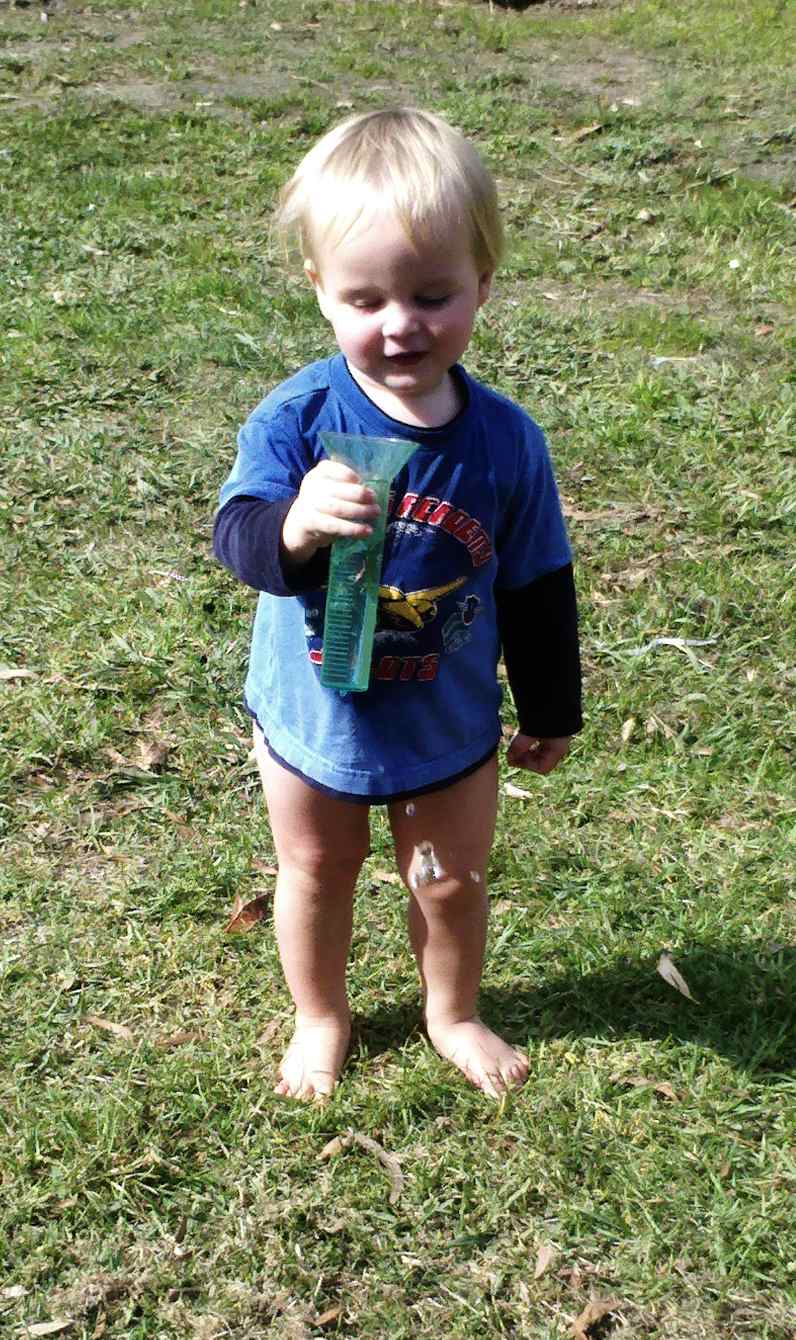
Even one-year-old Alex seems to know how exciting a trip to a full rain gauge is during Autumn and, this afternoon, he arranged a special present for me.

"Mama! Mls!"

“Mama, Mama! Mils!”

Alex ran up with the “rain” he’d prepared, shouting “Mama, Mama, mills!”.

“How much?”

“Four!”

“Great work, Alex, keep it up!”

Our farm is rain-fed rather than irrigated and I must admit that I often look enviously across the valley towards neighbouring farms soaking in water during summer and critical times like these.

Typically, Aussie dairy farmers also daydream of the seemingly perfect New Zealand climate. While Australia’s dairy exports stagnated during our 12-year drought, Kiwi exports soared. This year is different. The Kiwis have had a drought of their own and without a grain industry to help them maintain their cows’ diets, milk production has plummeted.

It’s a cruel irony that the misery of our Kiwi counterparts has already begun to see the international milk prices rise and with it, our hopes for the next season.