Just getting some extra cred

Remember Zoe and Pearlie Girlie?

Zoe and Pearlie Girlie back in November

Zoe and Pearlie Girlie back in November

Well, since I wrote about the tender relationship between young farmer and young cow, Pearlie Girlie decided to make a grab for power and began to scare me – taking a few aggressive strides towards Zoe and wagging her head. We’ve been making sure Zoe stays well clear of the little cow but, today, Zoe reclaimed her rightful position as boss.

Zoe is boss once more

Zoe is boss once more

Cows say “it’s not fair!”

As you may already know from my post about the herd’s concern for OHS, cows do not stand any nonsense from farmers. They also have a strong sense of justice.

Cows say "It's not fair"!

Cows say "It's not fair"!

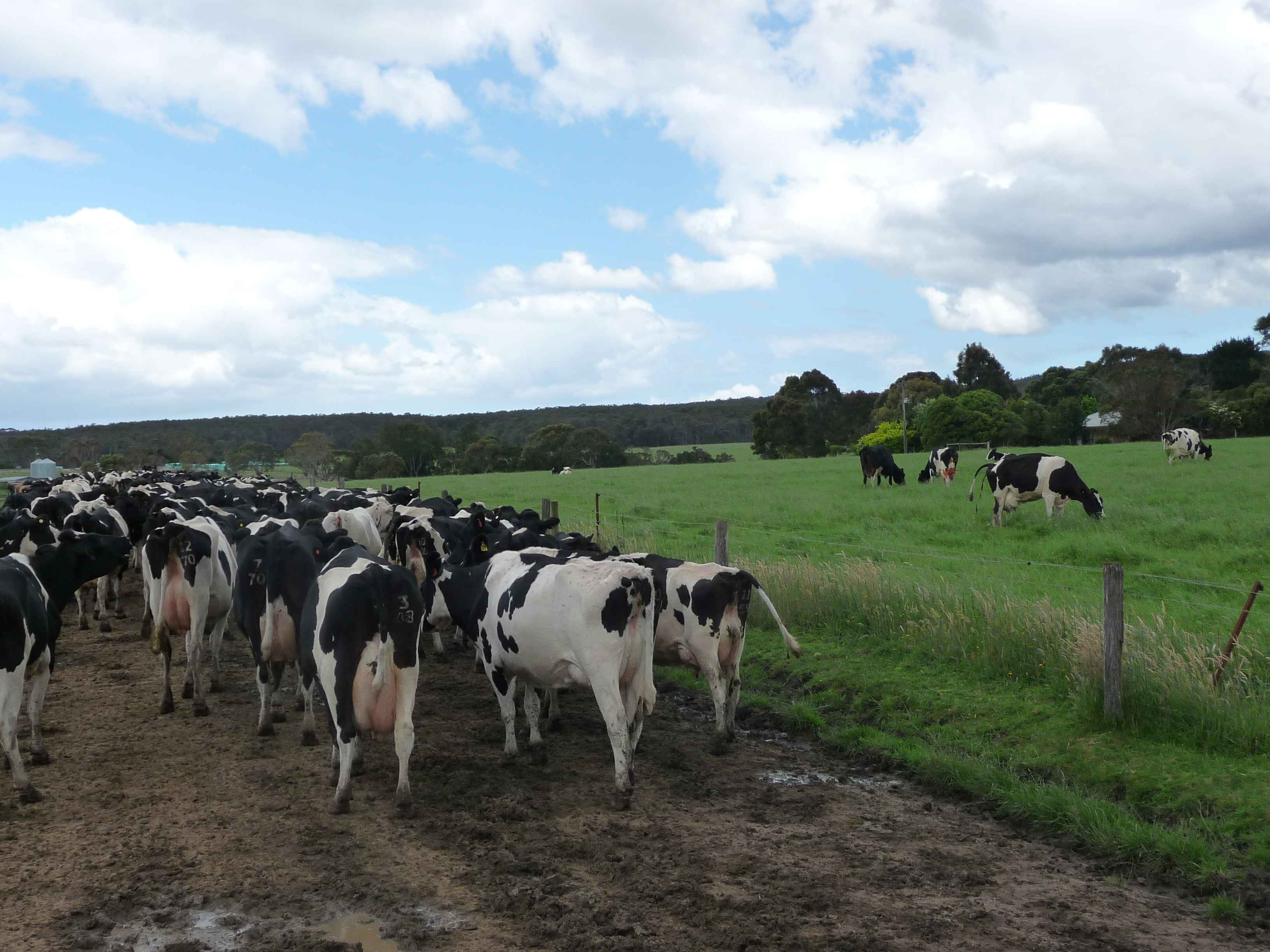
That sense of fair play was offended yesterday when the herd walked past those in the lush hospital paddock towards the dairy. Bellowing and pointed staring at the “cheats” still in their paddock ensued and I had to Unleash the Zoe to get the herd moving again.

It’s not just the herd that has been upset by the separation of the hospital group. The patients are reluctant to go into their paddock after milking, preferring instead to hang around on the track in the hope that they can rejoin the herd.

Cows hate being separated from their peers and, ironically, this does help when their calves are moved from the paddock to shelter. Many cows seem to prefer “adult” company.

Unless we learn to work together, the animals will be the losers

You know, something diabolical has happened to our sensibilities as we use animals to feed ourselves. We have lost something in the process. It’s called CONSCIENCE.
I don’t know how dairy farmers can lie straight in bed, when they kill the babies … just as the baby seals are killed for their fur, these poor little animals don’t even get a chance to grow a pelt, let alone have time to be alive!!!! Where are we going as a species, to use other creatures in such callous, cruel ways? I am beyond disgusted, I’m appalled and ashamed. GET A CONSCIENCE FOR GODS SAKE, ALL THOSE IN THE DAIRY INDUSTRY.
Friday at 18:19

I don’t blame Sally Hook for that comment posted on the Bush Telegraph Facebook page. Her response to the reported dairy practices was very typical and I’d feel the same way if I wasn’t better informed. Sally and every other Australian has a right to know her food is ethically produced and if we dairy farmers feel slighted by the comments that misinformation brings, we only have ourselves to blame.

Farmers are understandably wary of the vitriol that drips from the tongues of many animal activists.  But that is no excuse to keep people in the dark. Nor can we leave it to our “leaders” to communicate with the rest of the world because it is impossible to delegate telling your own story. Sally needs to hear it from the horse’s mouth, no matter how scary that might be for us.

At the same time, I’m hoping the animal activists will also take a step closer to the table. Sally did. After two days of online “talks” with real farmers, as distinct from agripoliticians, she posted this comment:

I urge the good people of the dairy industry to keep pushing.
Sunday 2 hours ago

We can and must build bridges with Australians who share our passion for animals. Defending the indefensible minority, as industry people caught like rabbits in the spotlight tried and failed miserably to do on national radio, is not only morally bankrupt but counterproductive in the extreme.

Sally is right. The good people of the dairy industry must keep pushing.

Ashamed to be a dairy farmer today

Yesterday, two industry representatives and a dairy farmer spoke about the treatment of bull calves on Australia’s Radio National program, Bush Telegraph.

It made Victoria’s dairy farmers appear as callous as Big Tobacco and today, I am ashamed to call myself a farmer of any description, let alone one that bludgeons premature calves to death with an axe.

The media feeds voraciously on such hideous depictions and it will be all over the internet and in the mainstream media unless something with even more news appeal happens this weekend.

This is something we can’t deal with by talking about industry standards and so on. Nobody believes that stuff. None of it resonates in the soul. We need to tell people the whole truth and how we feel about it.

And the truth is this:

I will never induce the birth of a calf unless its mother’s life depends on it. In the four years since I took over custodianship of the family farm, this hasn’t happened.

I can barely manage to hear the shot ring out as a suffering animal is euthanased humanely, even though I know it is the right thing to do.

I will always put the quality of our animals’ lives before profit.

We sell every bull calf we can to neighbours who rear them until they are big and powerful steers, even though we sacrifice income to do it this way.

The bottom line is that I will not do anything on the farm that I could not show five-year-old Zoe without any qualms. Our farm is also our home and we could not live with cruelty.

Farmer’s forums are jammed with distressed dairy farmers this morning and I spoke long into the night about it with another yesterday. I am ashamed yet I am proud to know I am not alone in this. If you are a farmer reading this, please add your voice to the news forums and don’t be afraid to tell them how your heart guides you.

Better care for bobby calves

There’s some good news about the welfare of our most vulnerable charges: young calves.

I hate selling any of our animals but we simply can’t keep all the bull calves. Our solution is to sell them to a neighbour over the river who grows them out until they are big, powerful two-year-olds. Not all dairy farmers have this option though and send them to market as young “bobby” calves.

For a long time now, there have been standards to ensure they are strong enough and fully fed before they leave the farm but once we hand over their custodianship, we could only rely on the decency of their buyers. The good news is that while governments have not been able to reach a consensus, the people involved with bobby calves have taken the lead and announced new national standards concerning their care.

The electronic scanning technology is already in place to make sure the standards are kept and I really hope that monitoring reveals the people who take calves from farms are already doing better than we expect.

Day in the life of a South African Jersey dairy cow

A little while ago, clever teenage farmer Firn Hyde made a guest post on the Milk Maid Marian blog and it was so popular I begged her for more! So here is your next instalment – a day in the life of a South African Jersey dairy cow written by Firn.

Hi everyone!
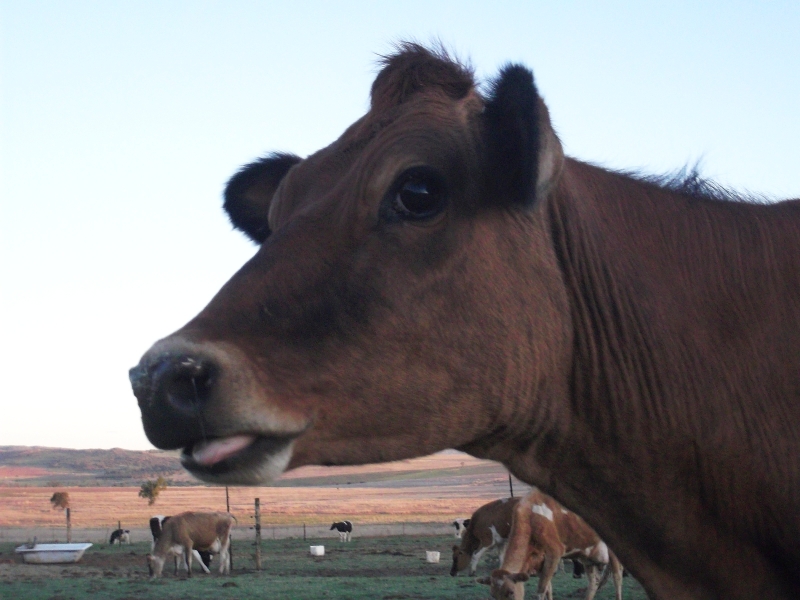
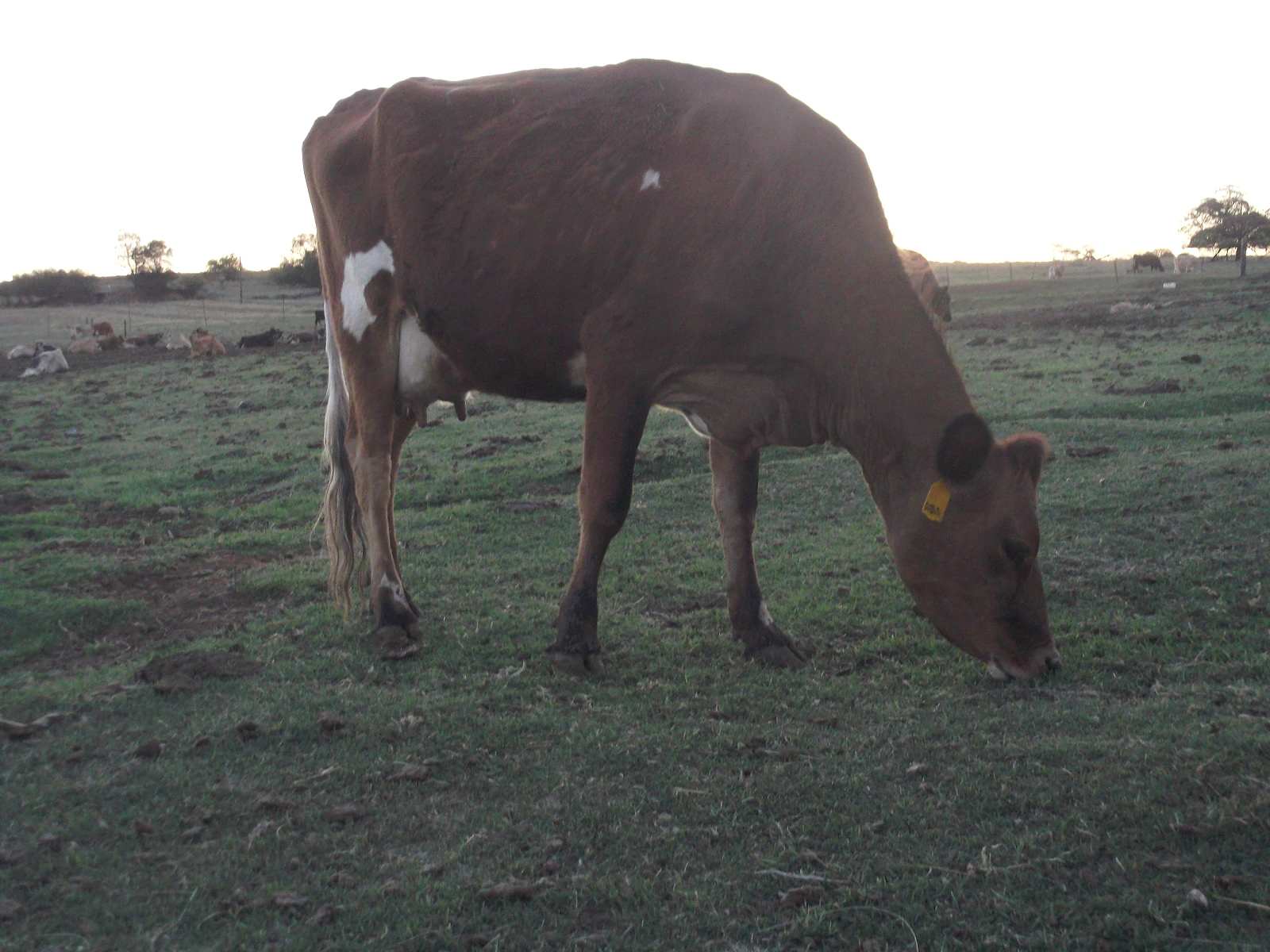
My name is Hydeaway Kalos Barbara, but most people just call me Barbara. I’m a young Jersey cow living on Hydeaway Farm in South Africa. I’ve only just had my first calf, and my friends know me as goofy but loveable.

Barbara the Jersey cow

Introducing Barbara

Early every morning, we walk up to the top of our paddock to get milked. Some of our humans come to fetch us, but we know to come as soon as we hear the milking machine bellow. We have lots of humans who for some reason walk on their hindlegs and are very noisy and not like cows at all, but they feed us and milk us so we’re quite fond of them.
Here I am waiting to go into the parlour to be milked.

Waiting to be milked

Waiting to be milked

The parlour is really noisy. At first I was scared of going inside it with all the noise, and I used to kick at the human putting the machine on my udder to suck my milk out, but now I’m used to it. We get to eat some nice food while we’re being milked, and when I’ve been milked I feel a lot more comfortable.

Milking

Milking time

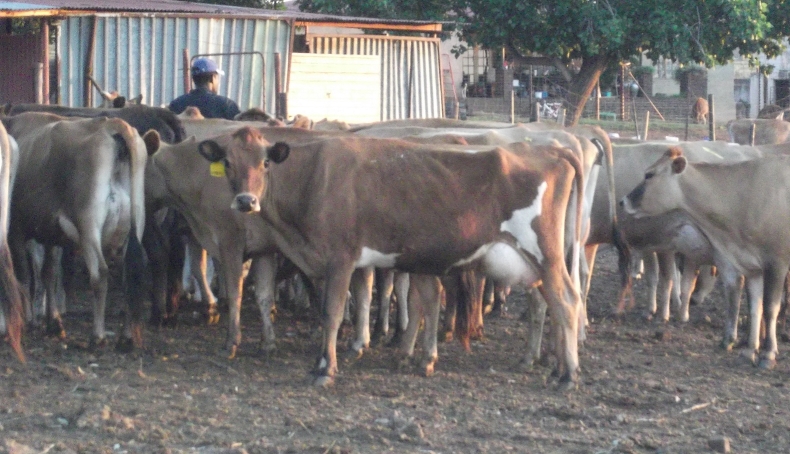
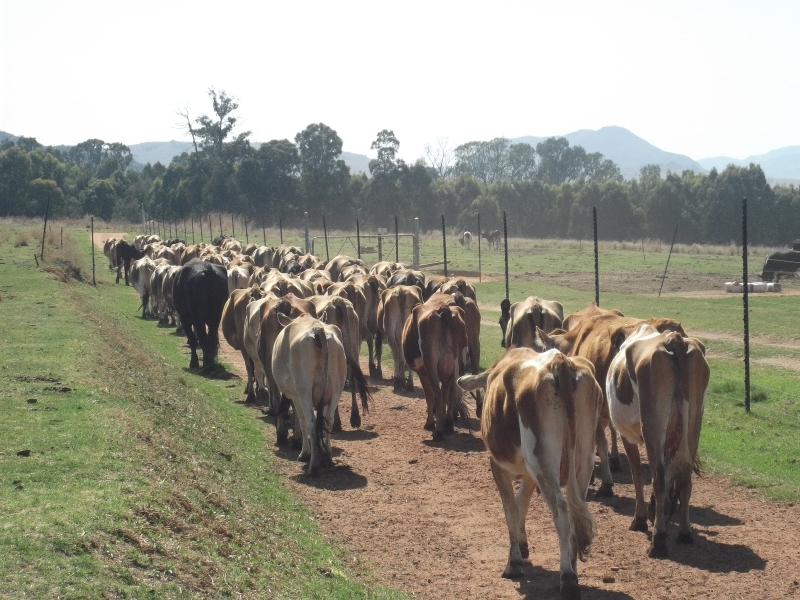
After being milked, we wait in a paddock until milking is finished. I’m usually one of the last cows to be milked because I’m smaller and younger than the others, so they push me out of the way and I’ve learned to wait my turn. Once the milking machine has stopped bellowing, our humans open the gates for us so that we can go outside for the day. I love going outside, there’s so much food and space!

Off to the Paddock

Off to the Paddock

Do you see the big black cow on the left? Well, we’re all supposed to be Jersey cows, but he’s not a cow at all; he’s half Holstein and half Jersey, and he’s an ox. He has a little heifer human who keeps him as a pet. She likes to lie on his back and scratch his ears.

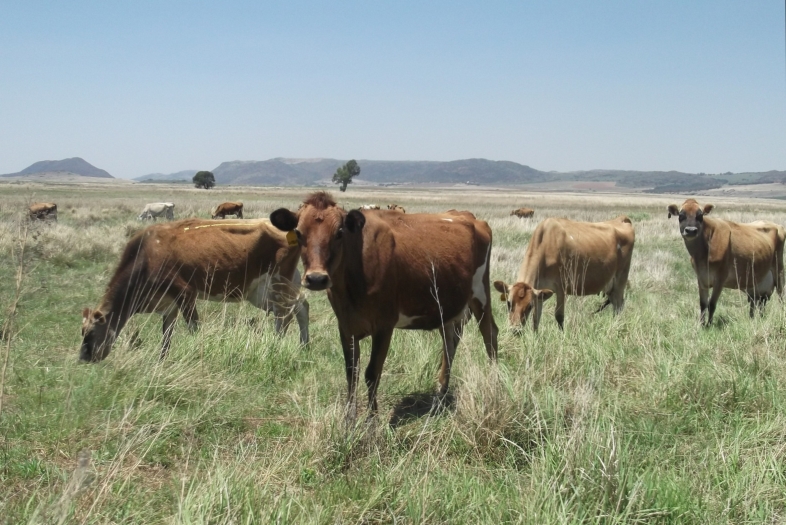
Now we spend the whole day grazing in the veld. Our humans think the grass isn’t good enough for us, but I like it. Here I am with some of my friends.

Barbara with her bovine friends

With friends

The grass tastes really good!

Barbara grazing

Delicious!

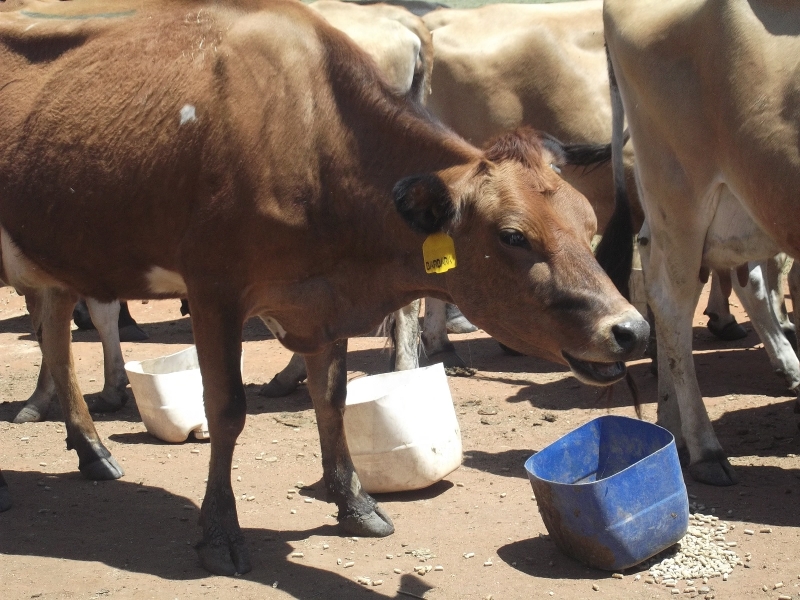
It’s not long before our humans come in a tractor to bring us our lunch. We each get our own bowl full of food. There is a bit of squabbling at the start, and sometimes us young cows get pushed out of the way, but there’s enough for everyone.

Lunch

Lunch

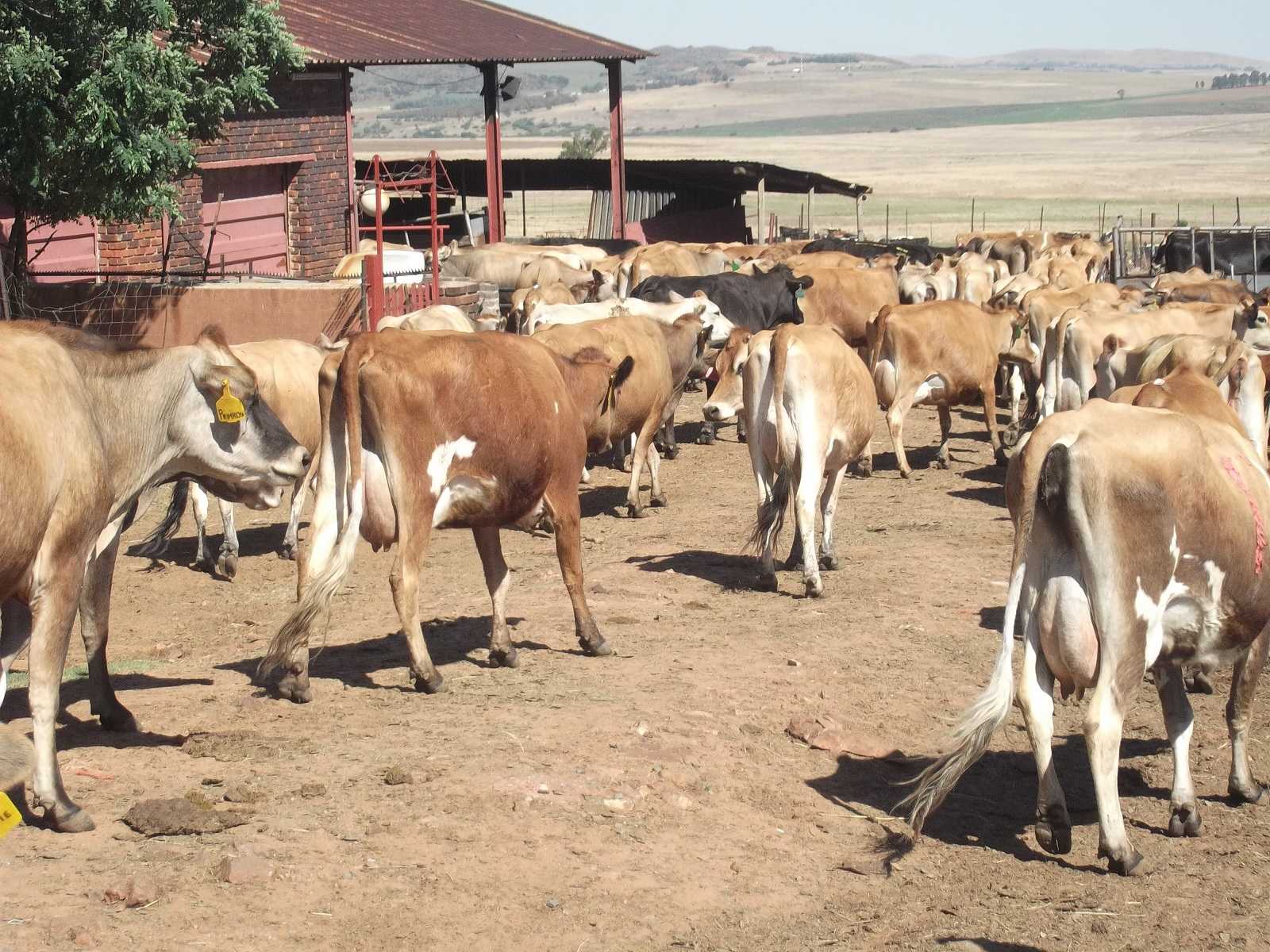
We spend a few more hours grazing away before our humans come to fetch us again and escort us back to the milking parlour. By then my udder is all tight and I’m ready for my supper.

Supper time

Supper time

After getting milked again, we go into our paddock for the night. We have two big round bales of hay, but I also like to nibble on the green kikuyu grass that grows there. The milking machine goes quiet and the whole world settles down for the night. As the sun retreats below the horizon and the silence of Africa spreads its wings around us, everything is very peaceful, and I graze among my friends knowing that tomorrow is going to be just as happy as today was for a young Jersey cow on Hydeaway Farm.

Day's end

Day's end

I knew our heifers would be okay but I had to check

Yearling heifers

Our yearlings look lovely in their holiday home

Back in June, we were in big trouble. We’d had waaaay too much rain and there literally wasn’t enough dry pasture on the farm to feed all our animals.

I decided we had to send our precious heifers away on agistment. We were lucky enough to find a caring farmer just an hour away with just the right amount of land. While we know they are in good hands, it’s our responsibility to check in on them every few weeks and see how they’re going. Well, here they were today – looking great!

You can tell when yearlings are feeling good. They literally jump out of their skins. I walked into their paddock and caused massive excitement as they leapt and frolicked all over the place.

It’s been 12 weeks since their last drench and vaccinations, so we’ll organise another dose in the next fortnight to keep them looking terrific. They’ll meet their Jersey beaux later in the spring.

Teen tells her personal story of dairying in South Africa

I’ve been mightily impressed by the incredibly entertaining dairy blog of one very clever South African teenager, Firn Hyde, and asked her to send in a guest post.

Hello everyone in Australia and beyond. First of all I’d like to thank Marian for the very kind invitation to contribute to her fabulous blog. It’s much appreciated!

I’m Firn Hyde, the teenager of Hyde Family. We live in the Highveld of South Africa and run a small dairy called Hydeaway Farm, where we embrace our slogan – “Names Not Numbers”. My mom, Dinki, and dad, Jon, run it together; Dad is also a computer programmer and works in Johannesburg, so Mom does a lot of the daily management while Dad works on maintaining machinery and fences. Their two daughters, myself (fourteen years old) and Rain (twelve) complete the Hyde Family.
Firn Hyde

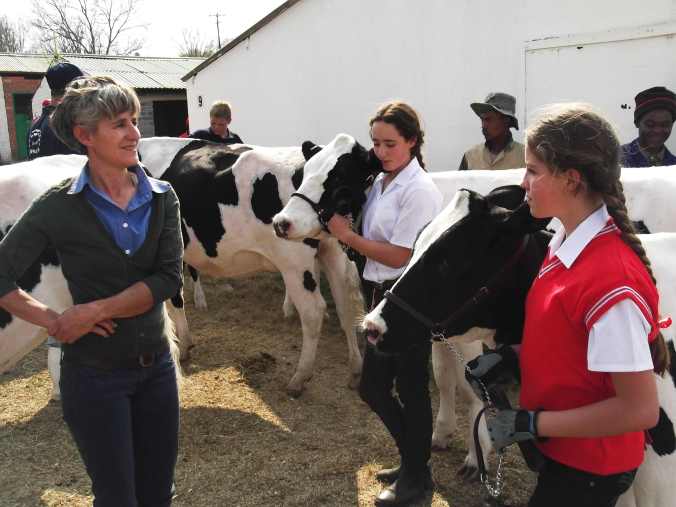
Dinki, Firn and Rain Hyde with Holstein heifers, Hermoine and Kaleidoscope, bred by Brett Gordon at the Standerton show

Mom and Dad chose to homeschool the two of us and in doing so gained two valuable farm labourers. Whilst Rain is a ballet dancer and does the more domestic jobs, I like to get dirty and work with the animals. This is definitely a family business. It’s a dream we all chase together.

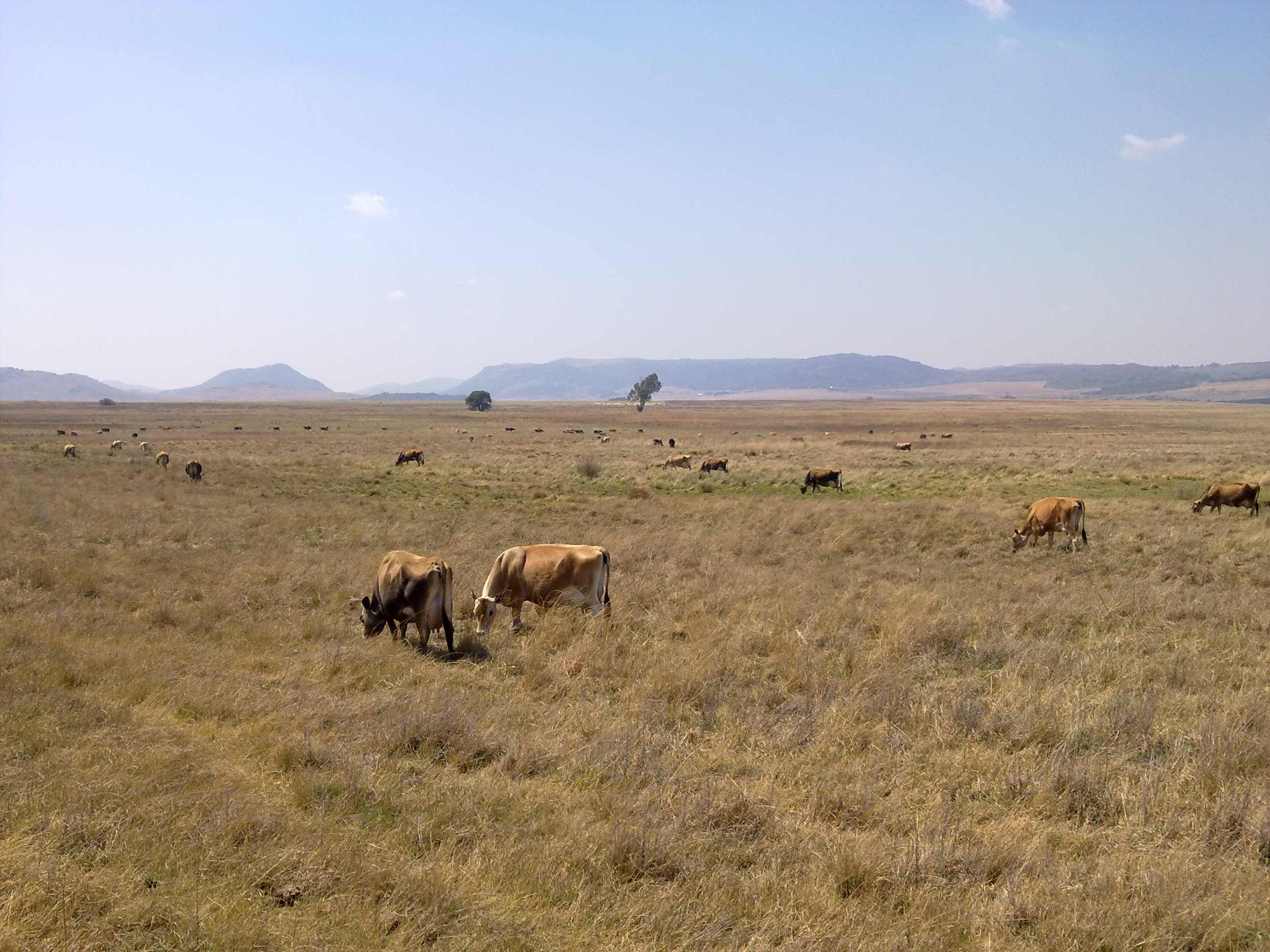
We milk 90 registered cows and own Hydeaway Jersey Stud. We love Jerseys for several reasons, among them size, calving ease, temperament and their golden, creamy milk. The cows and many of the Jersey heifers go out to graze during the day. We would love to have beautiful pastures like Marian’s, but at present the best word for our grazing is “veld”, which is something between “grassland” and “wilderness” in our native language, Afrikaans. Due to the poor quality grass we supplement them with good eragrostis hay.

Hydeaway Jerseys grazing on the veld

Hydeaway Jerseys grazing on the veld

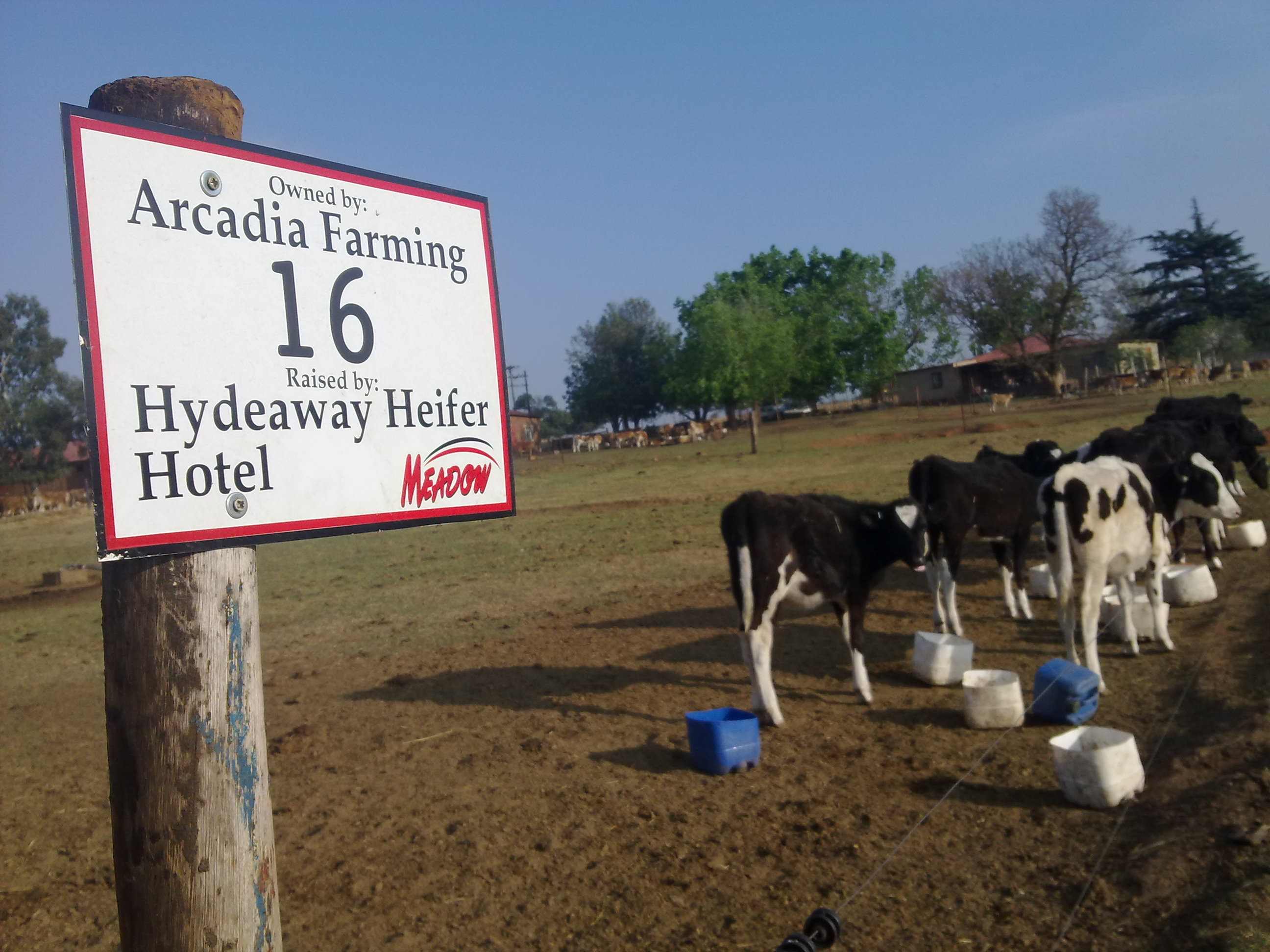
By far the more successful part of our farming operation is the heifer raising. Holstein heifers arrive here at 3 months of age. They live in small but grassy paddocks and eat pellets and hay, growing to about 350kg at the age of 12 months, when they are artificially inseminated by yours truly. We keep them until they’re 7 months pregnant, then their owner takes them home to be milked.

Hydeaway Farm raises heifers for other South African dairy farmers

Hydeaway Farm raises heifers for other South African dairy farmers

In S. A., it’s generally the big farmers that do the best; they say you can only do it profitably if you milk upwards of 300 cows and grow your own feed. Total mixed ration is more popular than pastures, and cow housing is apparently the way to go but we find the idea of keeping cows inside 24/7 positively sickening. Yes, we are sentimental, but the cows are happy doing what cows are supposed to do; graze and interact in a herd.

Altogether, there are roughly 500 cattle living on our farm. Oh yes, and they all have names, every last one. Walking through the paddocks is asking to be thoroughly licked and slobbered on.

The single greatest difference between dairying in Australia and S. A. is probably the labour. Labour in our country is relatively cheap, but unskilled. We have 13 workers, with at least 11 on the farm at any one time, and in harvest season other farmers can have over 40.

I’ll wrap up by telling all the dairy farmers out there to hang on. With just 2600 dairy farmers left in South Africa, we’re a declining breed. Those that are left are, for the most part, pretty special.