Meshing farm and family

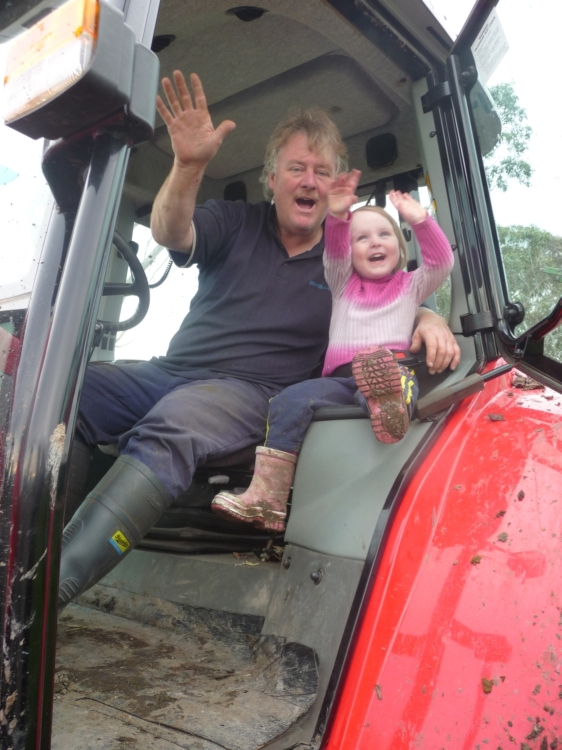
Farm kids get to spend lots of time with their Dads

Farm kids get to spend lots of time with their Dads

When I was a little girl, my brother and I had to feed the calves before we went to school and had plenty of jobs on the farm waiting for us once we got home. Naturally! It was the same for everyone else at our primary school.

It was an entirely different picture at our private secondary school in Sale, the home base for the oil and gas industry. Most of my classmates only had to take the bin out or do the dishes and some of them had never even been to their parents’ workplaces. To a teen who had to spend a couple of hours a day on the bus, it didn’t seem fair.

After a while and a few sleep-overs, though, I began to see some merit in living on a farm. We were certainly never bored and we did get to know Dad very well, even if it was while we worked.

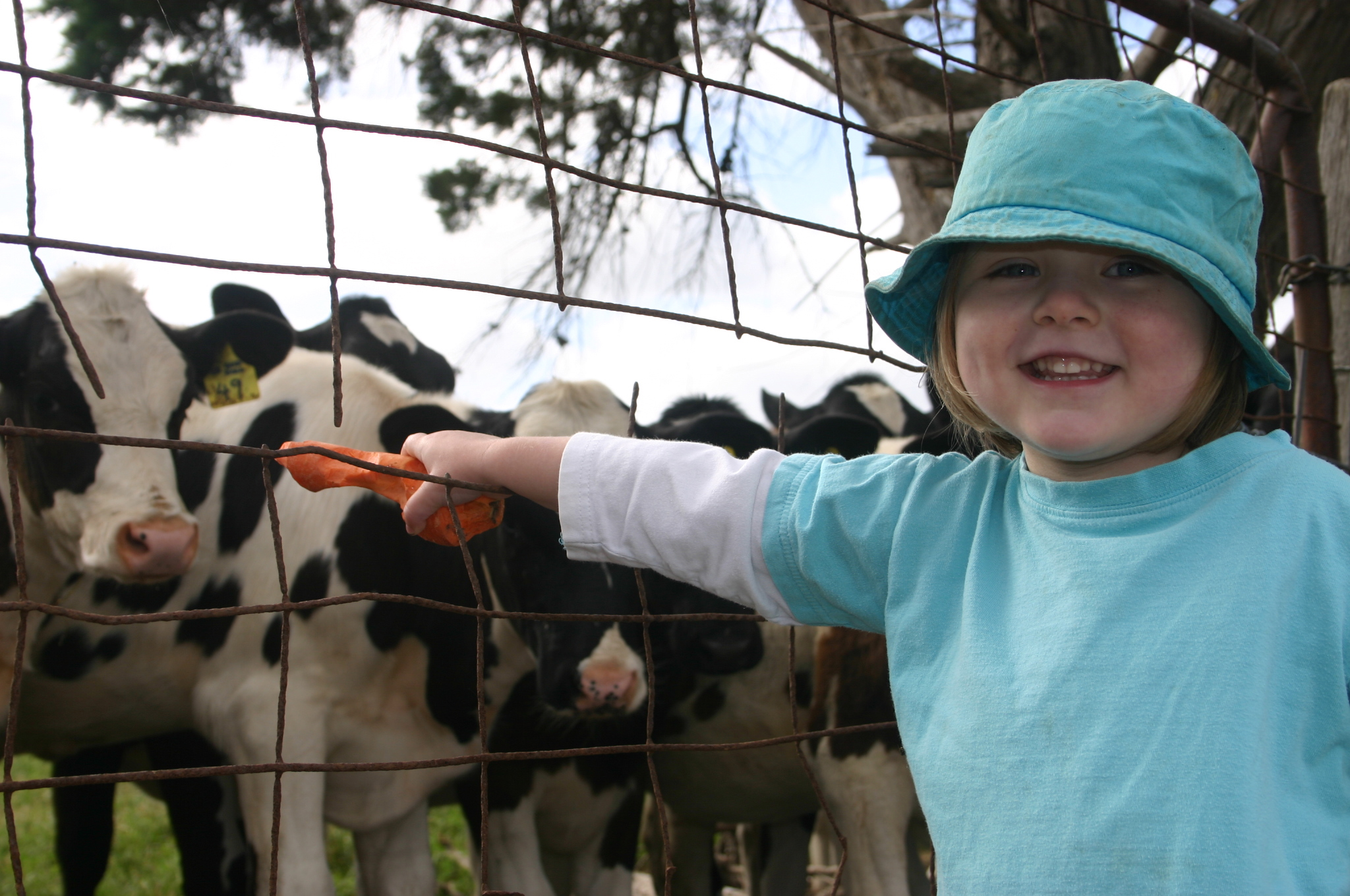
It was all brought home to me the other day when Zoe’s kindergarten class put on a little performance for us. One of the songs, “I’m a little teapot”, made tears well up. My Dad had taught me the same song 35 years earlier as I skipped alongside him to round up the cows. Dad would have been so proud of my little girl and even though we round up with the Bobcat these days, Zoe prefers to walk along behind the cows while we sing silly songs together.

I must have offended the tractor god

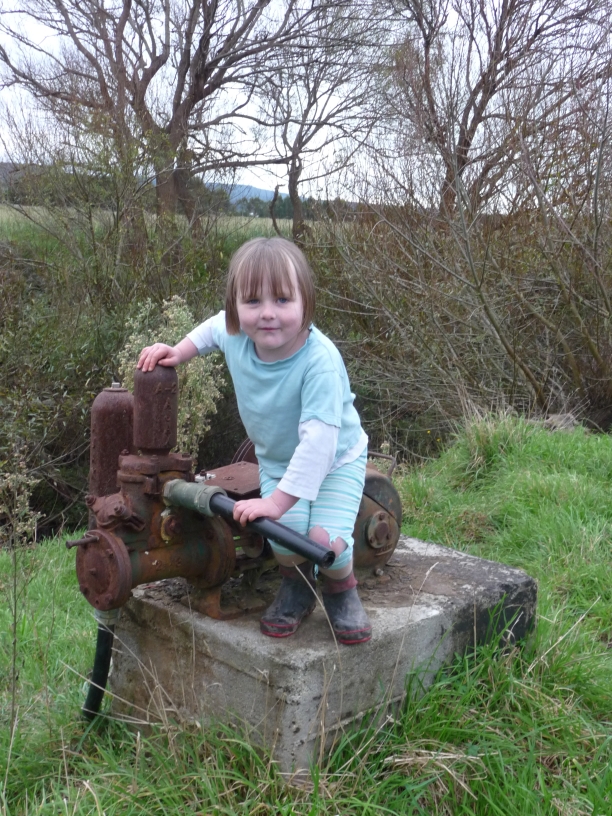
Zoe plays on an old relic while we prime the modern equivalent

Zoe plays on an old relic while we prime the modern equivalent

The more modern pump

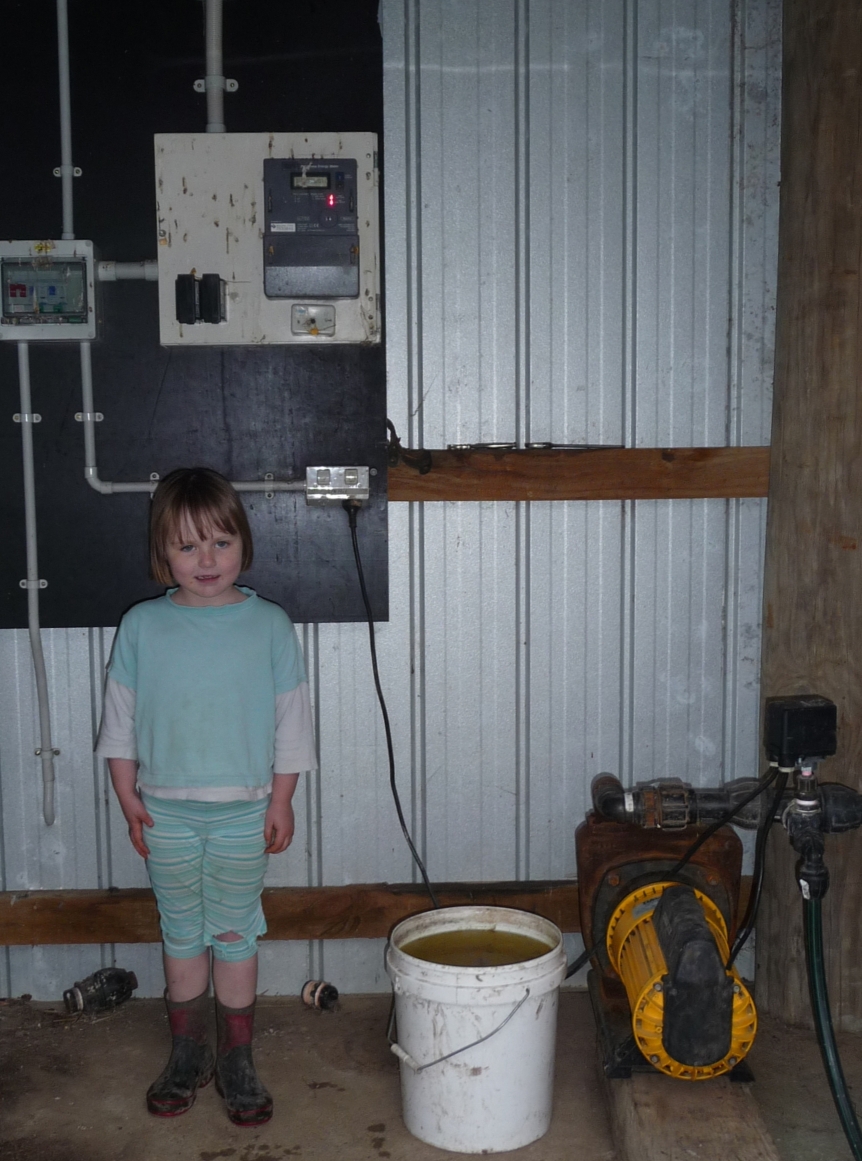
Our almost indestructible pump

I don’t like spending money on tractors. They depreciate very quickly and, so long as it’s reliable and reasonably comfortable, we don’t need anything flash. Yes, so long as it’s reliable. Oh dear. This is the second tractor we’ve bought in four years.

The first one was nothing but trouble (spent half its value in repairs in 18 months) so we traded it in on one that a friend had owned and said was solid as could be. Less than a year later and after fitting a new turbo, its engine needs rebuilding. Aaaargh. Any suggestions for an offering to appease the tractor gods?

The farm’s main water pump, on the other hand, works away tirelessly without complaint. Occasionally, the foot valve on the suction line gets jammed open with sticks and that’s what happened today. There’s nothing more critical than water, so we were onto it straight away. Of course, water disasters only ever seem to happen at milking time – maybe water lines have pheremone sensors that can tell when you’re a little bit stressed!

Beautiful birth

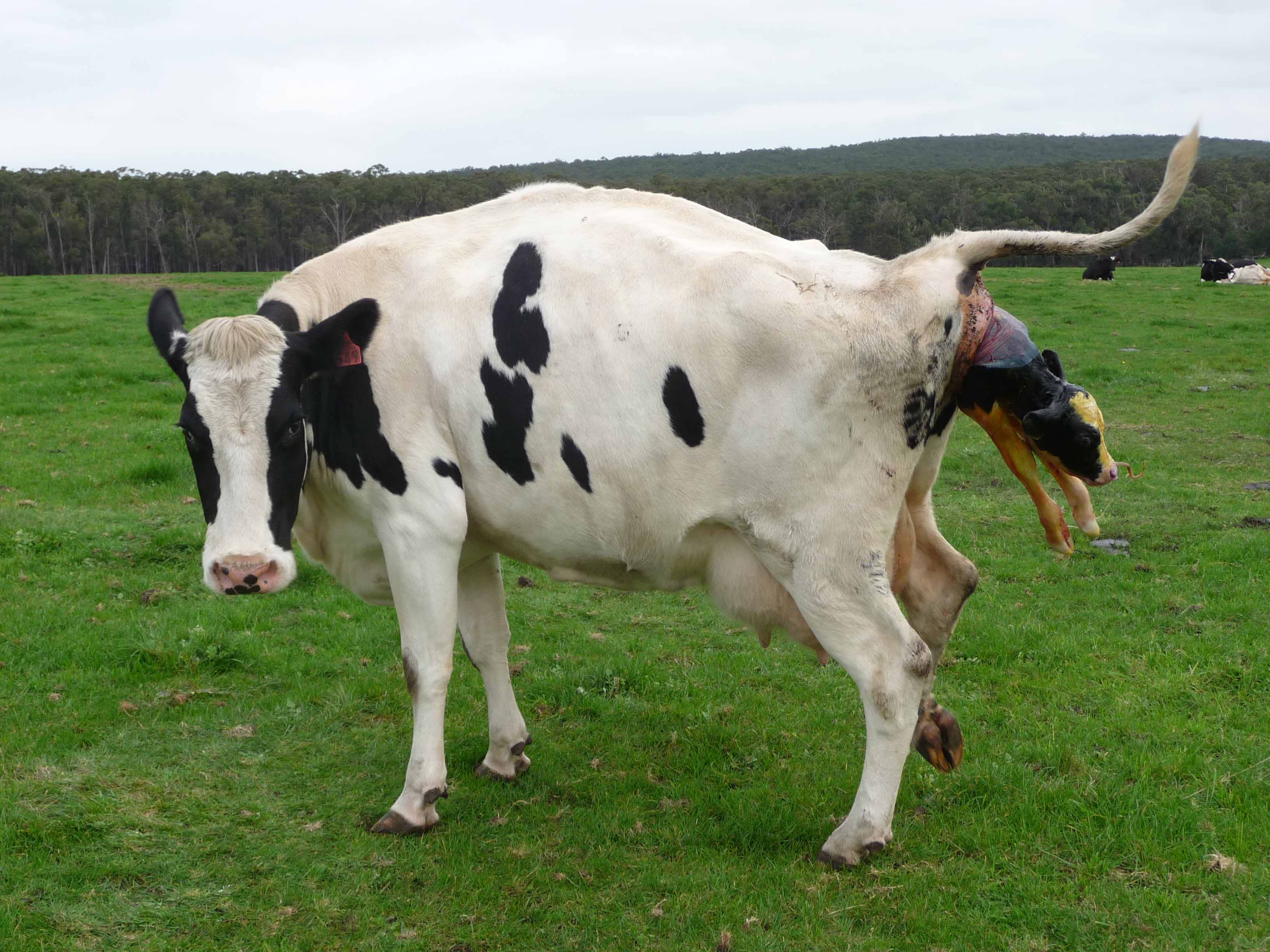
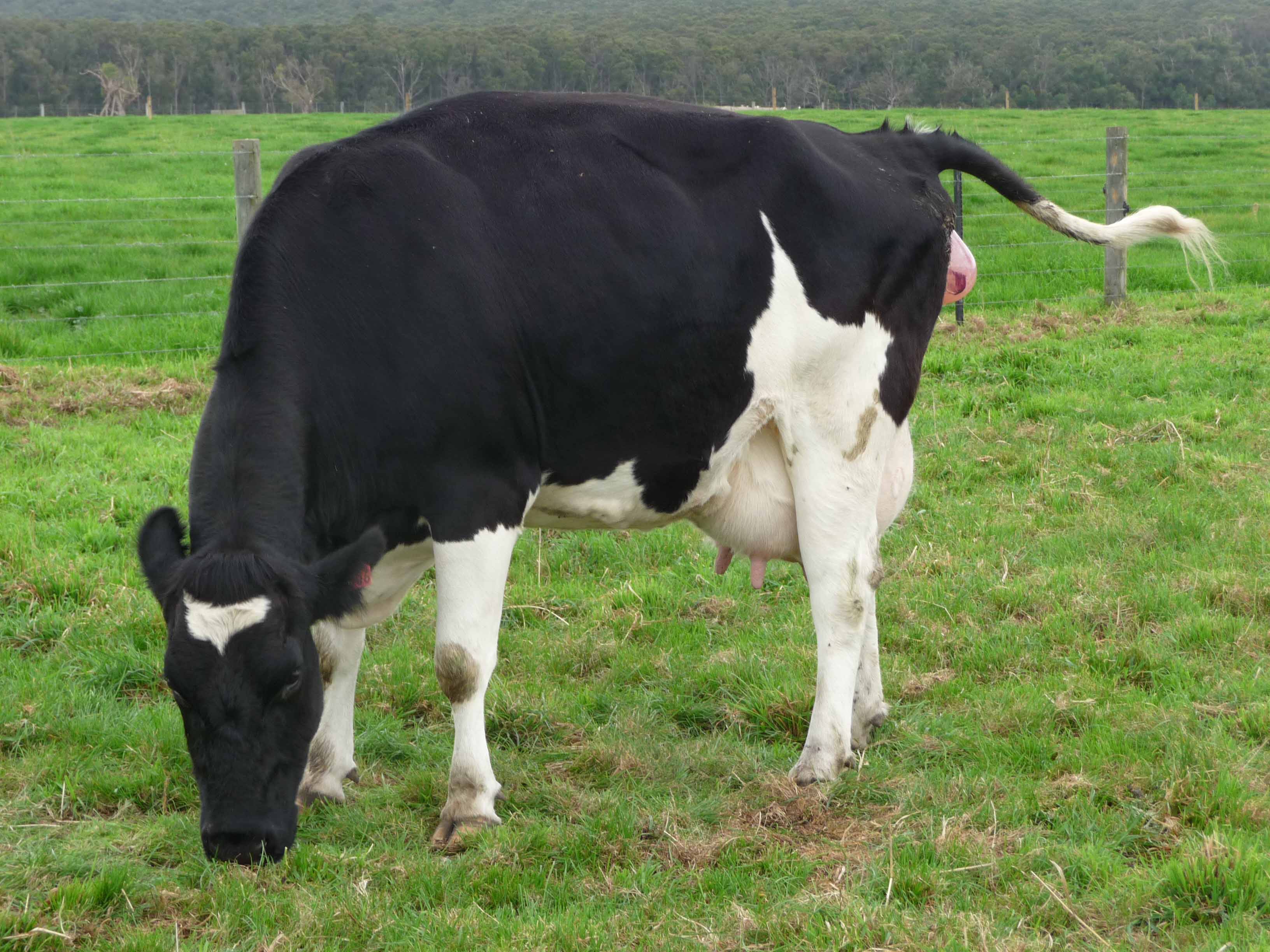
Cow 506 beginning to calve

Cow 506 beginning to calve at 11.50am

By the time I took this photo at 11.50 yesterday, I’d been watching over cow 506 for an hour or so. She’d been showing all the classic signs of a cow about to calve: restlessness, getting up and down. It was a relief to see her labour had progressed. I came back again an hour later to make sure everything was okay and look what I found! Licking her little one with gusto, she looked very comfortable.

Cow 506 licks her newborn at 1pm

Cow 506 licks her newborn at 1pm

Of course, it’s not always this simple. Sometimes the calf is too big, sometimes breech, sometimes the cow herself has a problem. With 340 cows set to calve over the next few months, it’s an anxious time for us.

To make it easier to keep an eye on our ladies, we do a weekly sort-out, drafting cows that are about three weeks from calving out from the rest so they can get extra special TLC in our calving paddock. This paddock is small and close to the house and dairy. We check it three times a day and, if any of the cows look like they’re about to calve, we hop up during the night to check them as well. Some of the signs are a swollen vulva, mucus, tight udder and unusual behaviour. The reality is though that, despite breeding programs meddling with the cow’s biology for thousands of years, almost all of them calve quite easily.

I hate comparing women with cows but, at almost 36 weeks myself, I can’t help wondering why it seems so much more complicated for us!

The farming community celebrates

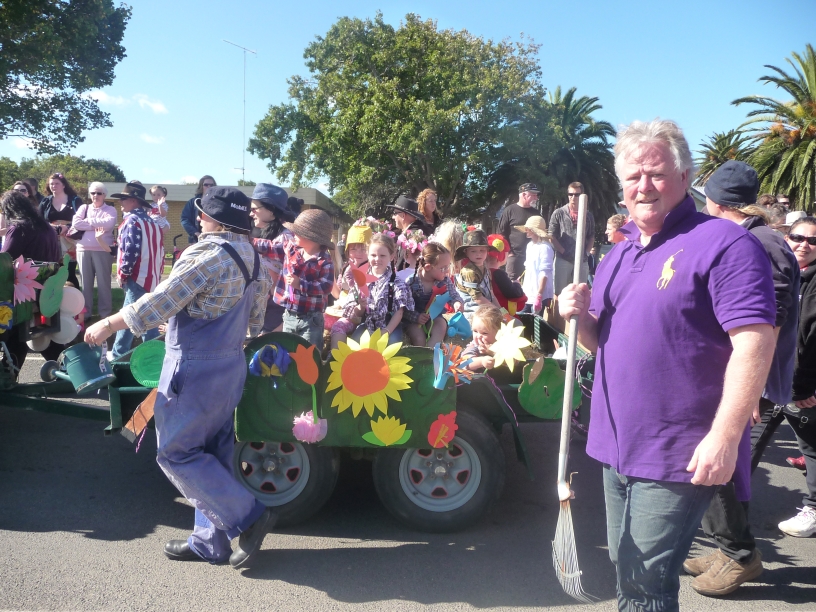
Zoe's first Tarra Festival parade

Today was huge. Every Easter our local town, Yarram, celebrates the Tarra Festival and at its heart is the parade. Colourful floats representing just about every facet of community life pass by thousands gathered on the footpaths and the centre plots. This morning, Zoe sat proudly among her friends on the kindergarten float, resplendent in yellow gardening hat and apron while waving a paper sunflower regally at the crowds. It was something of a rite of passage – I still remember clumsily twirling a Calesthenics baton decades ago along the same route – and she was in awe.

At the tail of the parade came three trucks: two B-Double milk co-op trucks and one belonging to the parade sponsor. The milk trucks are part of the community too and were warmly applauded.

The co-op's milk trucks are part of Yarram

The co-op's milk trucks part of the festival parade

After face-painting, slides, marvelling at the magicians, laughing at the clowns, catching up with friends and gobbling way too much fairy floss, we headed home to round up the cows. I was very proud of my tired little girl. She walked the cows in to the yard over 1.7 kilometres while making up lots of silly songs and giving me important directions.

Madame Butterfly stops traffic at the trough

We have a rule to let the cows drink for as long as they like on their way into the yard and in the picture you’ll see Madame Butterfly giving orders to stay clear of the drinking cows. After that, we checked two groups of cows, got in two mums and their newborns, fed grain to the yearlings and the springers, shifted the rising two-year-olds into a fresh paddock and checked in on a very sleepy and well-fed Laura.

Zoe will sleep well tonight!

Does grass grow on trees?

A few of the trees planted last spring

Trees Dad planted along a gully 12 years ago

Money may not grow on trees but I’m beginning to see that grass just might.

Our most productive pastures in summer are those that are sheltered on three sides by thick stands of willows. These are clapped out old ryegrass species but they outperform much newer pastures. I think that mostly it comes down to the relief the trees provide from those roasting NW winds. The cows also love the deep shade under the willows’ spreading branches, which must minimise heat stress. In other words, they create a more temperate micro-climate.

But willows are not universally loved, especially if you’re a native fish. Our farm draws water for cows and to clean the dairy machinery from the Albert River, so it is in our interests to protect the river’s health. I’m trying to see those shady willow windbreaks as “infestations” but without enough alternative shade, tearing them out is not a consideration.

So what are we doing? Planting hundreds and hundreds of native trees each year. If I had enough funding, I’d plant thousands every year! By doing this, we’re also creating wildlife corridors linking our gorgeous Land For Wildlife dam (which stretches over 8 acres) with two waterways and a wetland.

I’m so impatient. I can visualise the beauty of the farm in 20 years’ time, the cool oases of shade and the relief from the howling SW winter weather that these trees will bring. If the scientists are right, those refuges are going to be even more valuable as our climate becomes increasingly variable. If I’m lucky, I’ll be able to celebrate my 60th birthday in the summer of 2030 and Zoe’s 18th in the winter of 2024 in a very different and much more sheltered landscape to the one we enjoy now.

Dairy farming a glamorous job?

At a social get-together today, someone said dairy farming was glamorous. Rewarding, challenging, interesting, in touch with nature, a great way to raise a family, yes. Glamorous? I’d never thought of it that way. My friend (not a farmer) pointed out that many urban professionals might envy the freedom and sense of purpose enjoyed by dairy farmers.

It’s all about perspective, I guess. My husband saw me engrossed in reading a farmer’s newsletter last night and said: “You really love your farming, don’t you?”. “Yes,” I said, “Look at this! Turns out the nitrogen in the first effluent pond is much less volatile and…”. Well, there’s nothing sexy about a primary effluent pond. Realising how ridiculous I sounded, all I could do was laugh at myself. I do love it – especially learning how all the natural systems that come together in a farm work – even though there are days when it’s a really hard, dirty and uncomfortable grind that’s anything but glamorous.

But how do other Australians see us? According to one 2010 poll, as trustworthy. I wonder how the milk wars have affected public perceptions.

My lucky girl

Farm life can be fun and safe for children but tragedy strikes too often

Farms are extremely dangerous places for children. FarmSafe warns farming families of the horrible record of child deaths on Australian farms and makes some very sensible recommendations.

Some more conservative organisations recommend children are confined to safe play areas. That’s not reality for many farming families, including ours. We all work together because we need to and because it’s fun. On our farm, we are really careful Zoe understands there are some no-go zones and to observe some critical rules (not to get too close to the cows is one example).

One of Zoe’s favourite jobs around the farm is rounding up the cows for milking. It’s a great chance to run around, be an important helper and show how responsible she is. Zoe’s very proud and very lucky. So am I.

Cows do a LOT of poo but nothing goes to waste

Cows do a LOT of poo. About 40 litres of the green stuff per day (that’s besides number ones). Because they spend all their time grazing in paddocks, most of it goes straight back onto the grass as nature’s own organic fertiliser. The stuff that gets dropped onto the yard twice a day while they’re waiting to be milked is a different matter, though. It would be environmentally wrong and illegal to let it run into waterways, so this yard manure is hosed into large ponds for storage and digestion by aerobic and anaerobic bugs.

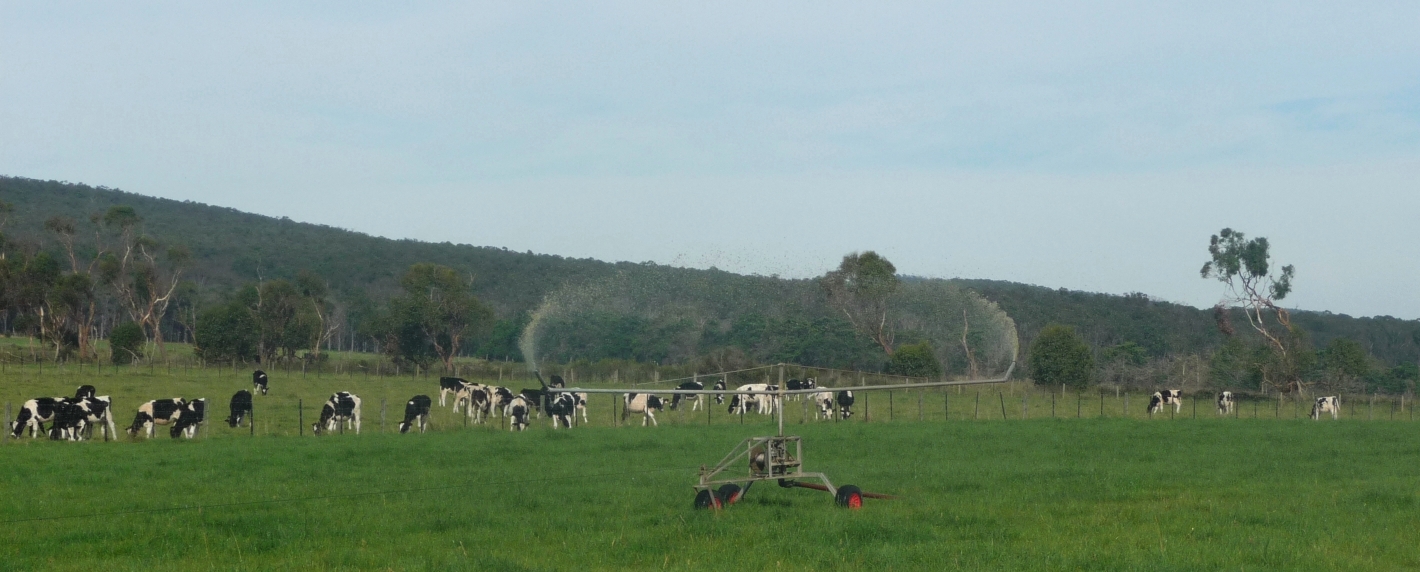
When it’s dry during summer and autumn, we pump the effluent on to paddocks using a little travelling irrigator hooked up to a fire-fighting pump. The effluent is full of great nutrients and beneficial bugs, we save trucking in inorganic fertiliser (not to mention the concept of peak phosphorous) and avoid polluting our rivers. When the pond is just TOO full for me and the irrigator to keep up with, we engage a contractor to come and pump it out and spread it with a huge tanker.

That’s been something of a challenge this year. The tractor and fully laden tanker weigh about 45 tonnes and, because  summer was so wet, access has been very limited. In fact, they just can’t get in at the moment. The effluent spreader shook his head and suggested calling for some rock. The quarry owner shook his head and suggested calling in the grader, excavator and the bank manager. I just hung my head and looked at my boots. Then, my lightbulb moment! If I can’t get the track to the pond, bring the pond to the tanker! I’m getting the excavator in to extend the pond so it’s really close to an existing cow track. Mark, the excavator supremo, expects it to be here in a couple of weeks, so I should have some boys’ toys pics up then.

Cycle of life adapts to a new climate

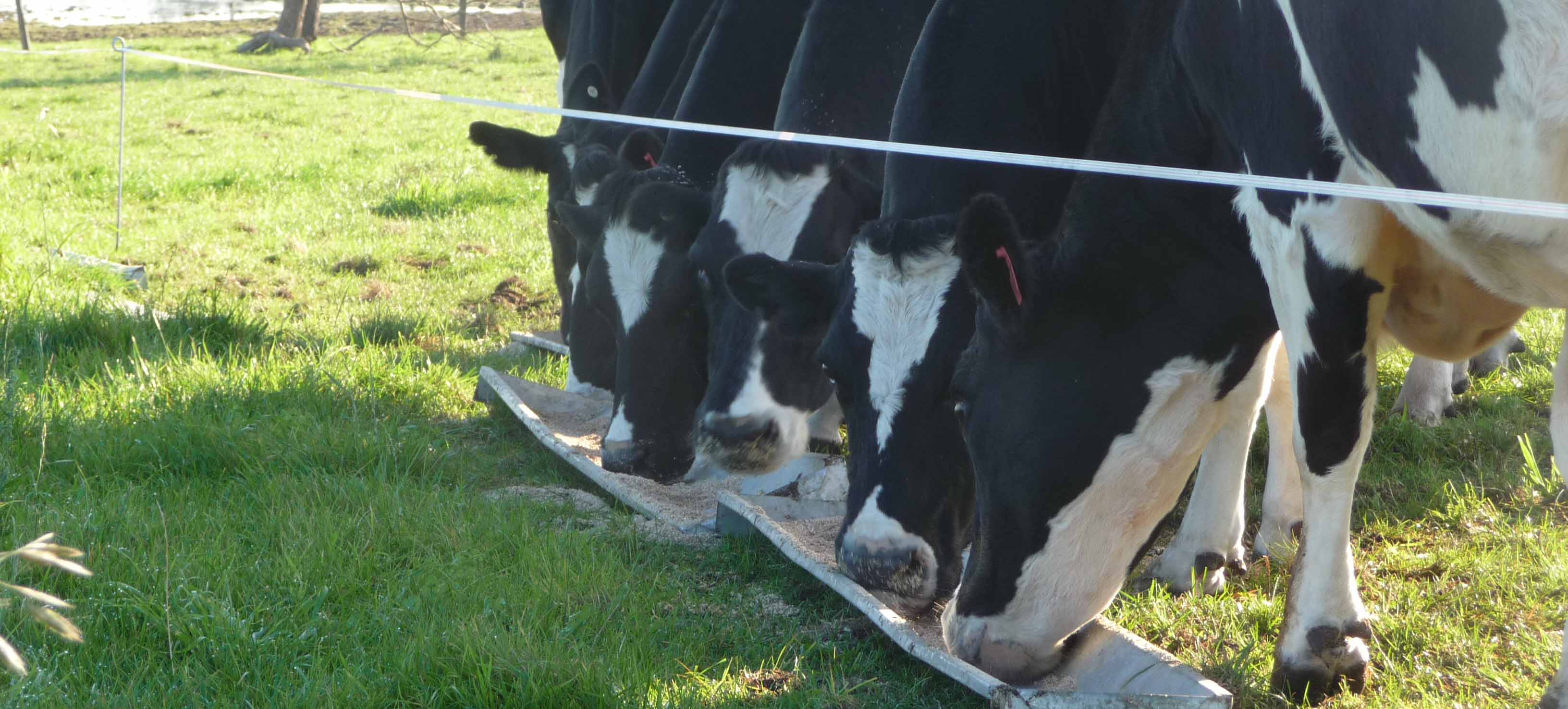
The calves are offered a special treat


Whether you call it climate variability or climate change, one thing’s for sure: we’re dealing with very different weather patterns in our part of Gippsland. The summers are hotter and tougher. The dryness now often begins in November and sometimes stretches into May. On the other hand, winter is warmer and grass grows far better in June and July than ever before.

This has fundamentally changed the farm, right down to the cycle of life. Instead of planning the calving season to begin in mid-July, we’ve decided to begin on April 20 this year. We’ve been surprised to see four premature calves (including twins Ella and Bella) born already – best laid plans often come undone at the hands of mother nature.

The reasoning is that we want to match the cows’ need for grass with the time when it grows best. Naturally, cows need the most energy when they produce the most milk, so we’re hoping to hit peak production in July/August/September, which is the period when the farm’s pastures are most productive under the new conditions.

The cows will have their two-month annual holiday from mid-February until calving begins in April – the time when grass is hardest to grow and when the cows’ energy needs are lessened. It will take time (two or three years) for us to get the whole herd into this pattern but it will be worth it. There will be less pressure on all of us.