Twin calves confuse cows as well as the cocky

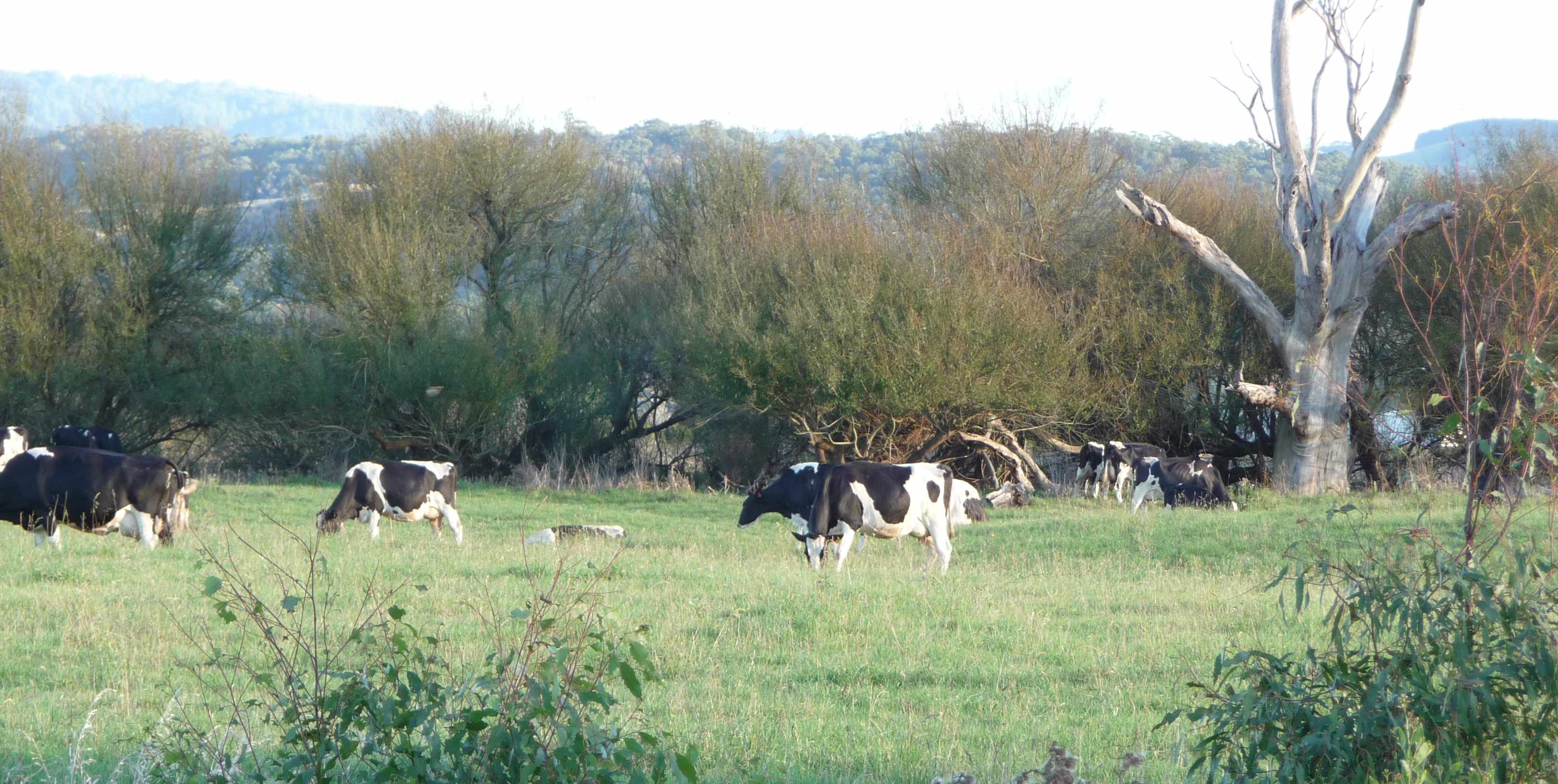
This is what I found when I got to the calving paddock:

Who's who?

Too many calves, not enough cows.

 
Yep, two calves having a drink but what about that one over there sitting down? Twice the size of the other two but clearly still a newborn…

I watched the cows and calves for a few minutes while shifting the fence and during that time, the big one took a fancy to me as the mother cow (yes, I know what you’re thinking!).

Are you my Mother?

Are you my Mother?

Having decided I wasn’t much chop as a mother cow, this suckie decided to try his luck with another cow. A serious tussle ensued between the two mother cows over the same calf and eventually, this girl ended up with two heifer (female) calves about the same size and the other cow claimed the big bull calf. Phew!

No rest for the mother of twins

A perfect multi-tasking mother!

I say “Phew!” because the female twin of a bull calf is likely to be an infertile “freemartin” so it was extra important that the pair was two females.

And did you say “eew” when you saw the first photo? Apologies if you were eating! If not and you have a strong stomach, consider this article on eating your own placenta.
Welcome to the Big Outdoors, suckies!

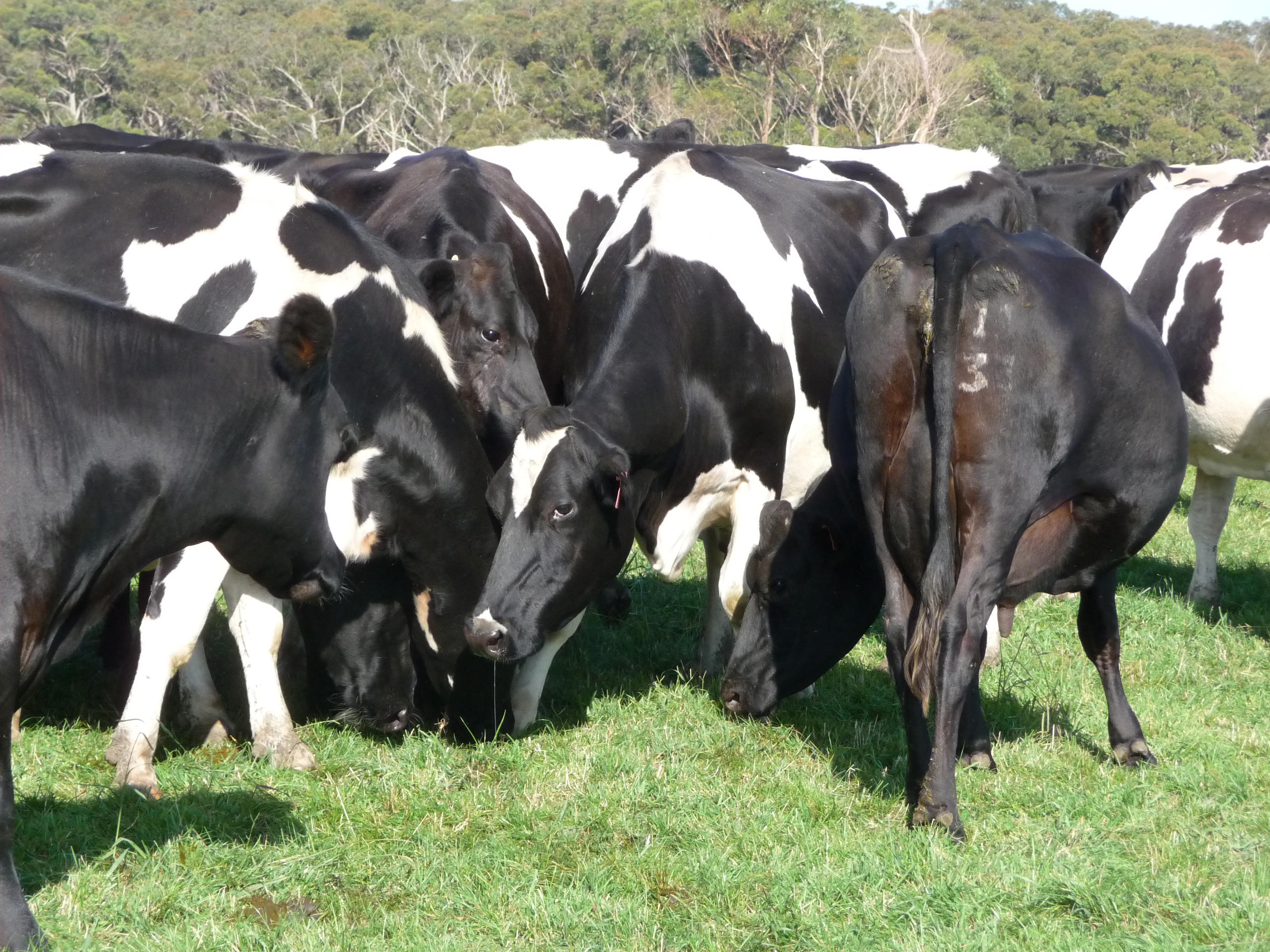
Yesterday, these seven to 10-day-old calves rediscovered the joy of the Great Outdoors. They’ve been in our little calf shed since birth, warm and safe from foxes. Most importantly of all, we’ve been making sure they’ve had enough colostrum – the special milk produced by cows in the first days after calving – to set them up for long, healthy lives.

What on earth are these cows doing?

“Rounding up the cows” took on a whole new meaning tonight. In the middle of the herd was a huddle of cows encircling a rather ordinary-looking yet obviously extraordinary patch of grass.

Mystery In Grass

Even after I chased them away, the cows were drawn to this mysterious patch of grass

What on earth could they sense? Blood, perhaps? Not that I’m suggesting anything but the only time I’ve seen cows go “crazy” in this way was after they passed yards in the old days after dehorning was done. It was a messy, deeply unsettling affair and the cows could smell it from a mile away.

We all hated the job but Dad explained it was kinder than having the cows down the pecking order gored with the sharp horns of their merciless superiors. Thankfully, these days we are able to cauterise the horn buds and spare the cows the trauma.

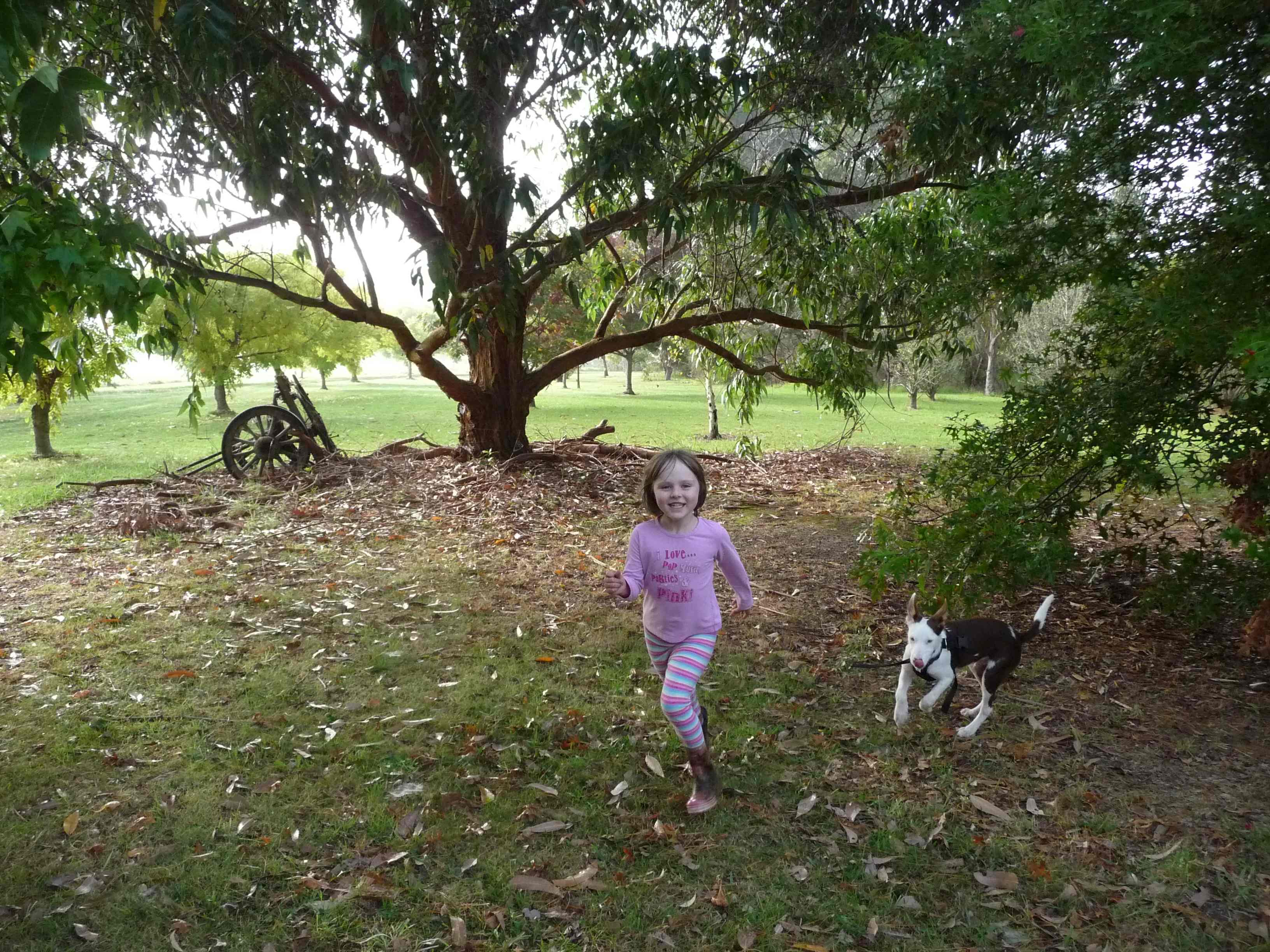
Meet Patch the pup

Zoe and Patch the pup

Patch and Zoe get to know each other


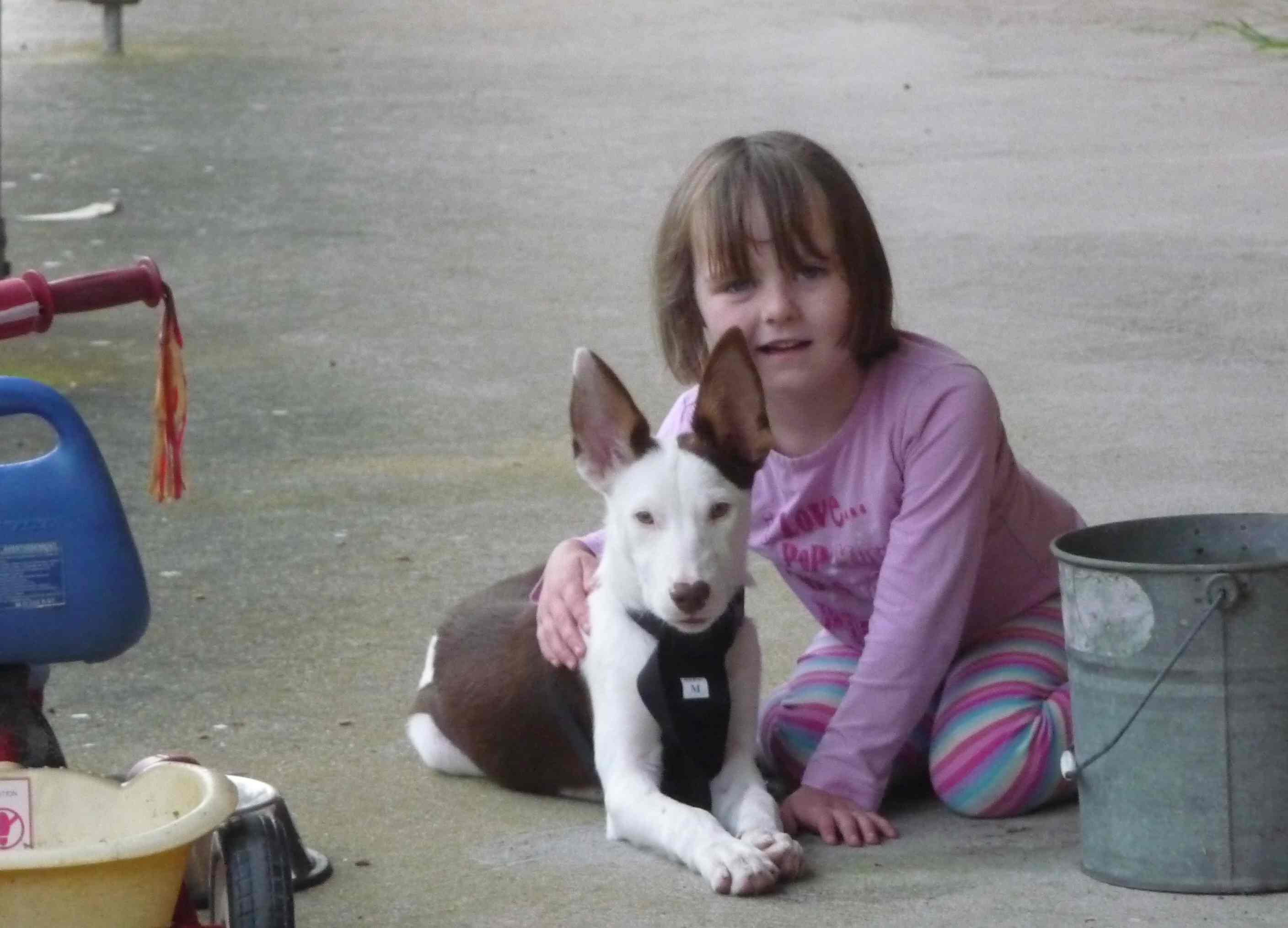
A new character has joined our farm crew! Patch (the pup formerly known as Buckley) is only five or six months old but he’s a very clever little fellow. In just one day, he’s already managed to scale the eight-step ladder up to Zoe’s cubby, been for a ride in the Bobcat and learnt (or remembered) to heel on a leash.

With Kelpie blood flowing through his veins, Patch loves to run. We expected that. What took us by surprise was this pup’s sense of calm. He nodded off less than five minutes after hopping in our car for the first time and seems completely unfazed by Zoe’s antics.

Zoe and Patch on the tear

Finally, someone who can keep up with me!

It’s a new start for Patch, who was left at a pound just a few weeks old and rescued by the volunteer foster carers from Homeless Hounds.

Surfing the net at http://www.petrescue.com.au can be an emotional experience. There’s Sascha, the reluctantly surrendered tradies’ dog who can bark Happy Birthday, the pair of dogs who minded their owner’s body for three days until he was found and dozens more that I would love to bring home. I really can see how people end up with mobs of rescued dogs.

New season has us rushing around like squirrels

It’s autumn and our dairy farm is buzzing with activity before calving starts and winter sets in.

We have sent about 50 cows off to the other side of the farm for their annual two-month holidays. Before they go, they are given long-acting antibiotic therapy and teat seal to reduce the risk of mastitis when they calve.

Dry cows go on holiday

"Yay! Holidays!"

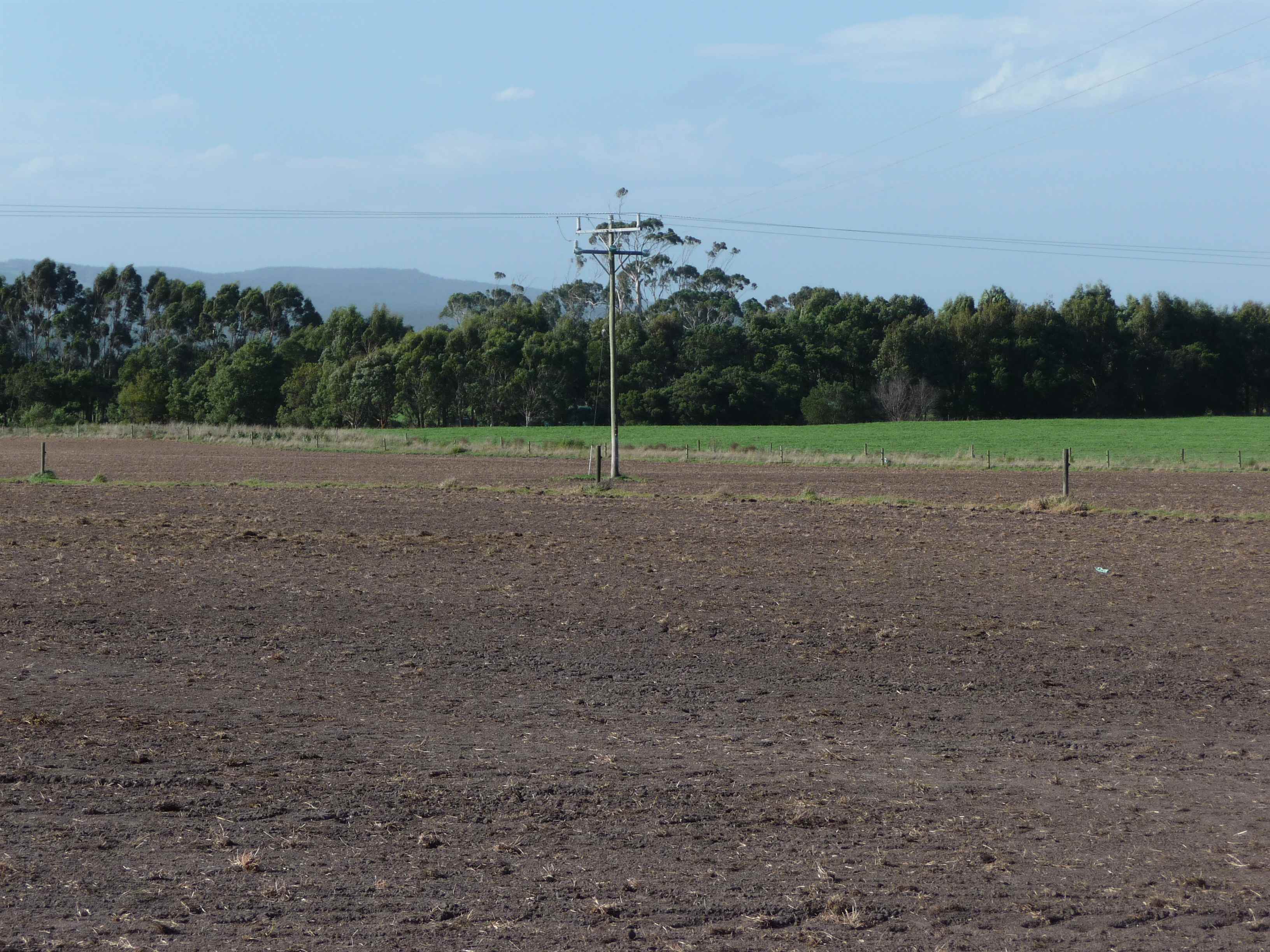
New pastures have been sown. Those (like this one) that were too rough have been fully cultivated with discs, power harrowed and rolled. This paddock has also had lime because its pH needs to be lifted a little higher. I’ll keep a photographic log of the paddock’s progress.

Newly sown paddock April 1st

Here it is, one day after sowing on April 1

We’ve invested in new stone and gravel for sections of the cow tracks and gateways.

New gravel

La la lush new gateway gravel!

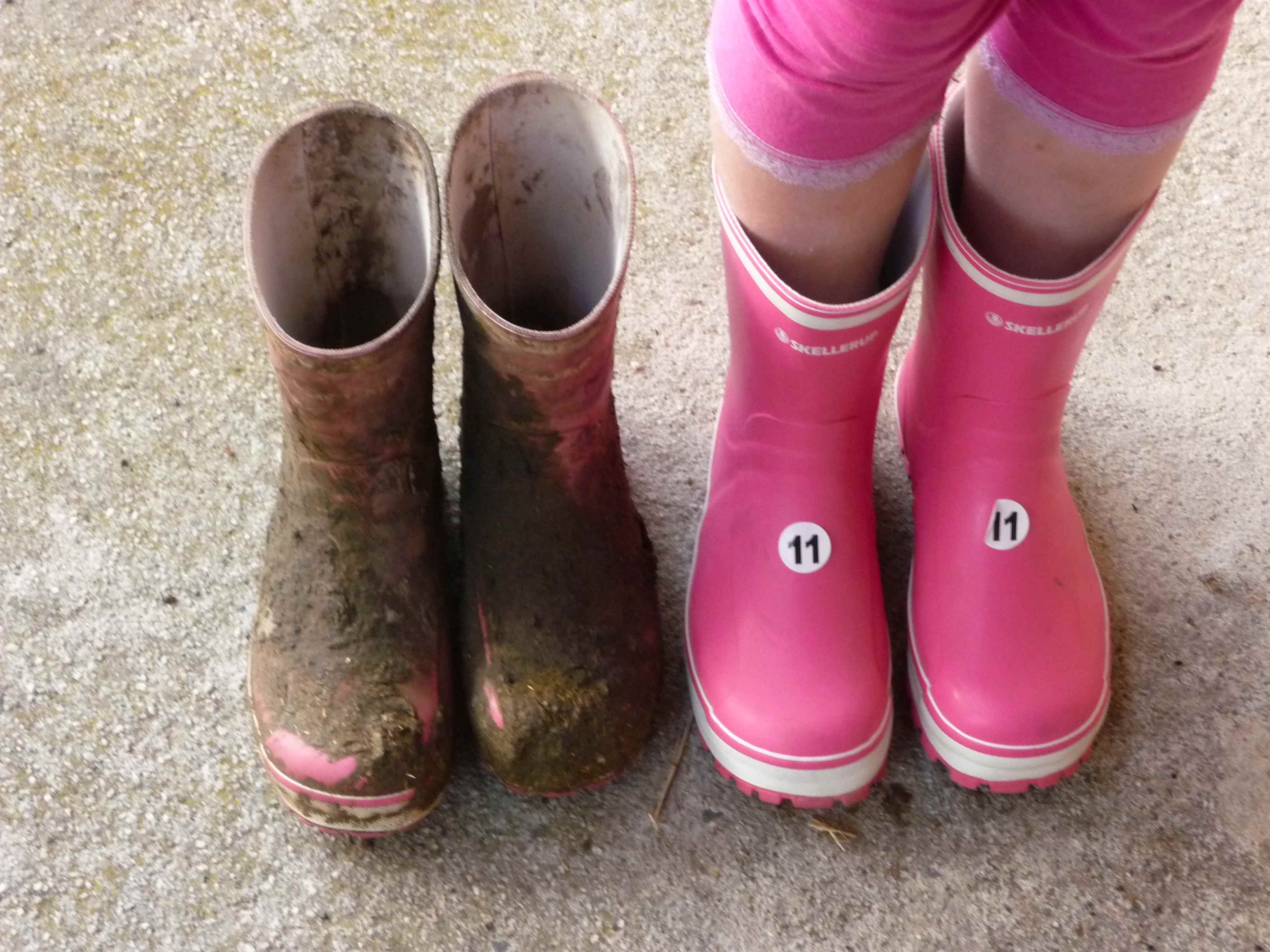
And, last but not least, a new pair of boots.

New rubber boots

How long 'til the pink turns khaki?

By the way, how do you know when your boots are too tight (especially when they were too loose the day before)?
“When you can’t do what you used to do with your boots.”
“What’s that, Zoe?”
“Put your big toe on top of the toe next to it.”
Obviously!

I’m with Hugh on this one: it’s not fun to kill

I am no stranger to death – every year, just as new calves are born, some old cows must pass away. I am, by necessity, philosophical about it but, still, every loss is felt. Nor can I eat an animal I have known, although I am keenly aware of my own emotional hypocrisy. One thing I am clear about, however, is that I will never kill for fun.

I don’t understand duck season. If I were to fire endless shots at stampeding cows from a hundred feet or more away, I would be rightly condemned for animal cruelty. Why is it so different with birds?

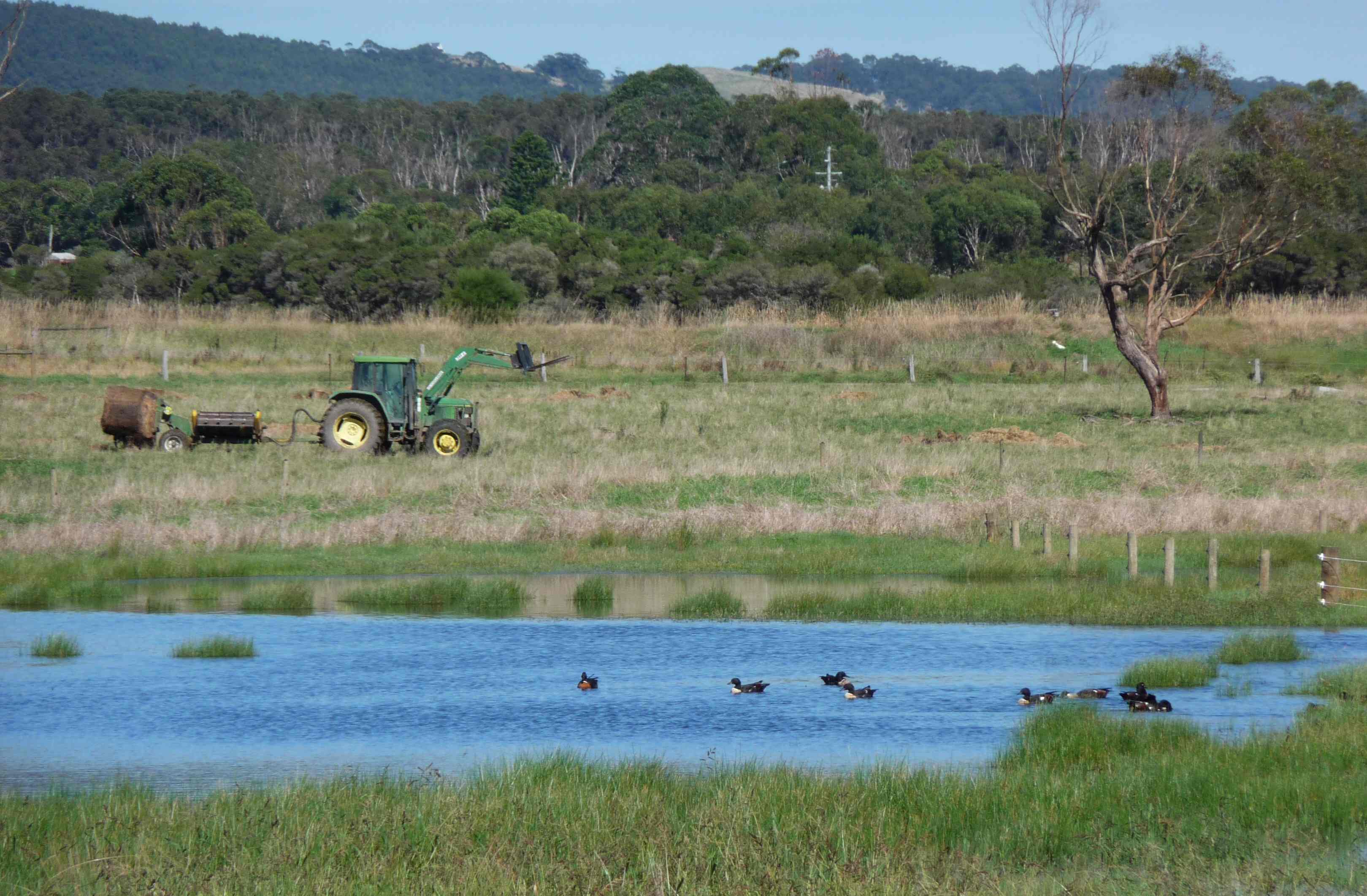
Ducks

Australian Shelducks

This Spring, we’ll be creating another permanent sanctuary for our bird life on the farm with the assistance of the Shire of Wellington, which has provided a grant for the fencing and trees (thanks Andrew!). This paddock will be broken into three pieces: the wet centre will belong to the birds while the higher, drier sections will be amalgamated with neighboring paddocks.

Have you seen a cow with blood all over her udder?

When Zoe’s city cousins came to visit the other day, they were horrified to see one of our cows with a crimson udder. “Oh my God, she’s bleeding!” cried one of the boys.

Painted Picasso Cow

Painted but not quite like this Picasso Cow (thanks to Libby Lambert for the pic!)

“No, it’s okay, she’s just painted,” laughed Zoe.

They were almost as astonished by Zoe’s reply as they were horrified by the thought of all the bleeding.

Why do dairy farmers paint cows?
We buy paint for cows in bulk. We use orange to denote a freshly calved cow still producing colostrum, blue when we want to keep an eye on a cow for some reason, red when she’s undergoing treatment and green once the treatment is complete.

The red paint is a warning to everyone who milks the cow – first, she needs treatment and, second, her milk must not enter the vat. Instead, it is collected in a separate bucket and discarded. Thankfully, Australia’s food safety regulations are very stringent and no trace of antibiotics may be present in milk.

You might also see cow’s backbones right near their tails painted different colours. But that’s a story for mating season.

Making up for the heat

Do you tend to eat less in the heat? I do and so do our cows. This is the third day of hot weather here and there’s another on its way.

Once the mercury rises over about 25 degrees Celsius, the cows begin to find it uncomfortable. We’ve sent them to a shady paddock for the day and to make up for the fact that they’ll spend most of it under the spreading branches of the willows, we’ve also changed their feed pattern.

Shady paddock

A cool spot for a hot day

According to the gurus at Cool Cows:

  • Cows will eat less overall, so increase the energy density of your diet where possible. More starch or added fat can be useful tools.
  • The risk of ruminal acidosis is increased during hot weather by several factors:
    • Cows prefer to eat in “blocks” in the cooler times of the morning and evening each day in hot weather;
    • Cows tend to select against low quality forage/fibre; and
    • The natural buffering system the cow relies on to combat ruminal acidosis does not work as well in hot weather.
  • Feeding of a high quality fibre source in the diet that helps maintain a stable rumen, but still contributes energy rather than just gut fill, is therefore essential in hot weather. For high-producing herds already being fed plenty of starch via grain / concentrates, this is particularly crucial.
  • Recent research work in Arizona (where they know a bit about heat!) suggests that heat stressed cows switch metabolism and have an increased need for glucose within their bodies. Feedstuffs and feeding strategies that either provide the cow with more glucose or spare the amount she uses in her normal body processes may therefore be useful in hot weather.

For these reasons, they’re getting some extra grass tonight in a fresh new paddock. What about the farmers? Lots of refreshing baths for baby Alex, the minimum of farm chores and an early morning sojourn into the cool forest.

A cool place to hang out

A cool place to hang out

Early morning greeting as the farmer tends her animals

With a scorching 36 degrees Celsius forecast today, Zoe and I decided to get out on the farm nice and early. Amazingly for mid summer, it still looks lovely and green.

Cool morning

Cool before we cook

One of the first things we did was check on a calf in the sick bay. Dubbed “Pinky” by Zoe, this calf is about the same age as my own baby Alex – eight months – and is thriving but had an umbilical hernia that vet Pete operated on last week. We are spraying her with a pink disinfectant and fly repellant to keep her wound nice but it looks horribly inflamed as a result. She’s camping in a small paddock by the shed with a friend to minimise the amount of running around she does for the next week or so.

Pinky

Pinky recovers in the company of a friend

Zoe and I also stopped to top up Charlie and Lola’s pantry and say good morning to our semi-nocturnal Maremma guardians.

Charlie the sleepy Maremma

Good morning sleepy head

But it was a far less cuddly creature that greeted me when I went to check the milk chart.

Chart

Aaaargh...look who came out to greet me!

Yikes! Got to take the good with the bad!

Are our dairy cows “forcibly artificially impregnated” each year?

Not for the last two years, no, we’ve gone au naturale. We will return to annual artificial inseminations but our experience of natural matings shows that’s really not out of the ordinary if you have the body of a cow.

In response to our changing weather patterns, I decided to start the cows calving on April 21 (also the date of our wedding anniversary but, honestly, no connection!) rather than our traditional mid-July. Now that winter is milder, an autumn calving means we’ll have more lush green grass just when the cows need it the most.

Moving calving in this direction is tricky. Cows have nine-month gestations and it’s at least three weeks after calving before they are ready to conceive again. For example, a cow that calves in August won’t conceive until September at the absolute earliest and her calf would be due in May or June.

It also requires a very keen eye to see who is in the window of fertility that lasts just hours and, often, we miss it.

For all of those reasons, I bought a host of pedigree bulls and introduced them to the cows in July. The bulls are on the job 24/7 and nobody is more expert at detecting the fluttering of long bovine lashes.

The result is that our conception rates have lifted and we have moved the herd’s calving date forward by a month each year.

In other words, left to their own devices with suitable Romeos, the cows don’t need to be “forcibly impregnated” (to borrow an alarmist vegan phrase) each year because it happens naturally. When we go back to annual artificial insemination, it will be with a clear conscience.