Divided we fall: so where to from here?

After a nose dive

Don’t worry if you fall, just get back up again.

Wayne said the other day that the farm has taught him something about resilience: live in the moment when the sun is shining and, when the hail stings your skin, think of the big picture.

But the big picture right now is confusing for this Milk Maid. The WCB war has thrust the outlook for Australian dairy into the headlines and, with it, a lot of questions.

Our co-op has offered half a billion dollars for WCB, claiming that its loss to a global player would be “a tragedy”. In its statement to the ASX, MG Co-op said:

“The combination of MG and WCB is the only option available that delivers an Australian-owned and operated company with the scale, capacity, strength and momentum to service global growth opportunities, returning profits to dairy farmers and their communities.”

In the midst of all this, the UDV hosted a farmer forum on Monday where independent dairy analyst, Dr Jon Hauser, told farmers that supporting cooperatives is a “no brainer” but has also said the golden era of dairy in Asia was “largely rhetoric” and that real progress for Australian dairy would come through cost control and increased efficiencies at the farm and the factory.

He created a stir at the forum too, simply by saying that milk prices of 48 to 50 cents per litre could not be sustained. Not popular news.

So, now that Saputo is on the cusp of announcing a new offer, prompting WCB to ask for a suspension of trade, what if Helou’s tragedy does unfold? How will the General regroup?

MG will certainly have to work harder to woo those who harbour a co-operative spirit but supply other processors. And that, I’m afraid, is something the co-op has not done well to date, in my view. Perhaps the tide is beginning to turn, reading between the lines of Helou’s interview with The Weekly Times dairy writer, Simone Smith, headlined Divided we fall:

“There is nothing stopping our farmers rallying around a well-run farmer run company that is of scale and relevance.”

“There is no law in the land against that. That’s what we are advocating. This rally around the MG foundation to create a new farmer-owned business that is really relevant to the 21st century.

“The farmers will only benefit from direct ownership and direct influence in supply chain from the farm all the way to market.”

I guess we farmers are used to falling and getting back up again.


UPDATE: In response to a question asked below, Dr Hauser has kindly sent me this. I don’t know how to put it – complete with charts – in the comments section, so here it is instead:

Sorry Marian, It would take me a day to properly represent my position on the Asian growth story and even more to update my analysis to the most recent trade data.

Here is a snapshot of the important data:
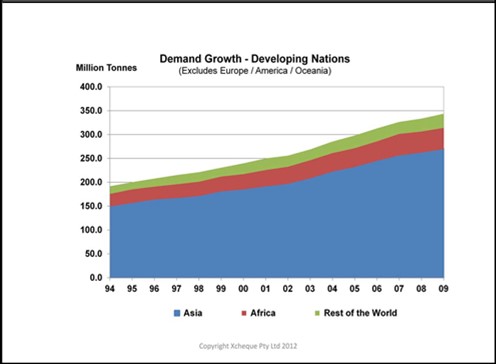
JH1

This is the demand growth for the developing nations. This comes from the FAO

Most of this growth has been serviced by internal development of their dairy industries.
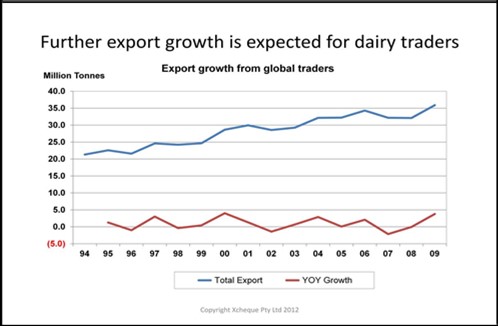
JH2

This the export growth from the key dairy traders – Europe, US, NZ, Argentina, Australia. The average is 2 – 3 billion litres / year. Even if this has been accelerating in the past few years it is unlikely that the opportunity is more than 4 – 5 billion litres / year. I believe the average growth opportunity for the global traders is 3 – 4 billion litres but I would need to review the more recent data to check this.

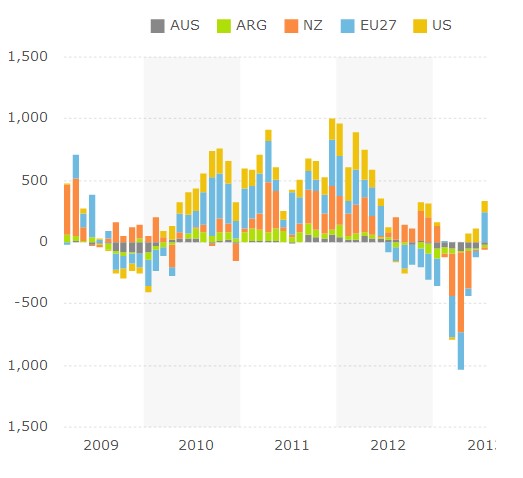
YOY Production milk production growth – Million Litres
JH3

This is the year on year growth that has come from the major traders. This chart shows 15 billion litres of growth from the EU, US, NZ and Argentina from July 2010 – June 2012. The total for the period from July 2009 – June 2012 is 12 billion. In other words we saw contraction in 2009 and 2012 and that is because the milk price was low. The US and Europe turn growth on or off according to commodity and milk price (New Zealand just keeps on trucking except when it doesn’t rain).

In summary:

  • The Asia growth story is not rhetoric but the suggestion that the hole can’t or won’t be filled is.
  • The US and Europe will turn on and off milk production according to demand and price. They had no difficulty growing supply at 5 billion litres / year in 2010 / 2011 and they are already gearing up to do it again in 2014.
  • No I don’t subscribe to the analysis that has been done for the Horizon 2020 report. I believe the “Supply Gap” analysis is a flawed way of assessing Australia’s future export opportunity.

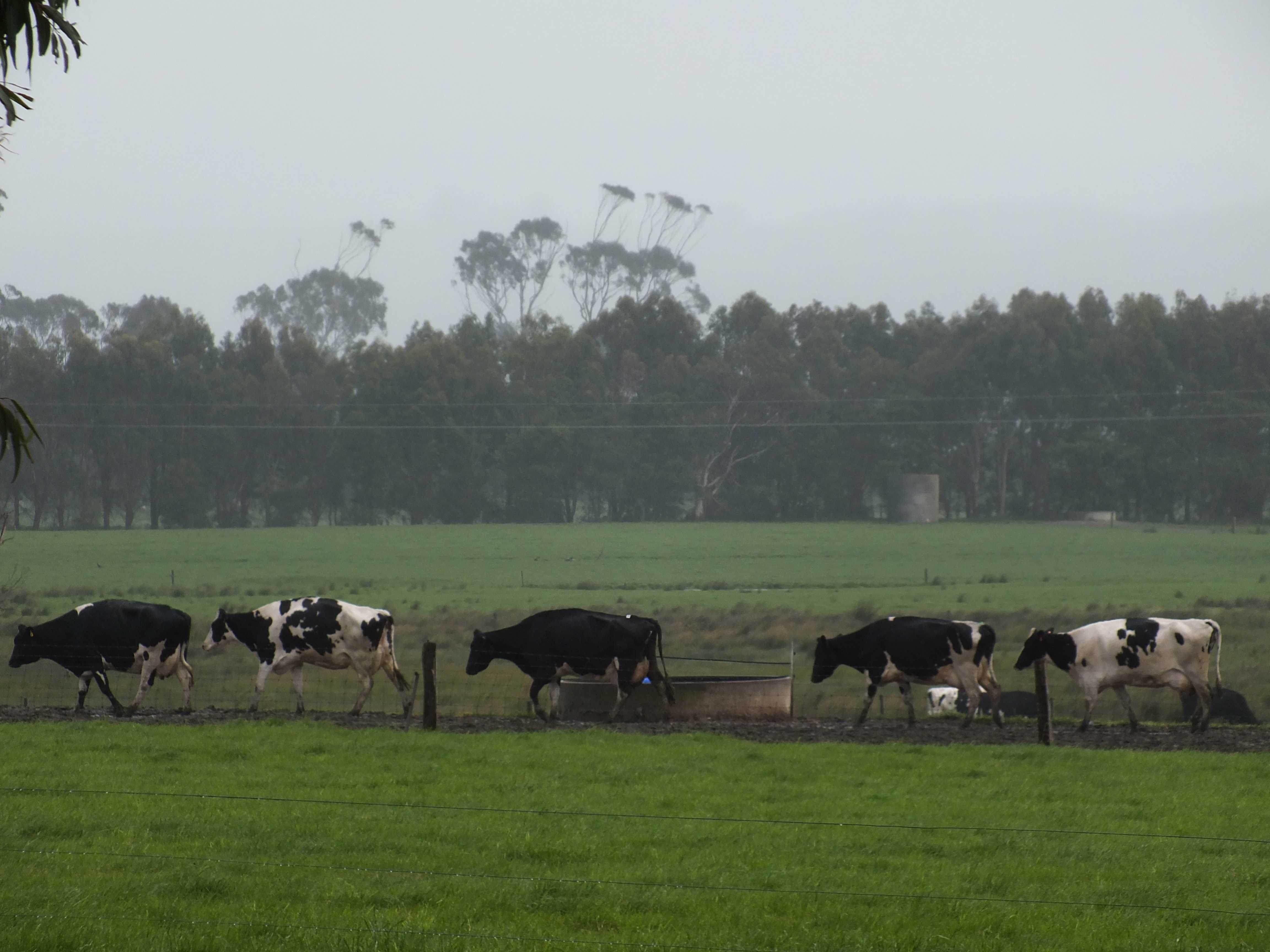
 

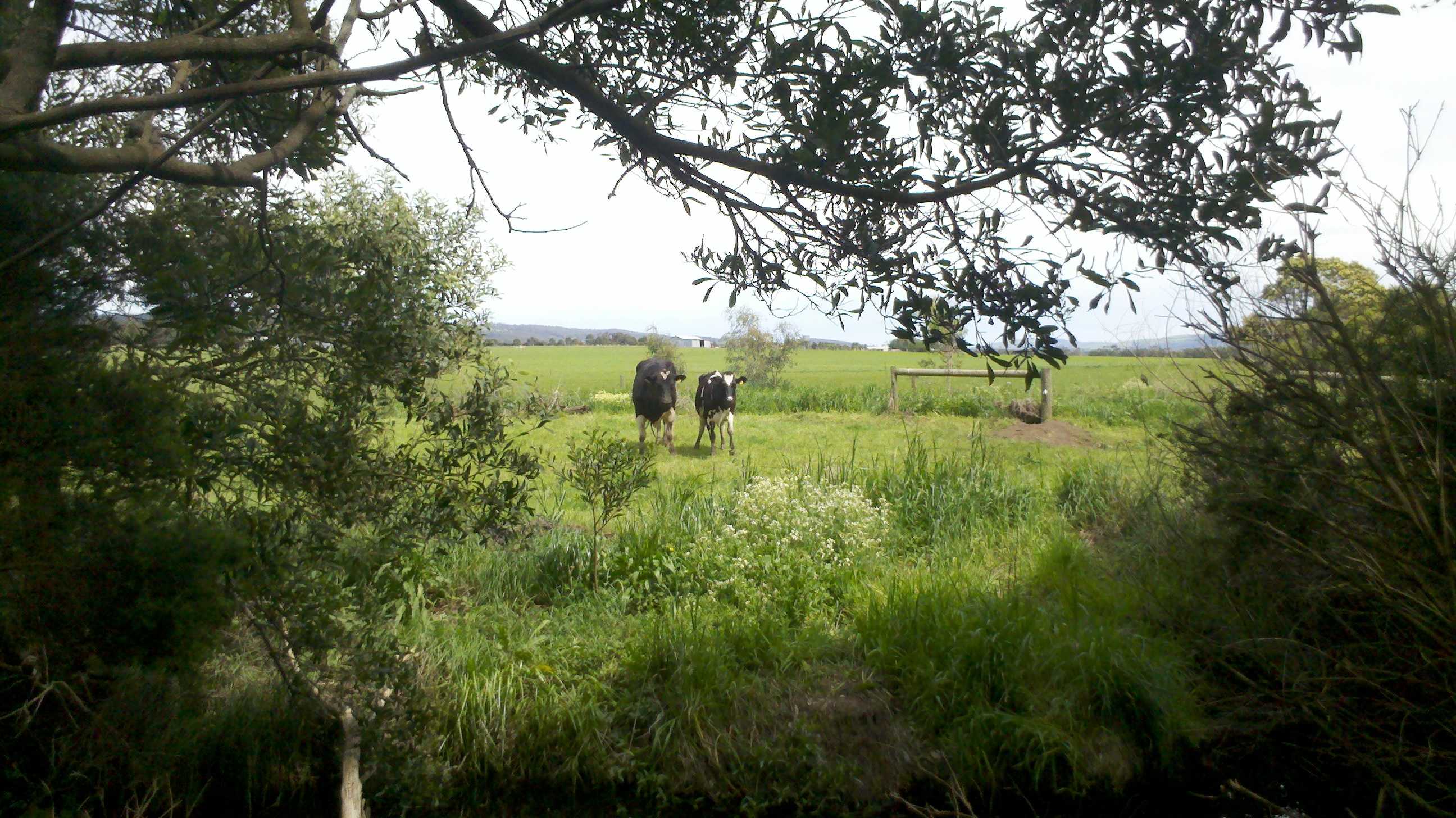
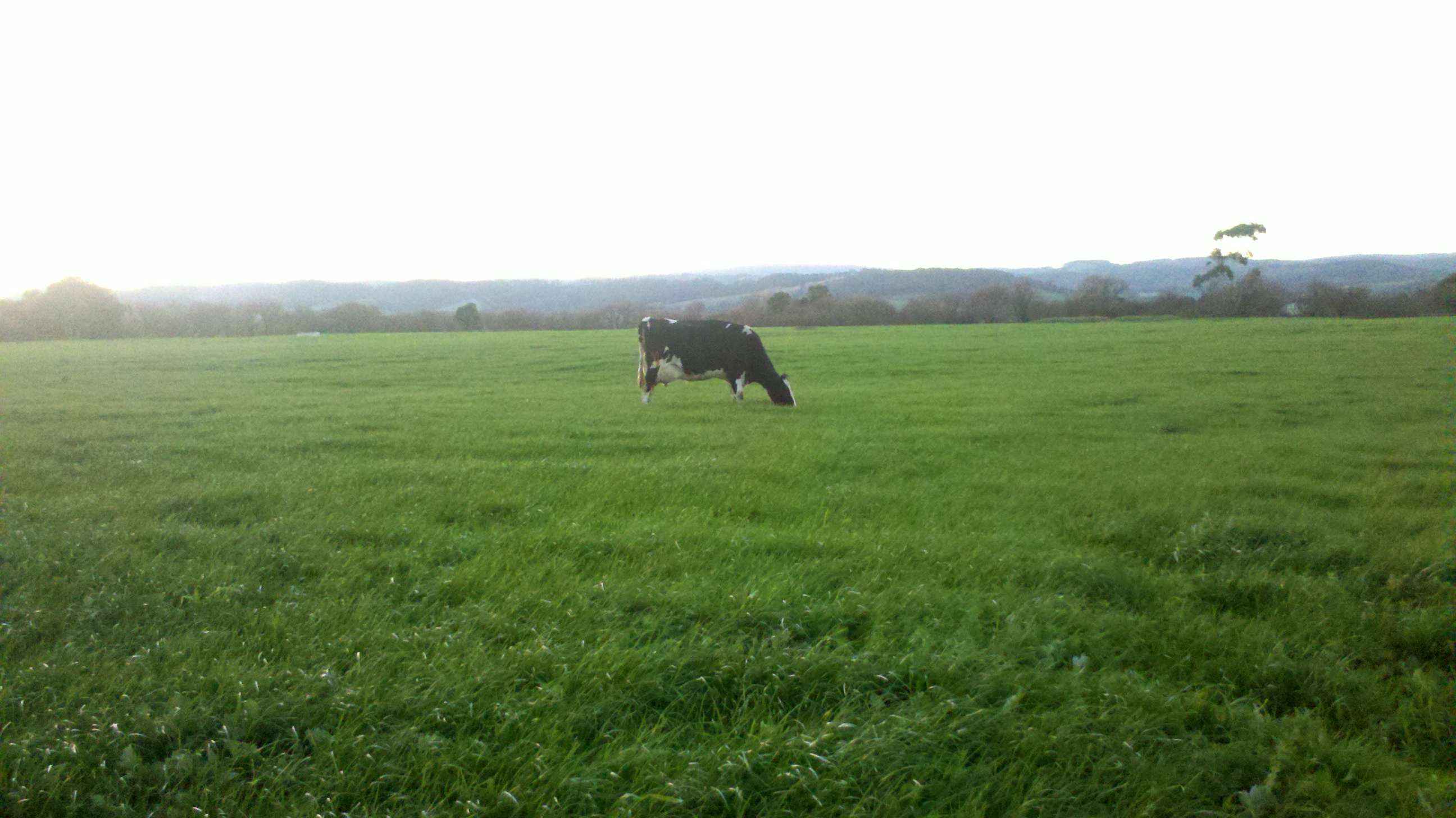
Feeling stressed? Come and sit in the grass with the cows

“What’s so special about that?” asked Zoe. “Nothing, and that’s why I thought we should put it on the blog.”

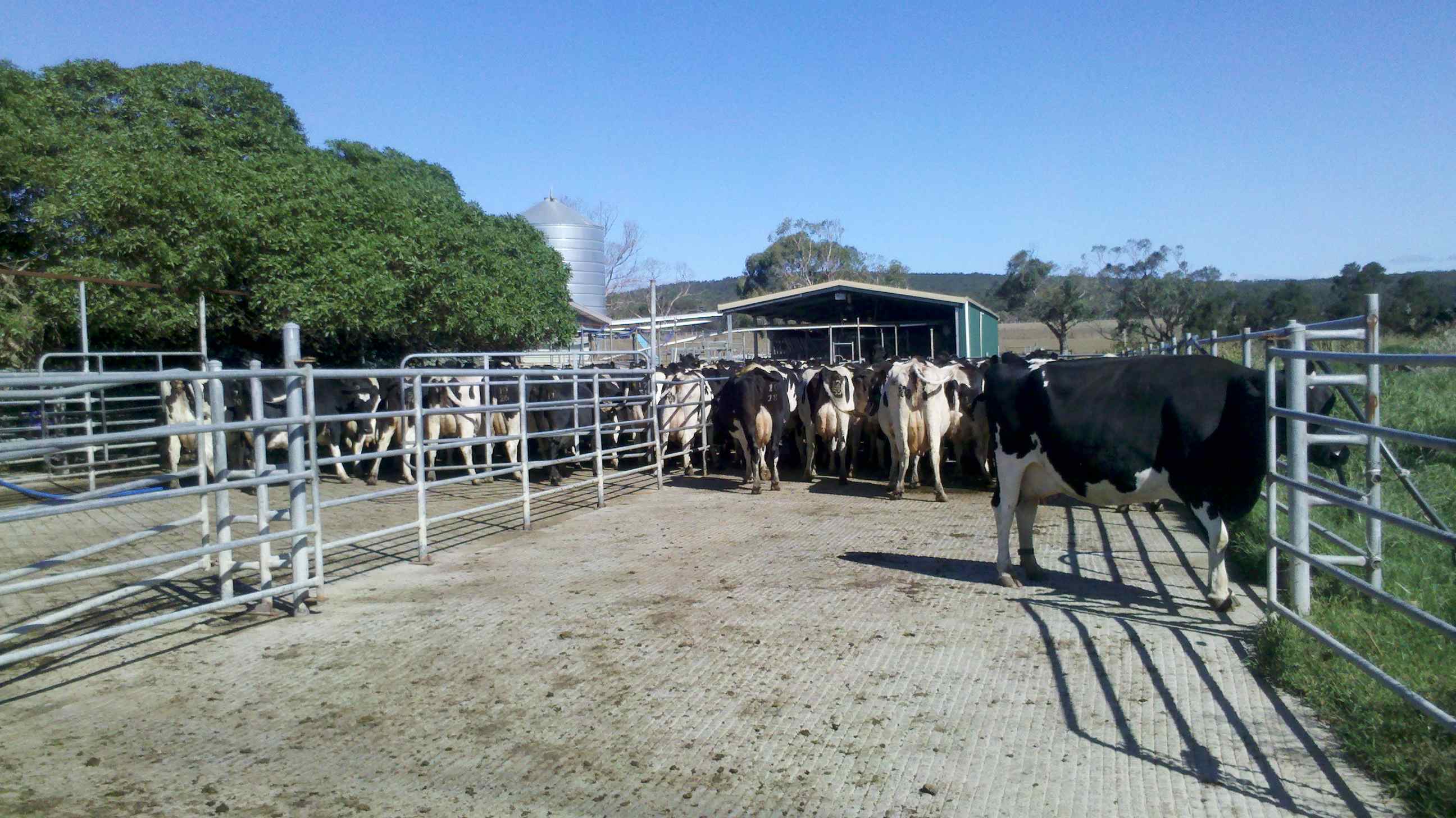
Apart from the twice-daily walk to and from the dairy, this is how our cows spend their time.

You won’t see footage like this anywhere else, I suspect, and certainly not on 4 Corners. There’s nothing sensational about it except perhaps that, right before your eyes, these cows are transforming grass into one of nature’s wonder foods (while wondering what the hell I’m doing sitting on their breakfast).

Dairy delight: silage supreme

The warm sweetness of fermented natural sugars swathed in the aroma of rich plum pudding make gourmet Silage Supreme irresistible.

Last weekend the conditions were perfect for the creation of a few thousand servings of this dairy delicacy.

Today, bunkered down in the office as water rattles down the drainpipes, I thought it was the ideal opportunity to relive the fleeting appearance of Spring by sharing the recipe with you.

So, next time you see cows eating “artificial, plastic food”, you’ll know the truth: it’s gorgeous, 100% pure luscious springtime grass lovingly preserved for a rainy day (or, perhaps, a scorcher).

Ah well, back to today…

WetHibiscus

WetOct

Lovers behind the shelter shed

Lovers

Lovers

I was out shifting fences yesterday when, through the trees along the gully, I heard the tell-tale staccato of furtive lovers nearby. And there they were, in a hidden pocket of the paddock, him licking her flank, she still undecided.

I crept closer to take a snap and uh, oh, I’d been spotted. Like guilty teens behind the shelter shed, the pair straightened up, stared belligerently (if a little gawkily) and wanted to know what I was looking at.

What else should I expect? It is springtime, after all. Isn’t a cow entitled to a little privacy?

A shocking day

Yesterday was a shocker.

After getting Zoe off to school, it was time to do the annual “spring clean” of the fences. The event is triggered by the influx of youngsters into the herd. Every bit as adventurous and bullet-proof as your teenage son, these first-time calvers are new to the dairy side of the farm and love to explore far beyond the allocated paddock of the day.

The result: chaos. Sure, it only lasts a few weeks but, in that time, I could face divorce from a frustrated hubby sick and tired of chasing newbies around the farm. With all that in mind, I head off with the tester to gird the fences against the onslaught.

First stop is the all-important fence around the effluent pond. Nothing. “Not another #@$% battery.” Much muttering.

I’ve broken the farm’s electric fence system up into cells using a cadre of solar-powered energisers so that a single fault cannot bring the whole place to its knees and what I’ve discovered is that the batteries only last a season or two.

I wriggle the connections and ZAP! Well, at least I know it’s working. Test the blasted thing: 9 point bloody 6. No wonder I didn’t enjoy it. Pick up the clamp to attach it to the fence.

ZAP!

“AAAARGH”

“Need…new…clamp”

“What doing, Mama?” asks the little fellow in the Bobcat. “Never mind, Little Man”.

After a bit more spring cleaning, I discover a major fault down by the gully. Investigations reveal a blessed wombat has dug a perfectly good post right out of the ground, collapsing the fence and quite literally earthing it. A steel picket does the job nicely. And we’re up!

Job done, I roar the Bobcat through the gates, leap off and in a few paces find myself shrieking and dancing over a writhing red-bellied black snake.

Fellow dairy farmer, Nick Renyard (@farmer_nick_au) later described this snake as “pretty” but with ashen face, thumping heart and jellied limbs, that was not what sprang to mind a few moments later when the silence was again broken by Little Man.

“What doing, Mama?”

Back on the job and with a paddock selected, it’s time to bring the heavily pregnant youngsters across the road. We crossed that road a total of eight times (four return trips) over the course of an hour before conceding defeat. Young stock like to be driven by pedestrians rather than UTVs but I was tethered close to the machine by Little Man who understandably wanted to be part of the action.

We decided to take a breather (did I mention that low-stress stock handling techniques do not involve inter-spousal shouting sequences?) and let them settle for a couple of hours while we had a think.

In the end, it was Wayne’s brain-wave that saved the day: “Why not just let them run up the road?”.

A cunning plan indeed. Refusing to take the orthodox route along the track past the dairy, the rotters duly ran straight up the road and “escaped” through the road gate into the house paddock. Not there yet but across the road, yesssss!

There was much running, shouting and frantic arm-waving to get the mob of 50 trainees to run under the hot wire into their new home. All done wearing heavy rubber boots through deep mud. This morning, with aching hammies, I think of Cliff Young and marvel at not just the stamina but the ingenuity of the Legend.

What heaven looks like for a dairy cow

Last night I’d just finished setting up a fresh paddock for the cows when the first of our ladies to leave the dairy strolled in.

Black and white bliss

Black and white bliss

I reckon I could have sat on this cow’s back stark-naked playing the banjo for all she cared. She was in a heaven all her own. Her herd mates weren’t far away though and when they saw what was waiting for them…

It’s only the second time they’ve grazed this newly-renovated pasture and they love it. The grass comes with a special type of fungus called the AR37 endophyte, which makes the grass naturally more resistant to pests (with huge environmental gains). Endophytes are nothing new but, traditionally, they come at a cost: the taste test. Cows seem not to like the old endophytes as much and they can even cause health issues for the cows.

AR37, on the other hand, is meant not to have any impact on palatability or cow health and, judging by the cows’ reactions, I’d say they’d give it three Moochelin stars!

Stealing the calf’s milk

There’s an urban myth that dairy farmers rear calves away from the herd so we can harvest the special buttercup-yellow milk that comes with the first milkings after calving called colostrum. The irony is that one of the main reasons we collect calves early is to ensure they get plenty of colostrum.

According to a Dairy Australia fact sheet on colostrum management:

“Unlike humans, the placenta of the cow keeps the maternal blood supply separate from that of the unborn calf. This prevents the transfer of antibodies from the cow to the calf before birth and the calf is born with no ability to fight disease.”

“Colostrum is the substance that provides the antibodies that form the main protection from infectious diseases for the calf in the first 6 weeks of life, until the calf can develop antibodies of its own. Without colostrum, a calf is likely to die.”

What’s more, calves need it immediately, as DA goes on to explain:

“It is important to be clear about two key facts relating to colostrum:
• The calf’s intestine absorbs the large IgG molecules easily straight after birth
• The intestine’s ability to absorb antibodies decreases after birth—it decreases by 30–50 % within 6 hours of birth
• It stops completely between 24 to 36 hours after birth”

Yes, it’s vital to our calves.

We don’t sell a drop of the precious stuff (few farmers do, which is why it’s so expensive) and we’re not allowed to mix it with the rest of the milk because it goes off quickly. “Stealing colostrum from calves” is certainly not why we raise the calves away from the herd.

Changing down to go up a notch

It seemed Mother Nature had played a classic nasty trick on us: the false break.

Each autumn, we take a punt on when the first downpour that heralds regular rains has arrived. Too early and some seed just won’t germinate costing us thousands in fresh seed and fertiliser, too late and we could miss out on autumn growth altogether, costing us thousands in replacement feed.

We get it right most of the time but when the early rains aren’t followed up with more, we end up with the worst of all worlds: seedlings shrivelling in the sun. That’s the way it was shaping up this season until we got 26mm of rain just the other day. Wow, what a relief and what a difference it makes.

The rains have come and the farmer and her cows are ecstatic!

The rains have come and the farmer and her cows are ecstatic!

Oddly enough, this means the cows will get less rather than more grass in the short term. This follow up rain was our signal to pile on the fertiliser across a huge slab of the farm to ensure the grass gets ahead before falling temperatures and longer nights slow growth once more. While the fertiliser does its job, we have to keep the cows away, limiting them to a smaller than normal area for grazing.

Just another couple of weeks to go, moos – until then, it’s a smorgasbord of grain, hay and silage.

This cow cannot take a trick

The last cow into the dairy on Friday morning had Wayne stumped. It had been an uneventful milking, she’d gobbled up her ration of grain for breakfast but, when Wayne turned to spray the teats, there she was calmly sitting underneath her neighbour. No matter what we tried, there she stayed, refusing to budge. This little cow is only five years old, six months in calf and in great health. We didn’t want to lose her.

SheShallNotBeMovedFriday

Sarah the vet was duly called but could find nothing wrong. We figured she’d just slipped and was gathering her nerves before trying to get back up. She didn’t. She wouldn’t, even to follow a tempting trail of wheat.

Mmm, you smell nice

Mmm, you smell nice

When the time for afternoon milking came around, Wayne had to slither her along the platform and then lift her over a fence with the hip clamps. We sat her in the shade with grass, silage and water. She ate well, looked bright and feisty but her legs just wouldn’t work. It was an enormous relief to see her up and about at daybreak on Sunday morning, pushing against the gate to get back with her herd mates.

She still looked a bit tottery yesterday afternoon, so we let her have the afternoon off but felt really confident she was going to be alright.

So when I had to move the cows unexpectedly at lunchtime and saw her being pushed backwards down a slope towards the gully by a big bully cow, my heart leapt into my mouth. With the bully heaving low under her belly, the poor little cow toppled sideways – seemingly in slow motion – into this ignominious position.

UpsideDown

Now, this crazy-looking pose called “dorsal recumbency” is deadly for a cow. I had minutes to get her upright. For emergencies like this, I carry a heavy drag chain in the Bobcat and had her sitting upright again in less than five minutes. It’s a delicate job that has to be done with a lot of grunt and that’s always a risky combination.

Thank goodness, it worked. After some gentle coaxing from me and enthusiastic yapping from Patch, she struggled to her feet and joined the herd. Fingers crossed, little cow.

We’re all individuals: the herd mentality

The Life of Daisy

The Life of Daisy

A quote from the Life of Brian (1979) springs to mind whenever I see our cow ‘Solo’ at the end of the yard:

Brian: Look, you’ve got it all wrong. You don’t need to follow me. You don’t need to follow anybody! You’ve got to think for yourselves! You’re all individuals!
The Crowd: Yes! We’re all individuals!
Brian: You’re all different!
The Crowd: Yes! We’re all different!
Man in crowd: I’m not…

The herd instinct remains strong, even in our dairy cows who’ve been domesticated for thousands of years. It’s so strong that if one cow heads the wrong way during rounding up, we generally don’t worry – she’ll head back to her herd mates anyway.

But every now and then you meet a true individual like Solo. The entire herd faces the dairy in anticipation of breakfast or dinner with the exception of this one member, who, without fail, heads to the north-west corner of the yard and gives everyone else the cold shoulder. She doesn’t want to rush out the gates (as you can see, they’re wide open in the pic above). Instead, Solo likes to poke her nose into the gatepost.

Generally, cows that hang towards the back of the yard are at the bottom of the pecking order, pushed back by more dominant cows eager to get into the shed. That’s not Solo, who’s strong, average-sized for our herd and in her prime. Just a little different, that’s all.