Gracious visitor to the farm

It’s an understatement to call it wet here at the moment. We have a mini-flood across the river flats and the dam is overflowing so last night I started up the siphon again and look who I saw!

White bellied sea eagle

Her Majesty, the White Bellied Sea Eagle, seated on her (or is that “his”?) throne.

Apologies for the photo quality – it was getting dark and the eagle was right in the centre of the dam, which is a big ask of my farm-going point and shoot! To appreciate its majesty, take a look at these photos of the white bellied sea eagle.

I was very lucky indeed to see it. According to a DPI fact sheet, the eagle is very rare here:

The total Victorian population is thought to be extremely low: possibly only 100 breeding pairs survive (R. Bilney pers. comm.). Distribution records indicate two population concentrations – approximately 25 pairs around the
Gippsland Lakes and 25 pairs around Corner Inlet – and a further 50 pairs scattered throughout the rest of Victoria.

The bird is about the size of a small wedgetail, with a wingspan of up to 2.2 metres. Like the wedgie, this one was harassed by smaller birds as she literally took off into the sunset.

Sea Eagle in Flight

Off into the blue yonder

Caring for Our Country requires a team effort

If it takes a village to raise a child, it takes a country to take care of its land.

Our family has set a target of planting at least 1000 trees on our dairy farm every year but we’ve only been able to do it with a lot of help.

  • Greening Australia helped me develop a whole farm plan and funded the refencing of 11ha of remnant vegetation plus 800 trees that our friends helped us to plant.
  • Our local Landcare group provided a good chunk of the funding for fencing off and revegetating a wetland that volunteers from the Victorian Mobile Landcare Group came down from the city and planted with us.
  • The West Gippsland Catchment Management Authority funded kilometres of fencing and thousands of trees along the gully and anabranch, plus connecting wildlife corridors.
  • Again, the volunteers from the Victorian Mobile Landcare Group came and planted 1200 trees for us last year.
  • The Wellington Shire Council funded the planting of trees along the roadside bounding our farm a year ago and has funded more work in the wetland this year.

We are so, so grateful for all this help. Revegetation is an expensive affair that involves a lot of planning and hard yakka. It’s so worthwhile! This is one of the trees planted by Bruce, Chris and David of the VMLG last October.

Six month old tree

The trees will provide wildlife habitats, help to keep the water table healthy, protect our rivers and the ocean and make a small contribution to reducing carbon pollution. They will also make our cows more comfortable in unpleasant weather and enhance the beauty of our landscapes.

With all this in mind, it was a relief to hear that the doomsayers’ predictions of funding cuts to the chief national environmental program, Caring for Our Country, that helps to fund all this work failed to materialise in the federal budget. There are unwelcome cuts (on top of previous cuts) but it is still here.

The positives of being a dairy farmer

It’s one year since I started Milk Maid Marian and seeing as I’ve just finished reconciling our accounts for March, I thought it perfect timing to do the same for my life as a dairy farmer, beginning with the top five positives.

Love of the land
The first one has to be love of land. I am connected to this place and think of myself as its custodian. Just being here is good for the soul.

Farm children have something special
The farm allows me to work with Zoe and Alex, even in those precious early years. The farm’s also a great teacher: respect for work, respect for the environment, animals and nature. They have seen birth, life and death first-hand and I hope they have learned to accept life with good grace yet develop inquiring minds. There’s a palpable sense of responsibility about farm kids that’s matched with the enormous freedoms of farm life.

Working with animals
Cows, calves, bulls and dogs all have their own personalities but none of them play office politics around the water cooler. Because we work with our cows at least twice a day, we get to know and appreciate the characters!

Exercise for mind, body and soul
Farming is not for dummies, lazybones or fragile souls. The challenges are immense and that can be enervating because there is always something new to learn and do.

Knowing that we are making a difference
We produce great, clean, healthy food while looking after our animals and the land. That’s very satisfying.

I’m with Hugh on this one: it’s not fun to kill

I am no stranger to death – every year, just as new calves are born, some old cows must pass away. I am, by necessity, philosophical about it but, still, every loss is felt. Nor can I eat an animal I have known, although I am keenly aware of my own emotional hypocrisy. One thing I am clear about, however, is that I will never kill for fun.

I don’t understand duck season. If I were to fire endless shots at stampeding cows from a hundred feet or more away, I would be rightly condemned for animal cruelty. Why is it so different with birds?

Ducks

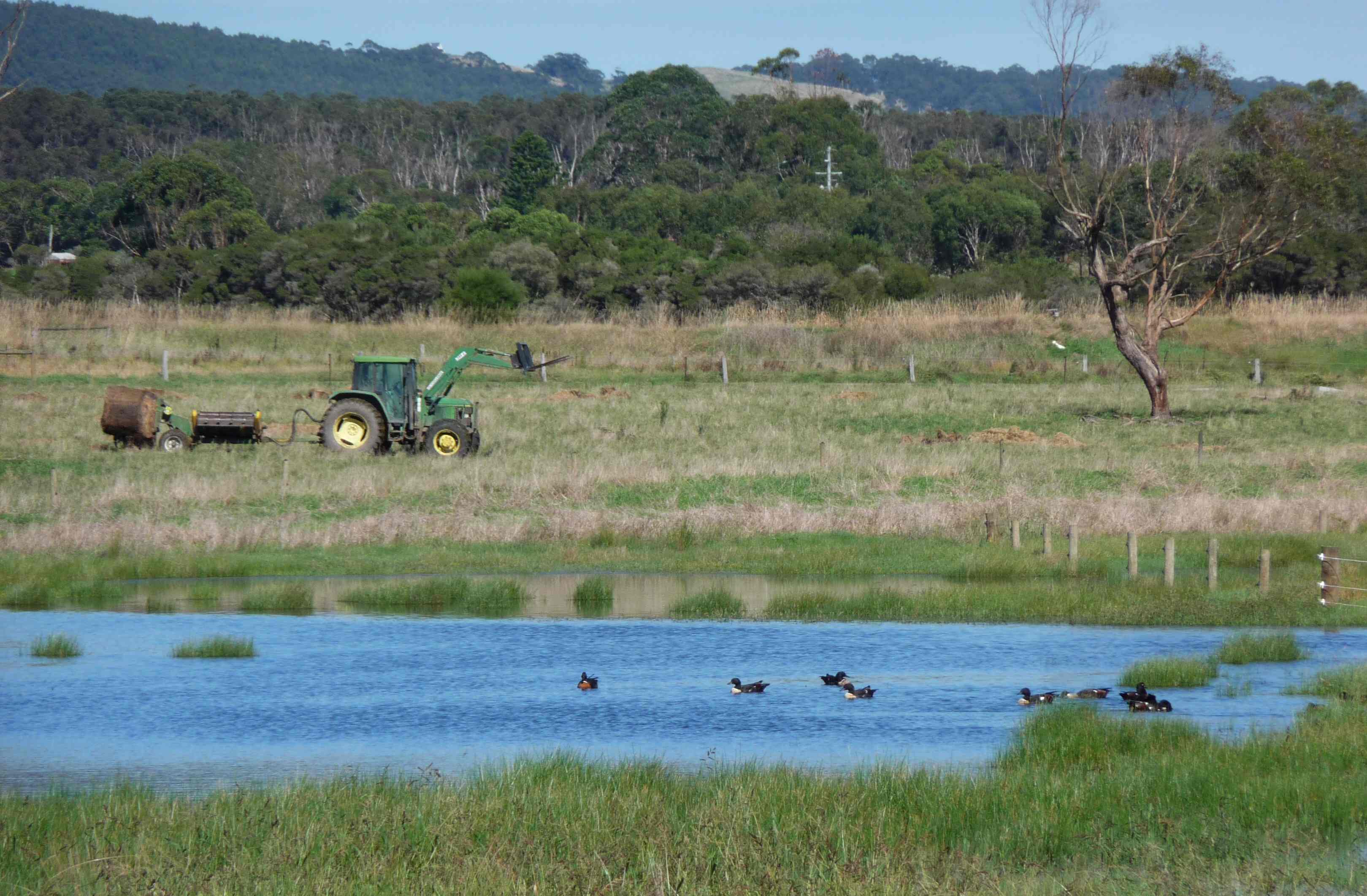
Australian Shelducks

This Spring, we’ll be creating another permanent sanctuary for our bird life on the farm with the assistance of the Shire of Wellington, which has provided a grant for the fencing and trees (thanks Andrew!). This paddock will be broken into three pieces: the wet centre will belong to the birds while the higher, drier sections will be amalgamated with neighboring paddocks.

I’m a greedy parent

I’m something of a greedy parent. I want my children to be strong but gentle, thoughtful yet bold and big picture thinkers who care about the small stuff (maybe Zoe will one day point her shrink to this post as evidence).

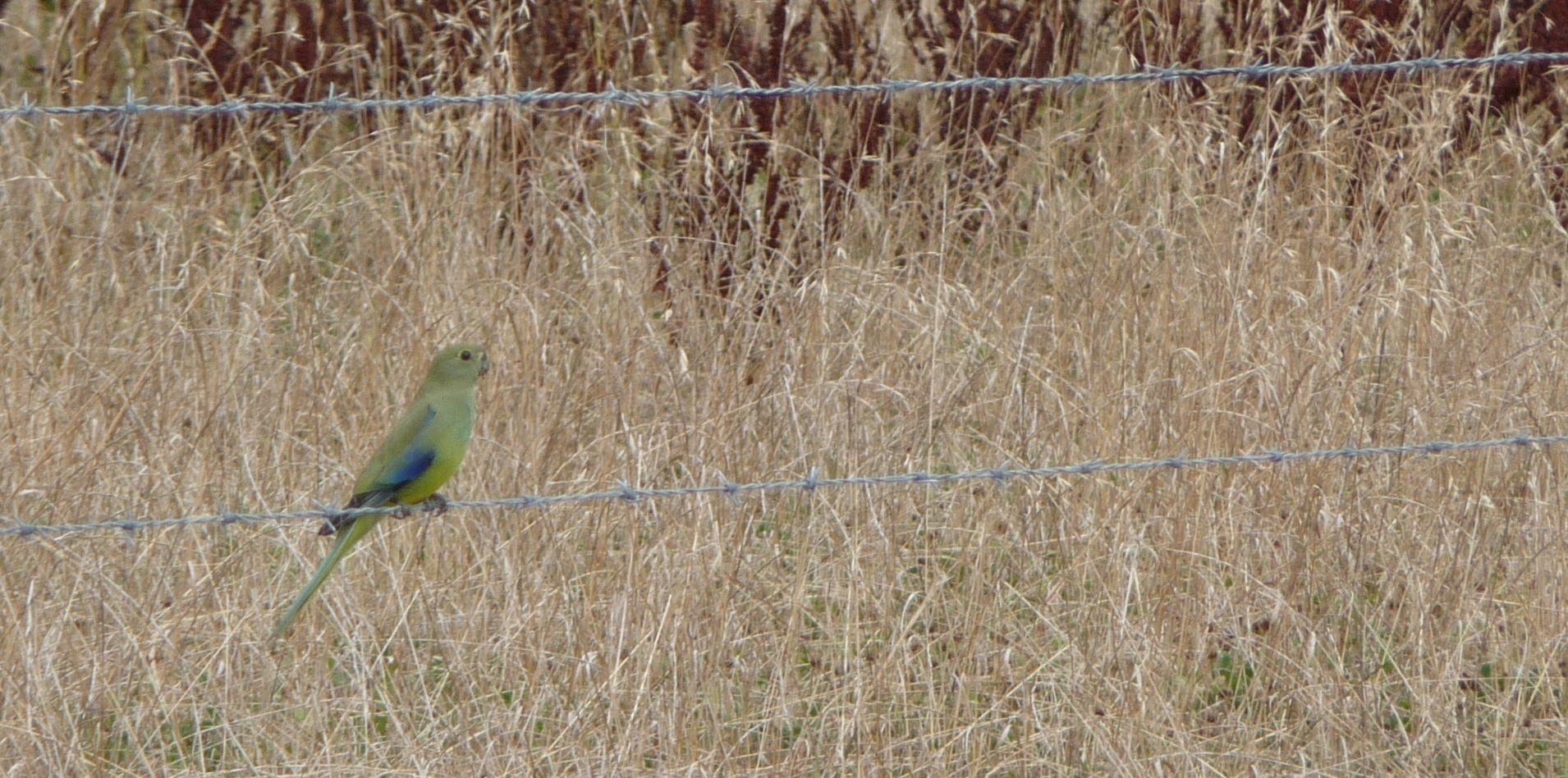
Blue winged parrot

The critically endangered orange-bellied parrot?

I’m a fairly excitable type and nearly crashed into a fence post when I saw this little bird and its mate on the farm because I had only that morning read this description of just such a bird by the Parrot Society:

“Australia’s Orange-bellied Parrot can be ranked with the Giant Panda, Whooping Crane and Siberian Tiger as amongst the rarest and most endangered of the Wildlife. Only 100 to 200 individuals still exist.”

I managed to snap a pic before the timid pair flitted away and breathlessly told the Little Farmer how lucky we were to see it. As an idealistic 20-something, I even trudged through the mangroves down near Wilson’s Prom in a fruitless search back in the 90s.

Having turned to Pizzey’s Field Guide to the Birds of Australia though, my excitement evaporated. I think instead, we have slightly atypical blue-winged parrots. Lovely and thankfully, in good numbers.

Just as Berenson’s Father Bear’s stuff-ups were the makings of a great Baby Bear, though, I hope my enthusiasm counts for something in the parenting stakes.

A most unlikely frog habitat

An automatic wash system keeps our milking machines spotless and hygienic. A series of warm, hot, hot and cold water cycles swish through all the stainless steel night and morning, carrying with them powerful alkali and acid detergents. Milk is very sticky stuff and we need to keep the pipework clean for high quality milk and to look after the health of the cows.

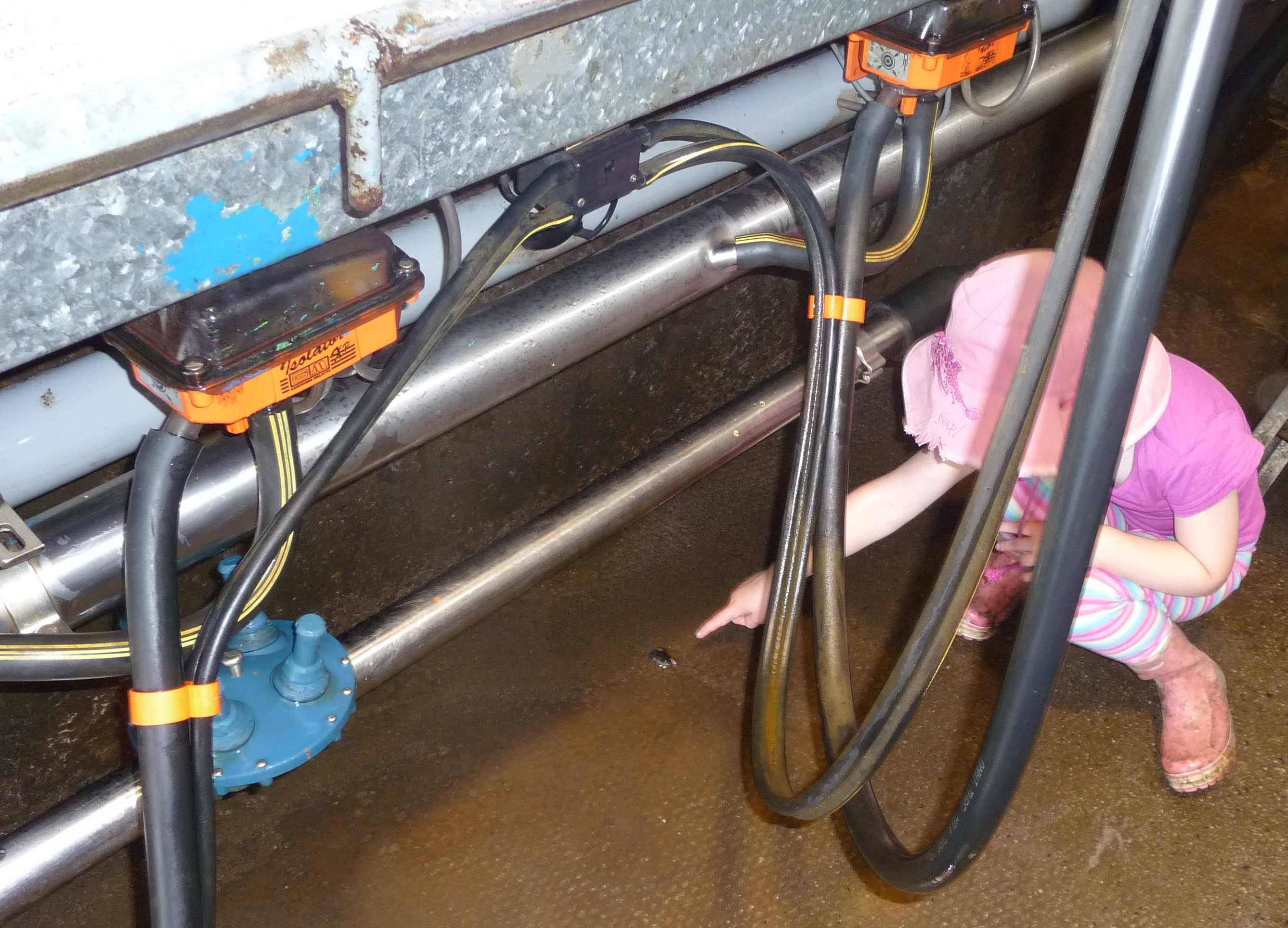
At the same time, we are all told that frogs are one of the first creatures to succumb to chemicals in waterways. The dairy pit, then, must be the most unlikely of frog habitats yet Freddy and Freda call it home.

Frog habitat like you've never seen it before

Frog habitat like you've never seen it before

Freddy and Freda are long-term residents of the dairy and make a journey from under the milk receival can at the north end of the pit to a dark spot under the steps at the south end as milking progresses. If anyone can tell me a little bit more about these tiny little frogs, please do!

Freddy frog

Freddy and Freda blend in beautifully with their concrete habitat

Left behind in the dust

The farm in February

Still looking green

It’s at this time of year that three distinct classes amongst dairy farmers around here become clear for all to see: the lax, the leaf counters and the irrigators.

The beautiful green pasture seen from our verandah is something of an illusion. Take a closer look and it’s sparser than it was just a few weeks ago when we were squirelling away silage. More importantly, it’s growing at about a third of the speed. In contrast, the irrigators are powering along, growing feed as fast as ever.

Why don’t I irrigate then, you ask? Because I cannot. There is an indefinite moratorium on new irrigation licences for the aquifer that flows beneath our farm because it is dropping unsustainably. According to a report by the Department of Sustainability and Environment:

“Levels of groundwater extraction from the Latrobe Aquifer, in Gippsland, are well in excess of annual recharge. Monitoring of groundwater levels indicates that, as a result, there has been a regional decline of approximately 1 metre per year over the last 30 years (SKM, 2004). It is forecast that this rate of decline will continue for at least the next thirty years.”

Ironically, that’s not because too much water is being used by farmers.

“Whilst detailed estimates vary, the proportions extracted by different users are estimated to fall into three broad categories (Hatton, 2004, Fig. 1):

  • 85,000 ML from oil and gas production in the Bass Strait;
  • 25,000 ML for coal mine stability purposes in the Latrobe Valley; and
  • 10,000 ML for irrigation and industrial purposes…”


Other potential impacts of the coal, oil and gas production are alarming. The report discusses potential land subsidence, sea water intrusion, reduced stream flow and running out of groundwater altogether.

The Australian and Victorian governments have established multi-million dollar assistance packages for irrigators but the rest of the community appears to have been left high and dry.

Something to make the heart sing

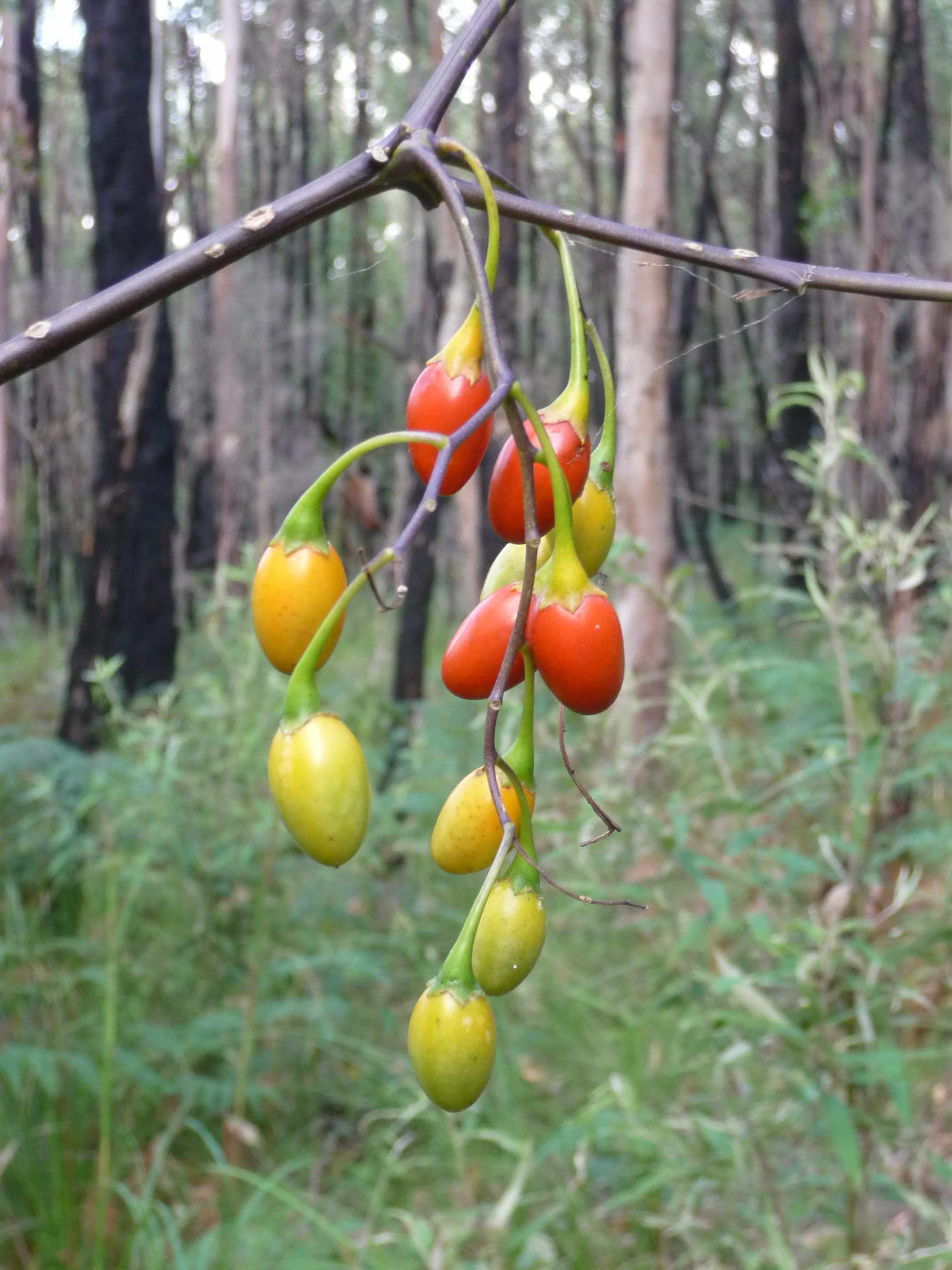
Kangaroo apple berries

One of our "Summer of Zoe" discoveries

This is officially “The Summer of Zoe”. As my dear little farmer starts school tomorrow, I have begun taking her further and further into the forest that bounds our farm to celebrate her launch into the big, wide world.

She has found herself entranced. Secret paths lead from farm to forest, amazing creatures present themselves and the bush smells wonderful.

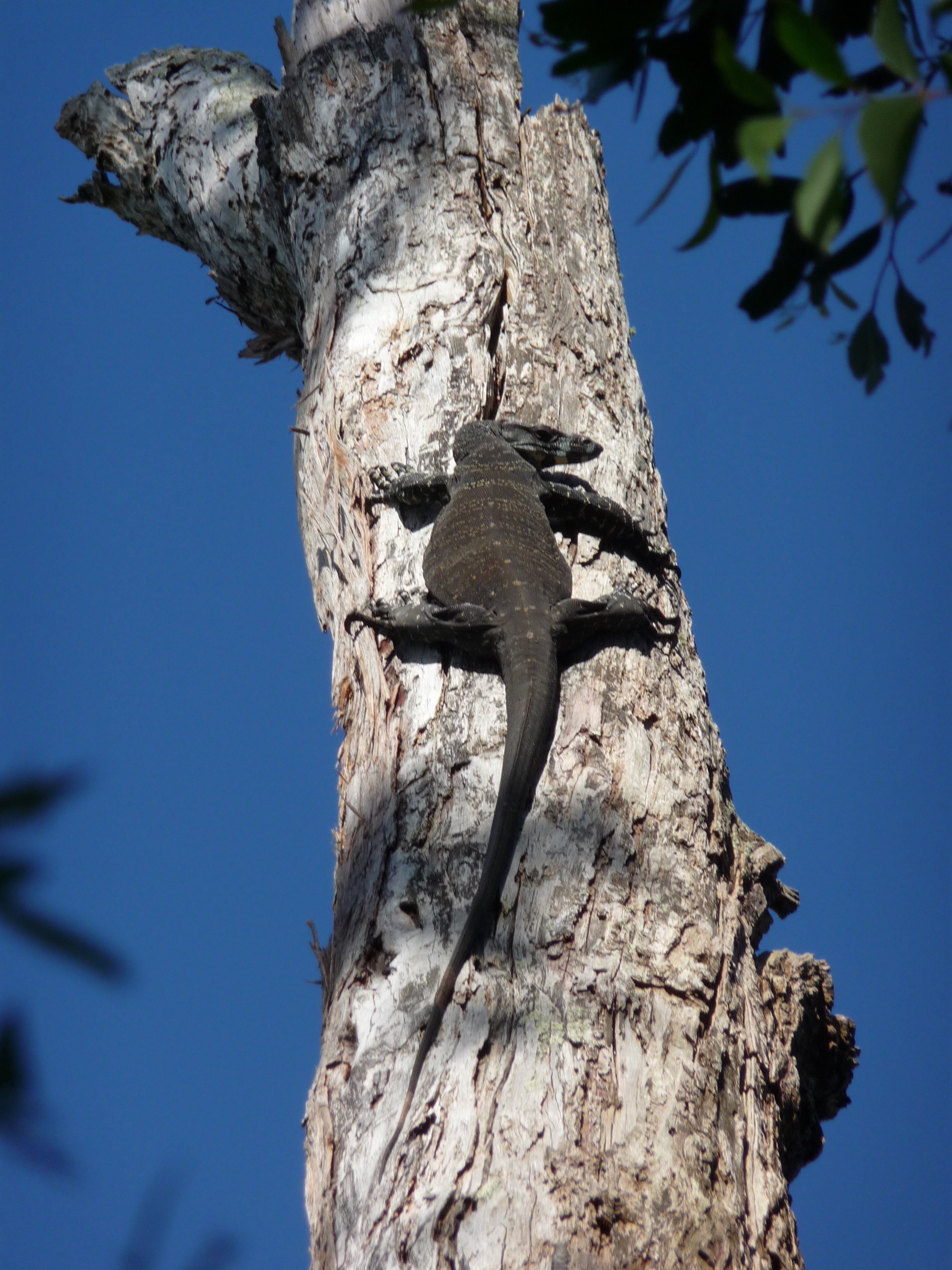
Goanna

An inspired Zoe even made her own goanna video

Somehow, Zoe senses this is a rite of passage. She volunteers that, one day, she will show her own daughter the ways of the forest and then says “You are beautiful, Mama, and I will never forget you”. She hasn’t yet waved goodbye from the school gates but I am already missing my wonderful little soul mate.

Our green investment already begins to grow

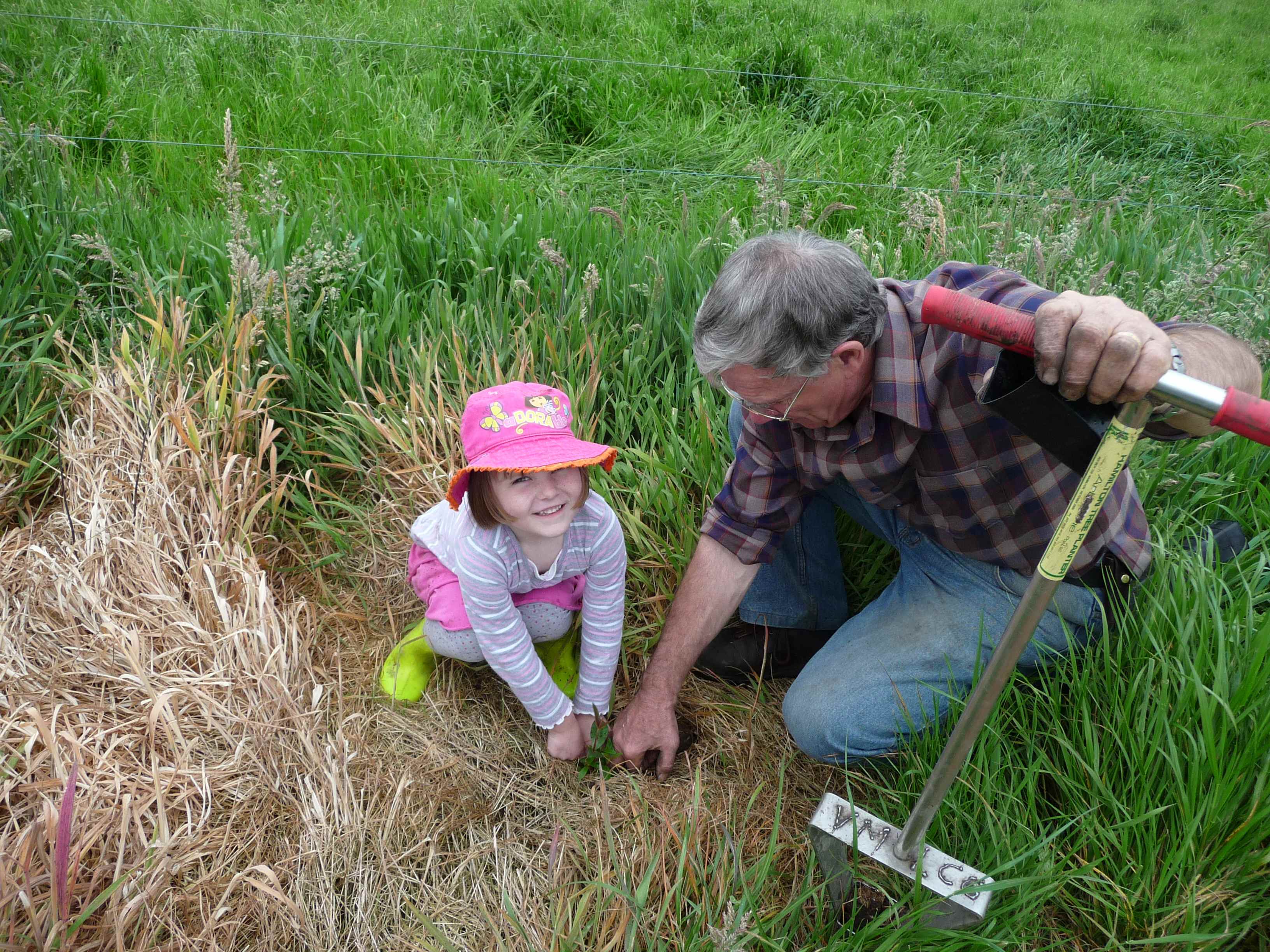
Bruce and Zoe planting in late October

Bruce and Zoe planting in late October

Young tree powers away

The next generation is looking good!

Just eight weeks ago, Bruce, Chris and David of the Victorian Mobile Landcare Group helped us plant 1200 trees. Yesterday, Zoe and I were staggered and delighted to see how much they’d grown.

Planting trees is always a bit of a gamble and the wet year had delayed their planting, which added to the risk they’d perish. Of course, it’s only the start of summer and they’re not out of the woods yet (dreadful pun, sorry) but what a great start they’ve had.

Thanks again, Bruce, Chris and David!

PS: I had to edit this – I meant 1200 trees, not 800! We were given 400 more at the last minute!

A prickly character on farm

Dairy farms are great places to teach kids a love of – and respect for – creatures of every kind.

We are really privileged to have acres of beautiful bush on our farm and we come across all sorts of creatures – even the threatened goanna. One of the cutest but least cuddly is the echidna and the forest has thousands of these little ant-eating waddlers.

An environmentalist once told me that she builds connections with farmers via birds because they are the most visible fauna on a farm but it’s the far less glamorous and more timid creatures that make an ecosystem. This was brought home to me yesterday when one of the shire’s environmental staff visited to assess the farm’s potential for green projects. One of the criteria was whether the farm is home to threatened flora or fauna. Apart from the goannas, I really don’t know, and that’s a shame.

I hope my children will indeed learn so much more than I’ll ever know about our wonderful world.