The negatives of being a dairy farmer

It’s time to balance yesterday’s post about the five upsides of being a dairy farmer with the three big downsides. I’m not whingeing – I have consciously chosen to be a dairy farmer – but nor am I going to beat about the bush because the issues are too serious to sweep under the carpet.

Piggy Bank

Sadly, almost all of the negatives about dairy farming come down to money.

Financial stress
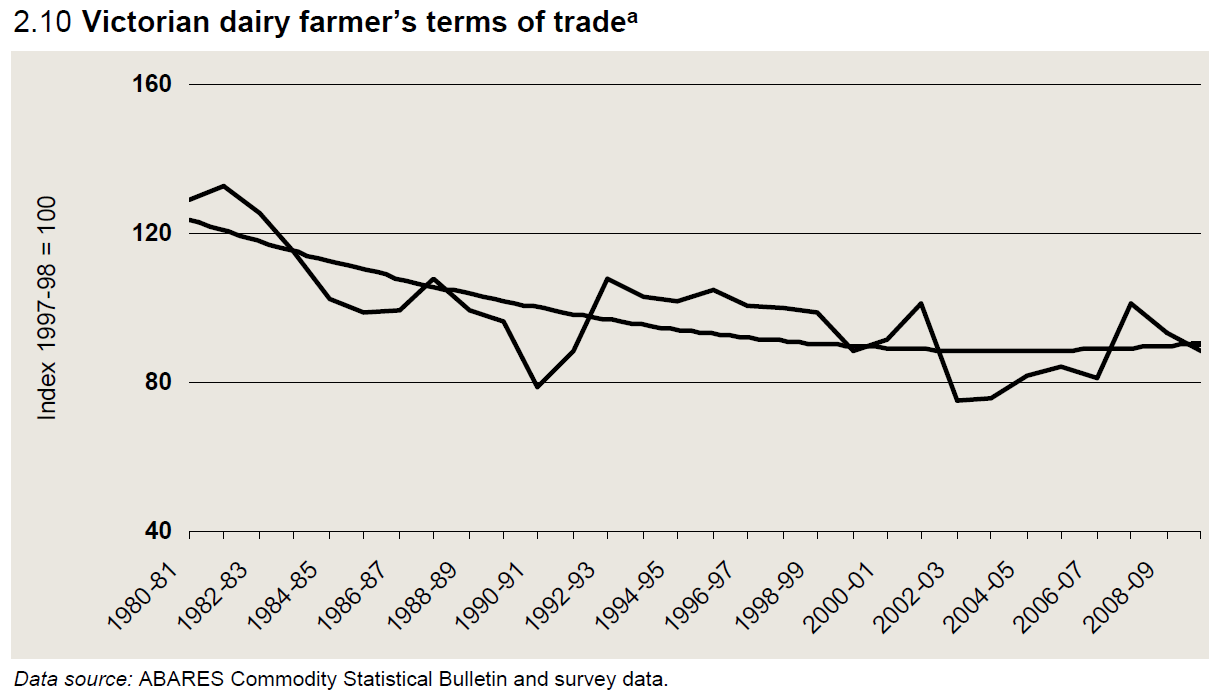
Dairy farmers are finding it harder and harder to make ends meet. When I was a teen, it was far easier as the terms of trade chart below shows.

Terms of Trade for Victorian dairy farmers

Not a pretty picture for dairy farmers

Basically, our standard of living has been cut by a third since the 1980s despite skyrocketing productivity.

High workload
Dairy cows are milked twice a day, seven days per week, and if you can’t afford to employ people, you need to work seven days per week, too. You start before dawn and generally finish after sunset.

Unless you have the money to pay someone to look after the farm, you also miss out on holidays.

A dangerous place to work
The many tasks and unpredictability of animals make farms among Australia’s most hazardous workplaces. Because they are also homes, farm injuries and deaths tragically include children. If you don’t have enough money to pay for assistance, again, you’re more likely to attempt jobs that should be left to skilled people with the right gear.

Aside from the risk of physical injury, the stress of farming with low incomes and at the mercy of Mother Nature can be pyschologically devastating. Farmers are around twice as likely to end their own lives with suicide than other Australians. Farmers are resilient but we are human.

The positives of being a dairy farmer

It’s one year since I started Milk Maid Marian and seeing as I’ve just finished reconciling our accounts for March, I thought it perfect timing to do the same for my life as a dairy farmer, beginning with the top five positives.

Love of the land
The first one has to be love of land. I am connected to this place and think of myself as its custodian. Just being here is good for the soul.

Farm children have something special
The farm allows me to work with Zoe and Alex, even in those precious early years. The farm’s also a great teacher: respect for work, respect for the environment, animals and nature. They have seen birth, life and death first-hand and I hope they have learned to accept life with good grace yet develop inquiring minds. There’s a palpable sense of responsibility about farm kids that’s matched with the enormous freedoms of farm life.

Working with animals
Cows, calves, bulls and dogs all have their own personalities but none of them play office politics around the water cooler. Because we work with our cows at least twice a day, we get to know and appreciate the characters!

Exercise for mind, body and soul
Farming is not for dummies, lazybones or fragile souls. The challenges are immense and that can be enervating because there is always something new to learn and do.

Knowing that we are making a difference
We produce great, clean, healthy food while looking after our animals and the land. That’s very satisfying.

Hail and hearty on the farm

Angry anvil clouds appeared above the ranges all through yesterday, sweeping rain up into the skies and pelting it down again with icy fury. In between were the most heavenly though frosty blue skies. As the day wore on, these glorious intermissions grew longer and we seized the opportunity to round up in the sun (albeit with at least three layers of clothing on).

With the cows yarded, we set off to open the gate to their new paddock. Just like the unfortunate Mr Gumpy, however, we were out in the middle of nowhere when the skies turned black.

As hailstones the size of garden peas stung our faces, Patch leapt from the back of the Bobcat onto my shoulders. Zoe buried her head in her coat shouting “It’s raining ice!” while Alex squirmed in his carrier under my layers of shirts and fleece. Our beanies were still in the tumble dryer after an earlier downpour and the hail was merciless.

But it was fun! Zoe began to laugh and so did I. Farm life is like that. It builds resilience and a sense of, dare I say it, dry humour.

To the victors flow the spoils

To the victors flow the spoils

Dad always said: “Happy is he who appreciates what he has” and I think it’s very good advice.

Herd meets hound

Our dairy cows are used to being rounded up morning and night, seven days per week and love routine. They amble in at a very leisurely pace at about 1.5 to 2km an hour. This is frustratingly slow if you’re in a hurry but it’s great for their well-being.

Now, we took Patch out with us (tied up in the back of the Bobcat) to round up the cows for milking last night. As soon as we got to the paddock, he decided to bark in a very commanding fashion and I had to growl and rap him on the nose. Ignoring my warnings, he barked again. It was then that the herd decided to take control.

Took moments for Patch to get the message, sit down and stay quiet. Took a long time to get the cows heading in the right direction. I suspect today Patch will be a better dairy dog.

Meet Patch the pup

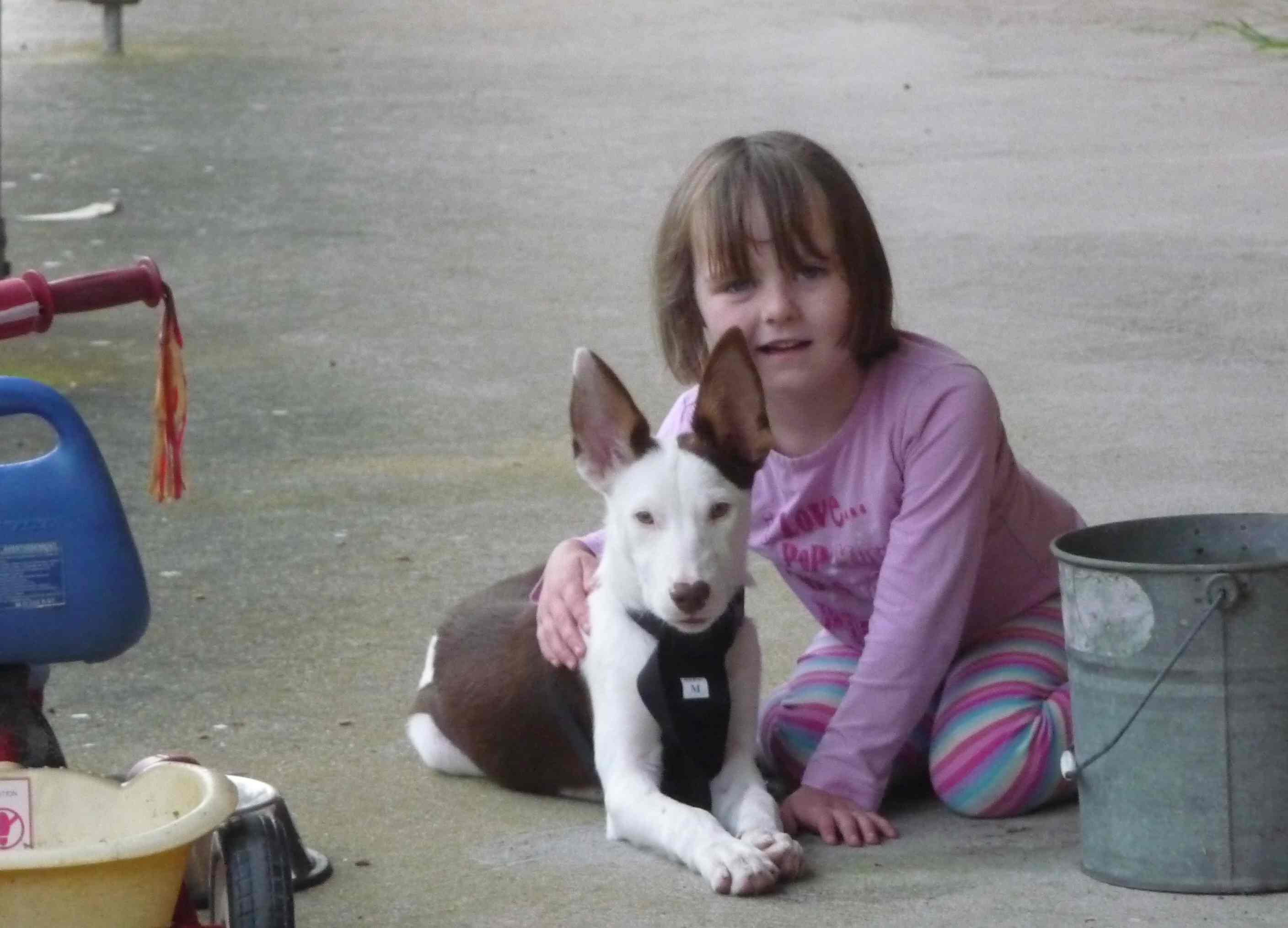
Zoe and Patch the pup

Patch and Zoe get to know each other


A new character has joined our farm crew! Patch (the pup formerly known as Buckley) is only five or six months old but he’s a very clever little fellow. In just one day, he’s already managed to scale the eight-step ladder up to Zoe’s cubby, been for a ride in the Bobcat and learnt (or remembered) to heel on a leash.

With Kelpie blood flowing through his veins, Patch loves to run. We expected that. What took us by surprise was this pup’s sense of calm. He nodded off less than five minutes after hopping in our car for the first time and seems completely unfazed by Zoe’s antics.

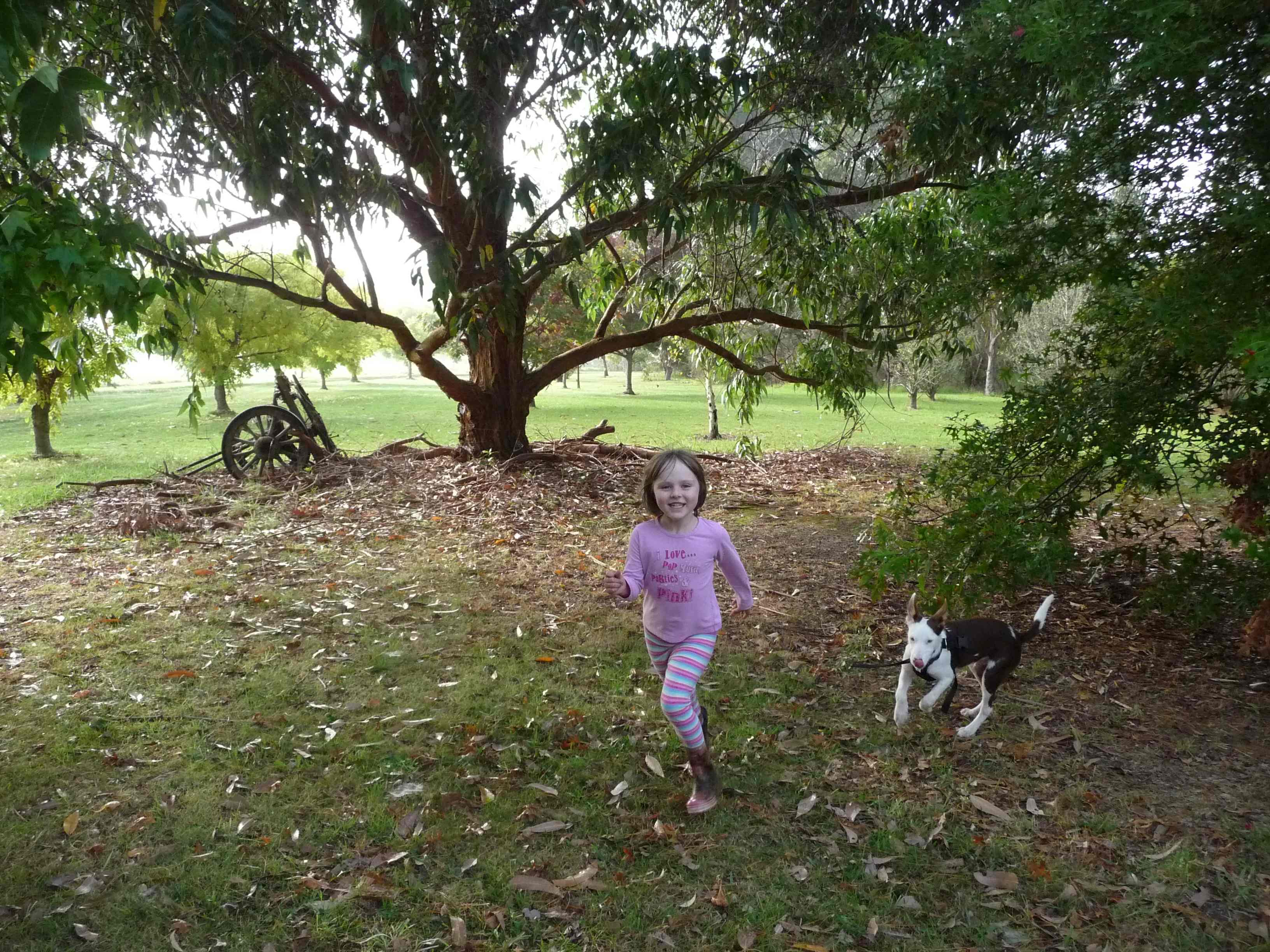
Zoe and Patch on the tear

Finally, someone who can keep up with me!

It’s a new start for Patch, who was left at a pound just a few weeks old and rescued by the volunteer foster carers from Homeless Hounds.

Surfing the net at http://www.petrescue.com.au can be an emotional experience. There’s Sascha, the reluctantly surrendered tradies’ dog who can bark Happy Birthday, the pair of dogs who minded their owner’s body for three days until he was found and dozens more that I would love to bring home. I really can see how people end up with mobs of rescued dogs.

New season has us rushing around like squirrels

It’s autumn and our dairy farm is buzzing with activity before calving starts and winter sets in.

We have sent about 50 cows off to the other side of the farm for their annual two-month holidays. Before they go, they are given long-acting antibiotic therapy and teat seal to reduce the risk of mastitis when they calve.

Dry cows go on holiday

"Yay! Holidays!"

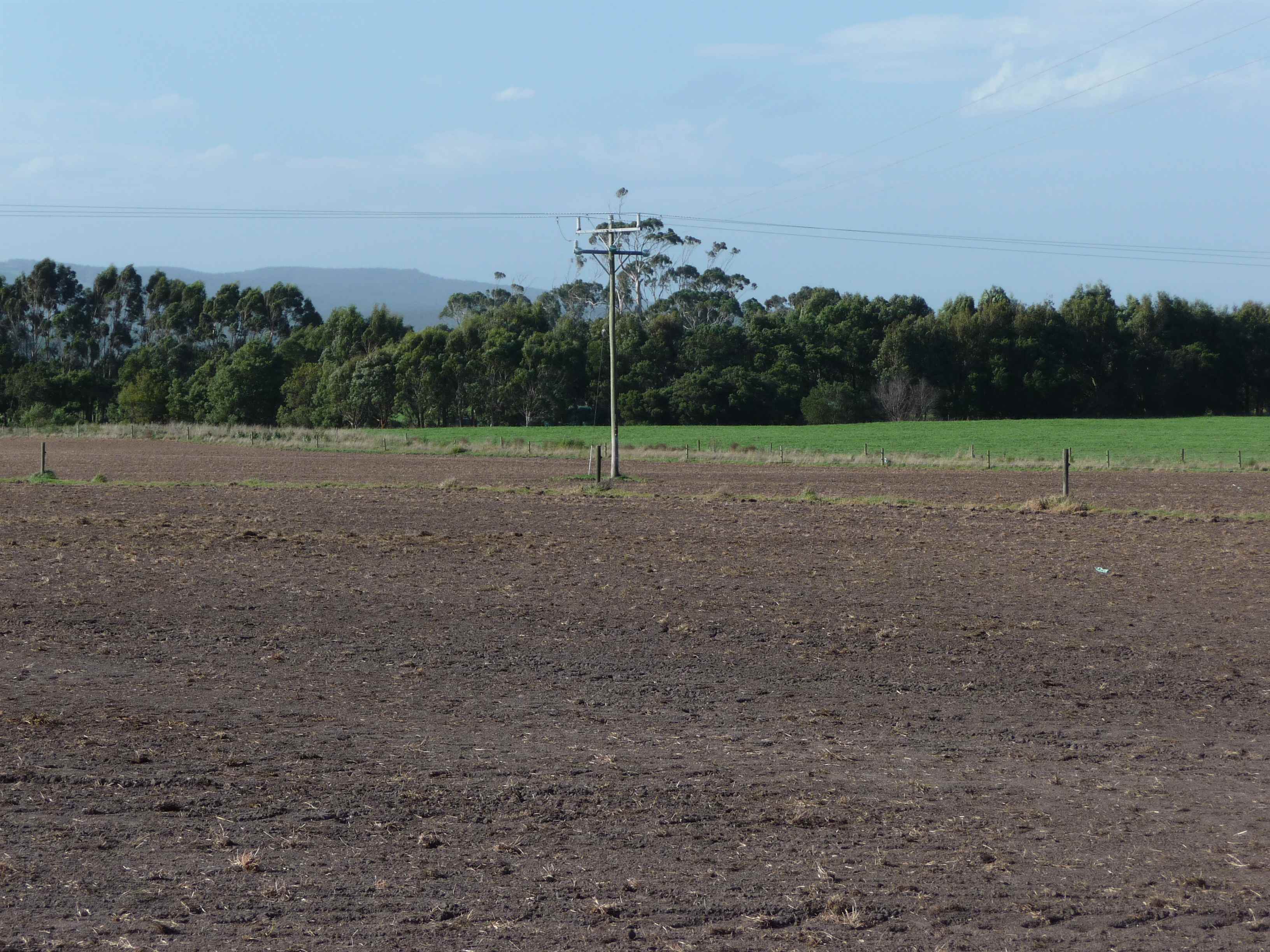
New pastures have been sown. Those (like this one) that were too rough have been fully cultivated with discs, power harrowed and rolled. This paddock has also had lime because its pH needs to be lifted a little higher. I’ll keep a photographic log of the paddock’s progress.

Newly sown paddock April 1st

Here it is, one day after sowing on April 1

We’ve invested in new stone and gravel for sections of the cow tracks and gateways.

New gravel

La la lush new gateway gravel!

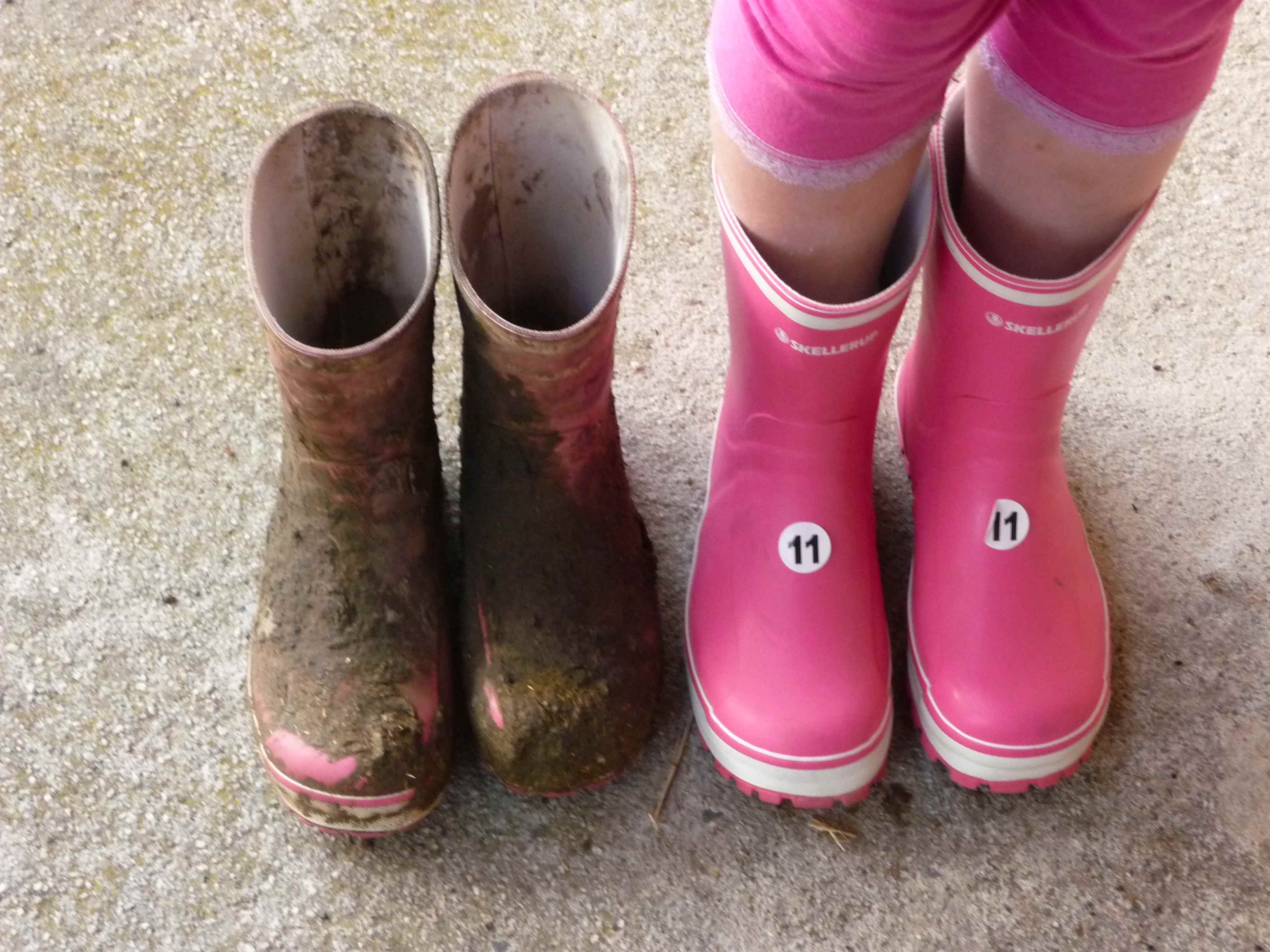
And, last but not least, a new pair of boots.

New rubber boots

How long 'til the pink turns khaki?

By the way, how do you know when your boots are too tight (especially when they were too loose the day before)?
“When you can’t do what you used to do with your boots.”
“What’s that, Zoe?”
“Put your big toe on top of the toe next to it.”
Obviously!

I have a rule that I never reblog. This post from CH Dairies Diary is so interesting I just had to break it…

Lynne Strong's avatarClover Hill Diaries - Join Me and Be the Change

Todays post is by guest blogger Dr Neil Moss our farm consultant and one of the great team of experts who shared their vast experience and knowledge with the participants at our recent Field Day

Neil shares his field day banter with you ……….

One of the great privileges of working in dairy consultancy is being able to observe and collect innovations and exciting ideas from successful farmers in one location, and then mould, adapt and apply these to a wider variety of situations with other farmers that are also willing to innovate and try new things.

Dr Neil Moss and Dr Richard Eckard share the benefits of planting legume pastures with Field Day particpants

Dr Neil Moss points out the stoloniferous habits of some his pasture

Our recent field day at Lemon Grove Research Farm was a great example of just this concept. For many years I have been working together with clients on their farms  developing pastures that break away from the norm and start to…

View original post 978 more words

From one farmer to the next

I have no idea whether Zoe and Alex will be farmers but I’m quite sure my father was surprised when I fought to keep the farm in the family after he became gravely ill.

I’d been given a great education and had built a thriving two-person little business that fitted in perfectly with a new baby. He’d decided I was better off not farming and told the lawyer drafting his will that he was going to sell the farm. The thing is, rationally, he was right: I was much better off financially than I am now or am likely to be as a farmer. What Dad had forgotten to factor in was the call of the land.

Life on the land gets in your blood and I’d always wanted – no, expected – to come back to the farm when there was room for me.

Now that I am here and have children of my own growing up on the farm, I sometimes wonder whether they will feel the same pull. Maybe they’ll simply look back happily on a wonderfully free, healthy childhood and move on. Maybe they’ll want to farm. I hope they have the choice.

I tuck little bits of money into share portfolios for Zoe and Alex here and there to build an understanding of the way money works and nest eggs that will free them to hatch their dreams one day. That’s the big picture. Then there’s the little things, like creating digital farm maps and records.

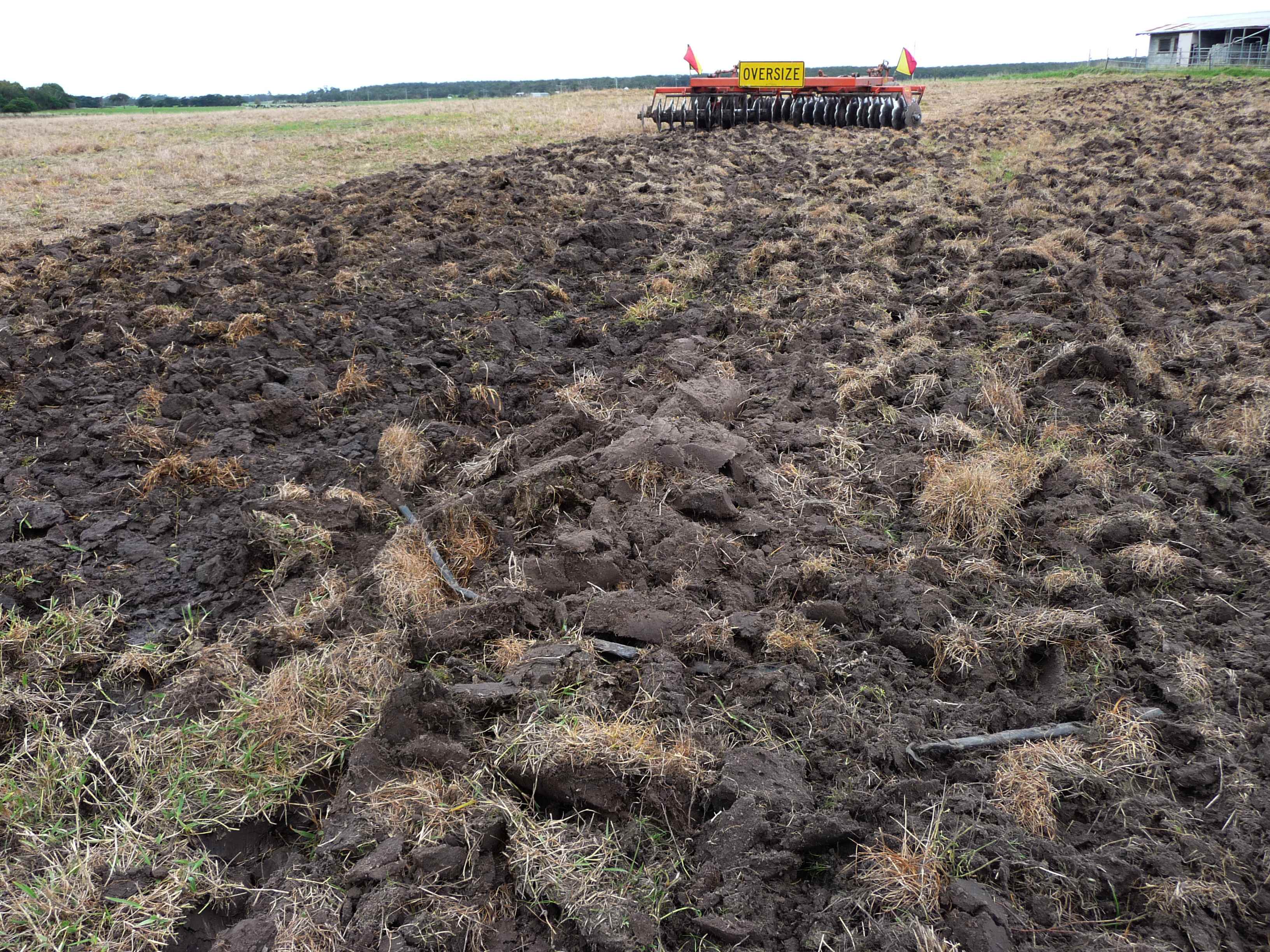
The importance of maps was hammered home just the other day, when I got a call from Wayne, our sowing contractor, just as I was feeding Alex his dinner and while Zoe and my Wayne were out at a piano lesson. The plough had located (chewed up, that is) a water pipe I didn’t even know existed.

Ploughed up pipe

Agricultural archaeology


The water started off as a trickle but soon became a spectacular three-foot-high in-paddock fountain. The break was at the furthermost end of the paddock from the pump and I knew that more ploughing would only mean endless fountains unless I could find the start of the pipe. A hopeless situation, especially at 5.30pm.

In the end, I decided to pretend I was Dad. I stood at the break and looked north in the direction of the river pump. Decided an old blackwood tree on the bank of a gully would be a natural spot for Dad to have a joiner and went for a walk.

Pipe in the Gully

Thank you, Dad!

Dad was a little eccentric but I knew him well. Went to work with a garden saw to get to the joiner and voila, one end cap and some mumbled swearing later, all fixed!

Not a moment too soon

Not a moment too soon

Got back to the house just as the sun was setting and Alex was totally over it but the troughs filled, a quagmire was averted and I smiled a little smile for Dad.

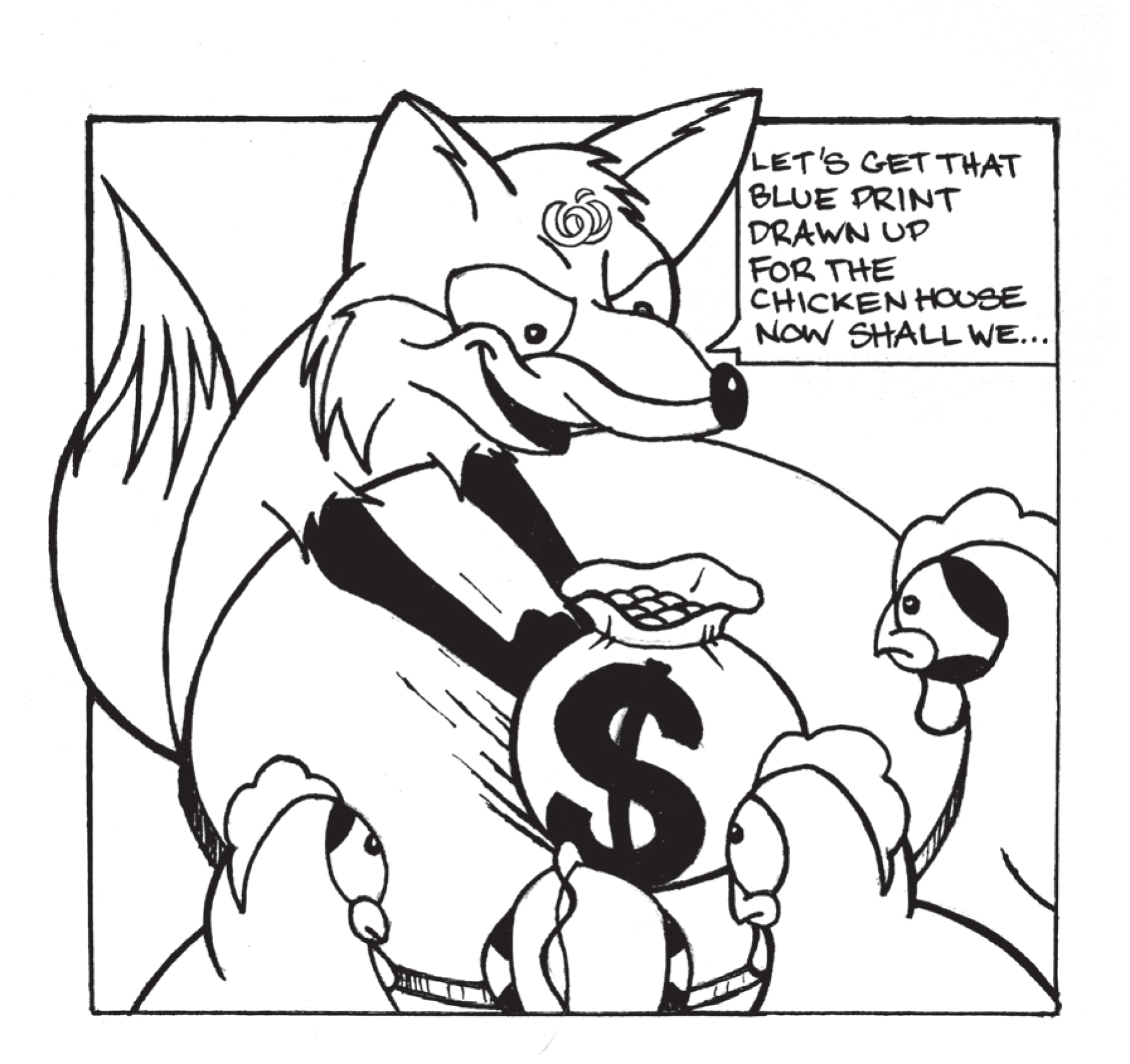
Cranky questions for the NFF about Woolies and the Blueprint

The NFF has “welcomed a new major partner in the Blueprint for Australian Agriculture: Woolworths”. Yes, one of the two giant supermarket chains that has slashed the value of milk to less than that of water is now helping to chart our farmers’ futures. My future, my children’s futures.
"It’s a matter of funding..."

In a media release, NFF president Jock Laurie said: “Having Woolworths on board will ensure that what consumers believe are the key issues for Australia’s food producers are captured in the Blueprint”. I felt betrayed. After the red mist settled, I wrote a list of six cranky questions and called the NFF. Admirably, the NFF’s Ruth Redfern has responded.

Would love to hear what you think! You can also participate in the Blueprint at http://www.nff.net.au/blueprint.html

1. How do you anticipate farmer reactions will be to Woolworths’ involvement as a “major partner” in the Blueprint for Australian Agriculture?
We hope that farmers see Woolworths’ involvement in the Blueprint as positive. From our perspective, having Woolworths on board as a partner means that we can reach more farmers and more people in the supply chain with what we believe is a very important project.

Importantly, being a partner in the Blueprint does not mean that Woolworths has any more input into the outcome than any other single participant in the process. They have the same amount of input and the same opportunity to contribute as you do – so if you’re a farmer or anyone else with an interest in, or involvement with agriculture, and you haven’t attended a Blueprint forum or completed the online survey yet, please do so – as the more input we get, the stronger the outcome will be for our sector.

2. What is the rationale for such high-level involvement of Woolworths?

Having Woolworths (and Westpac, our other major partner) on board will allow us to take the Blueprint to as many people as possible. It’s a matter of funding – running a project like the Blueprint requires money, and as the NFF is a not for profit organisation, we couldn’t do this without support. By sponsoring the Blueprint, Woolworths and Westpac are actually putting money back into agriculture by supporting a project that will help us achieve a strong and sustainable future.

The important thing is that the agricultural sector makes the most of this opportunity. Blueprint is about giving everyone that has an interest in agriculture the opportunity to say what they believe the sector should look like in the future, and what we need to change or do now to get there. If you don’t contribute, you’re missing the chance to say what you think our future should be, or to raise the issue/s that are of most importance to you and/or your business.

3. Has Coles been invited to participate and, if so, what has been its response?

Earlier this month, we posted letters about the Blueprint to 500 organisations and businesses in the agricultural sector – including Coles as they are part of the agricultural supply chain, and all the banks that work with agricultural customers – encouraging them to participate in the Blueprint and to pass information on to their staff, customers, suppliers and networks.

At this stage we haven’t heard back from Coles, but we do hope that they participate – just as we hope that all other people and organisations in agriculture and the supply chain participate. If they do chose to take part, they will have an opportunity to contribute that is equal to every other participant – be it a farmer, the owner of an agricultural supply business, a truck driver, a food manufacturer, or a retailer, like Woolworths.

4. Aren’t we already painfully aware of the demands supermarkets place on suppliers?

The Blueprint provides an opportunity for suppliers to raise these, and any other issues they see as critical for agriculture to overcome.

5. Why should a supermarket have such an important role in setting the agenda for Australian agriculture when so much of our produce is exported?

There are two important things to take into account here. The first is that Woolworths will have no more input into the Blueprint than any other single person, business or organisation that chooses to attend a forum or complete a survey. They are simply helping us make the Blueprint a reality. Setting the agenda belongs to everyone who takes part – so the more input we receive, the more representative and inclusive the outcome. It’s up to us, as an agricultural industry, to set our own agenda – that’s really what Blueprint is all about.

The second is that while 60 percent of our produce is exported, 40 percent of what our farmers grow is consumed domestically – so both the export and non-export supply chains are important stakeholders in the Blueprint process.
6. The two supermarket chains control 40% of Australia’s retail sales and are in the midst of a price war. How can Aus ag resist the push for lower and lower prices?

Having a strong and competitive retail sector is very important – for suppliers and for consumers. Ensuring farmers receive competitive prices for their produce – be it those farmers who are supplying their produce to supermarkets or those farmers who are shipping bulk commodities off-shore – is expected to emerge as one of the key issues in the Blueprint process.