Cow in the naughty spot

Cow in the Naughty Spot

In the naughty spot


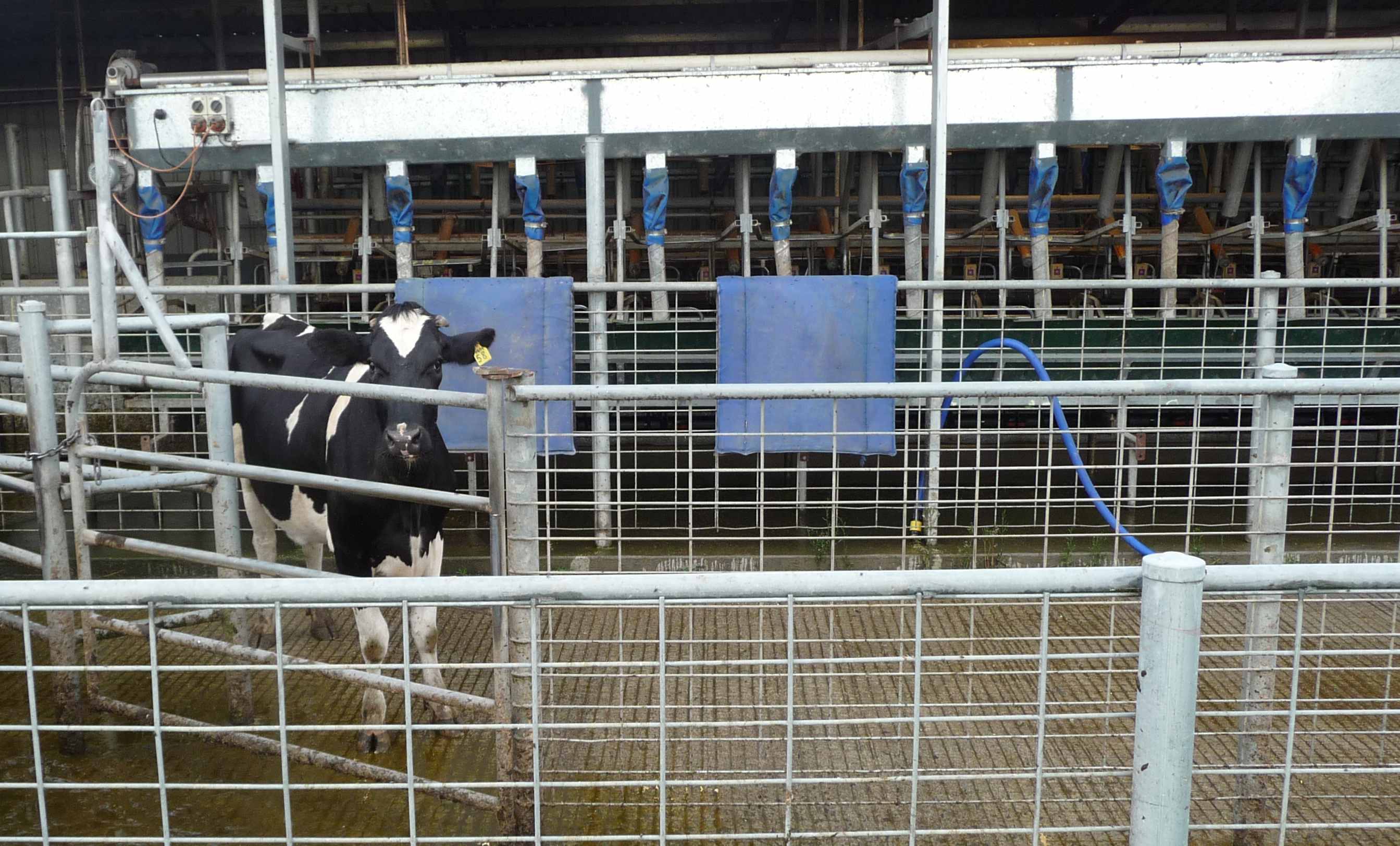
This is the dairy’s naughty spot and this cheeky young cow spends a lot of time there.

She’s a clever little thing and has noticed that there’s often grain under the feed bails when her sisters become a tad overenthusiastic tucking into breakfast. She lurks in the exit race waiting for her chance to quite literally “clean up”. The problem with this is that nobody else can get past her and a traffic jam ensues.

This morning, Wayne’s shooed her away three times and tried squirting her with the hose but her behaviour has continued to be “not acceptable”, so here she is in the “naughty spot” (with apologies to Super Nanny). She’ll be allowed out when she writes “I will not get in the way” 50 times and all her sisters have left the dairy.

US dairy woman moves to Aus and a whole new way of dairying

Penny Cooper’s story of her life in dairy in the US and now Australia, shows just how different dairy is around the world and I’m delighted she agreed to write a guest post for Milk Maid Marian. Penny, who now trims cows’ hoofs for a living, will be running a lameness workshop in Toora on March 19. If you’re interested in attending, visit http://www.allstatehooftrimming.com or connect with Penny on Twitter at @allstatetrim.

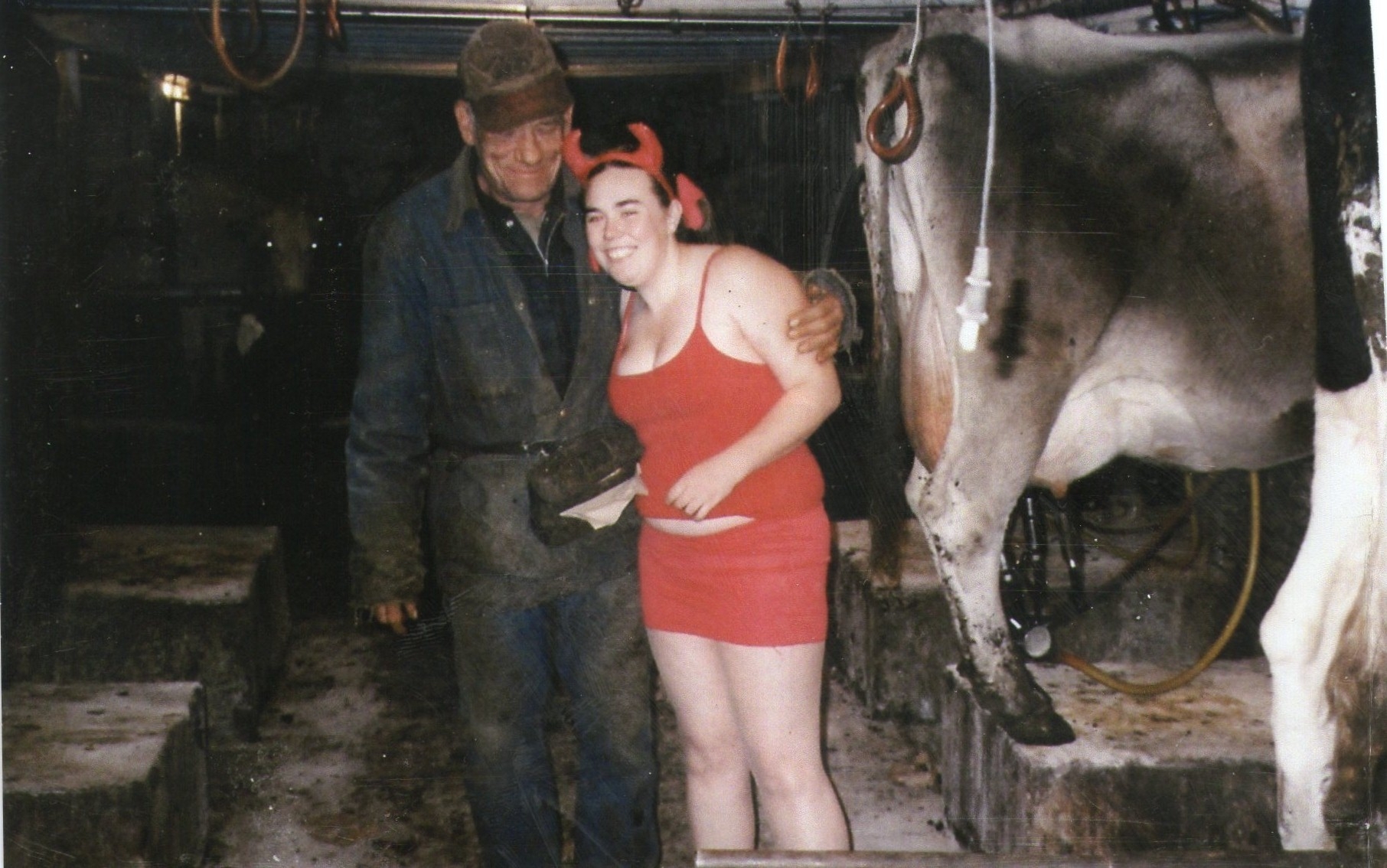
Penny celebrates Halloween in the dairy with her Grandad

Halloween in the dairy parlor with Grandad


I was raised on a 240 acre dairy farm in the heart of dairy country, Wisconsin USA. No one would imagine I would make it to South Gippsland, Australia, in the pursuit of helping lame cows. The differences between dairying in sometimes frozen tundra to the harsh Aussie summer are huge!

Growing up, we milked our cows in stantions and moved our milking units down the line, kneeling down to milk in between cows. Which was always made it fun when you had a particularly sassy heifer!!

We only had 80 cows, just like most other family farms in the area, but on a cold winter night when temperatures dropped to sometimes -20C it was plenty!! The cows usually heated the barn a bit but it was not unheard of to have to stop milking, run to the milk house get a bucket of hot water and pour it over the milk line because it had frozen solid before hitting the bulk tank!! In early 1999 we became quite “advanced”, installing a homemade step up/walk through parlor!

Making the change to rotational grazing brought about a new set of issues like frozen teats when the cows were sleeping with 4 feet of snow on the ground. People thought we were crazy and maybe we were but that’s okay too.

One thing that is constant, no matter where I travel in the dairy industry, is the kindness of the people and the amazing work ethic that is passed down from generation to generation. My Grandpa taught me that the Farm comes first no matter what, that I could do whatever I wanted on Friday night but I better be there to get cows on Saturday morning and to be proud of the job knowing that farming is the backbone to a great nation. I am so lucky to be involved in this great profession still today!

Milk war myths

This story from the ABC News on the impact of the price war suggests exports will allow dairy farmers to make a living.

It says China and South-East Asia, particularly India, will provide “huge opportunities” for Australian dairy. True, the February Dairy 2012 Situation and Outlook shows China’s whole milk powder imports have skyrocketed (see page 10).

It’s pretty misleading of the ABC news report to suggest, however, that exports will be our salvation.

First, not all Australian milk can be exported. Queensland, for example, does not have manufacturing facilities capable of producing product for export and it looks like there won’t be enough dairy farmers left there to support a factory in any case. Almost all of their milk is sold as fresh milk on Brisbane’s retail shelves.

Second, Victorian dairy farmers have long exported around half our milk; only 9 per cent of our milk ends up in cartons on the retail shelf and the ABC News report suggests we are doing better than those who supply the domestic market. The prices farmers are paid for a litre of milk in different Australian states tell a very different story. In 2008/09, Victorian farmers were paid 39 cents per litre while Queenslanders received 57 cents. In 2009/10, it was 34 cents versus 56 cents in the Queenslanders’ favour.

I am not suggesting the Queenslanders have been living it up but these numbers paint a far less rosy picture when it comes to exports, don’t you think?

The ABC also says raw milk prices have doubled in the last five years. Maybe so, but costs seem to have pretty much kept pace and the surging Australian dollar has meant that the average Australian dairy farmer has missed out on a fat pay cheque. Most of the farmers I know are struggling.

As Julian Cribb wrote in his SMH article “Huge shift in what we eat” today:

“If cities and the resources sector continue to take water and land from farmers, and supermarkets continue to punish them economically, much of our future food may be grown in factories, rather than on farms.”

Is that what Australians want?
One job I love and loathe

Hosing our yard takes an hour and a half every day. It can be frustrating because there’s so much we could do with that time but, on the other hand, you can use it as time to let your mind drift. I reckon it’s the equivalent of a city commuter’s traffic jam. It’s made so much more fun though, when you have help like this.

Hosing the yard

Making hosing fun

One day, we will get a hydrant wash, which gushes out large volumes of water at low pressure and do the job in five to 10 minutes. Maybe Santa will find a way to fit one in his sack!

What would you say to the trendy vegetarian?

We just had a young man staying with us who announced he’s become a vegetarian. When I asked why, he said it was because he liked what PETA says about not taking the life of another creature.

I try to be very open-minded but as soon as someone says “PETA says…”, I must admit that the fire doors of my mind slam shut. I was instantly infuriated. Just wanted him to leave but couldn’t say so. Instead, I told him he’d have to go a lot further than giving up chicken, pork and beef burgers.

As the weekend worn on, he ate copious amounts of eggs, dairy and…seafood. Quizzed a little more closely, he said his “vegetarianism” was really for health reasons. I urged him to see a dietician to make sure he has enough iron and vitamin B but he’s okay – he eats corn at least twice a week.

The experience has opened my eyes to the value of nutritional education when it comes to making food and lifestyle choices. Becoming a vegetarian or vegan is trendy. Thinking about supplements and vitamin B12 patches is not. Yet, according to experts cited in Wikipedia, “Poorly planned vegan diets may be low in vitamin B12, calcium, omega-3 fatty acids, vitamin D, iron, zinc, riboflavin (vitamin B2), and iodine.”

What would you say? In the meantime, grab a Coke and enjoy this hilarious clip on trendy diets from Mamamia.

What we feed our dairy cows

When I think of feed for our dairy cows, I think of grass. Unlike cows in much colder climates, ours live in the paddocks all year round and pasture is the “bread and butter” of their diets. Really, apart from hay baled in the summer and fed out in the depths of winter, that’s all our cows used to eat when I was a kid.

Everything changed, though, when a vicious drought desiccated Australia in 1982/83. That year, a massive dust storm blanketed Melbourne, ensuring that even inner-city dwellers felt the searing fury of mother nature. Like their neighbours, Mum and Dad cut every expense they could, right down to cancelling their newspaper subscription.

In desperation, they turned to grain to supplement the cows’ diets. And never looked back. We’re lucky in Australia to have such great wheat growers practically on our doorsteps. With grain at reasonable prices, we are able to buffer our cows from mother nature’s tantrums, keeping our cows well-fed, no matter whether it rains too much or too little. It also means our cows are able to produce more milk from less land – something that’s increasingly important as the population continues to climb.

Just as I created a breakfast for Zoe with the right building blocks of protein, fibre and carbs this morning, we offer the cows fibre, starch, protein and energy in the form of hay, silage and GM-free grain to top up their grass. So yes, Australian dairy cows are still pasture-fed but, these days, their diet has just a little added variety.

Night sacrifice ritual on farm

Just in case you hear it from Zoe, I thought I’d better come clean: we do a nightly sacrifice here on the farm.

Sacrifice

Where the nightly sacrifice is held

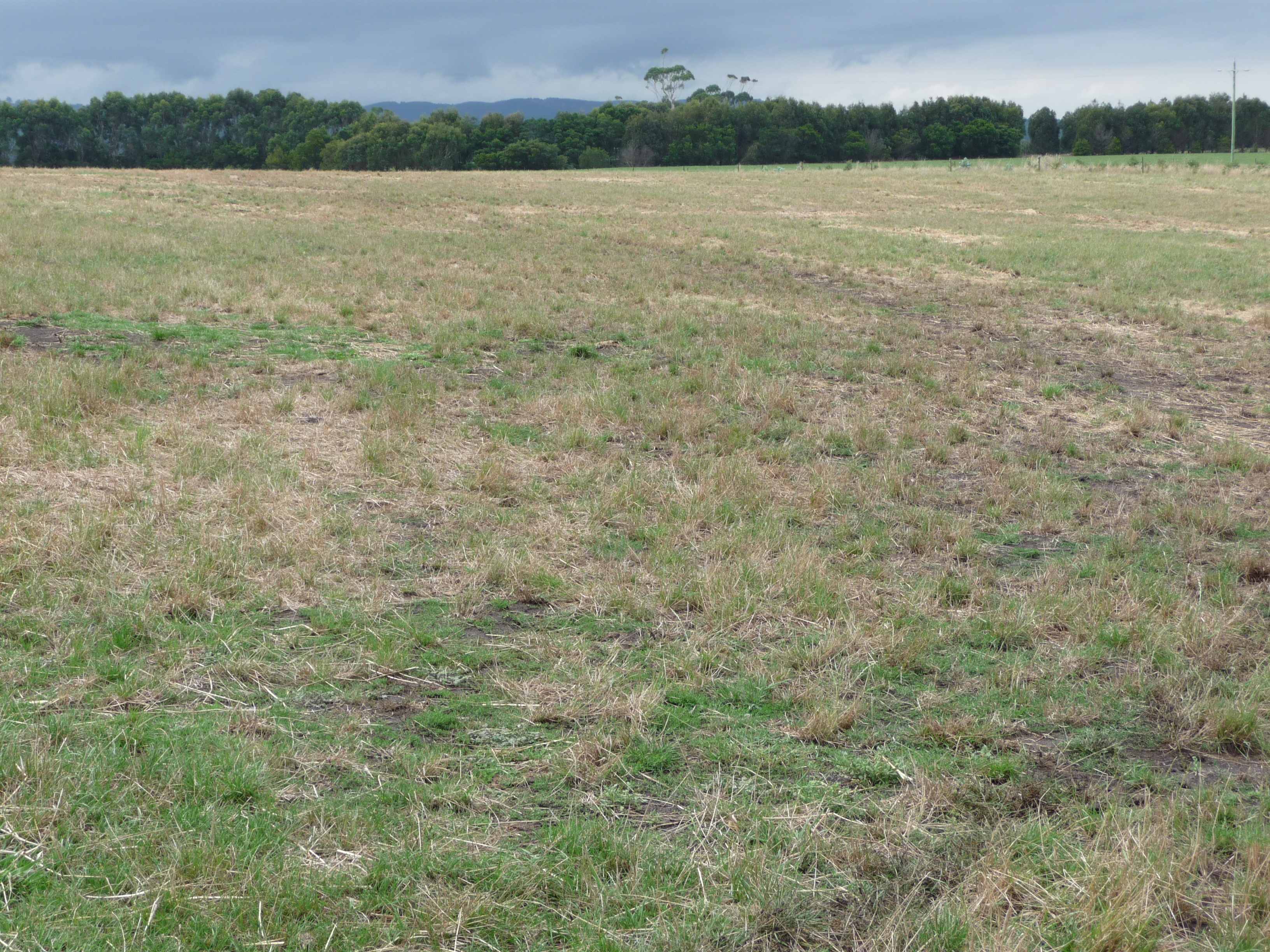
It looks innocent enough because it is! This paddock and a couple of others are being renovated with new seed this autumn and, in the meantime, we keep sending the cows back there night after night for their silage and hay – in other words, we are sacrificing the pasture. Aside from naturally building the fertility levels ahead of sowing, this allows us to give the other paddocks longer rests so there’s more high quality grass for the cows to eat during the day.

(PS: since we’re not biodynamic farmers, we are not governed by lunar cycles so you won’t catch us out in the dark doing strange things in the moonlight, either ;))

Where is our farm? Where are we?

We’ve just hit our fourth anniversary of running the farm since Dad died and what a rollercoaster ride it’s been. Cockchafers, collapsing fences, drought, floods, a new water system, massive pasture renovations, the global financial crisis and a new baby as well as the loss of Wayne’s father.

The farm looks great. Matt, our farm consultant, visited on Monday and said that with the exception of a rapid yard wash system, we have all the “physicals” just about right. We should be jubilant but we’re too tired for any sort of celebration.

As opposed to the “physicals”, the “financials” are still tight and there’s no prospect of a holiday.

“When do I get to experience the farm lifestyle everyone talks about?” was Wayne’s question. “We don’t seem to be getting anywhere.”

Matt’s colleague, John Mulvany, has drawn up a hilarious (but serious) farmer lifecycle chart and we are firmly seated in the FCTF TAF section. As such, we’ve only had six days off in the last year and three of them were while I was in the labour ward!

We decided it was time to rewrite our Farm and Family Plan. Like any other family business, it’s impossible to separate the two. We’ll look at where we are now, what we’ve achieved and our targets for the next 18 months. Top of the list is one day off per month!

What farm fanatics do

Paddock Book

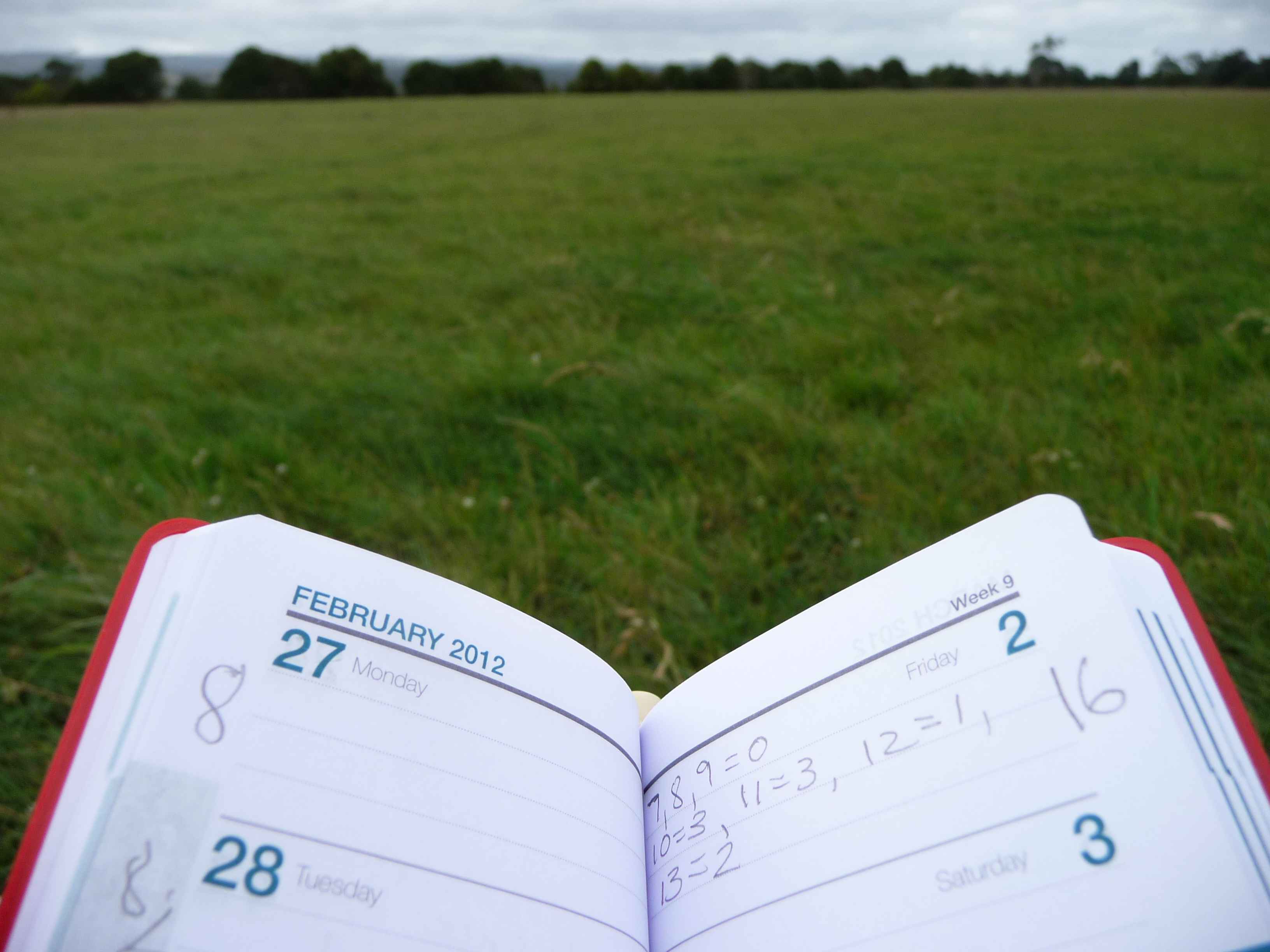
My little red book is indispensable

If ever you see a farmer crawling around in the grass, it’s not because she’s convinced she’s a cow. She’s a fanatical leaf counter. One of my weekly rituals is a “farm tour”. I stop at almost every paddock with my little red (easier to spot in the grass than the classic black) book and get counting.

It’s the best way I can be sure there’s just the right amount of grass ahead of the cows and answer the questions of our farm consultant when he visits (see you tomorrow, Matt!).

This little book is also whipped out every time I notice a cow who needs treatment, to record the specs of a punctured tyre or even a BIG IDEA.

I should be able to remember all this stuff but with two littlies, a farm and an every-now-and-then desk job, life flashes by too quickly these days. On second thoughts, if you do see me crawling around, nose to the grass, I could just have gone crazy!

Not just an old tree

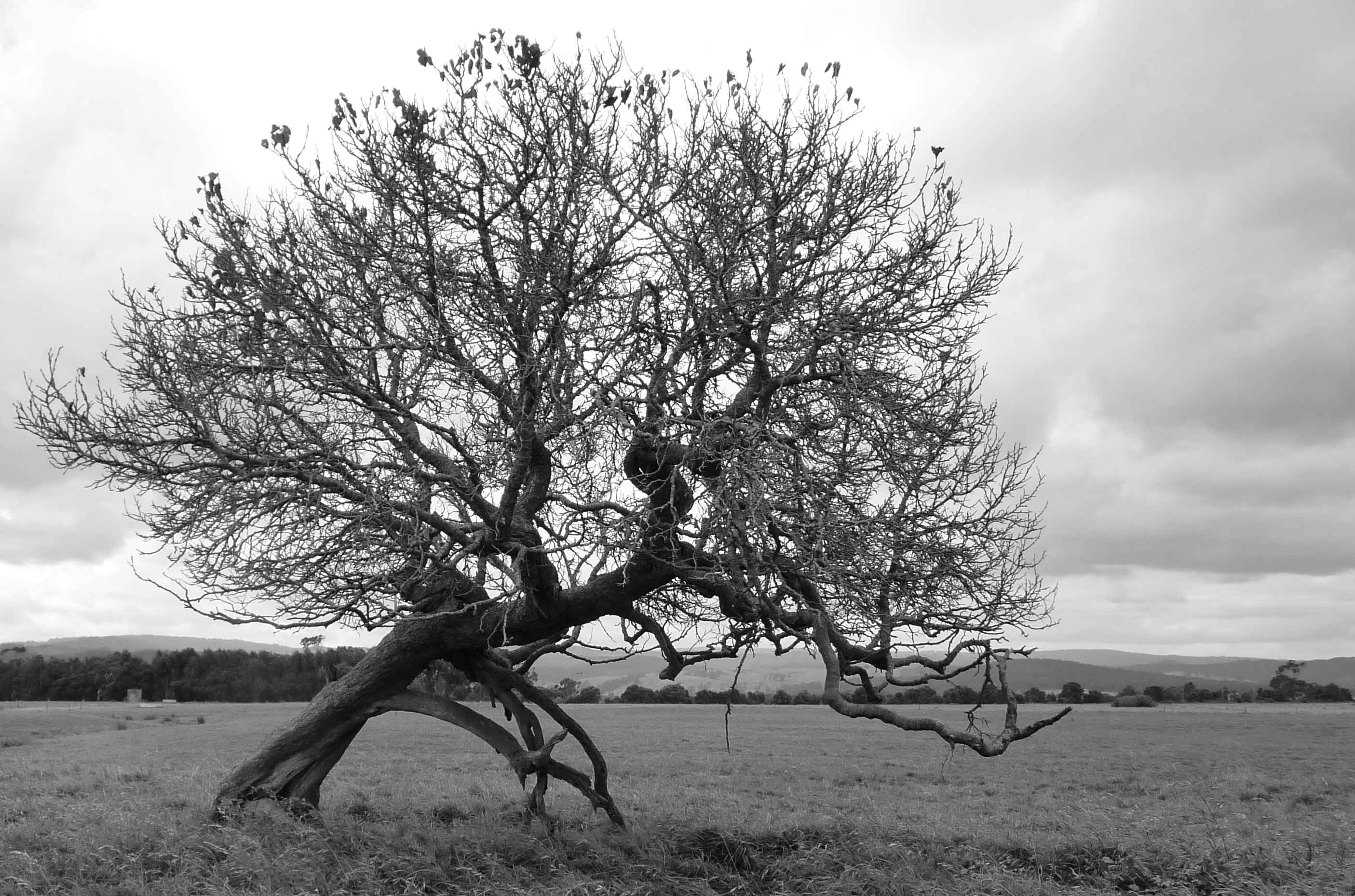
With hands and faces stained purple, my brother and I perched in this old tree every summer of my childhood. The exquisite mulberries were just reward for a hard day’s labour in the scorching heat filling sacks with buttery yellow ragwort flowers.

I looked forward to hoisting Zoe up that very same tree this year but the tradition will stop with me.

Old mulberry

She has at last succumbed

The tree has writhed across the landscape ever since I can remember but now she has a hideous crack right up the base of her trunk that must have made life not just tough but impossible. Normally, she would be covered in heart-shaped leaves hiding almost black fruit in early March. Instead, just a handful of leaves remain even though thousands of buds seem poised to burst open with new life.

She was the last productive member of an ancient orchard Dad told me was planted by the farm’s settlers before they realised it was an island on a floodplain. The house was later built a few hundred yards away, reached only by the worst floods. She could well be 100 years old.

Her death brings the cycle of life into stark focus. My Dad and brother are gone; Zoe and Alex walk beside me these days.  When Zoe turned one, we planted a mulberry tree in the garden to celebrate. It has borne its first fruit this year.