Where is our farm? Where are we?

We’ve just hit our fourth anniversary of running the farm since Dad died and what a rollercoaster ride it’s been. Cockchafers, collapsing fences, drought, floods, a new water system, massive pasture renovations, the global financial crisis and a new baby as well as the loss of Wayne’s father.

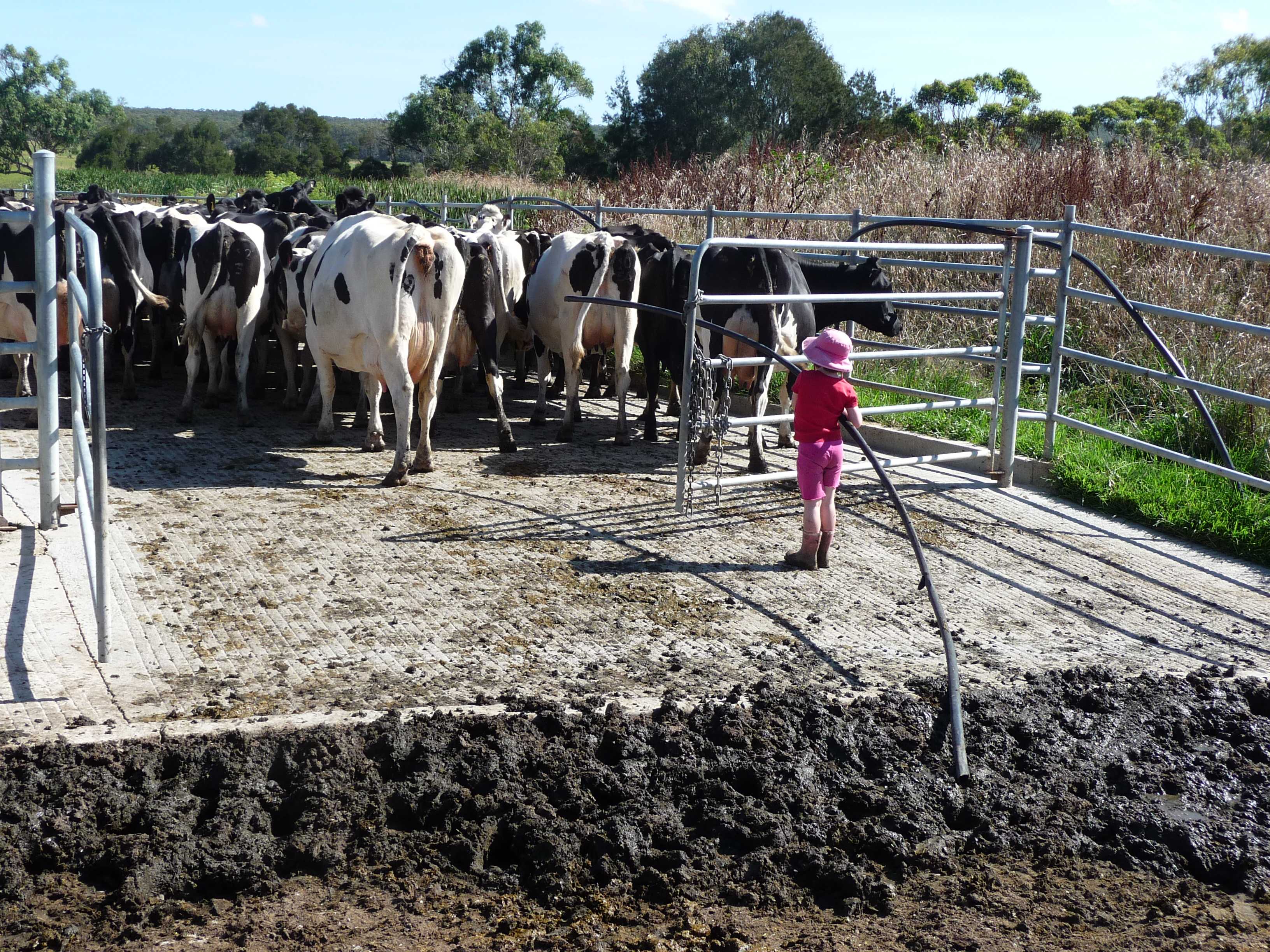
The farm looks great. Matt, our farm consultant, visited on Monday and said that with the exception of a rapid yard wash system, we have all the “physicals” just about right. We should be jubilant but we’re too tired for any sort of celebration.

As opposed to the “physicals”, the “financials” are still tight and there’s no prospect of a holiday.

“When do I get to experience the farm lifestyle everyone talks about?” was Wayne’s question. “We don’t seem to be getting anywhere.”

Matt’s colleague, John Mulvany, has drawn up a hilarious (but serious) farmer lifecycle chart and we are firmly seated in the FCTF TAF section. As such, we’ve only had six days off in the last year and three of them were while I was in the labour ward!

We decided it was time to rewrite our Farm and Family Plan. Like any other family business, it’s impossible to separate the two. We’ll look at where we are now, what we’ve achieved and our targets for the next 18 months. Top of the list is one day off per month!
What farm fanatics do

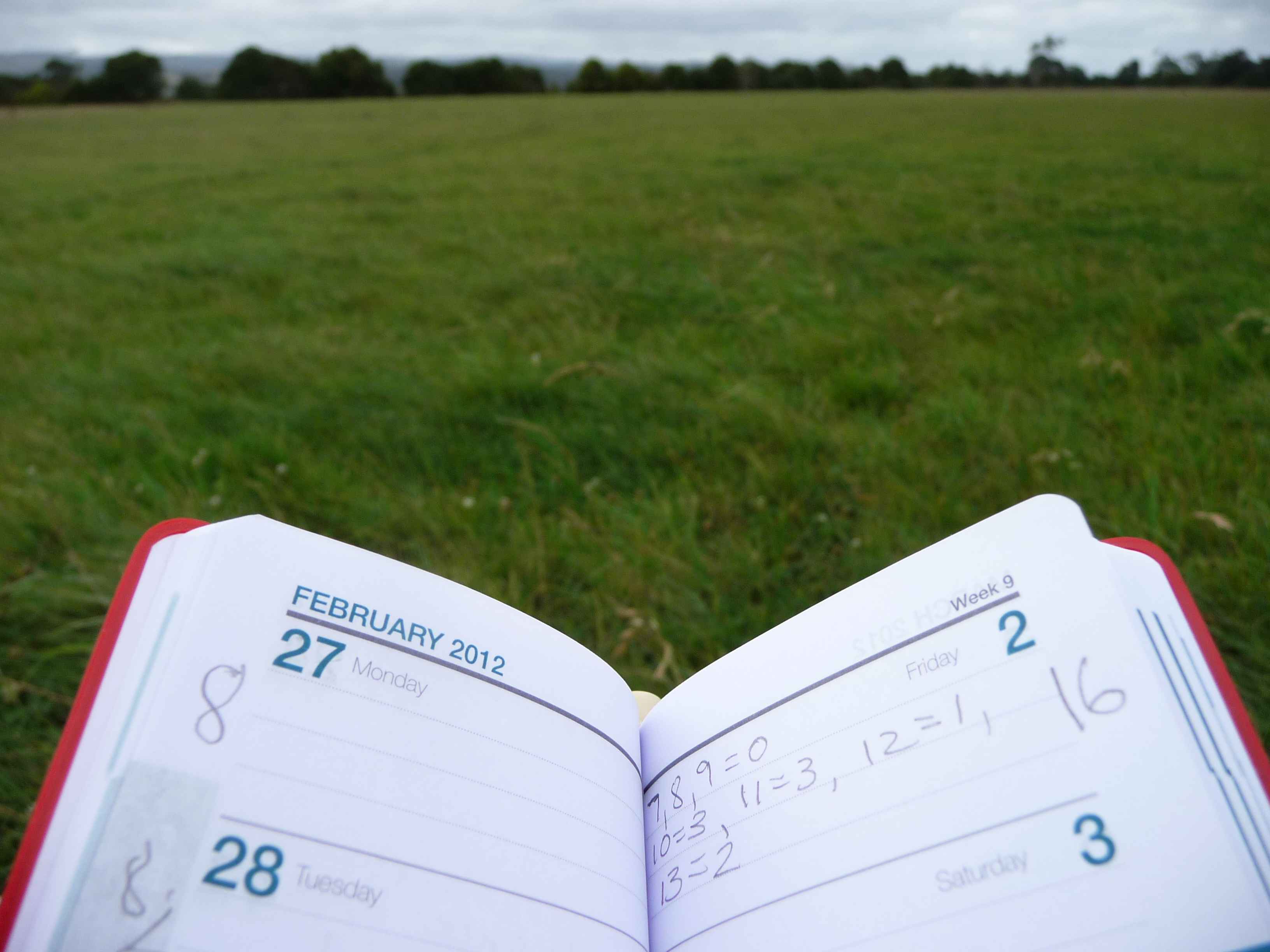
Paddock Book

My little red book is indispensable

If ever you see a farmer crawling around in the grass, it’s not because she’s convinced she’s a cow. She’s a fanatical leaf counter. One of my weekly rituals is a “farm tour”. I stop at almost every paddock with my little red (easier to spot in the grass than the classic black) book and get counting.

It’s the best way I can be sure there’s just the right amount of grass ahead of the cows and answer the questions of our farm consultant when he visits (see you tomorrow, Matt!).

This little book is also whipped out every time I notice a cow who needs treatment, to record the specs of a punctured tyre or even a BIG IDEA.

I should be able to remember all this stuff but with two littlies, a farm and an every-now-and-then desk job, life flashes by too quickly these days. On second thoughts, if you do see me crawling around, nose to the grass, I could just have gone crazy!

I’m a greedy parent

I’m something of a greedy parent. I want my children to be strong but gentle, thoughtful yet bold and big picture thinkers who care about the small stuff (maybe Zoe will one day point her shrink to this post as evidence).

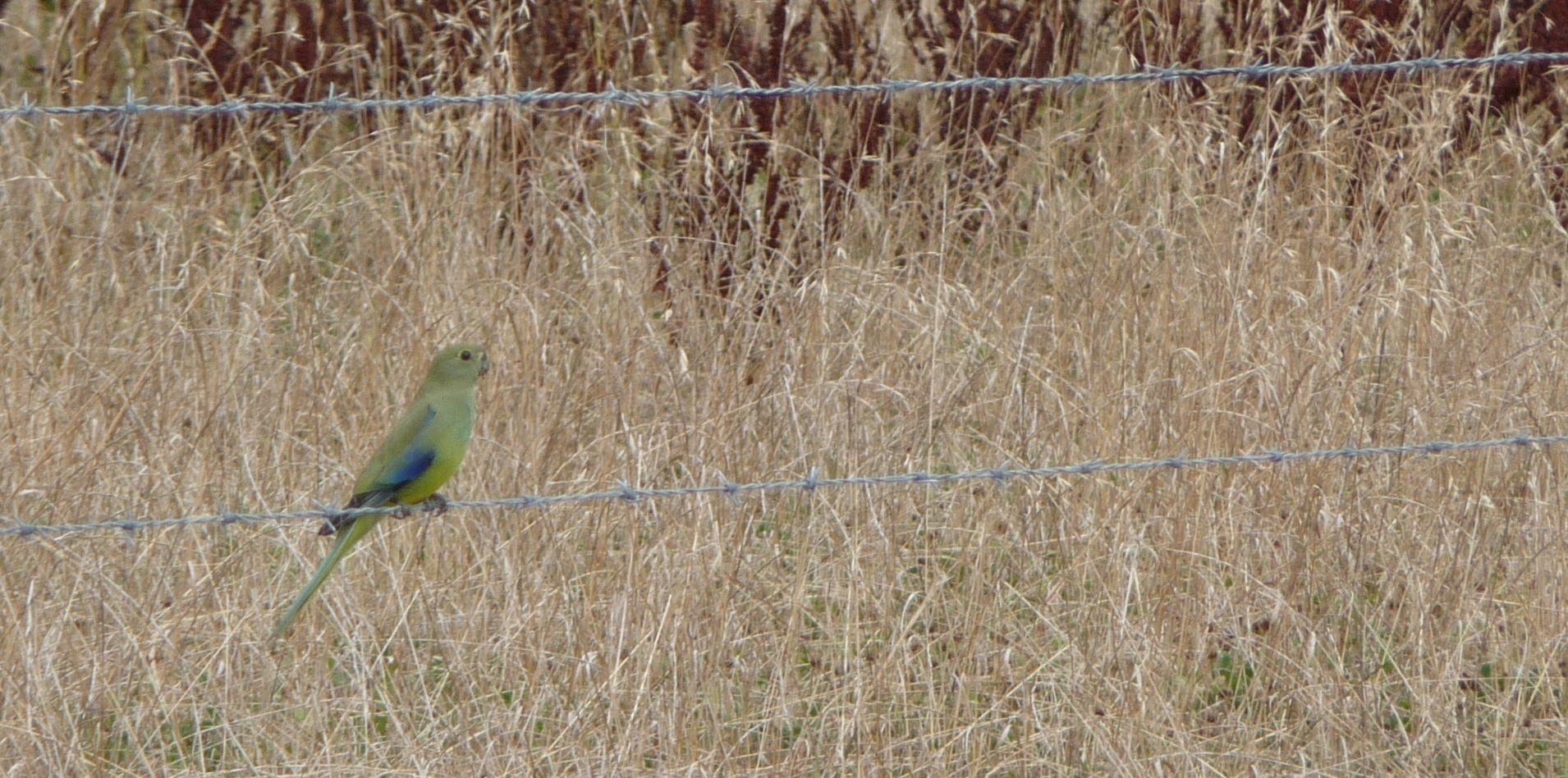
Blue winged parrot

The critically endangered orange-bellied parrot?

I’m a fairly excitable type and nearly crashed into a fence post when I saw this little bird and its mate on the farm because I had only that morning read this description of just such a bird by the Parrot Society:

“Australia’s Orange-bellied Parrot can be ranked with the Giant Panda, Whooping Crane and Siberian Tiger as amongst the rarest and most endangered of the Wildlife. Only 100 to 200 individuals still exist.”

I managed to snap a pic before the timid pair flitted away and breathlessly told the Little Farmer how lucky we were to see it. As an idealistic 20-something, I even trudged through the mangroves down near Wilson’s Prom in a fruitless search back in the 90s.

Having turned to Pizzey’s Field Guide to the Birds of Australia though, my excitement evaporated. I think instead, we have slightly atypical blue-winged parrots. Lovely and thankfully, in good numbers.

Just as Berenson’s Father Bear’s stuff-ups were the makings of a great Baby Bear, though, I hope my enthusiasm counts for something in the parenting stakes.

John Mulvany tells how young dairy farmers can make it work

It’s official: buying your own dairy farm may no longer be affordable but some entrepreneurial young dairy families are finding other paths to prosperity.

The answer is to farm without the farm, says John Mulvany of OnFarm Consulting. Ahead of his address to the Australian Dairy Conference on Thursday 23 February, I invited John to write a guest post especially for young farmers.

All dairy farmers at the Australian Dairy Conference will be somewhere on this dairy farmer life curve: it’s about balance between skills acquisition, growth, life style and eventually discretionary involvement.

FarmerLifeCurve

SA – Stuffing Around

FTCF – Focus, tight cash flow

TAF – Tight arse factor

HD – High debt

HEQ – High Equity Cons – Consolidation

DI – Discretionary involvement

Many dairy farmers are asset rich and energy poor. At the same time, many young dairy farmers are energy rich and asset poor. With land prices increasing while profit margins fall, landowners will find it harder to find young farmers capable of buying their farms.

Three young dairy couples I’ll introduce at the Australian Dairy Conference have taken their cue from many successful retailers: they don’t own the farm. Instead, they lease land to operate profitable dairy businesses while investing the returns from their dairying in high growth assets beyond the farm gates.

Warren and Kerrie Redmond, for example, entered the dairy industry with no assets in 1989 on a third share of 167 cows. Today, they lease just under 1000 hectares with 486 hectares milking area for 900 cows over three farms. Off-farm investments include three houses, FMD’s and shares. Last calculated return on asset was in 2010/2011 at 22%. Lifestyle is now very much a priority.

Gems of Advice for Young People in Dairy

• Keep an eye on the big picture – it’s easy to get lost and discouraged in the daily crap.

• There will be a minimum 8 -10 years where the pressure will be on and you’ll wonder if you are going anywhere.

• Build your reputation so people seek you to rent their assets.

• Keep your bank informed; they are your best friend when investing in high-risk cows and plant at the start.

• Spending is restricted to sensible money making assets – no shiny red toys.

• Purchase off-farm capital growth assets as soon as your debt level allows.

• You will have to make some sacrifices and initially be prepared to work hard manually while balancing decisions.

• In re-working arrangements, think outside the square, keeping the interests of both parties in mind.

Something to make the heart sing

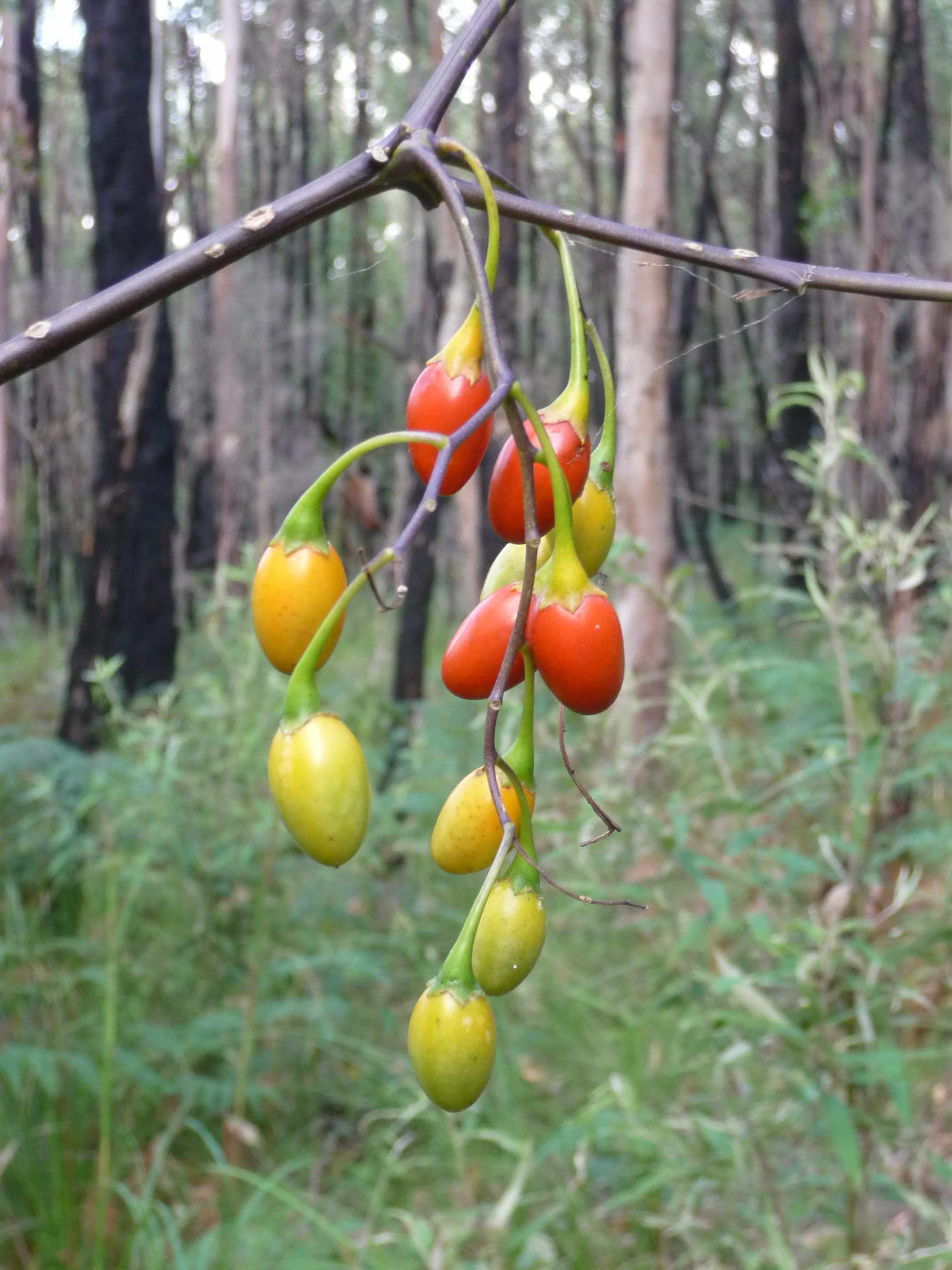
Kangaroo apple berries

One of our "Summer of Zoe" discoveries

This is officially “The Summer of Zoe”. As my dear little farmer starts school tomorrow, I have begun taking her further and further into the forest that bounds our farm to celebrate her launch into the big, wide world.

She has found herself entranced. Secret paths lead from farm to forest, amazing creatures present themselves and the bush smells wonderful.

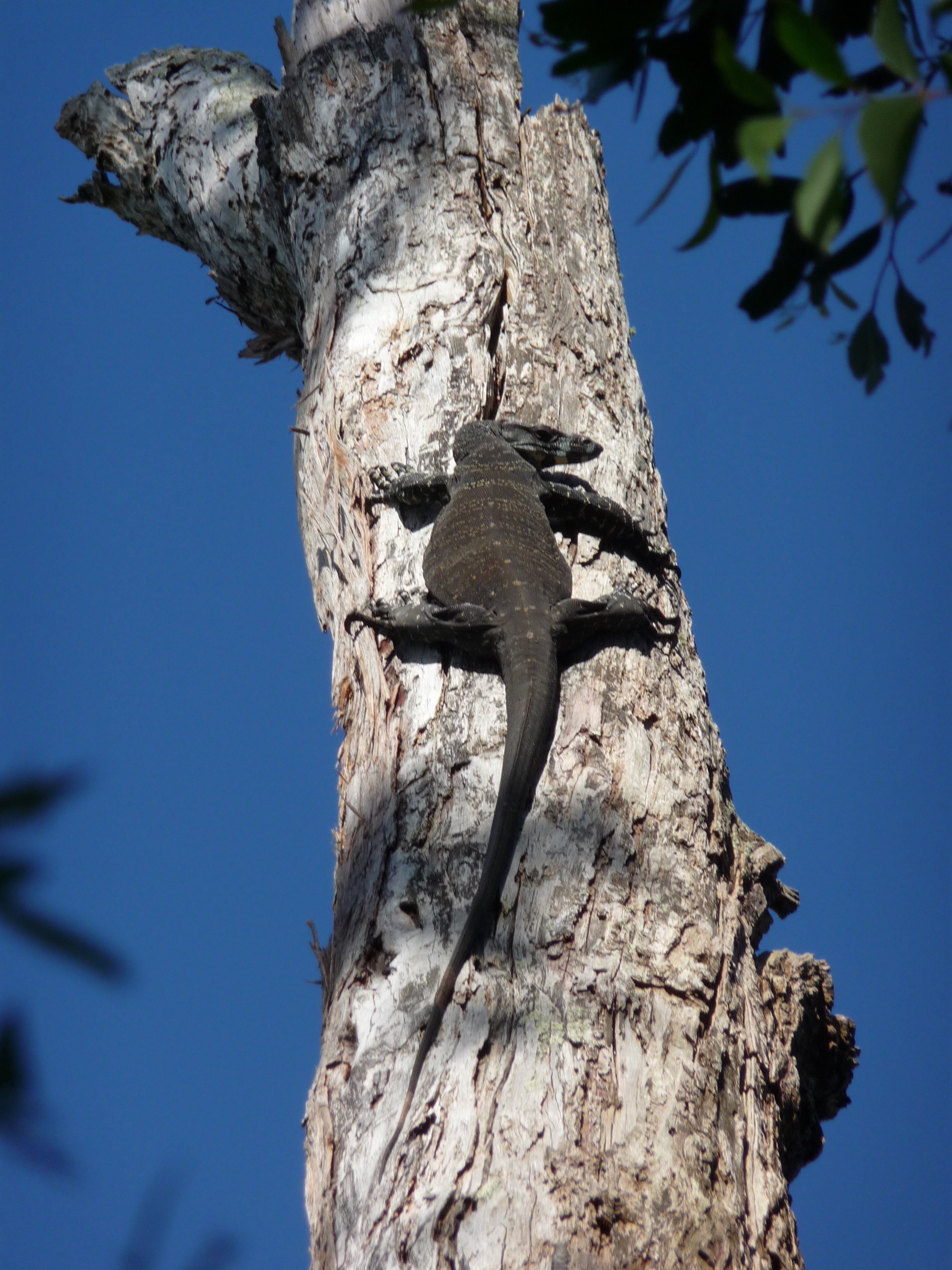
Goanna

An inspired Zoe even made her own goanna video

Somehow, Zoe senses this is a rite of passage. She volunteers that, one day, she will show her own daughter the ways of the forest and then says “You are beautiful, Mama, and I will never forget you”. She hasn’t yet waved goodbye from the school gates but I am already missing my wonderful little soul mate.

Don’t you get bored so far from the city?

Life three hours from the CBD is not for everyone. You can’t just nip down to the city to get a funky new outfit, watch an art house film or see the latest Melbourne Theatre Company production. Yep, I like that stuff.

But, having spent the last day and a half in the city, it’s great to be home listening to a chorus of crickets. Open skies, quiet and a fresh sea breeze keep me sane, even when life on farm is at its most manic.

Manic? Oh yes. There is always something to do and, often, far too many things. Still, it’s never a rat race.

How many kids die on Australian farms each year? Each week?

You can see from my blog that I take our children pretty much everywhere with me on the farm. The thing is, there are places I no longer go, so they can stay safe. I don’t milk, I don’t get into the yard when it’s full of cows and I avoid situations where cattle of any age are moving quickly in confined spaces.

I can make these choices because we can afford to pay other people to help but not every farmer can. And out here, the town’s youngest children have access to just two hours’ formal care per week.

If you don’t have an extended family willing and able to help, you might feel there’s little choice but to leave the kids playing by the gate or sitting in the ute while you do a risky job. This is how farm safety and childcare are so tightly connected. There’s nothing bourgeoise about needing childcare to drench the heifers or build a fence.

The impact of a lack of childcare on a farming community is tricky to gauge but the unfathomable grief that seeps through a community after the death of a child is something that resonates in your bones for many years. According to the stats, one child is killed on an Australian farm every fortnight.

I wouldn’t normally include a whole slab of stats but these, from the Aghealth Australia site, are so telling:

A recent study by the National Farm Injury Data Centre (NFIDC) based at AgHealth of on-farm fatalities for the 2001-2004 period found that:

Children (0-14yrs) make up 15-20% of farm injury deaths, around 2/3 are male. Main agents are:

  • Drowning in dams (mostly under five year olds)
  • Quad bikes or 4 wheeled motorbikes
  • Farm vehicles (cars, utes)
  • Around quarter of all child deaths were visitors to the farm, but for quad bikes around ½ are visitors
  • Drowning accounts for around 35-40% on child farm deaths, with farm dams being by far the most common site.

There has been an improvement in the reduction of toddler drowning on farms in recent years – particularly a reduction of dam drownings, which have halved since the early nineties. However, drowning is still the number one cause of child farm fatality in Australia. A common scenario is that a toddler wanders away from the home un-noticed into farm water bodies or toward other farm hazards (vehicles, mobile machinery). Apart from dams, children can find their way into creeks, troughs, dips and channels. Children under five years are at greatest risk.

For non-fatal injury of children on farms, older children (5 -15 yrs) figure more prominently – particularly in relation to injury from 2 and 4 wheeled motorbikes (and horses). Whilst there tend to be more hospital ED presentations for 2 wheeled motorbikes, injuries from quad bikes are likely to be more severe or fatal, with 4 times as many children being killed off ATV’s than 2 wheel motorbikes on farms (NFIDC 2007).

Take to the tractor if you can’t get baby to sleep

At 8pm, which happens to be “acid hour” for Alex, a truck carrying four pallet loads of calf feed arrived. The calf feed comes in unsealed bulk bags and forecast drizzle would wreck it, so the stuff had to be moved to shelter before long.

I was singing “Pop goes the Weasel” for the millionth time and Wayne had fallen asleep cuddling Zoe.

Wayne had told the feed guy it was okay to deliver late but when push came to shove, he couldn’t be woken despite repeated attempts. On the other hand, Alex couldn’t sleep. The only thing to do was put on the baby carrier and jump in the tractor.

Milk Maid Marian and baby Alex brush up their loader skills

Alex and I brush up our loader skills

But, jeepers, it took me forever and I was like a jack in the box, checking and double-checking I wasn’t skewering a bag in the pitch black driveway. Alex was fast asleep by the time I had the first pallet loaded up though and I might just blow stockfeed Scott a kiss for the unconventional but effective baby soothing lesson.

Night-time feed delivery

All done!

Just getting some extra cred

Remember Zoe and Pearlie Girlie?

Zoe and Pearlie Girlie back in November

Zoe and Pearlie Girlie back in November

Well, since I wrote about the tender relationship between young farmer and young cow, Pearlie Girlie decided to make a grab for power and began to scare me – taking a few aggressive strides towards Zoe and wagging her head. We’ve been making sure Zoe stays well clear of the little cow but, today, Zoe reclaimed her rightful position as boss.

Zoe is boss once more

Zoe is boss once more

Should farmers be embarrassed to talk about money?

A very thought-provoking piece by Terry Etherton deserves some discussion in dairy circles, I think.

Is it considered a little shabby for dairy farmers to be concerned with profit? Certainly, animal activists are quick to label farmers as greedy at the expense of their animals and the environment. Their web sites and advertisements paint “profit” and “money” as very dirty words indeed.

In contrast, Terry Etherton makes the point very well that:

“My perspective is that sustainable should first be viewed through the ‘lens’ of economic sustainability. Farms are businesses. If they don’t make money they close…pretty simple.”

“However, sustainable gets used in a myriad of confusing ways. For example, some in society talk about sustainable in the context of this being the ‘best’ food production practice to embrace. I am sure many readers have seen the marketing message: organic food production is more sustainable than other agricultural production practices and, therefore, better.”

Mr Etherton is right and Australian dairy farms are even more precariously balanced than their US counterparts, receiving no taxpayer-funded subsidies at all. We do have to be keenly focussed on the almighty dollar to survive. On the other hand, that doesn’t mean we cut corners when it comes to animal wellbeing.

A dairy farmer with a dislike of animals would soon quit. We work with them all day, 365 days of the year. They’d also quite likely get “sacked by the bank” because being mean is not profitable. Our livestock, our land and our people are our greatest assets – generations of farmers and cows know that.

So, how do we respond when we are labelled as “greedy farmers who exploit animals”? The US experience is that it’s best to say little about the link between profitability and animal welfare, preferring instead to focus on the values that we as farmers hold.

I agree because it’s true that values are much more powerful than profit. When the chips are down during drought, fire or pestilence (so to speak), it is the farm family that goes without, not the cows.