A young cow and a young girl

Zoe and Pearlie Girly the Cow

Zoe and Pearlie Girly have a unique relationship

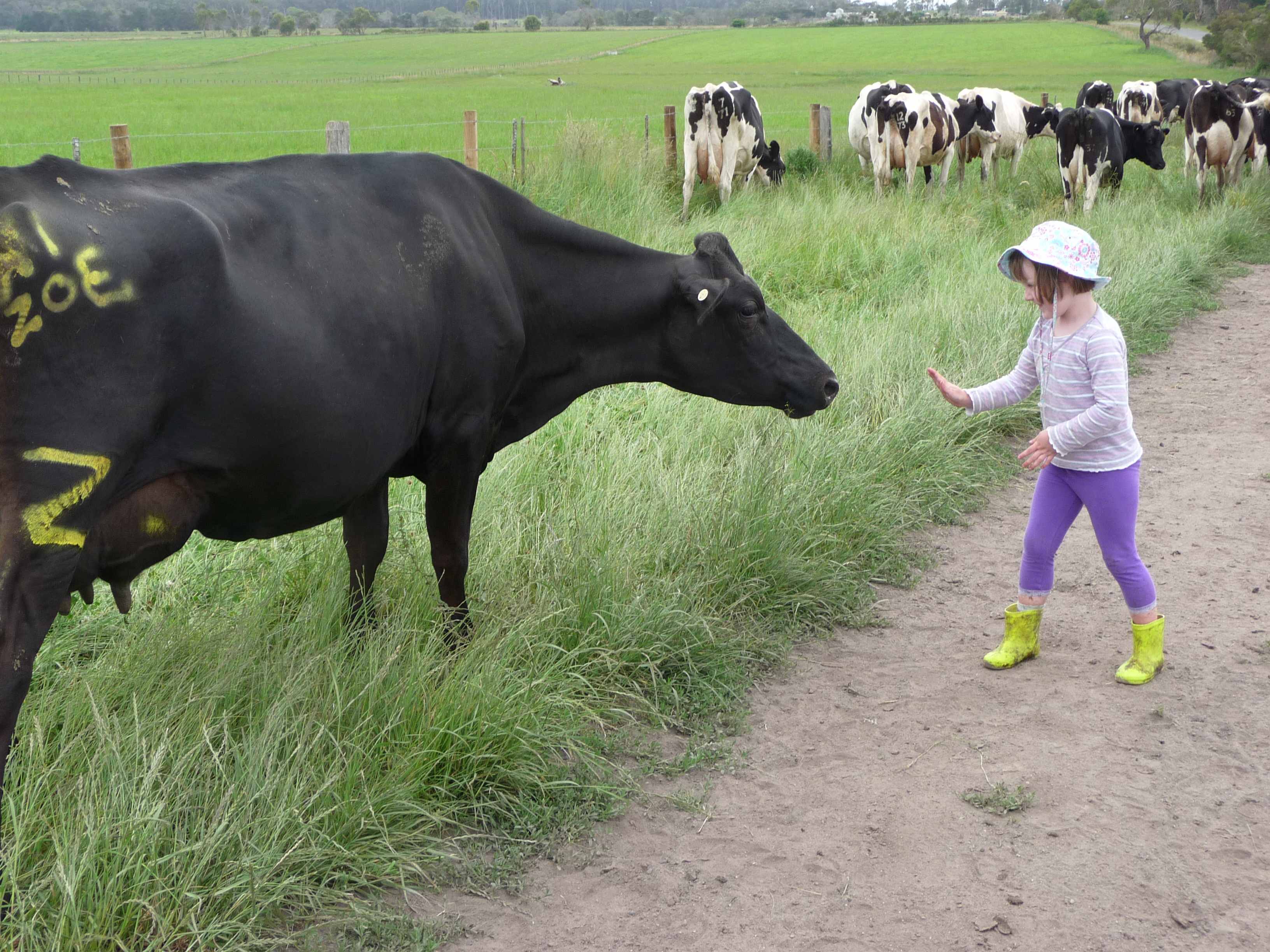
Meet Pearlie Girly. Just like her equally cheeky mate, cow 33, Pearlie Girly is a young crossbred cow with an extra dose of personality. Since she is always one of the last in the herd to come into the shed, we get to spend a lot of time with her and Zoe has struck up a curious relationship with the little cow.

Pearlie likes Zoe. Zoe likes Pearlie. Pearlie lets Zoe pat her on the shoulder. Pearlie says “Enough!” and that’s it for the rest of the trip to the dairy. Oh, to be queen of one’s domain…
 

Ashamed to be a dairy farmer today

Yesterday, two industry representatives and a dairy farmer spoke about the treatment of bull calves on Australia’s Radio National program, Bush Telegraph.

It made Victoria’s dairy farmers appear as callous as Big Tobacco and today, I am ashamed to call myself a farmer of any description, let alone one that bludgeons premature calves to death with an axe.

The media feeds voraciously on such hideous depictions and it will be all over the internet and in the mainstream media unless something with even more news appeal happens this weekend.

This is something we can’t deal with by talking about industry standards and so on. Nobody believes that stuff. None of it resonates in the soul. We need to tell people the whole truth and how we feel about it.

And the truth is this:

I will never induce the birth of a calf unless its mother’s life depends on it. In the four years since I took over custodianship of the family farm, this hasn’t happened.

I can barely manage to hear the shot ring out as a suffering animal is euthanased humanely, even though I know it is the right thing to do.

I will always put the quality of our animals’ lives before profit.

We sell every bull calf we can to neighbours who rear them until they are big and powerful steers, even though we sacrifice income to do it this way.

The bottom line is that I will not do anything on the farm that I could not show five-year-old Zoe without any qualms. Our farm is also our home and we could not live with cruelty.

Farmer’s forums are jammed with distressed dairy farmers this morning and I spoke long into the night about it with another yesterday. I am ashamed yet I am proud to know I am not alone in this. If you are a farmer reading this, please add your voice to the news forums and don’t be afraid to tell them how your heart guides you.

The year turns the corner

Today’s very belated celebration with around 20 members of Wayne’s extended family of Alex’s birth in May and Zoe’s birthday in June signalled something else: the turning of the year in our family’s favour.

Back in June, we were beside ourselves. We were halfway through a marathon six-month calving period, welcoming a colicky new baby and coping with the wettest season in a very long time. Absolutely stretched to the limit.

We’ve finally turned the corner. Calving is finished and almost all the suckies are weaned, silage is well underway and Alex is a jovial, thriving five-month-old (mind you, no cake for his Mama thanks to his plethora of food intolerances).

Every dairy-farming family knows the annual cycle of crazy winter/spring workloads followed by the hiatus of December through to March. The heat slows pretty much everything on farm and is the perfect time to catch up – with everything from maintenance chores to entertaining friends. Summer is already in the air!

Lucky to be alive

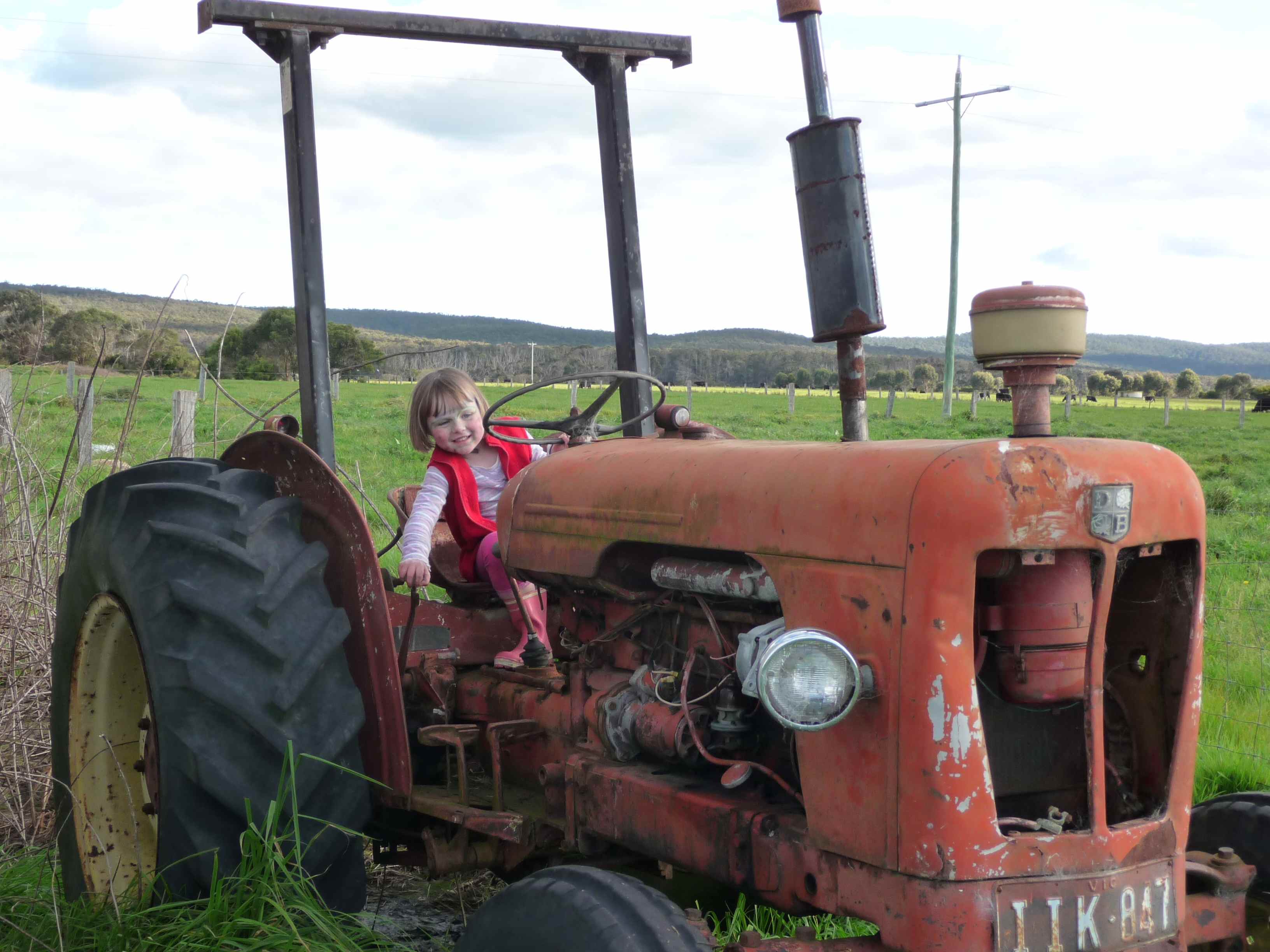
Zoe drives the David Brown

Zoe drives the David Brown

I used to mow and rake the hay with this tractor and the brakes were so hard to operate, I had to stand up to put all my teenage weight on them to get the David Brown to stop. Those were the days before Roll Over Protection Systems (ROPS), let alone cabins, on tractors.

Today’s tractors must have ROPS by law and most have cabs as standard. Thank God. My husband, Wayne, was unloading a B-Double truck of hay recently, when one of the huge rectangles (8x4x3) weighing just over 500kg fell off the front end loader tynes, bounced off the tractor where the windscreen meets the roof and came to rest perfectly balanced on the bonnet. Without the ROPS built into the cabin, he would almost certainly have been killed.

Even though we are much better protected these days, tractors and quad bikes cause almost all the deaths on Australian farms. The introduction of ROPS on tractors was really contentious back in the 1990s (was it that long ago?) and now, the introduction of Crush Protection Devices on quads is causing the same controversy today. The sooner we just put them on and get on with it, the more lives we’ll save.

Hang on, aren’t farmers supposed to be whingers? Turns out we’re the happiest workers!

I didn’t see it but a friend of mine at Dairy Australia, Julie Iommi, tells me that the presenters of the Today Show concluded that farmers are whingers because we like to get it all off our chests when leave our isolation and meet someone. Oh dear.

For a start, dairy farmers are not all that isolated. My nearest neighbours are less than a kilometre away. Second, look at this newly reported research and here, on the radio.

“IF you’re whinging about your job and the things that annoy you most, you probably don’t work in farming, event management or the legal profession.”

So why are farm employees so happy? A commentator on UK career happiness research suggests that good jobs have this in common: high interaction with people, are out of a conventional office, and do things that have clear outcomes. Okay, we don’t have high interaction with people but we’ve got something even better – animals!

She contrast this with the least happy professions in administration:

“Admin work usually means a lack of control over what you do. Admin work is part of a clear pecking order (and when you’re constantly reminded you’re low on the ladder, that doesn’t feel great).”

“There is something about that office-admin environment that feels toxic. Office politics, an impenetrable pecking order, stuck in an airless office box with a lack of freedom about your day… plus a question mark over the point of what you actually contribute every day. Sound familiar? It’s not just admin workers is it?”

Farm employees often work either side-by-side with their “bosses” or are given lots of freedom to do their work without anybody breathing down their necks.

No wonder it’s a great career!

Disgraceful dairy farmer’s skin care regime

A friend of mine, Gary Thexton, passed on this:

Two farmers walking through a field; one stoops down and dips his finger in some cow dung and rubs it across his lips. The second farmer asks him why he did such a disgusting thing. The first one replies, “I have chapped lips!”. The second one asks him, “Does it make them better?” He replies, “No! But it stops you from licking them!”

I couldn’t help laughing. Just for the record, I carry a container of antibacterial wipes in the Bobcat glove-box. I am far from obsessive about cleanliness but when it’s time for a snack and we’re too far away from a tap, they ease my mother guilt.

Teen tells her personal story of dairying in South Africa

I’ve been mightily impressed by the incredibly entertaining dairy blog of one very clever South African teenager, Firn Hyde, and asked her to send in a guest post.

Hello everyone in Australia and beyond. First of all I’d like to thank Marian for the very kind invitation to contribute to her fabulous blog. It’s much appreciated!

I’m Firn Hyde, the teenager of Hyde Family. We live in the Highveld of South Africa and run a small dairy called Hydeaway Farm, where we embrace our slogan – “Names Not Numbers”. My mom, Dinki, and dad, Jon, run it together; Dad is also a computer programmer and works in Johannesburg, so Mom does a lot of the daily management while Dad works on maintaining machinery and fences. Their two daughters, myself (fourteen years old) and Rain (twelve) complete the Hyde Family.
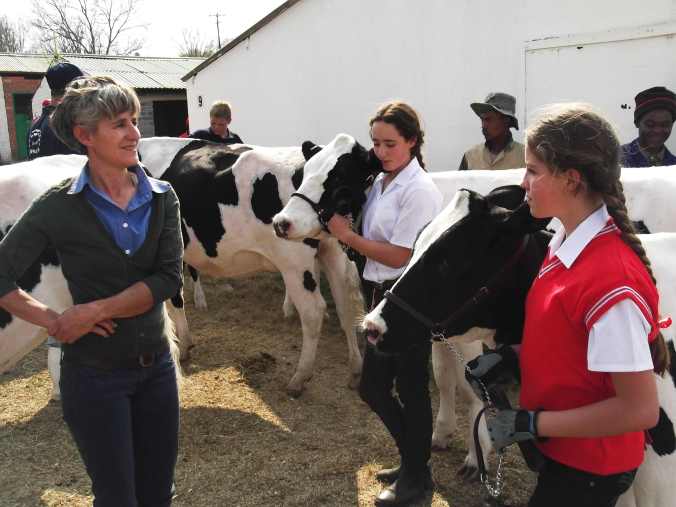
Firn Hyde

Dinki, Firn and Rain Hyde with Holstein heifers, Hermoine and Kaleidoscope, bred by Brett Gordon at the Standerton show

Mom and Dad chose to homeschool the two of us and in doing so gained two valuable farm labourers. Whilst Rain is a ballet dancer and does the more domestic jobs, I like to get dirty and work with the animals. This is definitely a family business. It’s a dream we all chase together.

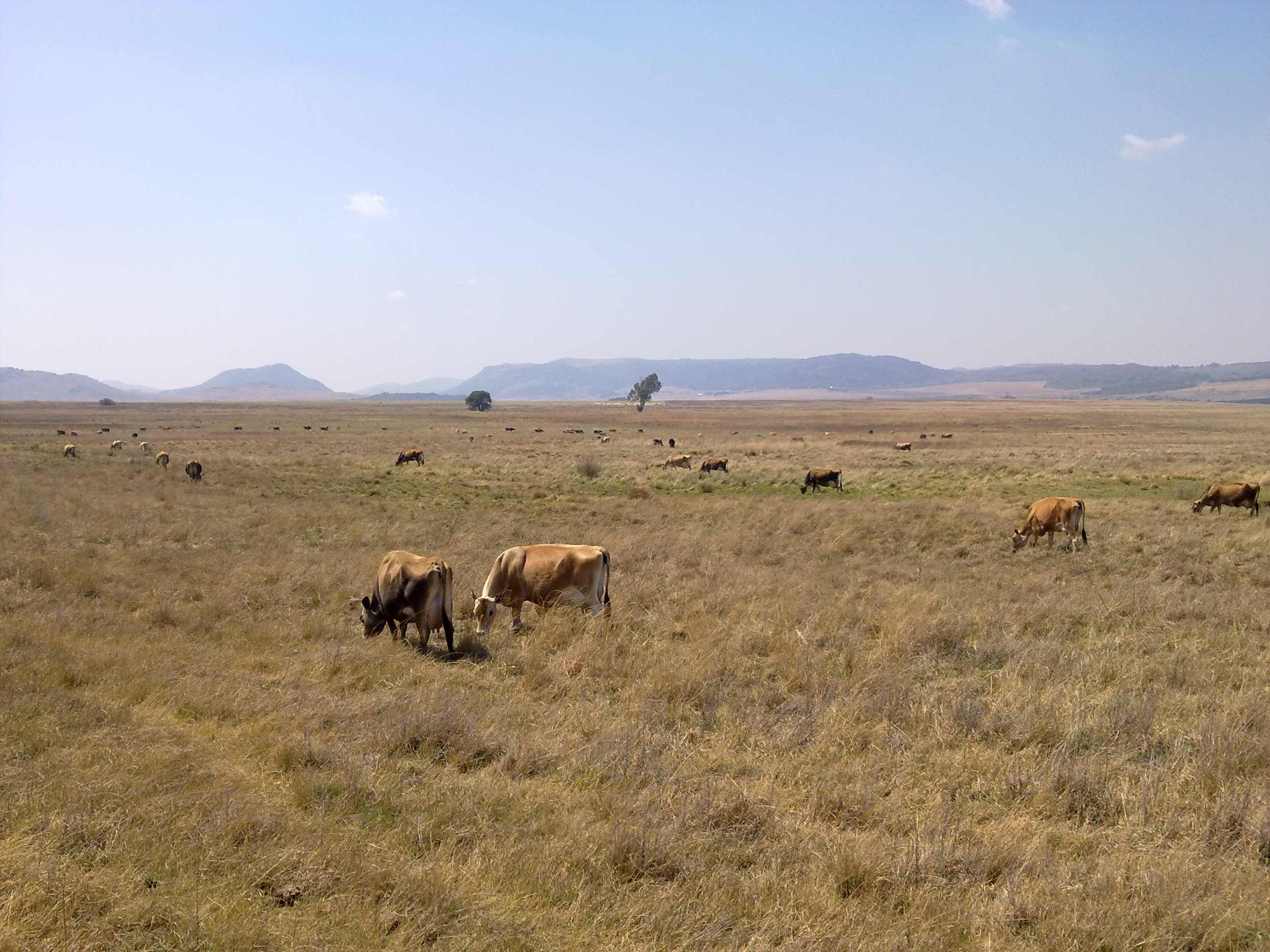
We milk 90 registered cows and own Hydeaway Jersey Stud. We love Jerseys for several reasons, among them size, calving ease, temperament and their golden, creamy milk. The cows and many of the Jersey heifers go out to graze during the day. We would love to have beautiful pastures like Marian’s, but at present the best word for our grazing is “veld”, which is something between “grassland” and “wilderness” in our native language, Afrikaans. Due to the poor quality grass we supplement them with good eragrostis hay.

Hydeaway Jerseys grazing on the veld

Hydeaway Jerseys grazing on the veld

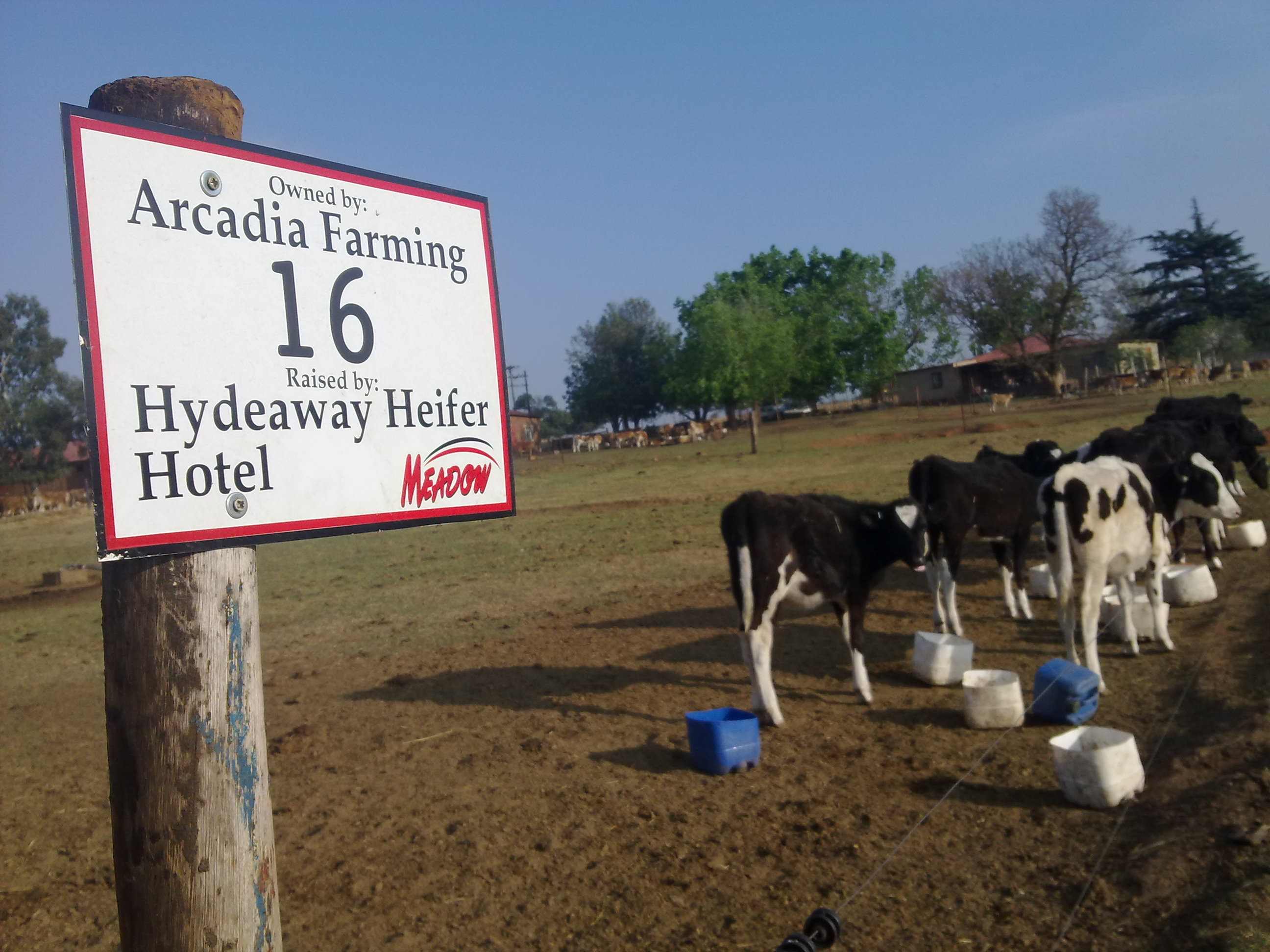
By far the more successful part of our farming operation is the heifer raising. Holstein heifers arrive here at 3 months of age. They live in small but grassy paddocks and eat pellets and hay, growing to about 350kg at the age of 12 months, when they are artificially inseminated by yours truly. We keep them until they’re 7 months pregnant, then their owner takes them home to be milked.

Hydeaway Farm raises heifers for other South African dairy farmers

Hydeaway Farm raises heifers for other South African dairy farmers

In S. A., it’s generally the big farmers that do the best; they say you can only do it profitably if you milk upwards of 300 cows and grow your own feed. Total mixed ration is more popular than pastures, and cow housing is apparently the way to go but we find the idea of keeping cows inside 24/7 positively sickening. Yes, we are sentimental, but the cows are happy doing what cows are supposed to do; graze and interact in a herd.

Altogether, there are roughly 500 cattle living on our farm. Oh yes, and they all have names, every last one. Walking through the paddocks is asking to be thoroughly licked and slobbered on.

The single greatest difference between dairying in Australia and S. A. is probably the labour. Labour in our country is relatively cheap, but unskilled. We have 13 workers, with at least 11 on the farm at any one time, and in harvest season other farmers can have over 40.

I’ll wrap up by telling all the dairy farmers out there to hang on. With just 2600 dairy farmers left in South Africa, we’re a declining breed. Those that are left are, for the most part, pretty special.
Why doesn’t farm safety gear have the same cred as motorbike leathers?

Motorbike leathers are worn like a badge of honour by some of the toughest (and scariest) blokes in the country. They reek of the danger inherent in their metal steeds.

Farmers don’t share this aura yet spend hours every day on bikes and working inches from hundreds of half-tonne animals. The risks are real and the consequences can be heartbreaking.

Following yesterday’s tragic death of an 11-year-old boy, WorkSafe spokesperson Michael Birt told The Weekly Times there had been 14 workplace deaths in Victoria and five of those were on farms.

“A third of the deaths have happened on farms and it’s people doing routine tasks. You don’t get much more routine than moving cattle on a dairy farm,” Mr Birt said.

Despite all of this, some of us hesitate to protect ourselves. I don’t know why. The other day, someone suggested there’s a fear we might “look like sissies”. By all means call me a sissy for looking after myself but I wouldn’t try running that line by a Hell’s Angel.

Daylight savings catches the cows napping and we Unleash The Zoe

Cows are creatures of habit, that’s for sure. If we’re half an hour late to round them up, they start arriving at the dairy demanding to know why, so you can imagine the annoyance when we are a whole hour early.

Daylight savings may not fade the curtains but it does confuse the cows for a day or two. Couple this with the luxury of a doze in the afternoon sun after a really good feed and you have cows that don’t want to get up for anyone.

Daylight savings does not impress our cows

Daylight savings brings no sense of urgency to our cows

We decided there was nothing for it but to “Unleash The Zoe”. Our little girl has a commanding presence with the cows and her lion’s roar is known to scare everyone from baby Alex to silage contractors!

Unleash The Zoe

Unleash The Zoe gets results

The rubber boot catastrophe

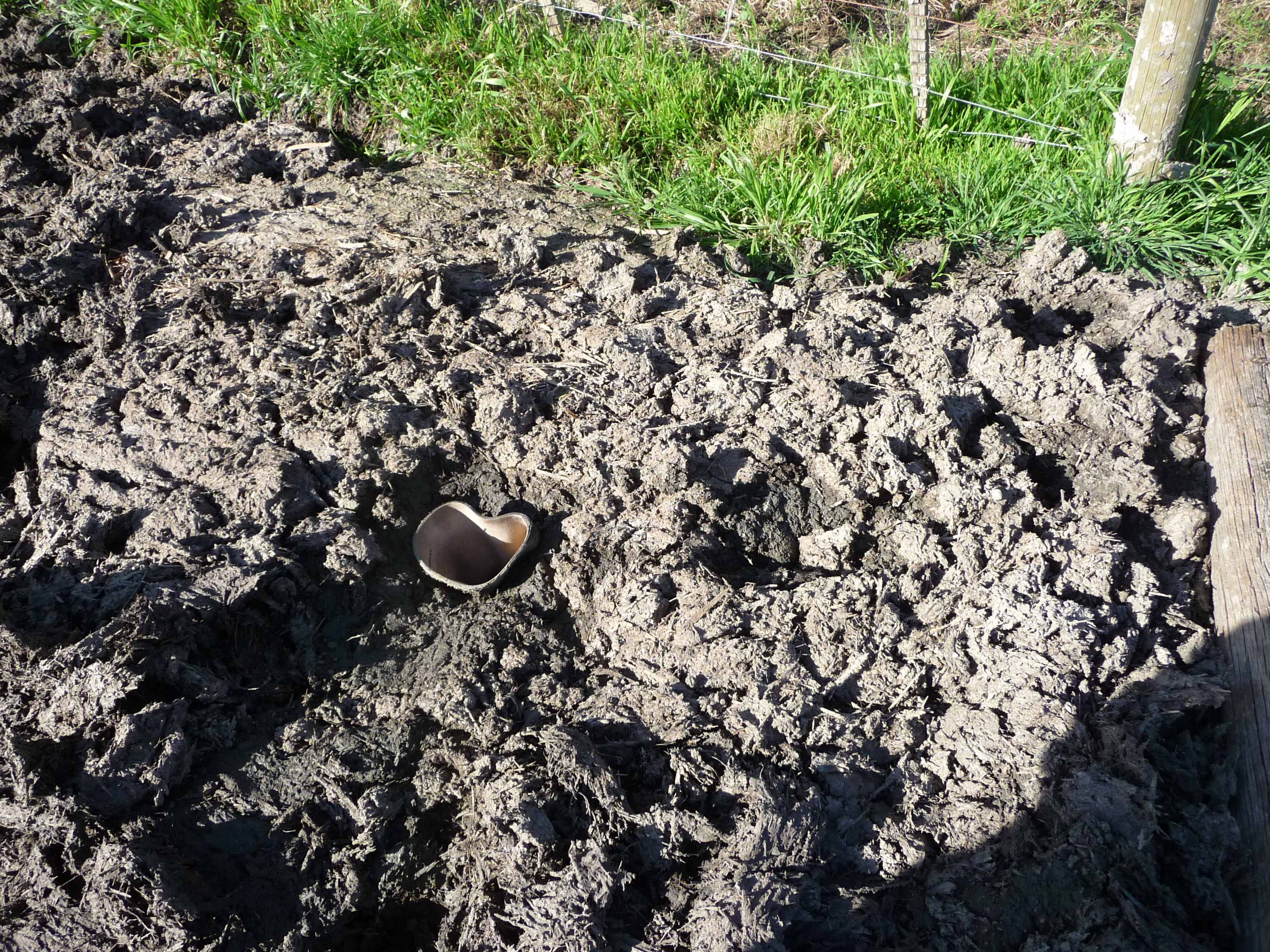
The day did not start well. Wayne arrived outside the office window while I was feeding Alex in the pre-dawn gloom and tossed a boot onto the verandah, rubbed at it with some grass, uttered an expletive, pulled on his Blundstones and roared off into the fog once more.

Bemused, I snapped this photo.

Papas Left Rubber Boot

Papa's lonely left rubber boot

Daylight revealed a sorry picture. Wayne had been ushering bulls into their rest paddock when he stumbled into the Mulch Mud Morass, a deep slurry with the gumboot-gobbling capability of quicksand. We’d spread the last few metres of the track near the dairy with stringy mulch during the big wet to make it nice and soft underfoot for the cows. It worked well but it does have the disadvantage of trapping a lot of mud and manure. I asked the grader to scrape it away now that Spring is here but some of it became lodged near the bull paddock gate.

After becoming stuck, Wayne reportedly toppled over sideways into the Morass and found one foot had been freed from the goo. Alas, it was only due to the sacrifice of his right gum-boot (or Welly as some call it). And here it rests.

Papa's Boot

Right boot's sacrifice