When the lights go out on farm

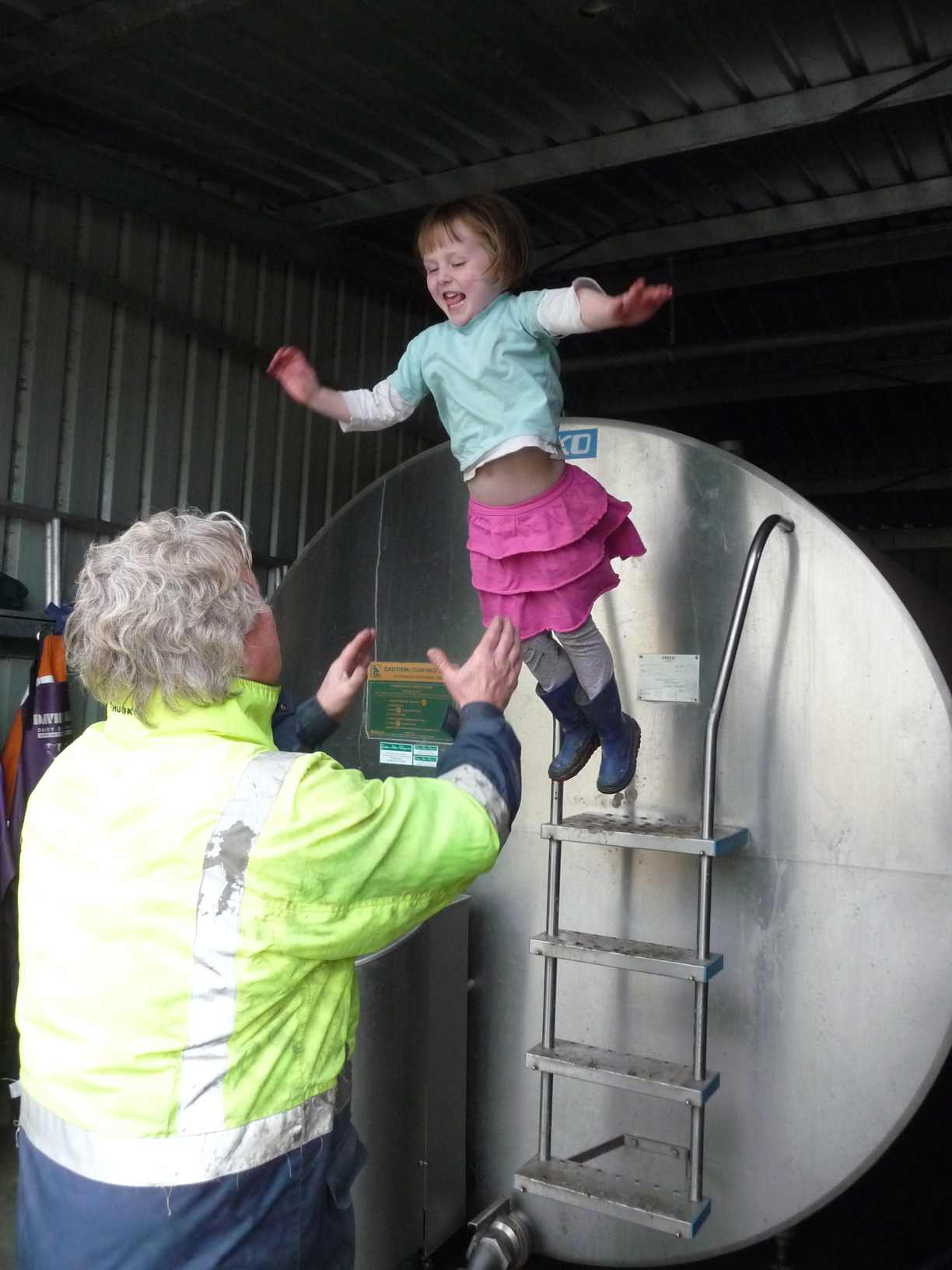
Jumping off the milk vat

Zoe leaps off the vat ladder to her Papa

Our power has become so unreliable I’ve given up resetting the microwave clock but this is far from the most serious consequence for our dairy farm. Unfortunately, we use a lot of power. There are water pumps, milking machines and, most critically, refrigeration. Our milk is stored in a stainless-steel 17,500-litre vat before it is collected by the tanker.

The vat keeps the milk at a steady 4 degrees Celsius to keep it fresh. As part of the co-op’s quality assurance program, the tanker driver records the temperature upon collection. If the refrigeration fails, we need to organise immediate collection to prevent a quality failure.

The most common cause of problems with the vat are power outages or spikes that mean we have to manually reset the compressors. That’s what happened yesterday and the milk was not kept cool enough. The co-op’s lab will test the milk to make sure it remained fresh. Fingers crossed.

Power outages also affect milking of course. There’s nothing worse than being halfway through milking when the power goes off and looks like staying off for a while. The dilemma is whether to let the cows out and know they won’t be comfortable overnight or keep them waiting in the yard and hope it comes back on quickly.

A little while ago, the electricity infrastructure company rang to do a customer satisfaction survey. I don’t think they were expecting quite the ear-bashing they got!

How well Australian dairy farmers are paid compared to those around the world

International Farmgate milk prices US$ per 100kg

This graph kindly supplied by Dairy Australia (please click on the link to see it) shows that Australian dairy farmers are enjoying their best prices in a long time. I haven’t rushed out to put a deposit on a BMW for five very important reasons:

  1. The US dollar is incredibly weak against the Aussie dollar, so the high price is not translating to an equally high pay packet in our terms.
  2. Our costs, especially fertiliser and power, have increased dramatically in the last five years.
  3. I’m playing a game of catch-up. When prices are low or seasons are unfavourable, we put off spending on necessities like cow tracks, fencing and emptying effluent ponds but we can’t put that off forever!
  4. We’ve had the autumn/winter/spring from hell and that’s cost a fortune in feed.
  5. Even if I had the money for the Beemer, I’d be too scared to spend it in case the global economy forces a repeat of 2009, when our price dropped 40% almost overnight.

Given that half of our milk is sold on the volatile international market, nothing’s  guaranteed in Victorian dairying except that the cows need to be milked and fed and you never know what’s around the corner.

Why have Australian farmers received such a low price for our milk for so long, you ask? First, we produce a lot more milk than our domestic market can consume, which means our milk needs to be sold on the highly competitive international market. Second, the US and European Union have subsidised their dairy industries, creating an artificially low international price. The so-called “butter mountain” was sold at unsustainably low prices for many years.

More recently, the political appetite for subsidisation has waned and this has helped Australian dairy compete – while still hardly a level playing field, it’s not quite so tilted against us.

What wildlife does for farms

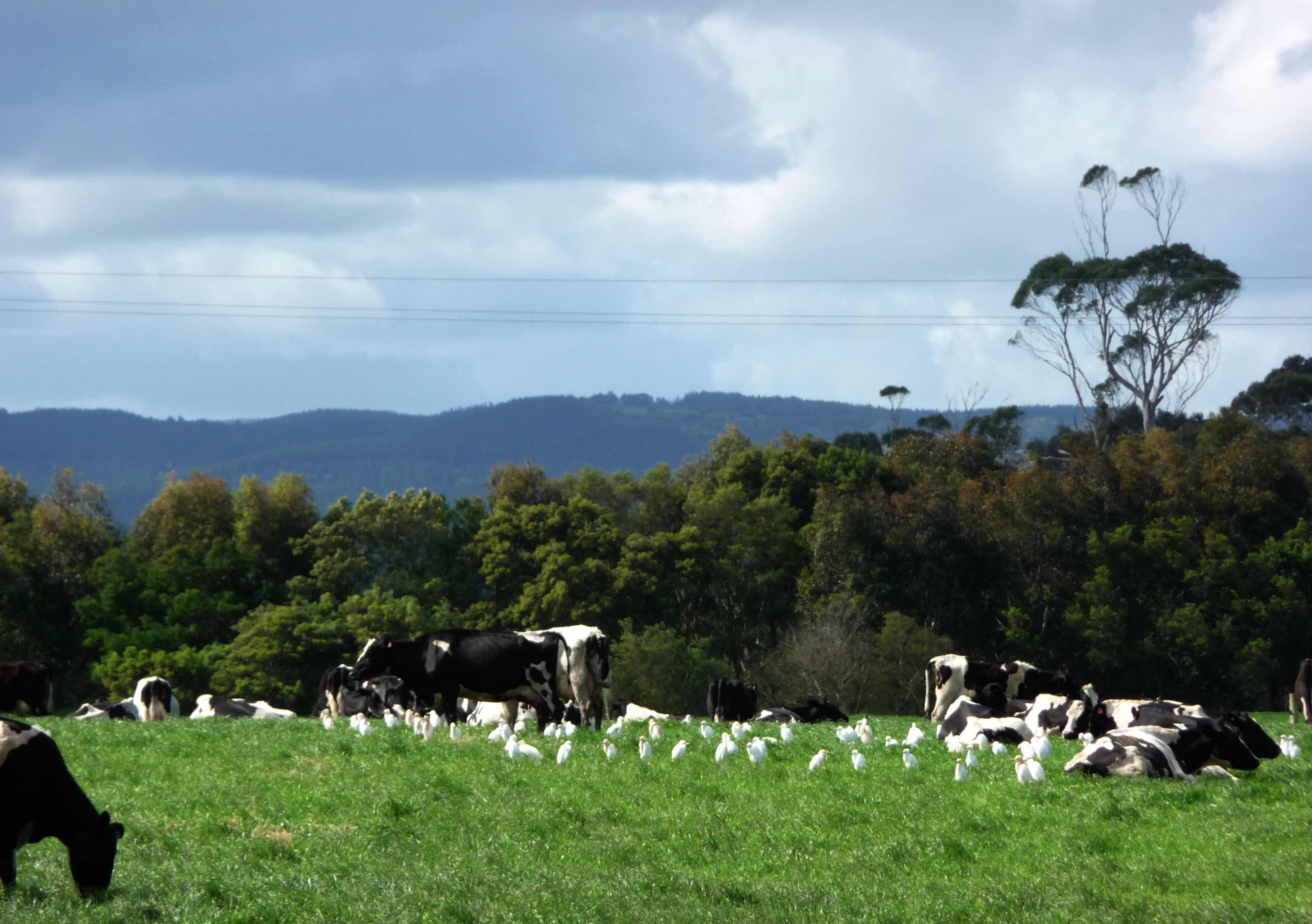
Cattle Egrets

Cattle Egrets in breeding plumage follow the cows everywhere

There’s lots of wildlife on our dairy farm: waterbirds of every description, a chorus of frogs, waddling wombats and lots of lizards from the cute blue-tongue through to the vulnerable goanna!

Sometimes we curse them. Ducks gobble new pastures and crops, cockies eat seed, wombats dig cavernous holes. But we never begrudge them a home and we’re aware they have important roles to play, too. The ibis eat root-eating grubs and aerate pastures with their needle-like beaks while the army of little birds help to manage the insect population.

With this in mind, we’ve created a whole farm plan that incorporates wildlife corridors linking our big environmental assets:

  • The state forest and our remnant vegetation on our southern boundary
  • Our Land for Wildlife dam
  • The wetland
  • The revegetated gully
  • The Albert River on our northern boundary

We’re also proud to participate in the JARR project, which is creating a biodiversity blueprint for this important catchment for the RAMSAR-listed Corner Inlet.

While it’s important to justify planting trees and fencing sensitive areas from a business perspective, the farm is more than that. It’s our home and, if I’m honest about it, we protect and encourage wildlife on the farm because it makes this a much better place to live.

Gotta be quick to respond as Spring springs

Spring has pounced…at last and with a flourish!

Each week, I monitor the growth rate of our grass and by golly it’s shot away in seven days. This means we can offer the cows a larger slice of each paddock per day, knowing that we won’t run out of grass or punish the pastures. We treat our little ryegrass plants with TLC, you see.

To explain why, I’ll need to tell you a little bit about the ryegrass plant (only a speed-date style of introduction because I know you’re probably not as excited about watching grass grow as I am).

In most cases, rye grass only ever grows three leaves per plant before the oldest leaf dies off. It’s at its best when it has 2.5 to 3 leaves, which is also when it grows fastest because it has the most “solar panels” to generate sugar and sustain itself.

The grass draws on sugar reserves stored in its stem to produce the first leaf, the second is self-sufficient and the third offers about 50% more herbage than the first two combined.

If you let the cows chew the grass down too hard or bring them back when it’s just used up its sugar reserve to get the first leaf out, you do enormous damage to the plant. It may not recover and will certainly take a long time to get up and running again.

Because Australian milk is sold at such low prices, we have to be super efficient and that means grazing the pasture at its most productive rather than relying on lots of expensive grain. A DPI expert once told me that what farmers do in the 12 weeks of Spring dictates how profitable we are for the whole year, so I am extra vigilant at the moment.

With the warmer, drier weather of the last week, we’ve seen growth rates soar. Rather than taking about 14 days to emerge, the first leaf is out in seven or eight. I’ve asked Wayne to reduce the amount of grain we’re feeding the cows (just by half a kilo every four days so we don’t upset the bacteria in their finely tuned digestive systems) and I’ll ring the silage contractor tomorrow to give him the heads-up.

That same DPI guy also told me that it doesn’t cost anything to be on time but being late in farming could cost a year’s profit. I’d better get out there!

I knew our heifers would be okay but I had to check

Yearling heifers

Our yearlings look lovely in their holiday home

Back in June, we were in big trouble. We’d had waaaay too much rain and there literally wasn’t enough dry pasture on the farm to feed all our animals.

I decided we had to send our precious heifers away on agistment. We were lucky enough to find a caring farmer just an hour away with just the right amount of land. While we know they are in good hands, it’s our responsibility to check in on them every few weeks and see how they’re going. Well, here they were today – looking great!

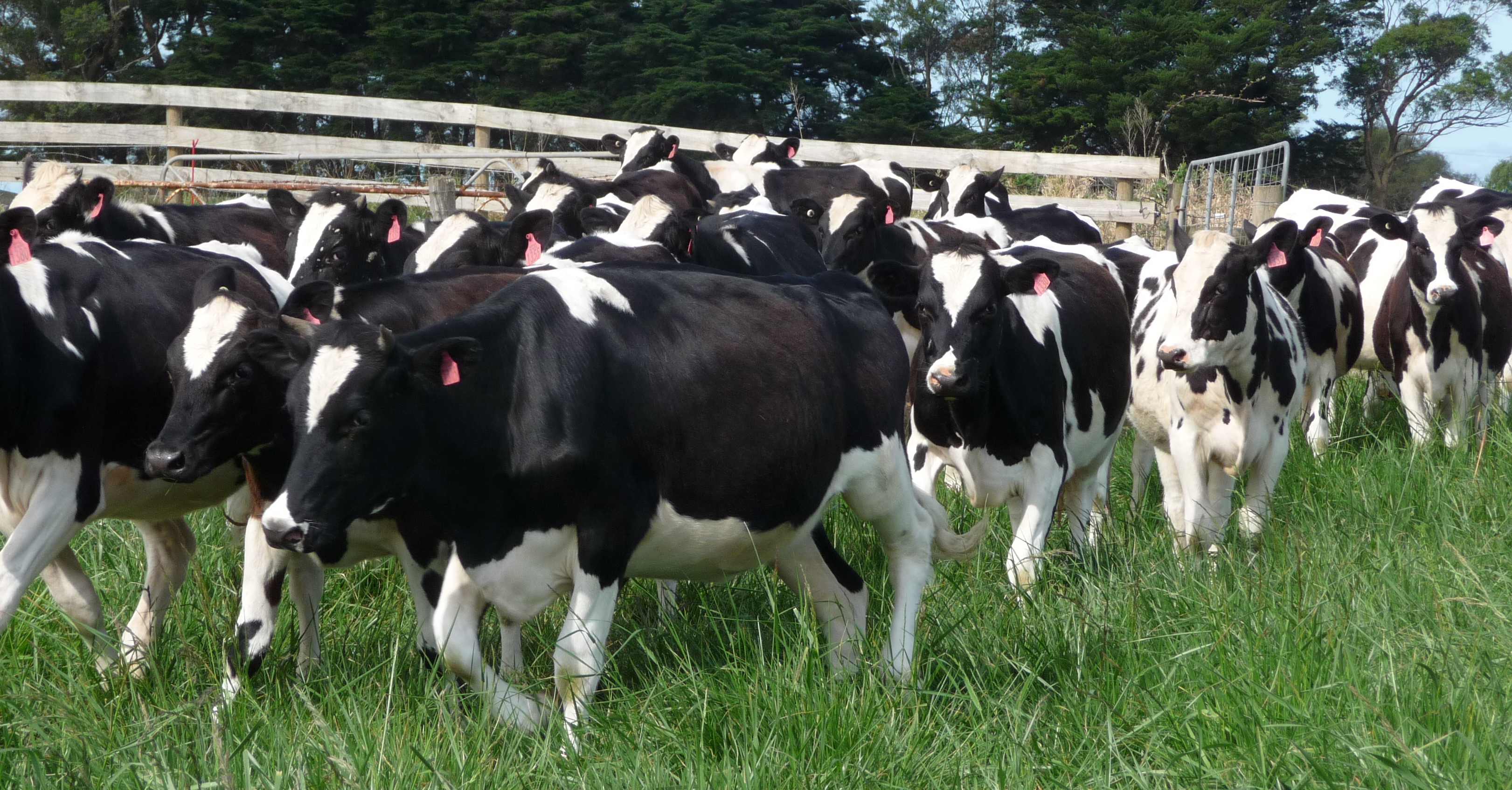
You can tell when yearlings are feeling good. They literally jump out of their skins. I walked into their paddock and caused massive excitement as they leapt and frolicked all over the place.

It’s been 12 weeks since their last drench and vaccinations, so we’ll organise another dose in the next fortnight to keep them looking terrific. They’ll meet their Jersey beaux later in the spring.

Teen tells her personal story of dairying in South Africa

I’ve been mightily impressed by the incredibly entertaining dairy blog of one very clever South African teenager, Firn Hyde, and asked her to send in a guest post.

Hello everyone in Australia and beyond. First of all I’d like to thank Marian for the very kind invitation to contribute to her fabulous blog. It’s much appreciated!

I’m Firn Hyde, the teenager of Hyde Family. We live in the Highveld of South Africa and run a small dairy called Hydeaway Farm, where we embrace our slogan – “Names Not Numbers”. My mom, Dinki, and dad, Jon, run it together; Dad is also a computer programmer and works in Johannesburg, so Mom does a lot of the daily management while Dad works on maintaining machinery and fences. Their two daughters, myself (fourteen years old) and Rain (twelve) complete the Hyde Family.
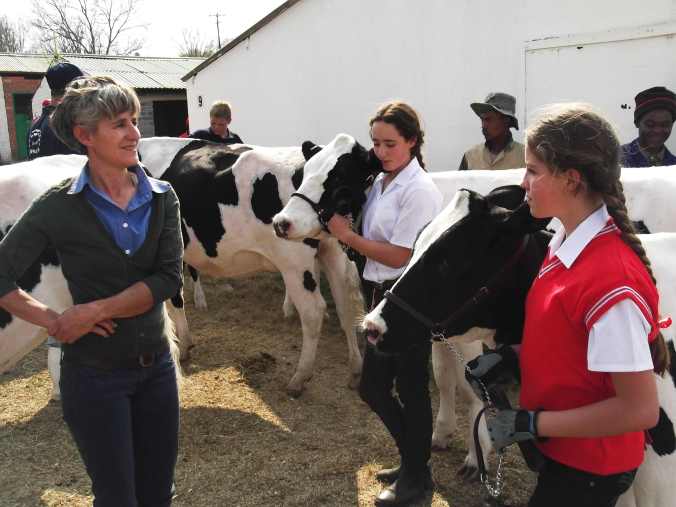
Firn Hyde

Dinki, Firn and Rain Hyde with Holstein heifers, Hermoine and Kaleidoscope, bred by Brett Gordon at the Standerton show

Mom and Dad chose to homeschool the two of us and in doing so gained two valuable farm labourers. Whilst Rain is a ballet dancer and does the more domestic jobs, I like to get dirty and work with the animals. This is definitely a family business. It’s a dream we all chase together.

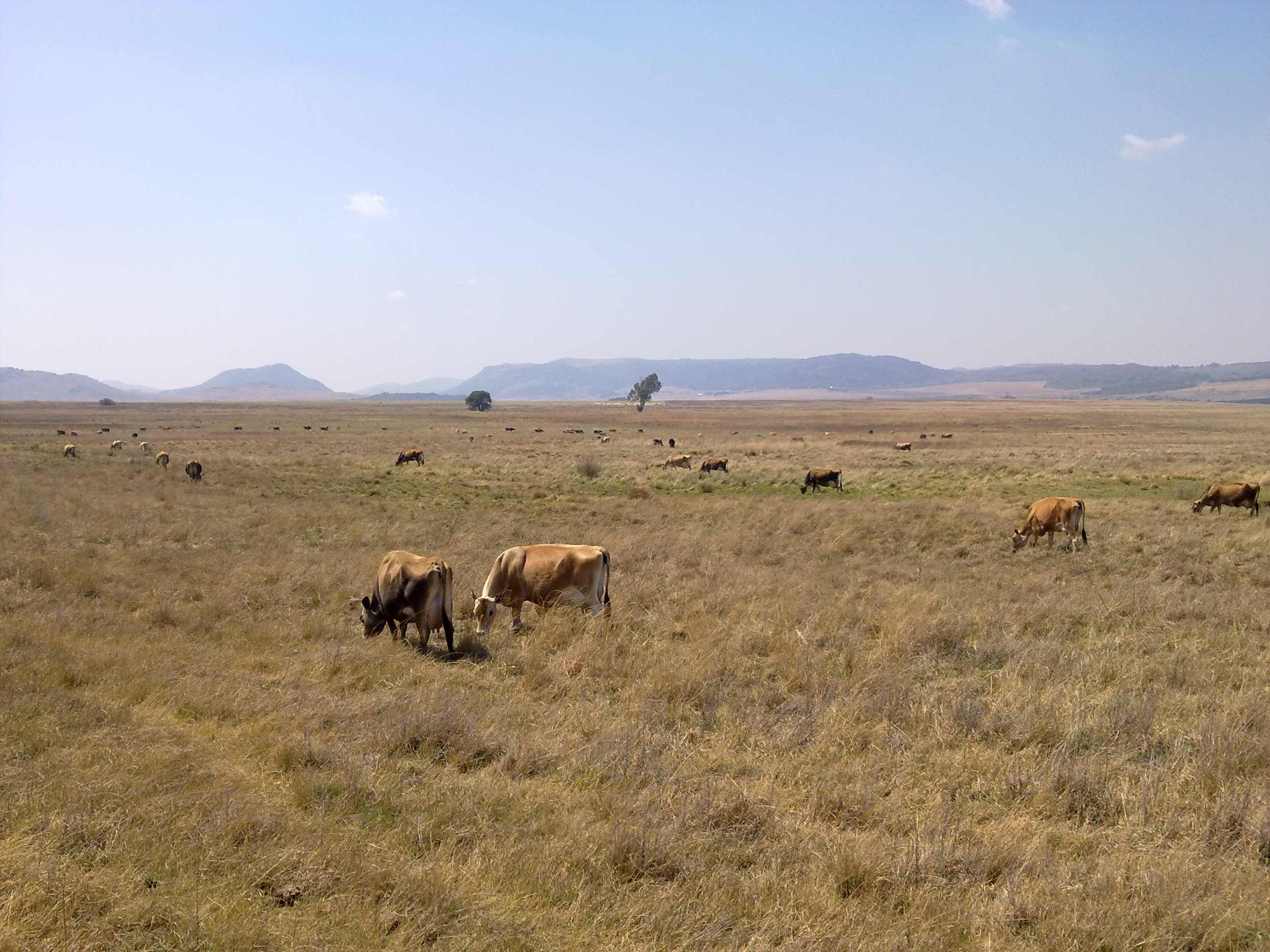
We milk 90 registered cows and own Hydeaway Jersey Stud. We love Jerseys for several reasons, among them size, calving ease, temperament and their golden, creamy milk. The cows and many of the Jersey heifers go out to graze during the day. We would love to have beautiful pastures like Marian’s, but at present the best word for our grazing is “veld”, which is something between “grassland” and “wilderness” in our native language, Afrikaans. Due to the poor quality grass we supplement them with good eragrostis hay.

Hydeaway Jerseys grazing on the veld

Hydeaway Jerseys grazing on the veld

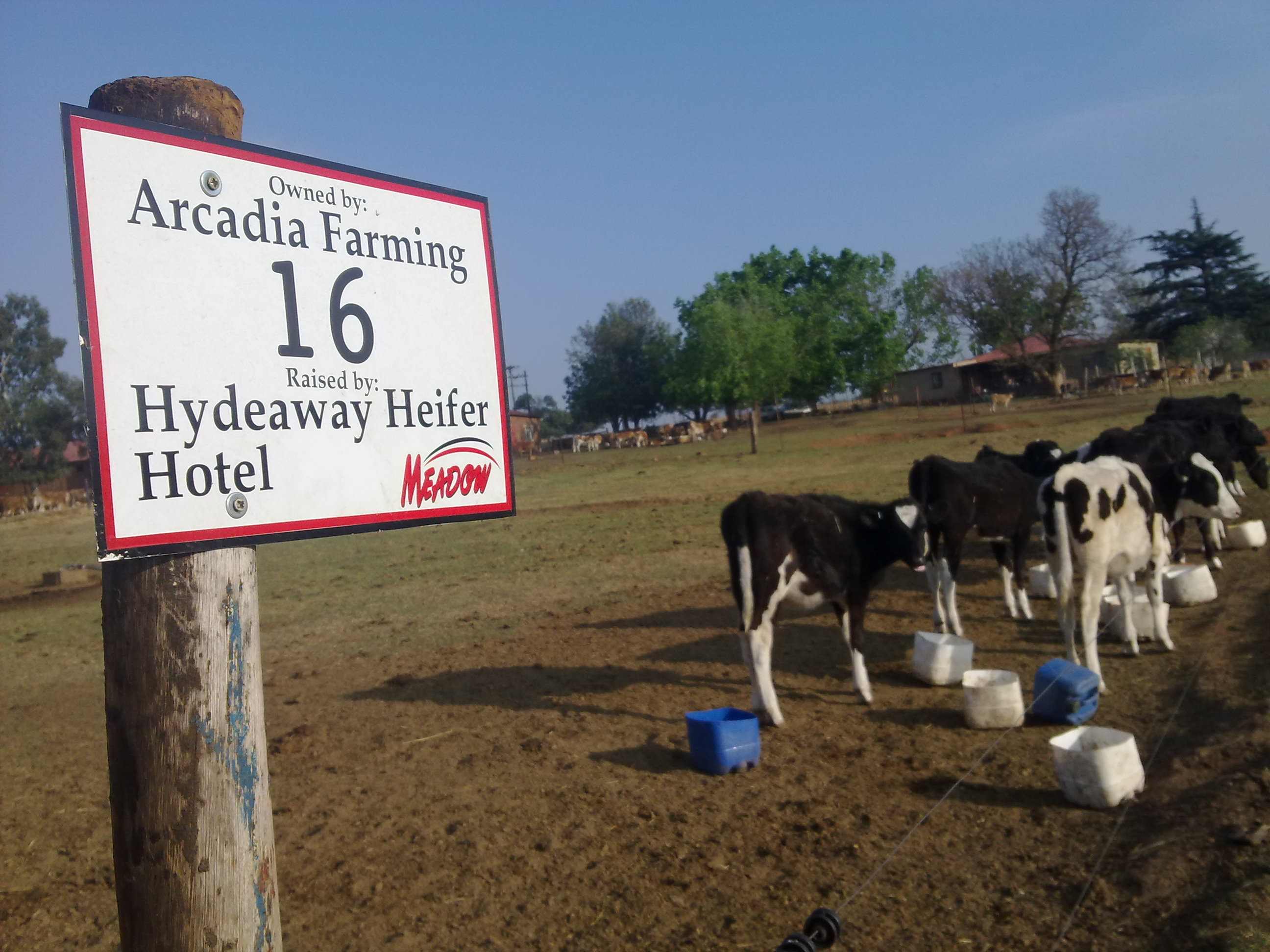
By far the more successful part of our farming operation is the heifer raising. Holstein heifers arrive here at 3 months of age. They live in small but grassy paddocks and eat pellets and hay, growing to about 350kg at the age of 12 months, when they are artificially inseminated by yours truly. We keep them until they’re 7 months pregnant, then their owner takes them home to be milked.

Hydeaway Farm raises heifers for other South African dairy farmers

Hydeaway Farm raises heifers for other South African dairy farmers

In S. A., it’s generally the big farmers that do the best; they say you can only do it profitably if you milk upwards of 300 cows and grow your own feed. Total mixed ration is more popular than pastures, and cow housing is apparently the way to go but we find the idea of keeping cows inside 24/7 positively sickening. Yes, we are sentimental, but the cows are happy doing what cows are supposed to do; graze and interact in a herd.

Altogether, there are roughly 500 cattle living on our farm. Oh yes, and they all have names, every last one. Walking through the paddocks is asking to be thoroughly licked and slobbered on.

The single greatest difference between dairying in Australia and S. A. is probably the labour. Labour in our country is relatively cheap, but unskilled. We have 13 workers, with at least 11 on the farm at any one time, and in harvest season other farmers can have over 40.

I’ll wrap up by telling all the dairy farmers out there to hang on. With just 2600 dairy farmers left in South Africa, we’re a declining breed. Those that are left are, for the most part, pretty special.
Intensified farming good for the environment sometimes

There is so much to learn on a farm. Aged just 5, Zoe can correctly identify plants from rye grass to melaleuca, wildlife from willy wagtails to wedgetail eagles and stock from heifers to old cows.

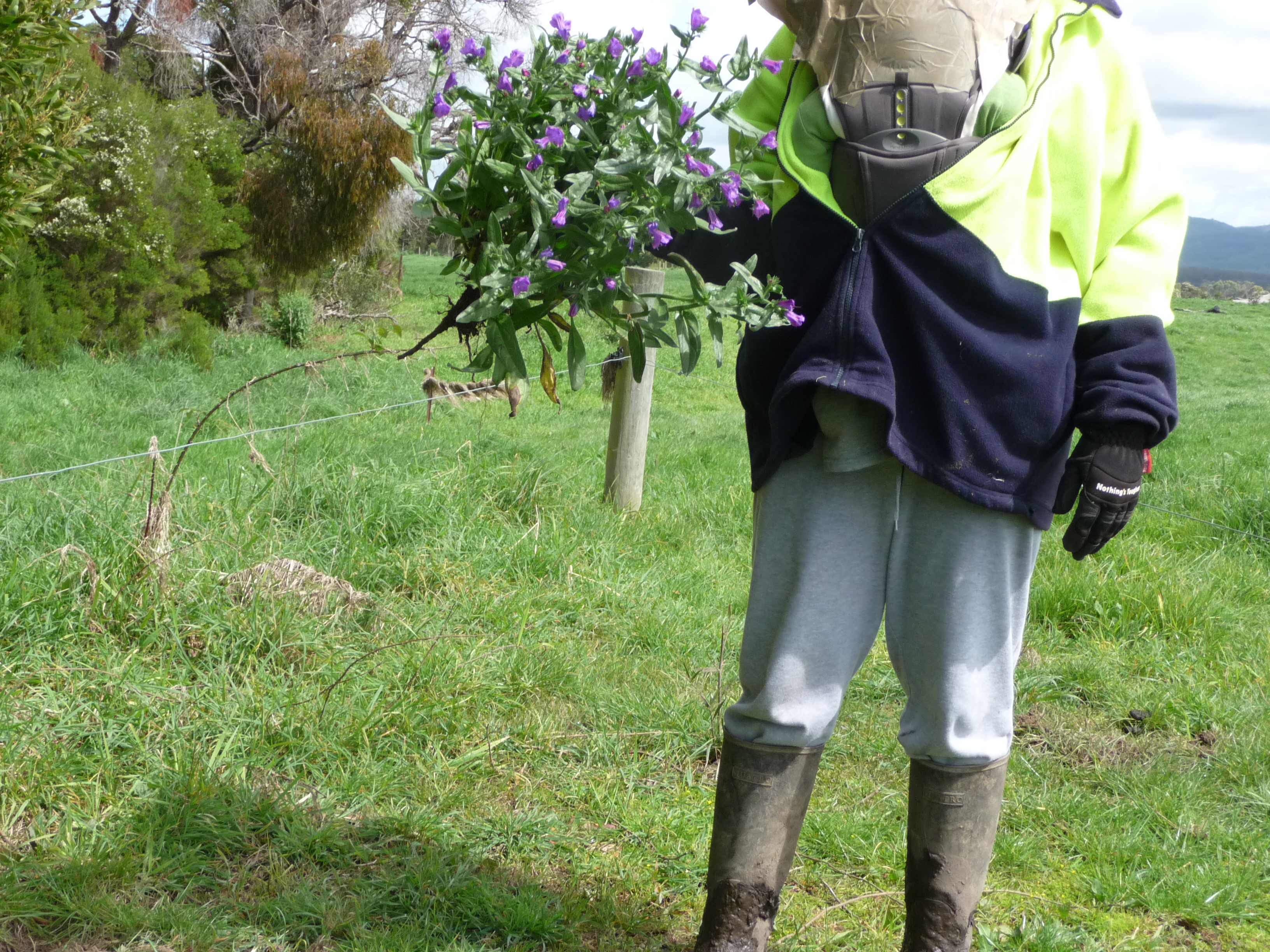
Yesterday, she came across the beautiful Paterson’s Curse for the first time. It’s not a problem here – the occasional plant pops up from time to time. Zoe took this pic to remind herself of it.

Patersons Curse

Patersons Curse

When I was Zoe’s age, ragwort was the weed we battled all summer. The paddocks turned a buttery yellow in late spring and the grass and other weeds on the river flat scratched at the ute windows. I haven’t seen a ragwort plant here in years and though the blackberries and thistles persist, they are at vastly reduced levels. The grass is also tamed to juicy, shin-high herbage. I think it comes down to the intensification of dairy farming in the last 30 years.

When my brother and I were out in the paddocks pulling up ragwort in the late 1970s and early 1980s, we had 120 cows on 300 acres. Now, we milk 265 cows on about the same area (with dry stock on another 200 acres), although we might be a bit overstocked. Back then, we had three paddocks and now we have 24 on the milking pastures.

Someone reminded me that Dad never paid any attention to daylight savings in the 1980s because he couldn’t find the cows in the dark in those massive hundred-acre paddocks! Now, they are contained in 3 to 4-hectare paddocks. It means the grass is far better managed and forms a thick sward that is harder for opportunistic weeds to penetrate. It also means we are more alert to changes in the pasture – there are no more “lost forests”.

Why doesn’t farm safety gear have the same cred as motorbike leathers?

Motorbike leathers are worn like a badge of honour by some of the toughest (and scariest) blokes in the country. They reek of the danger inherent in their metal steeds.

Farmers don’t share this aura yet spend hours every day on bikes and working inches from hundreds of half-tonne animals. The risks are real and the consequences can be heartbreaking.

Following yesterday’s tragic death of an 11-year-old boy, WorkSafe spokesperson Michael Birt told The Weekly Times there had been 14 workplace deaths in Victoria and five of those were on farms.

“A third of the deaths have happened on farms and it’s people doing routine tasks. You don’t get much more routine than moving cattle on a dairy farm,” Mr Birt said.

Despite all of this, some of us hesitate to protect ourselves. I don’t know why. The other day, someone suggested there’s a fear we might “look like sissies”. By all means call me a sissy for looking after myself but I wouldn’t try running that line by a Hell’s Angel.

Daylight savings catches the cows napping and we Unleash The Zoe

Cows are creatures of habit, that’s for sure. If we’re half an hour late to round them up, they start arriving at the dairy demanding to know why, so you can imagine the annoyance when we are a whole hour early.

Daylight savings may not fade the curtains but it does confuse the cows for a day or two. Couple this with the luxury of a doze in the afternoon sun after a really good feed and you have cows that don’t want to get up for anyone.

Daylight savings does not impress our cows

Daylight savings brings no sense of urgency to our cows

We decided there was nothing for it but to “Unleash The Zoe”. Our little girl has a commanding presence with the cows and her lion’s roar is known to scare everyone from baby Alex to silage contractors!

Unleash The Zoe

Unleash The Zoe gets results

What did one bull say to the other?

Aussie cricketers are infamous for sledging but, judging by last night’s performance, they have nothing on our Jersey bulls.

Three of these testosterone-fuelled bovines are in with the last of the cows due to calve and they are sharing a very strict pre-calving or “transition” diet that involves virtually no grass – just grain and cereal silage and hay. So, when I arrive with the grain trailer, everyone rushes over and tucks in before they miss out. Well, not quite everyone.

Bulls fighting in calving paddock

It all started when I arrived with the grain trailer

Headbutting bulls

Nobody else was impressed

Bulls still fighting

The bulls just kept on going

Bulls still warring half an hour later

The two bulls were still warring half an hour later (sorry about the pic quality)

Love to hear what you thought the original sledge was that sparked all this off!