The Life of the Dairy Cow

1441 aka "Cheeky Girl" on the left

1444 aka “Cheeky Girl” on the left with the pink nose

Meet 1444, known to us as “Cheeky Girl”. If you were in the paddock alongside me, she would certainly want to meet you. As a calf, a yearling and now, a mature cow, Cheeky Girl’s always been one of the first in the herd to wander up to you in the paddock. You’re busy working on the fence, you turn around to see who’s sniffing you and there she is, every time!

Vegan group, Voiceless, today launched an “expose” of cruelty to Australian dairy cows called The Life of the Dairy Cow: A Report on the Australian Dairy Industry. Continue reading

Skeletons in the dairy case

CowsDairyTrack

We know we are not perfect, we realise we must do better and we are proud of how far we have come.

Our cows live better lives than they did when I was a girl. Careful breeding has reduced the incidence of mastitis and lameness, while a new understanding of bovine nutrition has reduced the risk of calving trouble and helped us insulate the cows from the impact of both drought and flood. Our first generation of naturally polled (hornless) calves has just been born.

Even so, dairy farmers will one day earn a prime-time feature for all the wrong reasons. It could be someone doing the right thing that looks like the wrong thing: Continue reading

On your marks for Spring on the farm

Spring starts tomorrow

Spring starts tomorrow


I’m excited. Fertiliser’s going on, calves are still being born and raised, almost all of the milkers are in and we are joining again with an eye to the next generation. The grass is growing a new leaf every seven days and, before we know it, the silage harvest will start.

This is the make or break time of year when everything has to be done right. Miss cutting a paddock of silage by a week and it could mean buying in expensive fodder later, miss a cow’s readiness to mate and it could cost you $250 in lost milk, miss a problem calving and it might cost a cow’s life.

All our skills are tested in Spring – from biology through to animal behaviour – so we need tools to help us.

We stick “scratchy tickets” on each cow’s back to make it easier to see when she’s ready to mate. Okay, she’s got no chance of winning the lottery but the silver coating of these stickers gets rubbed off when other cows leap onto her back in response to her hormonal cues, revealing hot pink, yellow or orange tell tales underneath.

The results of summertime soil tests and the advice of our agronomist allow us to maximise the performance of our pastures while minimising the impact on the environment.

Knowing when silage involves crawling around the paddocks keeping a close eye on grass growth, then entering the results into a clever little “Rotation Right” spreadsheet devised by our guru friends at DEPI.

But raising calves and watching over expectant cows? That’s a whole lot of tender care, time and generations of farming knowledge (yes, yes, combined with the latest advances in science).

This is when a farmer really knows she’s alive!

Watch a calf being born

Although we keep an eagle eye over cows as they approach calving time, most give birth perfectly naturally without any help from us just like this lovely lady. Her calf was up and walking within the hour and running by the afternoon. These little animals are amazing sprinters! Just ask eight-year-old Zoe, who tried and failed miserably to outrun a three-day-old calf this morning!

A milkmaid’s dirty linen and why you shouldn’t see it

In the three years since I started Milk Maid Marian, I’ve written about everything we do here on the farm. I’ve got nothing to hide. Well, almost nothing.

You haven’t seen our kids running around starkers in the paddock because, goodness, there are some weirdos out there and, in any case, my little people deserve some privacy.

You haven’t seen much in the way of veterinary treatment, either. I’ve written about sick cows here and here, for example, but I’m not going to post a picture of a newly-lanced abscess; me in action using a tractor to lift a cow threatened with paralysis; or the face of a cow in recovery after eye cancer surgery.

Why not? Because it would be unfair. You might not want to see graphic images as you munch your muesli and, second, the images could be abused. In the name of a higher cause, it’s not unknown for activists to take images of cows being nursed back to health and portray them as abuse.

My family’s privacy and the potential for misleading the public are two reasons why I shudder to imagine activists creeping onto the farm or spying on us with drones. I’m naturally protective, so when an email came through from an animal welfare group on just this topic today, I read it with a sense of dread. Here’s part of what it had to say:

“Alarmingly, support for ag-gag legislation is slowly creeping into politics here in Australia.”

“Ag-gag targets undercover investigators, whistleblowers and journalists by criminalising the undercover surveillance of agricultural facilities or by requiring that any footage which is obtained must be turned over to enforcement agencies immediately rather than given to animal protection groups or the media.”

My farm – my home – is an “agricultural facility”, you see.

And, you know what? If cruelty on a farm was recorded, I’d want the information to get to the enforcement agencies immediately so the animals could be rescued straight away rather than whenever it fitted in with the media cycle, wouldn’t you?

Feeling stressed? Come and sit in the grass with the cows

“What’s so special about that?” asked Zoe. “Nothing, and that’s why I thought we should put it on the blog.”

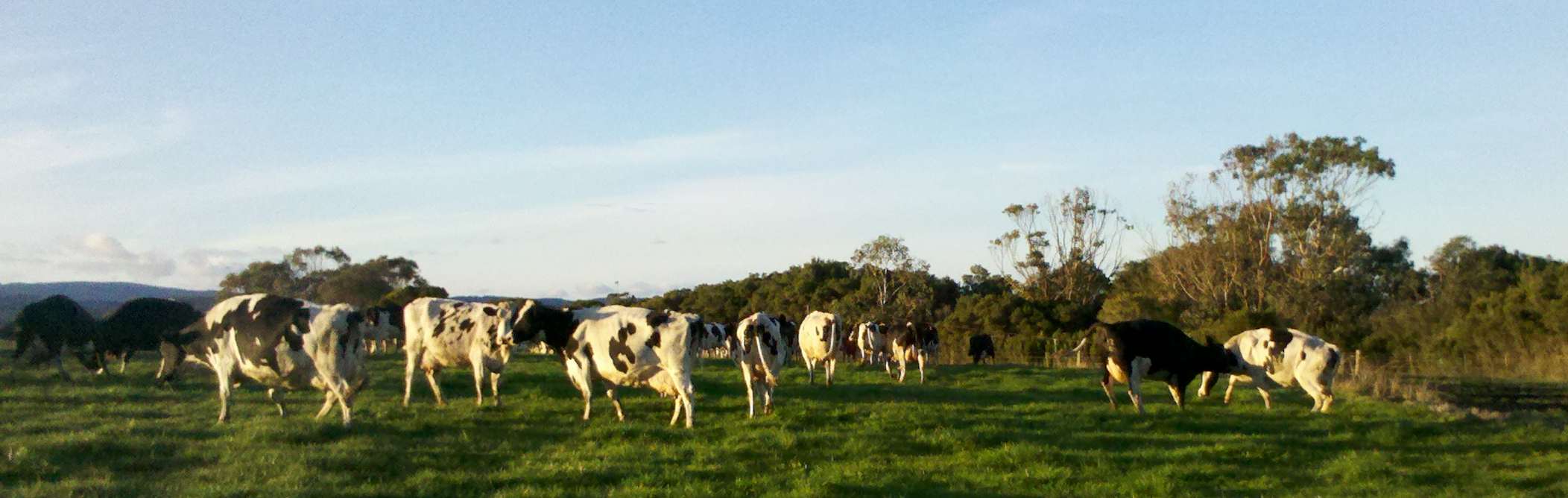
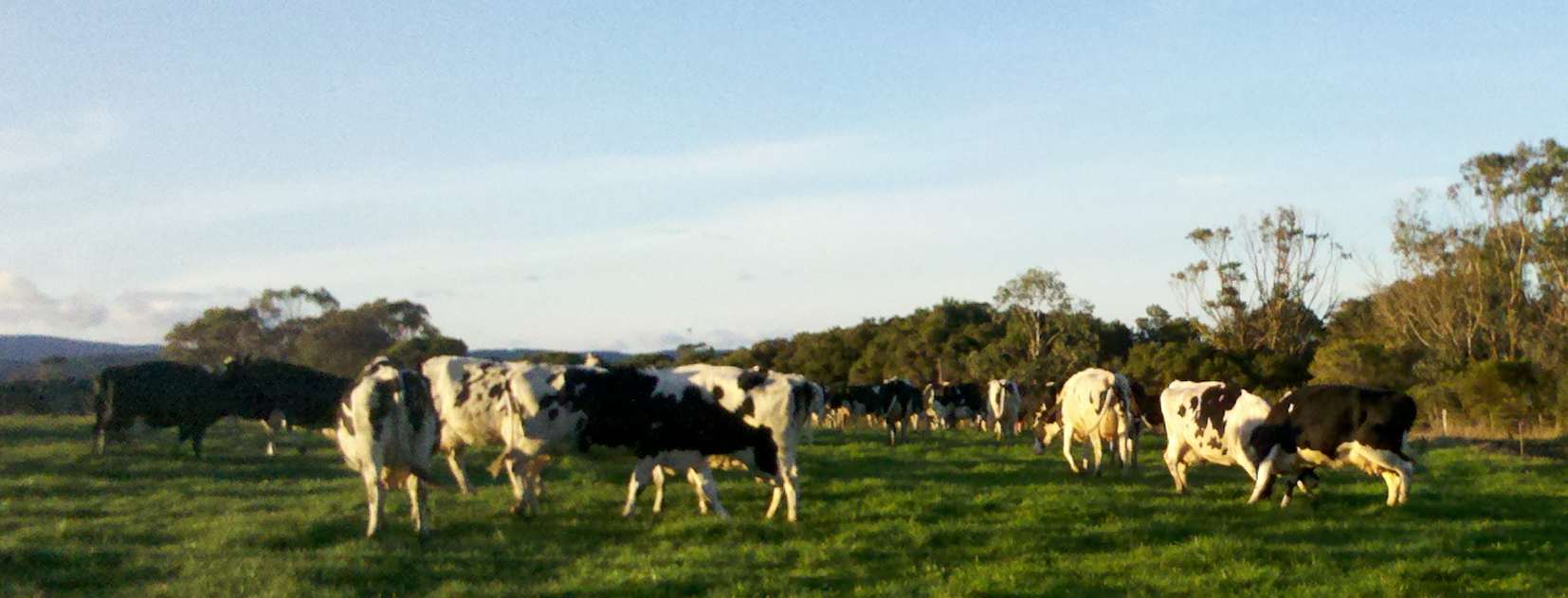
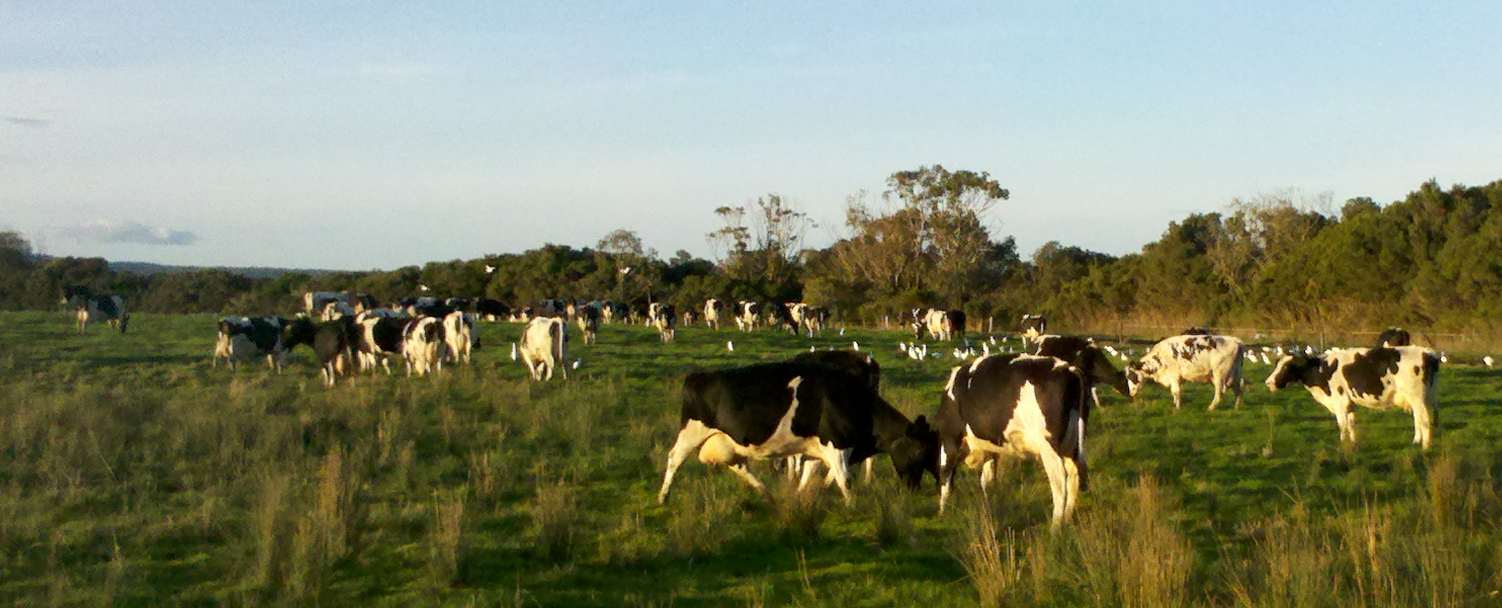
Apart from the twice-daily walk to and from the dairy, this is how our cows spend their time.

You won’t see footage like this anywhere else, I suspect, and certainly not on 4 Corners. There’s nothing sensational about it except perhaps that, right before your eyes, these cows are transforming grass into one of nature’s wonder foods (while wondering what the hell I’m doing sitting on their breakfast).

One woman’s kindness is another’s cruelty

Animal welfare is one of those things that often falls into the realm of sex, politics and religion. It’s an emotionally-charged topic at the best of times and when standards need to be set, conflict is inevitable. Consider this:

“Rear the calf in safety away from the herd so it can lead a healthy life”
vs
“Take the calf from its mother so farmers can steal the milk”

Both statements put the calf first, yes, but advocate diametrically-opposed practices. Vets say science supports the hand-rearing of calves, animal rights bodies say that’s immoral. So, what’s a farmer to do? At the moment, farmers have a lot of freedom to do whatever we think is right, so long as the calf’s healthy.

But animal welfare is increasingly becoming a political hot potato as vocal lobby groups demand more of a say in, and greater scrutiny of, farming practices. We farmers can’t stick our heads in the sand and hope this will all go away.

And, to be frank, many of the farmers I’ve discussed the issue with would like to see our representatives raise the bar to match the standards almost all of us meet every day. Few choose farming as a career just for the money (that concept never fails to raise a chuckle) – most do it because we love being outdoors with the animals. Why should we let a few rotten apples bring us all down?

But who decides what those standards should be? The dairy community? Well, no, we can’t do it by ourselves because external input is important to progress. The attitudes of the wider community have to be part of the decision-making process.

The thorny question really is: who represents the views of the wider community? Neilson research presented by Courtney Sullivan at the Australian Dairy Conference a couple of years ago showed that most Australians have little knowledge of where their food comes from, that they are aware of their ignorance and that, to put it bluntly, ignorance is bliss. Price was the main driver. Quality was taken for granted.

Ironically, this is a view that is eschewed by farmers and animal welfare bodies alike. It probably comes about because we farmers are trusted to do the right thing – a perception that some animal welfare activists would like to change.

Farmers have the opportunity to be proactive and show the good faith of the community is deserved. Why on earth not?

PS: If you want to know more about how we rear our calves and why, the answers are here on the Milk Maid Marian blog.

The business of dairy farming and what that means for our “stock”

I don’t like to use the word “stock” when it comes to cows. The connotation is that they are simply economic units. Yes, we do rely on their milk for our living but, no, they are not simply the equivalent of black-and-white boxes in a grassy warehouse. We burn the midnight oil, holding down second jobs during tough times so the cows will never know a lean year.

A sick cow is more important than our own dinners.

Nor are male calves “low-value by-products” of dairying. Maybe for some but not for me. Absolutely not. Rather than shooting them (the economically rational path), our family chooses to make a loss rearing the bull calves for the first few days of their lives and then selling them to beef-farming locals.

In the same vein, I am not a “milk producer” but a farmer. Somehow, “producer” conjures up factories and production lines, while nothing could be further from the truth here. We nurture our animals and the land because we understand that nature is bigger than we are. Sounds trite and fluffy? Perhaps, but it’s the reality.

There is no financial reward for such an attitude and in the teeth of the economic crisis most dairy farmers have suffered in recent times, the pressure’s been on to make every conceivable saving but here’s how I look at it: if you’re not able to make a dollar out of farming this year, you should at least be able to feel good about the way you farm.

If farming this way is not viable, I would rather not be a farmer.

Jousting for poll position

Scuffles broke out right across the paddock as the weak winter sun lit the stage for a bovine pugilism festival. The cows were feeling magnificent and, unable to contain their energy, were ready to take on all comers.

jousting jousting2 jousting3

The kids and I love watching the cows “do butter-heads” and the cows seem to love it, too. For every pair or trio engaged in warfare, there will be a group of curious onlookers and one scuffle seems to inspire more outbreaks.

Does butter-heads have a serious purpose though? Yes, it does. The herd has a very structured pecking order. Cows come into the dairy in roughly the same order every milking and the smallest and most timid are inevitably last. Mess them up by splitting the herd into seemingly random groups for a large-scale vet procedure like preg testing and you can expect trouble. There are cows thrust into leadership positions who don’t want to go into the yard first and lots more poo than usual.

I am sure that in days gone by, these battles were often fought to the death. Strong, razor sharp horns with 550kg of muscle and bone behind them are fearsome weapons. Our calves have their horn buds removed as painlessly as we can manage it early on to avoid far greater traumas later in life and for our own protection.

Soon, they will be spared even this discomfort. Dairy cows are being bred “polled” (without horns) and, eventually, we will have a herd that is naturally hornless. It’s not easy finding suitable polled bulls yet but our breeding centre tells me that demand from dairy farmers for polled semen is now “huge”.

I have my eyes on a couple of German polled beaux for our ladies. I only hope we can get them in time for this year’s mating season.